BetaFPV Cetus Pro FPV Kit vs Emax Tinyhawk III RTF
Both are under the 250-gram line, so the legal position is identical and the decision comes down to the rows tinted below — the specs where these two actually differ. The BetaFPV Cetus Pro FPV Kit is the cheaper of the two at ~$211.
| Drone | ||
|---|---|---|
| Bundle price | ~$211base kit | ~$359base kit |
| True first-year price | ~$211 | ~$359 |
| Flight min per $100 | 1.9 | 1.4 |
| Rating | No cited rating | No cited rating |
| Takeoff weight | 46 g | 40 g |
| FAA registration | Not required | Not required |
| Remote ID | None | None |
| Sensor size | — | — |
| Sensor area | — | — |
| Megapixels | — | — |
| Max video | None onboard — analog feed only, and the VR02 goggles do not record | DVR in the Transporter 2 goggles — no onboard recording |
| Colour depth | — | — |
| Log profile | — | — |
| Gimbal | None | None |
| Obstacle sensing | None | None |
| Claimed flight time | 4 min | 5 min |
| Tested flight time | — | — |
| Battery | 1.7 Wh | 1.7 Wh |
| Transmission | Analog 5.8 GHz | Analog 5.8 GHz |
| Max range | 80 m | 300 m |
| Max speed | — | — |
| Wind resistance | Light outdoor use — no published rating | Indoor and calm outdoor use — no published rating |
| Service ceiling | — | — |
| Internal storage | None | None |
| Controller | LiteRadio 2 SE transmitter and VR02 goggles, both in the box | Emax E8 transmitter and Transporter 2 goggles with DVR, both in the box |
| Return to home | No | No |
| Geofencing | No | No |
| Care plan (1 yr) | Not in our snapshot | Not in our snapshot |
| US availability | Sold | Sold |
| Released | 2022 | 2021 |
| Flight claim measured at | BetaFPV quotes 4 to 5 minutes on a 450 mAh 1S pack. Brushless motors draw harder than the brushed Cetus, so aggressive flying sits at the low end. | Emax quotes roughly 5 minutes on the included 1S 450 mAh pack, which assumes indoor cruising rather than punch-outs. |
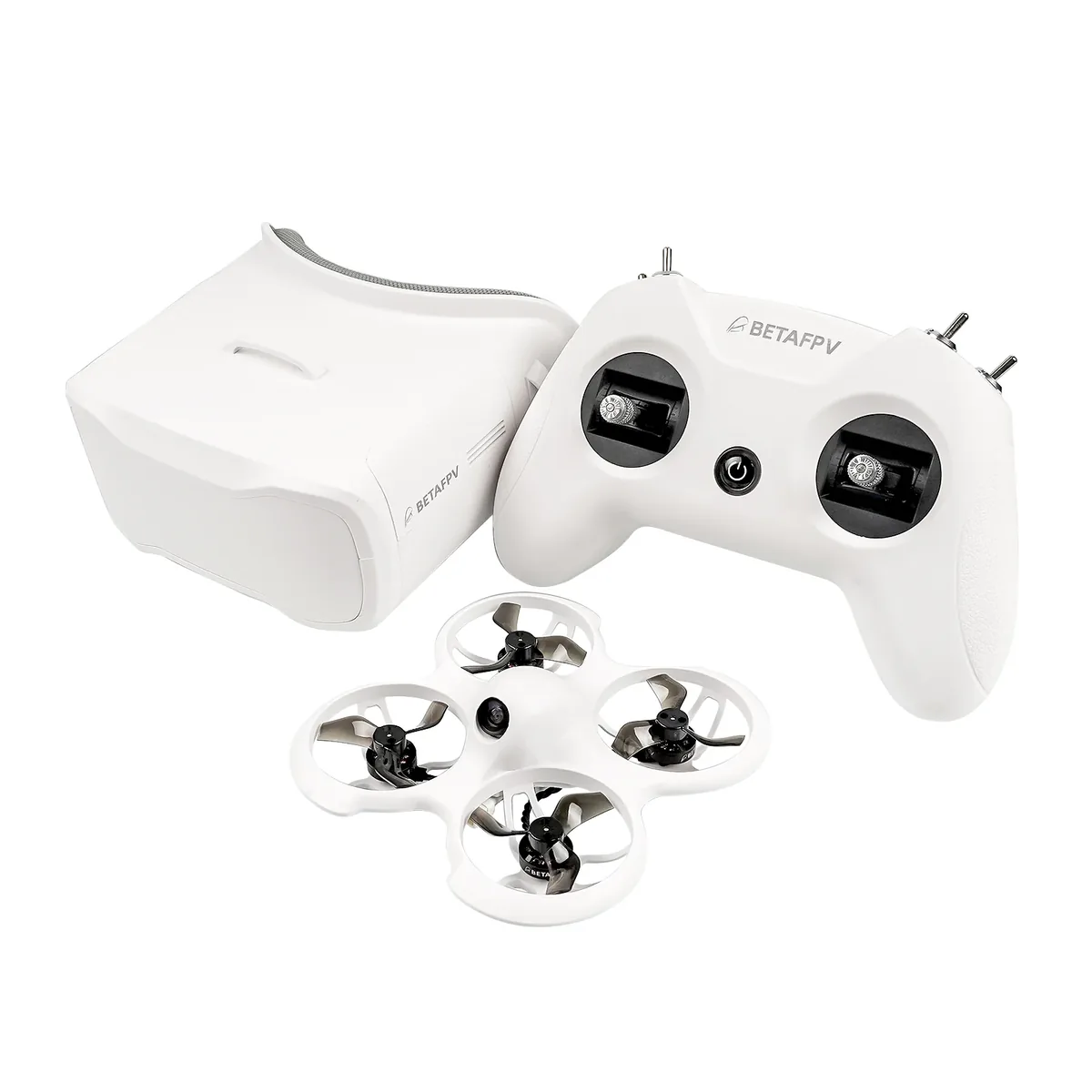
BetaFPV Cetus Pro FPV Kit
Brushless motors and 40 mm props are the entire difference from the standard Cetus, and they change what the aircraft can teach you. Brushed motors have a ceiling of authority that makes real stick control impossible to practise; brushless ones respond hard enough that manual mode starts behaving like a full-size quad, which is the point of learning on a whoop at all. It keeps the ducted frame, the turtle mode, the three flight modes and the same radio-and-goggles-in-the-box completeness. The trade-offs are unchanged: 4 to 5 minutes per pack, 80 metres of analog range, and goggles with no DVR so nothing gets recorded. Most people who stick with FPV either start here or wish they had.
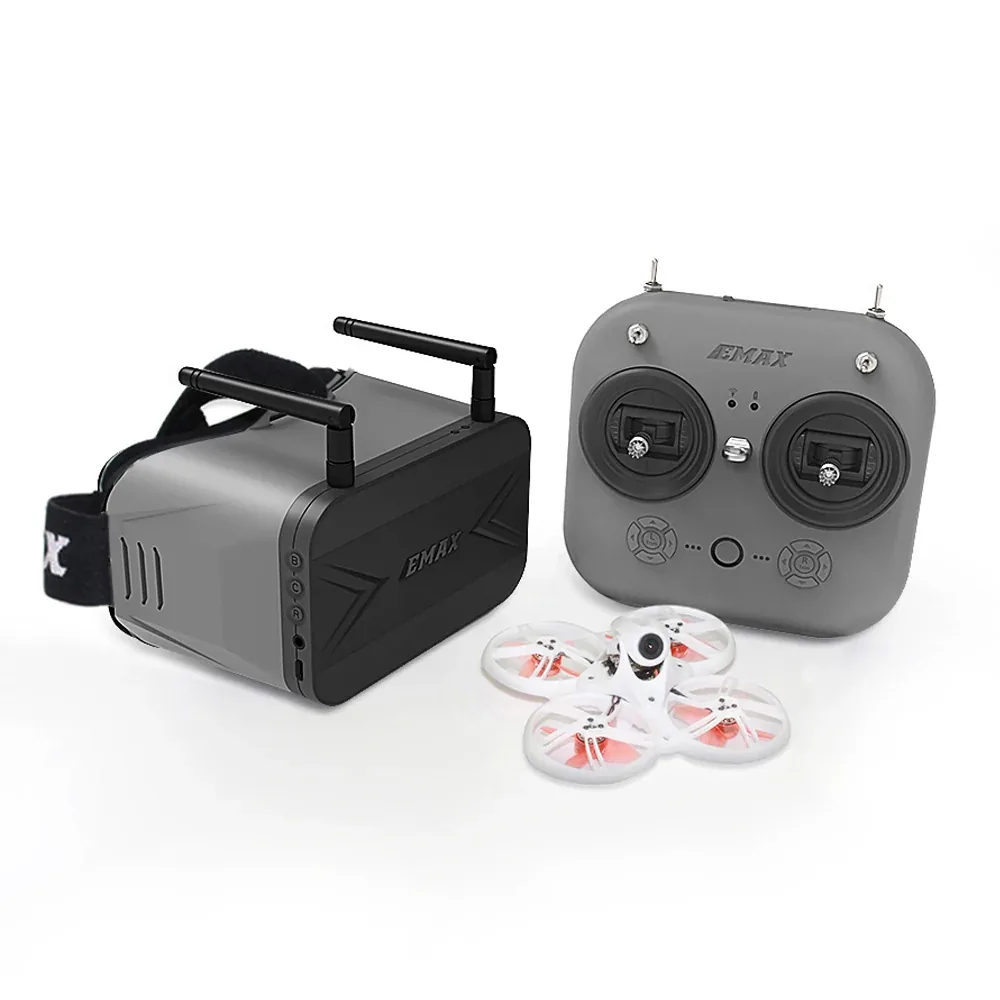
Full spec sheet →Emax Tinyhawk III RTF
Seventy-five millimetres between motors rather than the 65 of a true tiny whoop, which is the reason this kit outflies its price. The extra size gives it authority in a breeze that the smaller whoops simply do not have, and TH0802 II motors at 15,000KV plus a RunCam Nano 4 camera make it a serious indoor racer as well. The goggles are where the money went: Transporter 2 with a DVR and diversity receivers, meaning two antennas instead of one and a noticeably more stable picture behind obstacles. That also explains a $359 kit price against $160 for a brushed starter. If you already know you want to keep flying FPV, the extra spend is the difference between equipment you replace in six months and equipment you keep.
Full spec sheet →