6 drones tracked
Holy Stone
- Price range
- ~$170–~$400
- Under 250 g
- 3 of 6
- Biggest sensor
- 28.1 mm²Holy Stone HS900 Sirius
- Longest claim
- 40 minHoly Stone HS600D
US availability across this range: sold. Each drone’s page carries a dated note explaining its own position.
Holy Stone
Holy Stone HS900 Sirius
Holy Stone spent years making competent toys and then built this, which is the first of their aircraft that invites comparison with a Mini rather than with a hobby quadcopter. Three-axis brushless gimbal, a 48MP 1/2.3-inch Sony sensor, 6 km of transmission, subject tracking, built-in Remote ID and 249 grams on the nose. Reviewers have been noticeably warmer about it than about anything else in the brand's catalog. The gaps are still real: no obstacle sensing in any direction, a fixed-focus f/2.6 lens, and a measured 22 minutes against a 30-minute claim. At roughly half a Mini 4 Pro's price with a real gimbal and real Remote ID, though, it is the most credible budget alternative here.
- Sensor
- 28.1 mm²
- Claimed
- 30 min
- Bundle
- ~$420
Best for: The best-equipped sub-$400 camera drone
Full spec sheetHoly Stone
Holy Stone HS720G
A two-axis motorised gimbal plus electronic stabilisation, brushless motors, GPS return-to-home and built-in Remote ID — for a drone that has been on shelves since 2022, the feature list holds up better than the numbers behind it. Range is the giveaway: the controller is rated at roughly a kilometre, a fraction of what the newer sub-250 gram models claim, and there is no obstacle sensing. At 380 grams it also crosses the registration line, which means $5 to the FAA, a TRUST certificate and Remote ID that this aircraft at least provides itself. Two batteries come in the box, which is where the "52 minute" figure on the packaging comes from; a single flight is 26.
- Sensor
- 28.1 mm²
- Claimed
- 26 min
- Base kit
- ~$300
Best for: A first drone where two batteries matter more than range
Full spec sheet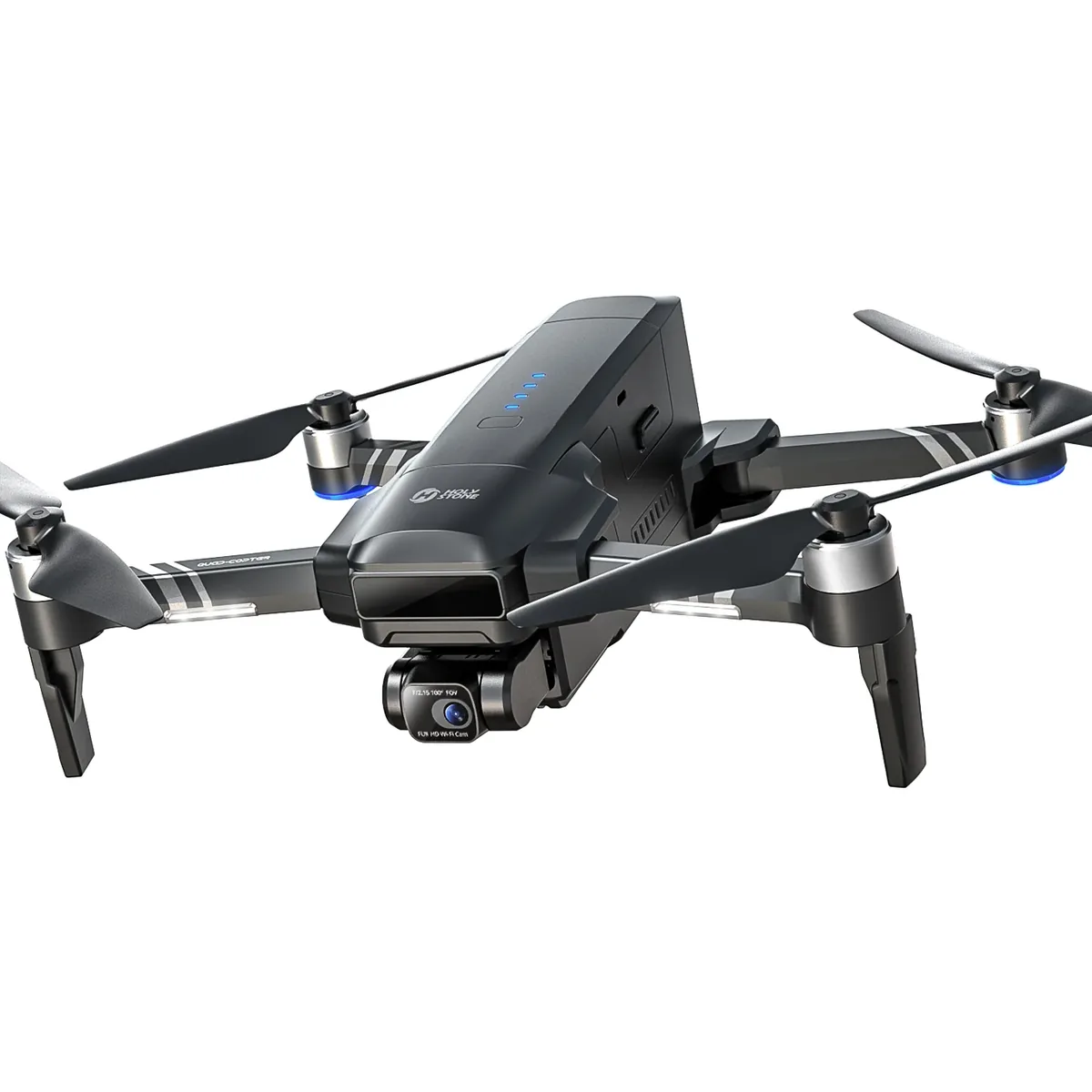
Holy Stone
Holy Stone HS600
Sitting a step below the sub-250-gram HS900 in Holy Stone's range and a step above it in weight, this is the brand's answer for people who want reach rather than a registration exemption. Two-axis gimbal plus electronic stabilisation on the roll axis, a 48MP 1/2.3-inch sensor, integrated Remote ID, Level 6 wind resistance and roughly 6 km of transmission. Two batteries come in the box, which is the source of the 56-minute figure in the listings — a single flight is about 28. At 541 grams the registration, TRUST certificate and Remote ID obligations all apply, and the aircraft at least handles the last of those itself. There is no obstacle sensing, which at this weight and speed is the specification most worth noticing.
- Sensor
- 28.1 mm²
- Claimed
- 28 min
- Base kit
- ~$370
Best for: Range and wind resistance under $400
Full spec sheet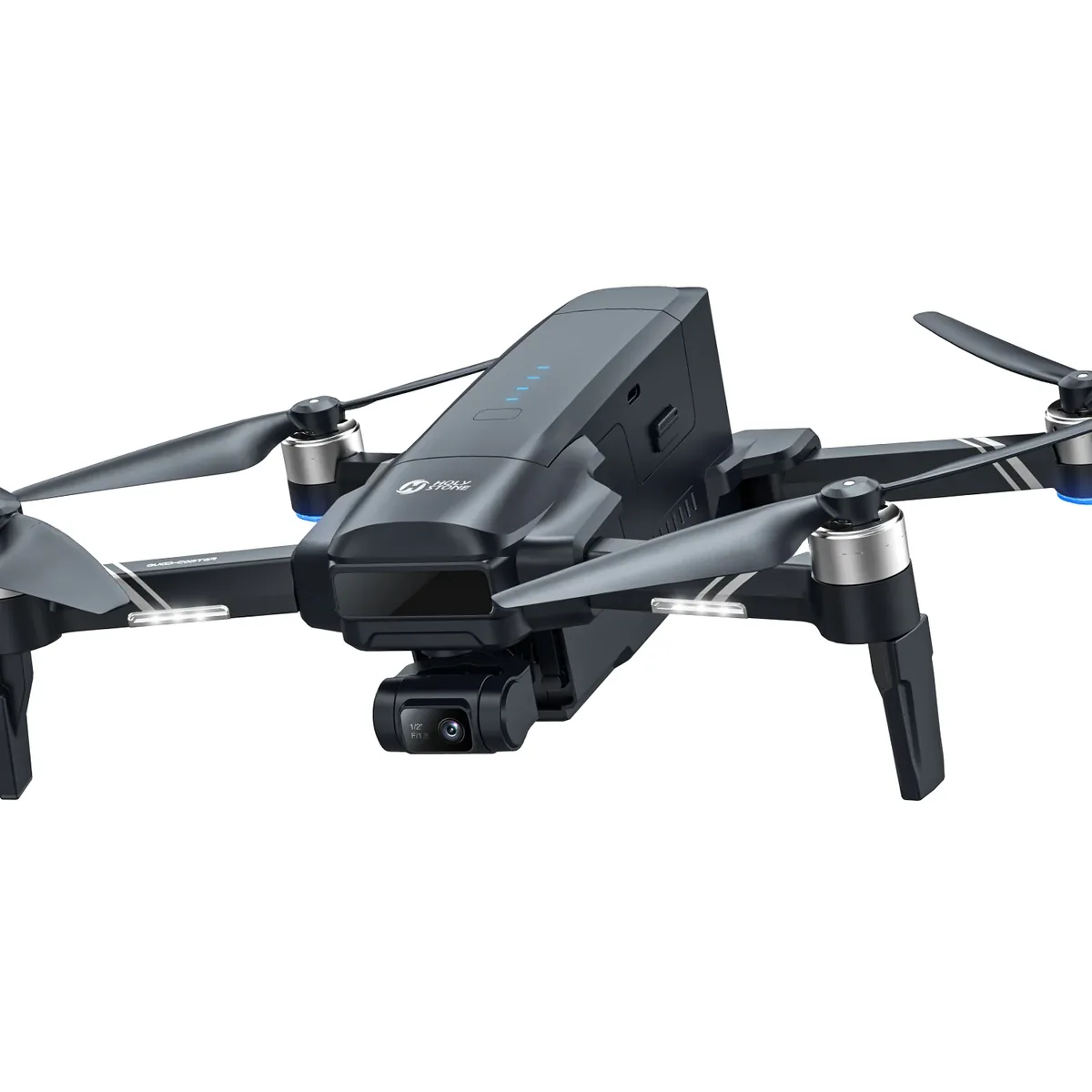
Holy Stone
Holy Stone HS600D
Holy Stone's most ambitious aircraft: a genuine three-axis gimbal, 48MP stills, integrated Remote ID, Level 6 wind resistance and roughly 6 km of transmission, for around $400. Reviewers have called it a clear improvement on everything the brand made before it and still short of the Mini it is priced against. The number to look at hardest is endurance. The box says 40 minutes per battery and 80 across the two included packs; independent reviewers measured 20 to 25 minutes per charge, which is the largest documented gap between a claim and a measurement anywhere in this catalog. Everything else behaves as advertised. At 603 grams you are registering it, taking TRUST and relying on its own Remote ID broadcast. It also arrives with two batteries, a carrying case and a screened controller in the box, which at this price is unusual and is part of why it compares well on paper with drones that charge separately for all three.
- Sensor
- 28.1 mm²
- Claimed
- 40 min
- Base kit
- ~$400
Best for: A three-axis gimbal at budget-brand pricing
Full spec sheet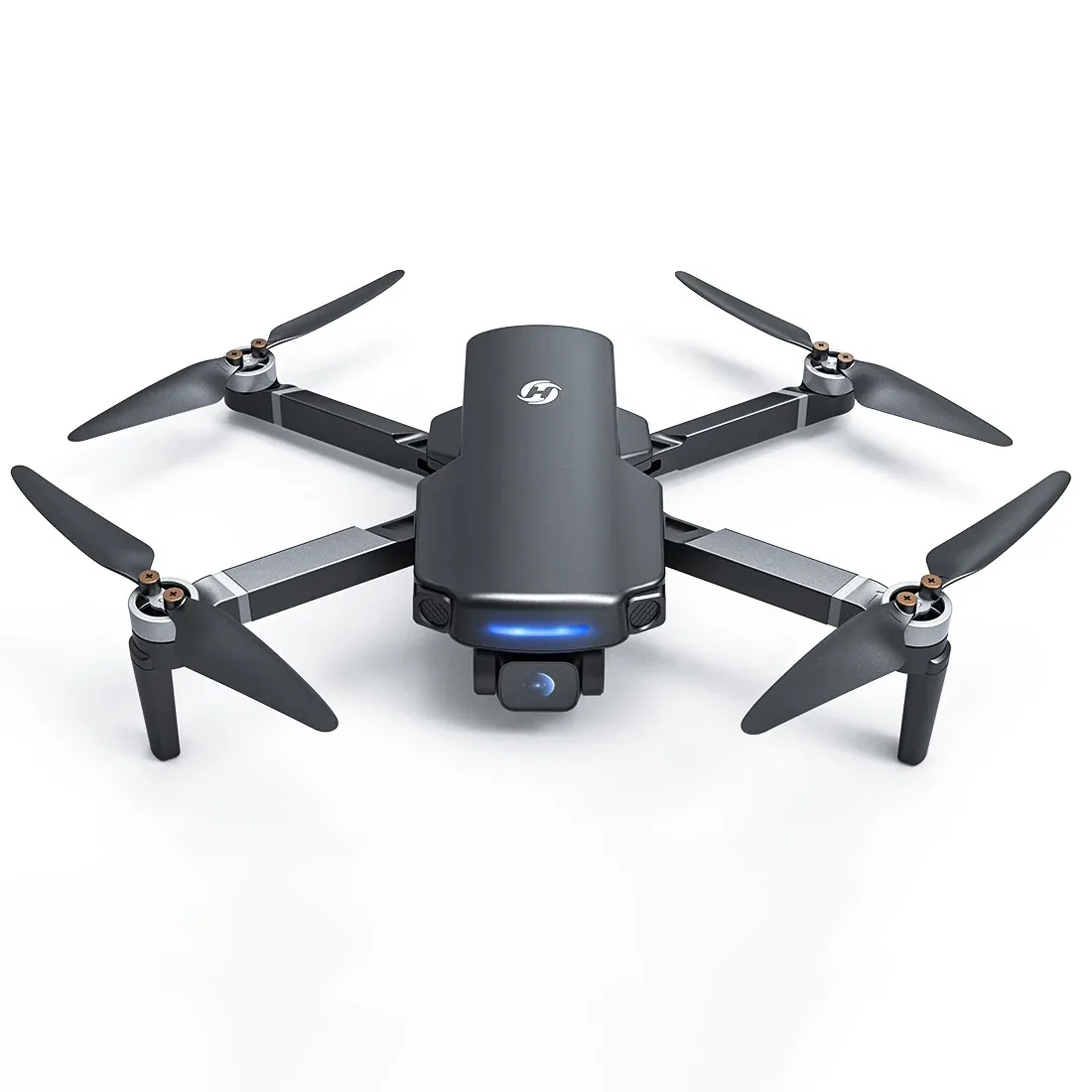
Holy Stone
Holy Stone HS360S
Two hundred dollars, GPS, optical-flow hold for indoor flying, a modular battery and 249 grams on the scale. Read the camera spec twice, though: the 1/3-inch GalaxyCore sensor records 4K at 20 frames per second, which is below the 24fps floor most people consider watchable and well below the 30fps everything else here manages. Stills at 4K resolution are fine. There is no gimbal and no obstacle sensing, and return-to-home fires automatically on low battery or lost link, which is the feature that keeps a first drone out of a tree line. As an aircraft to learn on in an open field before spending real money, it does the job; as a camera, it is the weakest in this catalog.
- Sensor
- 17.3 mm²
- Claimed
- 20 min
- Bundle
- ~$239
Best for: Learning to fly before spending real money
Full spec sheet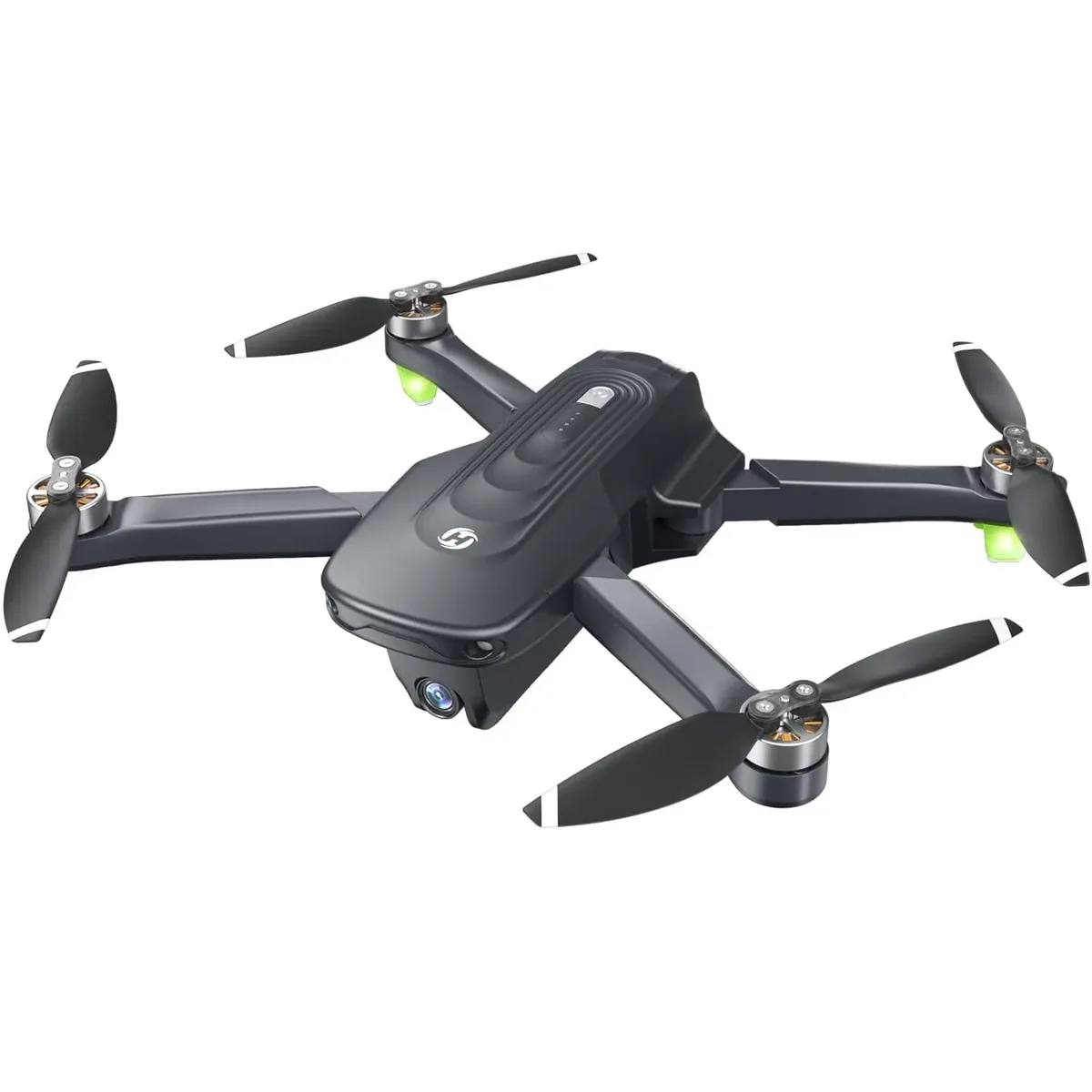
Holy Stone
Holy Stone HS175D
Worth including mainly as a warning about how the word "4K" gets used at the bottom of this market. Holy Stone's listings put 4K on the box, and the aircraft will indeed produce a 4096x3072 still image — but video tops out at 2,688 by 1,512 at 25 frames per second, which is 2.7K, not 4K, and below 30fps. Everything else is what $170 buys in 2026: brushless motors, GPS hold, return-to-home, a 90-degree manually adjustable lens with no gimbal at all, and about a kilometre of range. Two batteries come in the box, which is where the advertised 46 minutes comes from. At 215 grams it stays under the registration line, and as a genuinely cheap way to learn stick control outdoors, it still works.
- Sensor
- 17.3 mm²
- Claimed
- 23 min
- Base kit
- ~$170
Best for: The cheapest way to learn stick control outdoors
Full spec sheet