15 drones tracked
DJI
- Price range
- ~$199–~$2,499
- Under 250 g
- 8 of 15
- Biggest sensor
- 224.9 mm²DJI Mavic 3 Classic
- Longest claim
- 51 minDJI Mavic 4 Pro
US availability across this range: limited, grey market, sold. Each drone’s page carries a dated note explaining its own position.
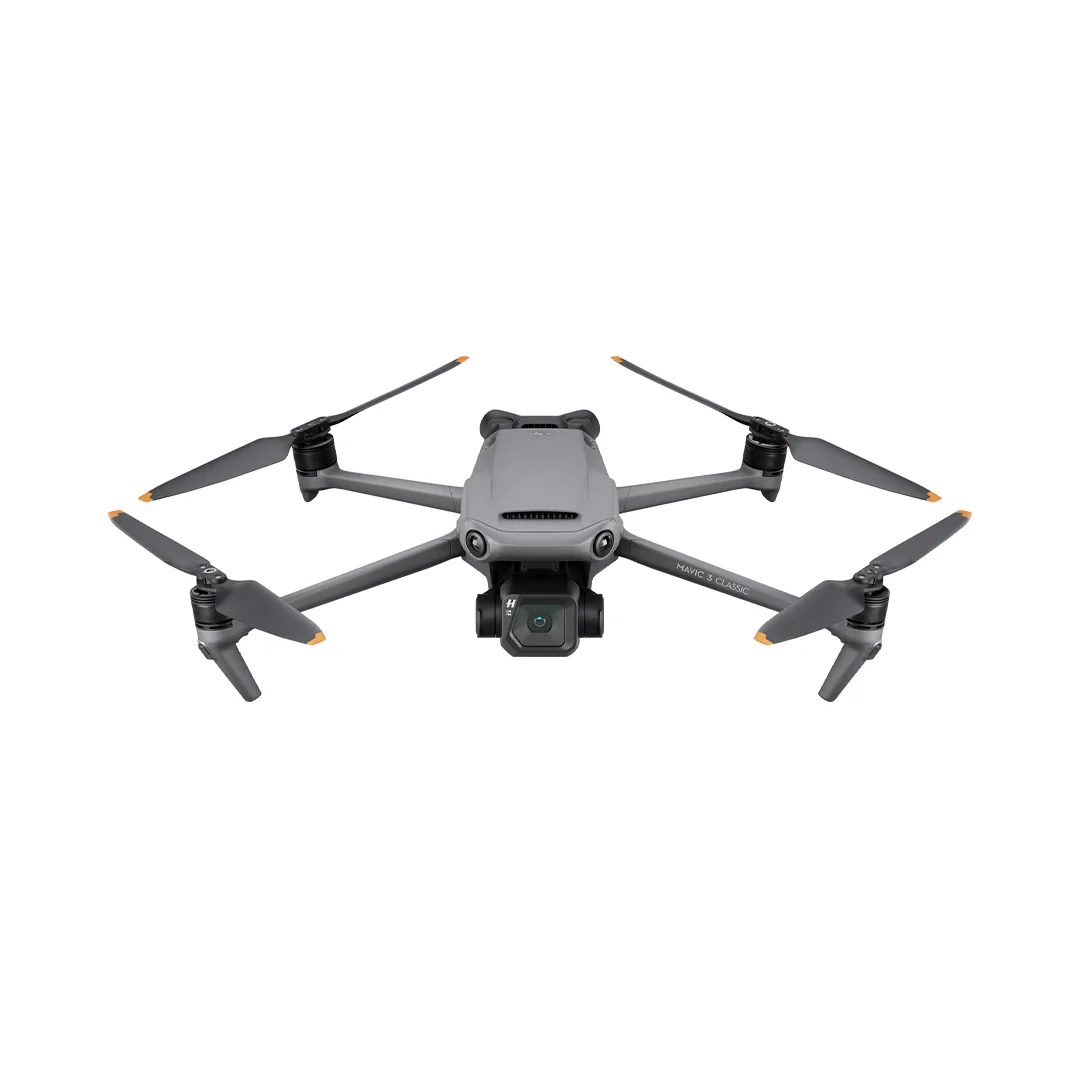
Strip the tele camera off a Mavic 3 and you get the cheapest route to a Four Thirds sensor in the air. Twenty megapixels on 225 mm² — nearly twice the area of a one-inch chip and eight times a 1/2.3-inch one — with a mechanical f/2.8 to f/11 aperture, 10-bit D-Log at 200 Mbps, and 5.1K/50 or 4K/120 recording. That aperture matters more than the resolution: it is the only way in this catalog to cut light without screwing filters onto the front. Omnidirectional sensing, a 77 Wh pack and a 6,000 m ceiling make it a serious tool rather than a hobby aircraft, and at 895 grams it is firmly in registration-and-Remote-ID territory. O3+ transmission is a generation behind the O4 in the Air line, which is the main thing four years have cost it.
- Sensor
- 224.9 mm²
- Claimed
- 46 min
- Bundle
- ~$1,749
Best for: Four Thirds image quality at the lowest price
Full spec sheet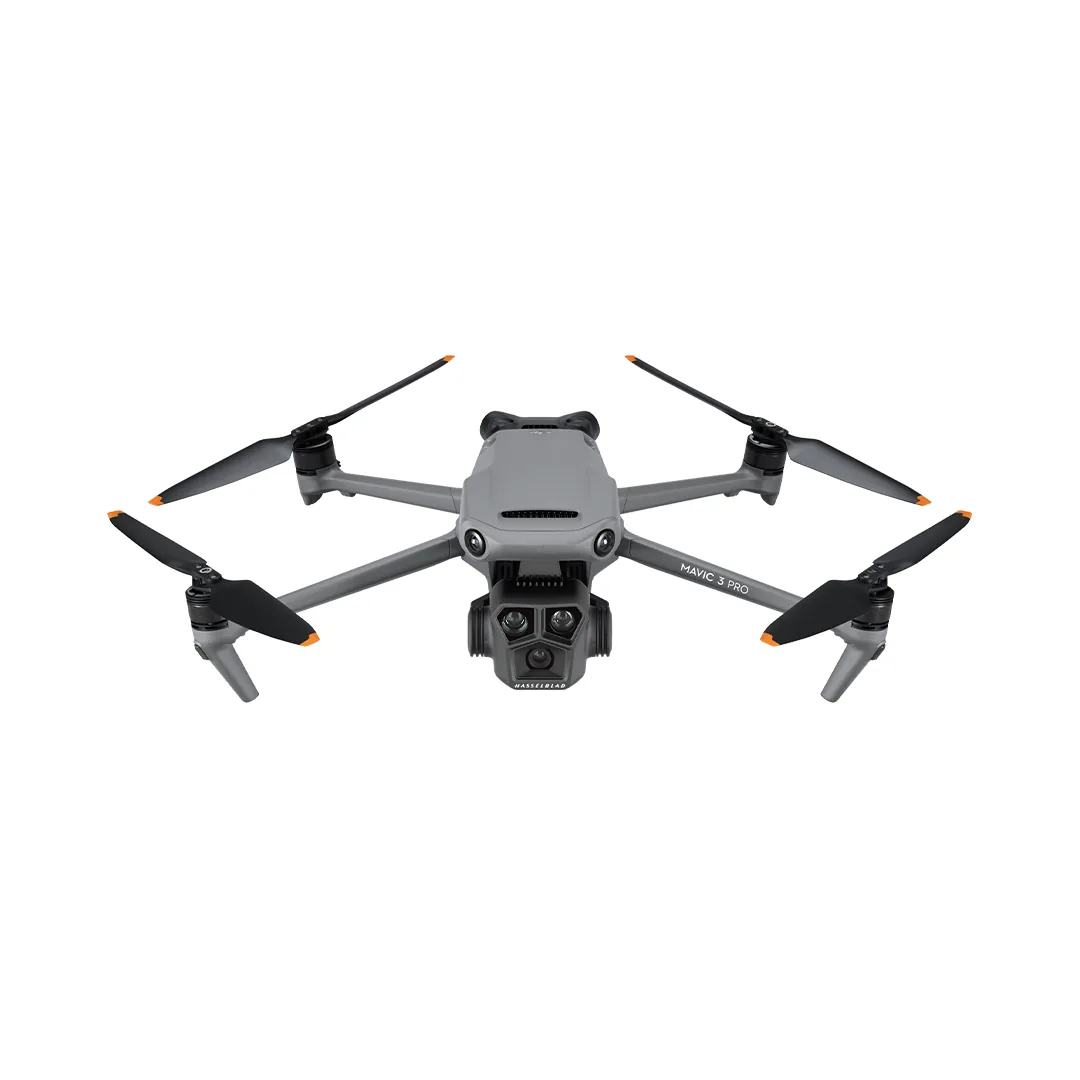
Three focal lengths on one gimbal, all recording 10-bit at 200 Mbps, is a thing no other consumer aircraft does. The 24mm Hasselblad uses the same Four Thirds sensor as the Mavic 3 Classic; a 70mm medium tele on a 1/1.3-inch 48MP chip covers the everyday reach; and a 166mm tele on a 1/2-inch 12MP sensor gets genuinely compressed shots that a digital crop never will. In practice the two longer lenses are what change how you shoot — you stop repositioning the aircraft and start choosing a lens. That third camera is also the weak link, since a 1/2-inch sensor at 166mm wants good light. At $2,199 before a bundle, plus $299 a year for crash cover, this is where a camera drone stops being a purchase and starts being equipment.
- Sensor
- 224.9 mm²
- Claimed
- 43 min
- Bundle
- ~$2,999
Best for: Choosing a lens instead of moving the aircraft
Full spec sheet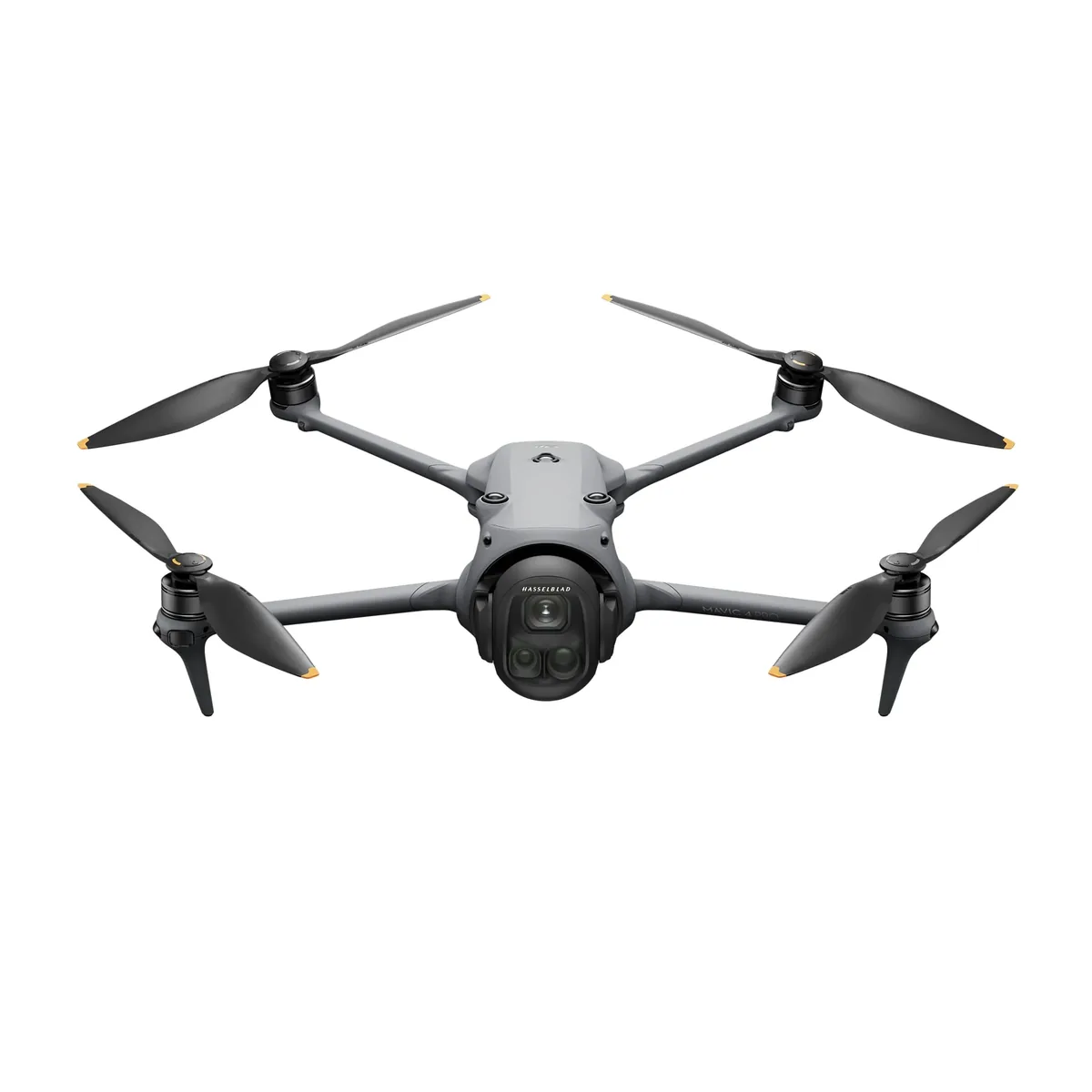
Everything DJI knows how to build, sold everywhere except here. A 100MP Four Thirds wide camera shooting 6K/60, a 70mm 48MP medium tele and a 168mm 50MP tele, all on an Infinity gimbal that rotates a full 360 degrees so vertical framing and continuous rolls stop being compromises. Six low-light fisheye sensors and a forward LiDAR handle obstacles down to 0.1 lux. O4+ carries a 10-bit feed to 30 km in FCC regions and the 95 Wh pack is quoted at 51 minutes, though a reviewer flying it in moderate wind landed closer to 35. The reason it is in this catalog with a warning rather than a recommendation is the US position: DJI said at launch it would not ship here, so anything you find domestically arrived by another route and almost certainly carries no US warranty. For anyone weighing an import against an Air 3S bought normally, the practical questions are service and resale: a domestic warranty claim on this aircraft has nowhere to go, and a buyer three years from now will ask the same question you are asking today.
- Sensor
- 224.9 mm²
- Claimed
- 51 min
- Base kit
- ~$2,499
Best for: Maximum image quality, if you accept the import risk
Full spec sheet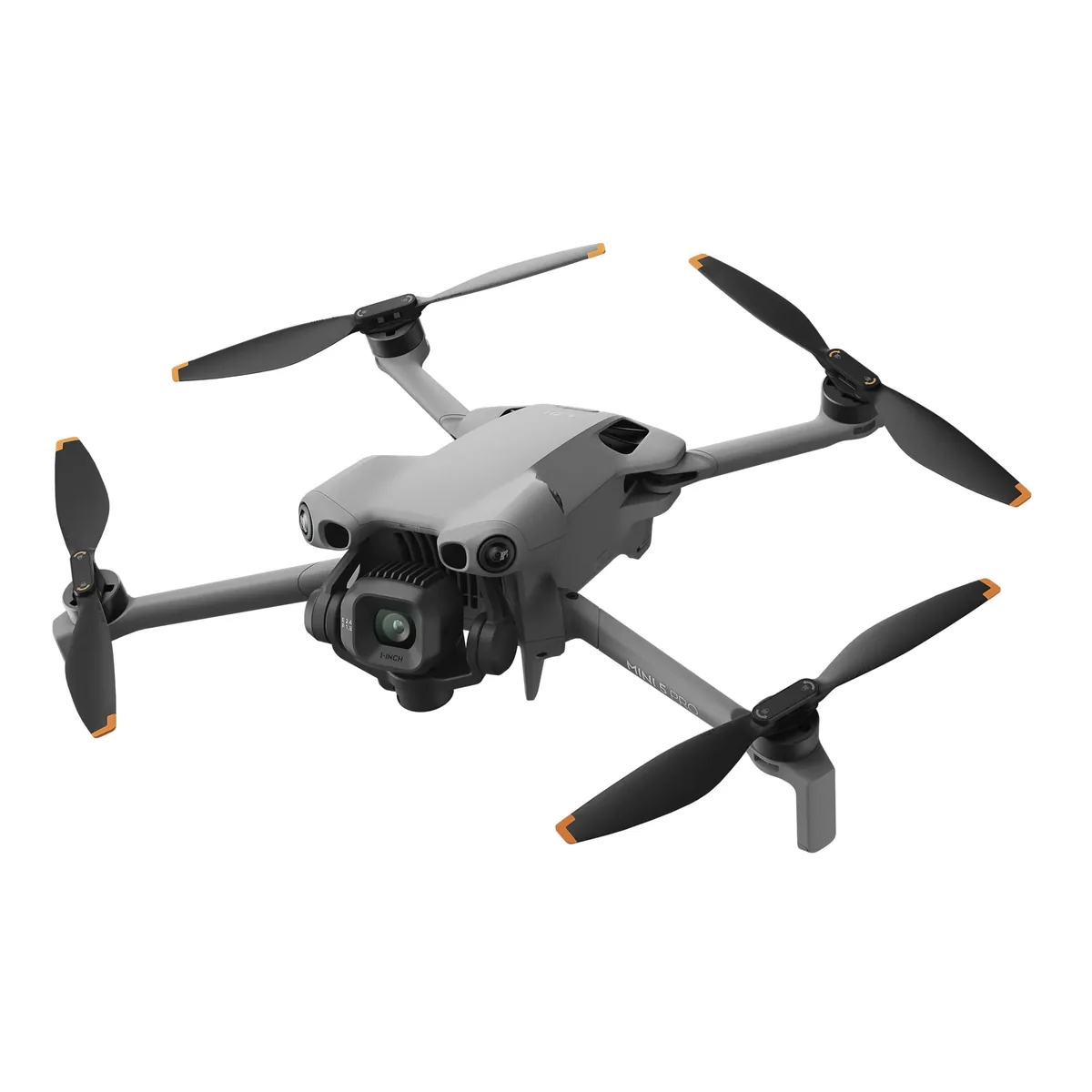
A one-inch sensor under 250 grams was supposed to be impossible, and this is the drone that did it. Fifty megapixels on a 116 mm² sensor at f/1.8 is roughly two-thirds more light-gathering area than the Mini 4 Pro's 1/1.3-inch chip, which shows up exactly where you would expect: dusk, interiors of shadow, and anything where the smaller Minis start smearing. It adds forward LiDAR to the omnidirectional vision system, so it sees in the dark rather than just in daylight, and the gimbal swings through 225 degrees for true vertical framing. The complication is where you buy it. DJI never put it in its own US store, and the units on US shelves arrived through import channels, which changes what happens when you crash it.
- Sensor
- 116.2 mm²
- Claimed
- 36 min
- Bundle
- ~$1,043
Best for: Low light and vertical video without registering
Full spec sheet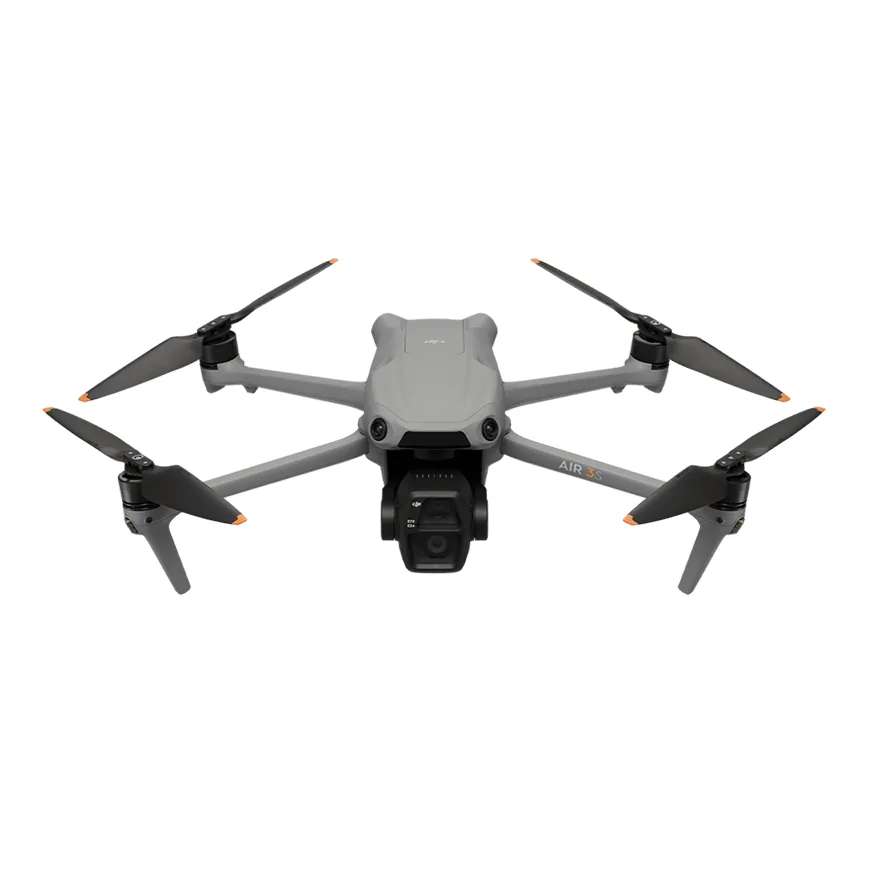
DJI
DJI Air 3S
Where the Air 3 gave you two matched 1/1.3-inch cameras, the Air 3S puts a one-inch 50MP sensor on the wide and keeps a 1/1.3-inch 48MP for the 70mm tele. That is the upgrade almost everyone wanted, and it comes with forward LiDAR bolted onto the omnidirectional vision system, which is the first time DJI's sensing has genuinely worked after dusk. Forty-two gigabytes of internal storage, a 6,000 m ceiling and 12 m/s wind resistance round it out. It sits in a strange spot in 2026: it is the best all-round camera drone DJI has FCC clearance to sell in the US, and the Mavic 4 Pro that beats it never officially arrived here. If you want one aircraft that handles wind, low light and long flights without a caveat, this is the shortest answer in the catalog.
- Sensor
- 116.2 mm²
- Claimed
- 45 min
- Bundle
- ~$1,399
Best for: One aircraft for wind, low light and long flights
Full spec sheet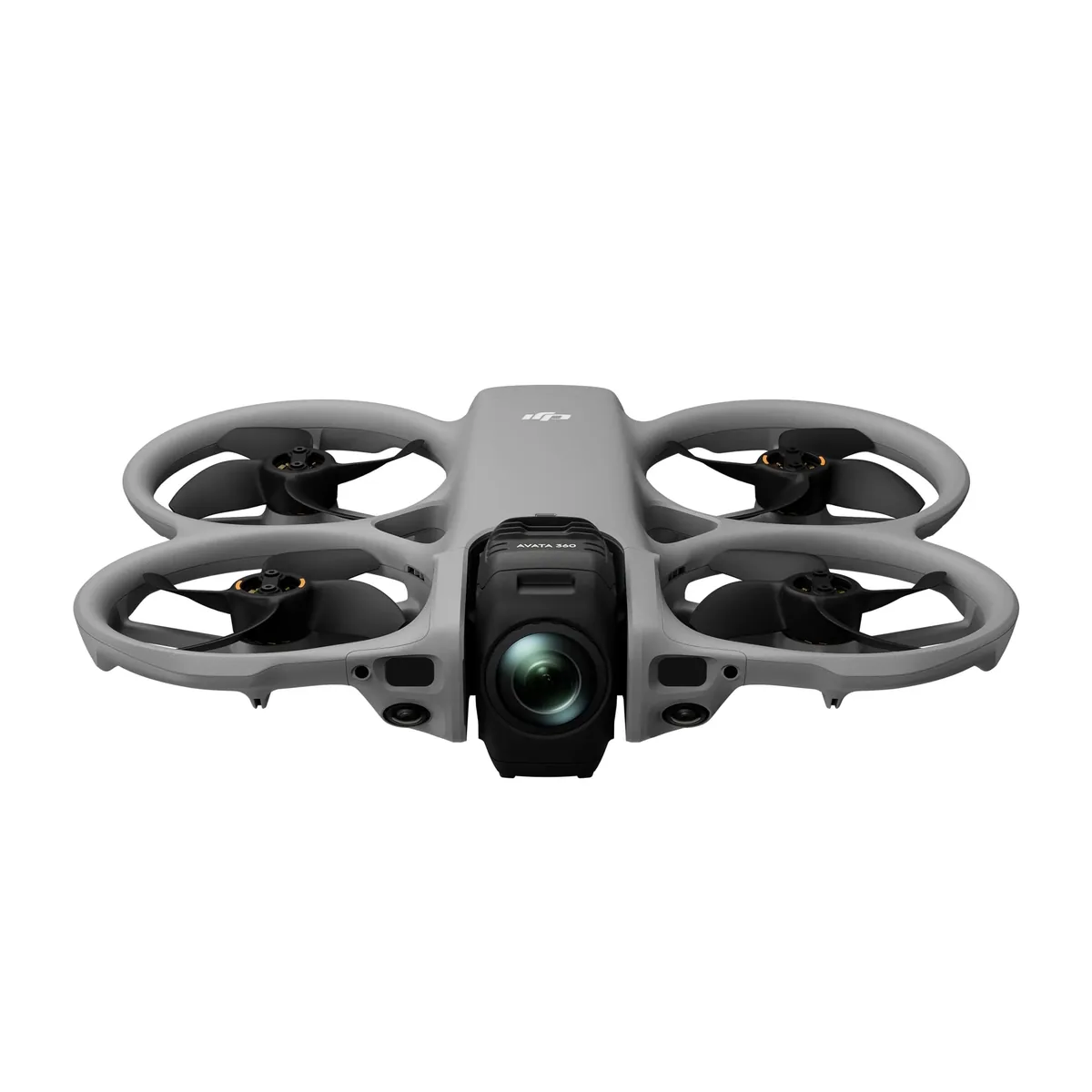
DJI's answer to the 360 drone, and the direct rival to the Antigravity A1. Dual one-inch-equivalent lenses capture 8K/60 HDR in full 360 or 4K/60 through a single lens, with 120MP stills and 42 GB of internal storage — roughly half an hour of 8K spherical footage before you need to offload. Integrated prop guards and a replaceable front lens element acknowledge what actually happens to 360 drones. Omnidirectional sensing with nightscape support and O4+ transmission to 20 km put it comfortably ahead of the Avata 2 on everything except price. At 455 grams it needs registration and Remote ID, which it broadcasts itself, and unlike most of DJI's current line it genuinely arrived in the US.
- Sensor
- 116.2 mm²
- Claimed
- 23 min
- Bundle
- ~$979
Best for: 360 capture from a maker that still ships to the US
Full spec sheet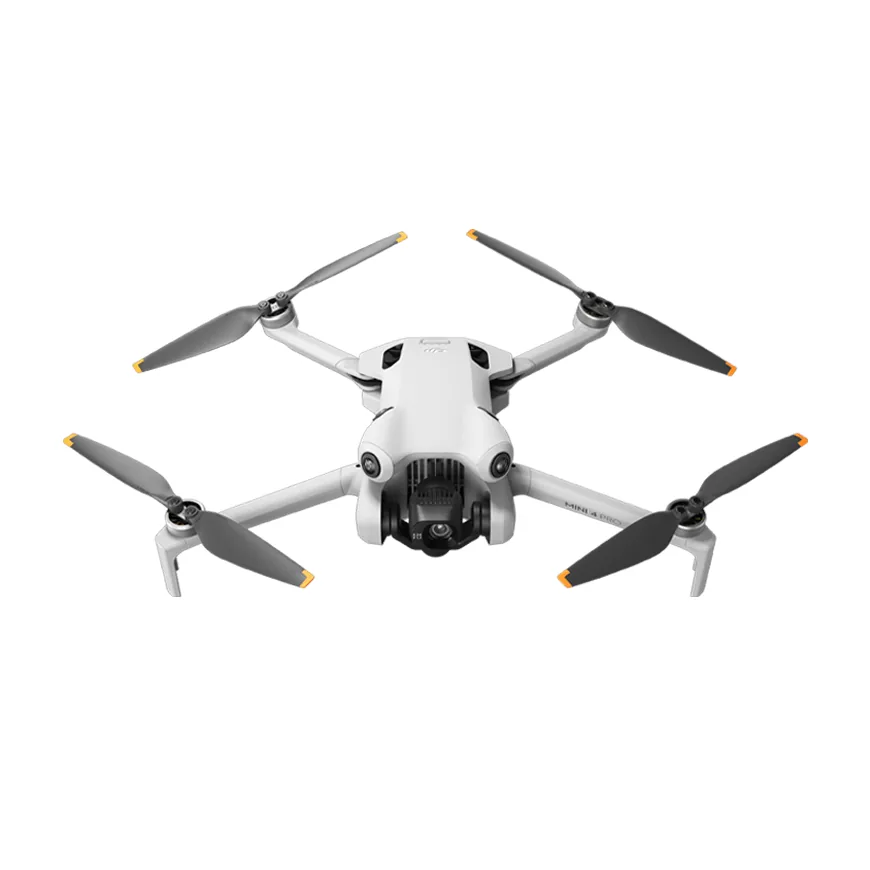
Omnidirectional sensing on a 249-gram airframe is the trick nothing else in this catalog fully matches. Binocular vision on all sides plus a downward 3D infrared sensor means the Mini 4 Pro will stop for a branch it is backing into, which matters far more than it sounds once you fly near trees. The 1/1.3-inch 48MP sensor records 4K/60 HDR and 4K/100 slow motion at 150 Mbps in 10-bit D-Log M, so the footage grades rather than just plays. O4 transmission is rated to 20 km in FCC regions, which is far beyond any legal line-of-sight flight but does mean a clean 1080p feed at the distances people actually fly. The caveat is the one everyone trips on: the 45-minute battery is a separate, heavier pack that takes the aircraft over the registration threshold, so the honest number for a registration-free flight is 34 minutes.
- Sensor
- 69.1 mm²
- Claimed
- 34 min
- Bundle
- ~$1,099
Best for: Flying near trees and buildings without registering
Full spec sheet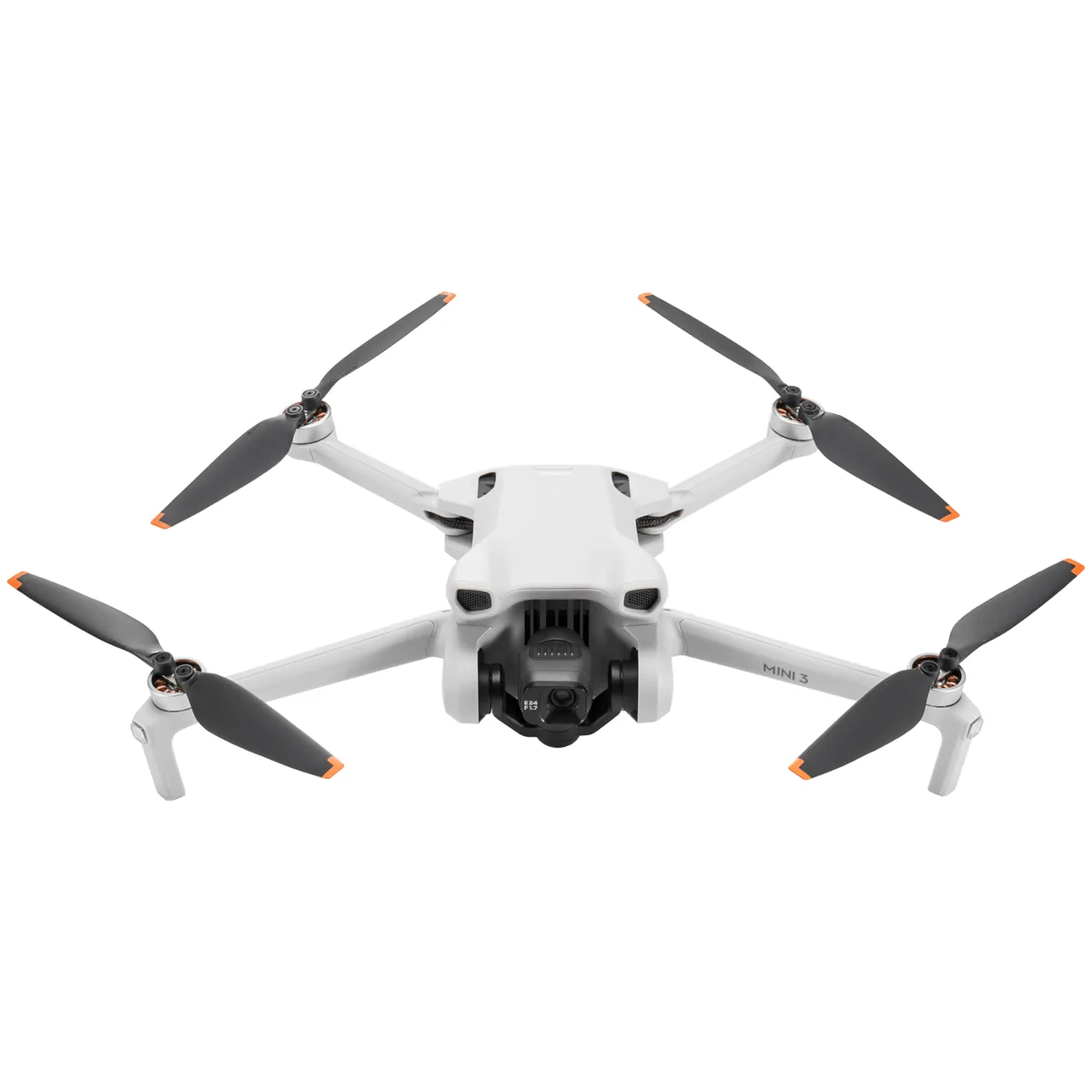
DJI
DJI Mini 3
Everything the Mini 4 Pro has except the sensing and the frame rates, for a good deal less money. Mini 3 carries the same 1/1.3-inch 48MP sensor, the same three-axis gimbal and the same true vertical shooting, then stops at 4K/30 in 8-bit with no log profile and no obstacle detection beyond the downward vision system. Its 38-minute headline is the most quotable example of why this site records flight conditions: DJI measures it hovering in a windless lab, in photo mode, running the battery from full to empty. Fly it forward with the camera rolling and land with a reserve and you are in the mid-twenties. As a daylight stills and simple-video aircraft that never needs registering, it still holds up; as a drone to fly through anything, it does not. There is one more consideration for anyone comparing it against a Mini 4K at a similar price: the Mini 3 has been out long enough that the accessory market is deep and second-hand batteries are plentiful, while the newer aircraft is still building that.
- Sensor
- 69.1 mm²
- Claimed
- 38 min
- Bundle
- ~$598
Best for: Daylight stills and simple video with no registration
Full spec sheet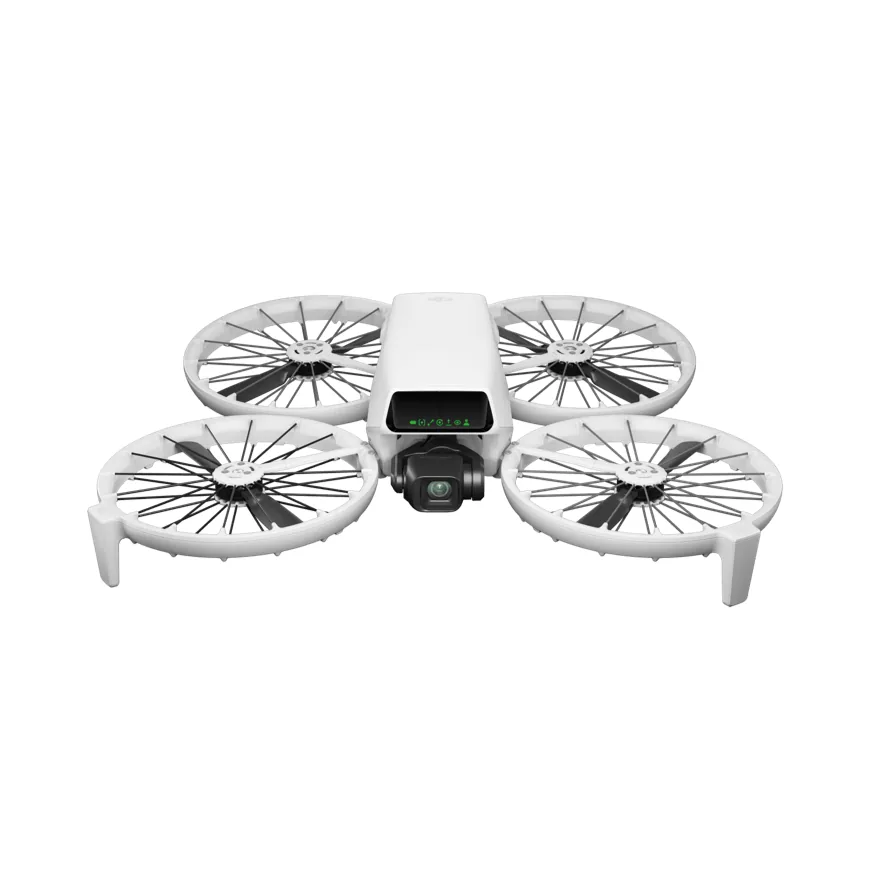
DJI
DJI Flip
Full-coverage propeller guards that fold flat is the idea, and it is a better one than the spec sheet suggests. Unfolded, the Flip's four cages sit around the props like a Neo's but carry a proper 1/1.3-inch 48MP camera on a three-axis gimbal behind them; folded, the whole thing collapses to something close to a Mini's footprint. It will take off from a palm and fly a preset without a controller at all, and it will also fly properly on an RC-N3 with 10-bit D-Log M and O4 transmission. Forward 3D infrared sensing covers the direction you are most likely to hit something and nothing else, which is an honest middle ground between the Neo's nothing and the Mini 4 Pro's everything. The bundle pricing is the awkward part — the screened-controller combo costs nearly twice the base kit.
- Sensor
- 69.1 mm²
- Claimed
- 31 min
- Bundle
- ~$779
Best for: Flying safely around people with a real camera
Full spec sheet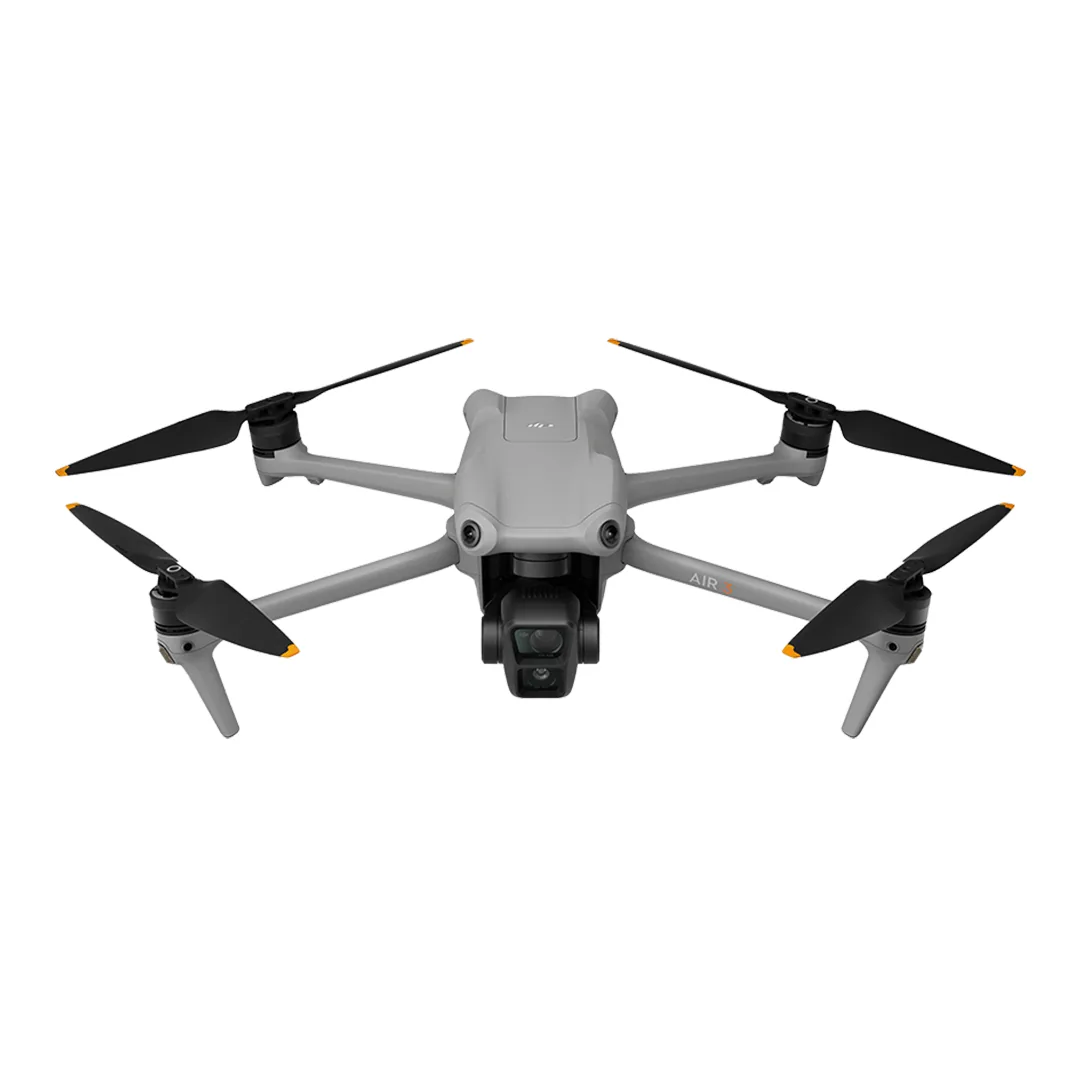
DJI
DJI Air 3
Two 1/1.3-inch cameras rather than one big one was the Air 3's bet, and for a lot of people it paid off. A 24mm wide and a 70mm medium telephoto share the same sensor size and the same 48 megapixels, so cutting between them does not produce the jarring quality drop that a small tele sensor causes. Both shoot 4K/60 HDR, 4K/100 slow motion and 10-bit D-Log M. Omnidirectional sensing, 46 claimed minutes on a 62.6 Wh pack and a 6,000 m ceiling make it the class workhorse it was meant to be. Read that 46 carefully, though: DJI quotes it with obstacle sensing switched off and the camera set to 1080p/24, which is not how anyone flies. The Air 3S replaced it with a one-inch wide camera and forward LiDAR, so the Air 3 is now the value pick in the line rather than the current one.
- Sensor
- 69.1 mm²
- Claimed
- 46 min
- Bundle
- ~$1,349
Best for: Long flights with two usable focal lengths
Full spec sheet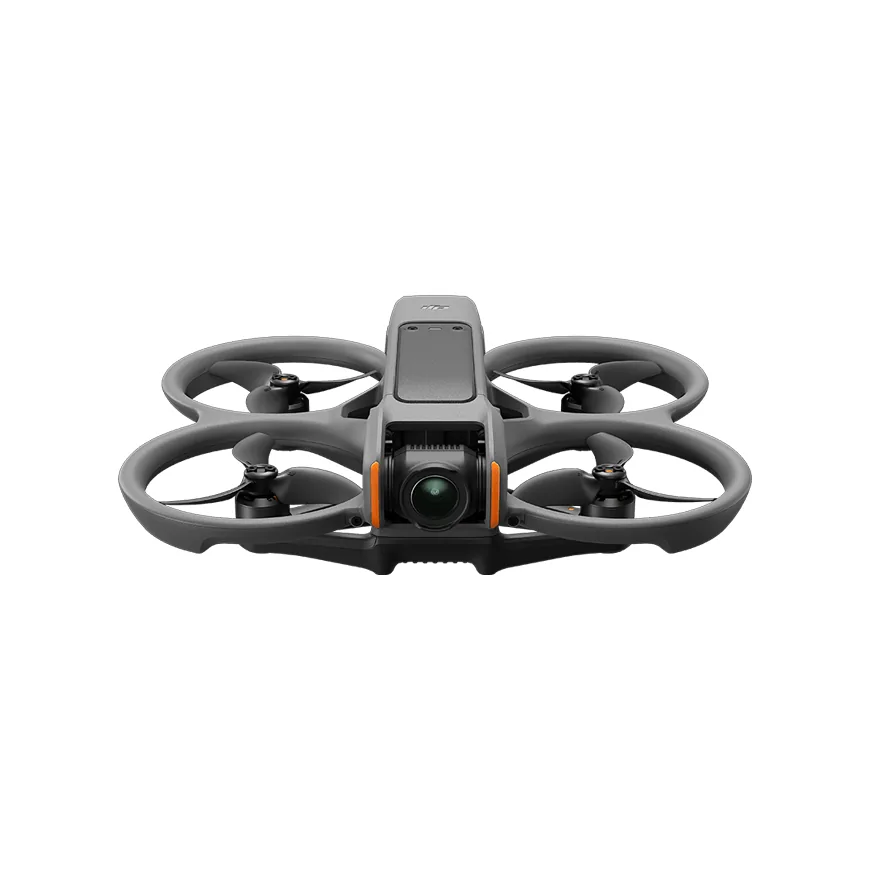
DJI
DJI Avata 2
Ducted props, goggles in the box, and a flight model that forgives you — this is how most people who fly FPV now start. The Avata 2 puts a 1/1.3-inch 12MP camera on a single-axis gimbal behind full prop ducts, records 4K/60 in 10-bit D-Log M to 46 GB of internal storage, and flies on DJI Goggles 3 with the FPV Remote Controller 3. Normal mode hovers and holds position like a camera drone; Sport and Manual progressively hand you the throttle until you are flying a real quad at 60 mph. The ducts mean a clipped branch usually means a bounce rather than a repair, which is the entire reason this is a better first FPV aircraft than a bare 5-inch freestyle build. The honest limits are endurance and sensing: 23 minutes is a cruise figure, and nothing watches forward. Two things the price tag hides in both directions: the goggles and controller are the expensive half of this system and are shared with the Avata 360 and the Neo, so the cost amortises if you add another aircraft; and a ducted airframe over water has no float and no second chance.
- Sensor
- 69.1 mm²
- Claimed
- 23 min
- Bundle
- ~$1,199
Best for: A first goggle-flown drone that survives mistakes
Full spec sheet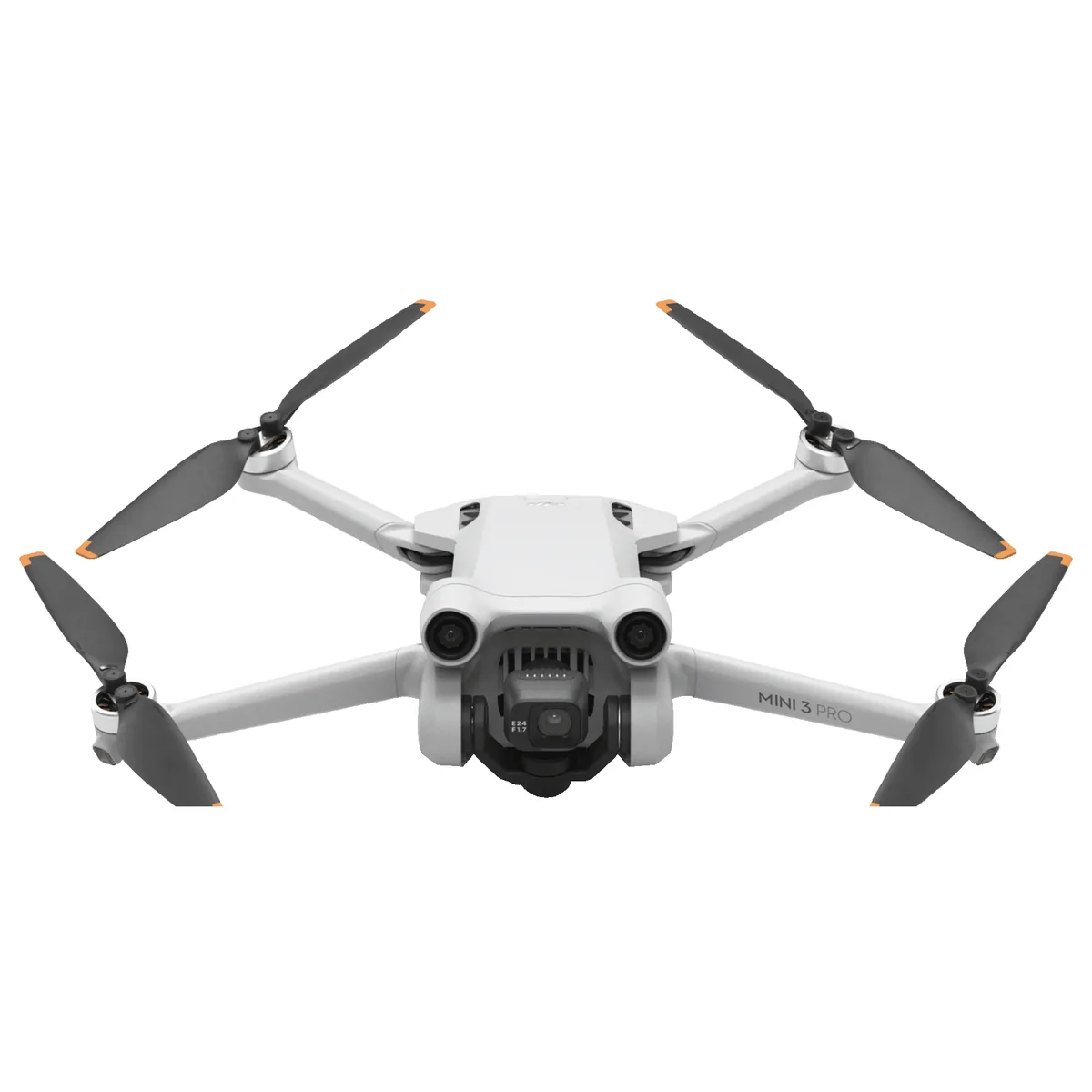
This was the aircraft that made obstacle sensing possible under 250 grams, and everything in the Mini line since has built on it. Forward, backward and downward sensors, a 1/1.3-inch 48MP sensor that rotates 90 degrees for true vertical shooting, 4K/60 HDR at 150 Mbps in 10-bit D-Cinelike, and a genuine 34 minutes on the standard pack. What the Mini 4 Pro added two years later was sensing on the remaining sides, O4 in place of O3, and 4K/100 slow motion. If you find one at a real discount the older aircraft still does most of the job, but DJI discontinued it in 2024, so you are shopping for the last of the stock and betting on battery availability a few years out.
- Sensor
- 69.1 mm²
- Claimed
- 34 min
- Base kit
- ~$759
Best for: Sensing under 250 g at a discount
Full spec sheet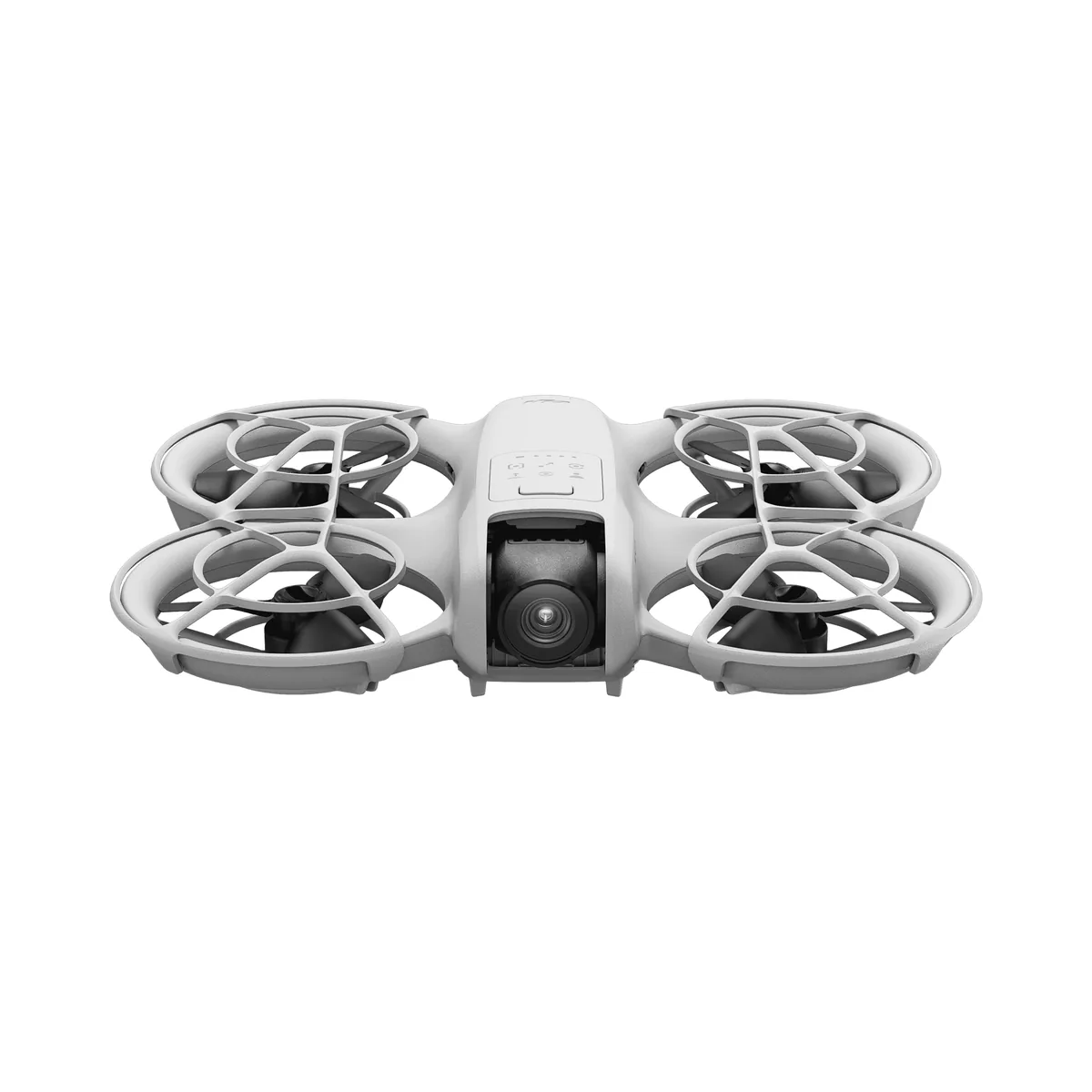
DJI
DJI Neo
At 135 grams with the propellers already caged, this is the drone you hand to someone who has never flown one. It launches off a palm, picks a preset move — orbit, follow, dronie — flies it, and lands back on the hand, with no controller and no app interaction required. A single-axis gimbal and electronic stabilisation keep 4K/30 usably steady, and 22 GB of internal storage means there is no card to forget. The trade is total: there is no obstacle sensing, the Wi-Fi link is good for about 50 metres without the optional controller, and the 18-minute claim is measured crawling forward at 2 m/s. Think of it as a hovering camera with eight fixed moves, not a camera drone you compose with.
- Sensor
- 30.7 mm²
- Claimed
- 18 min
- Bundle
- ~$289
Best for: Hands-free follow shots without piloting
Full spec sheet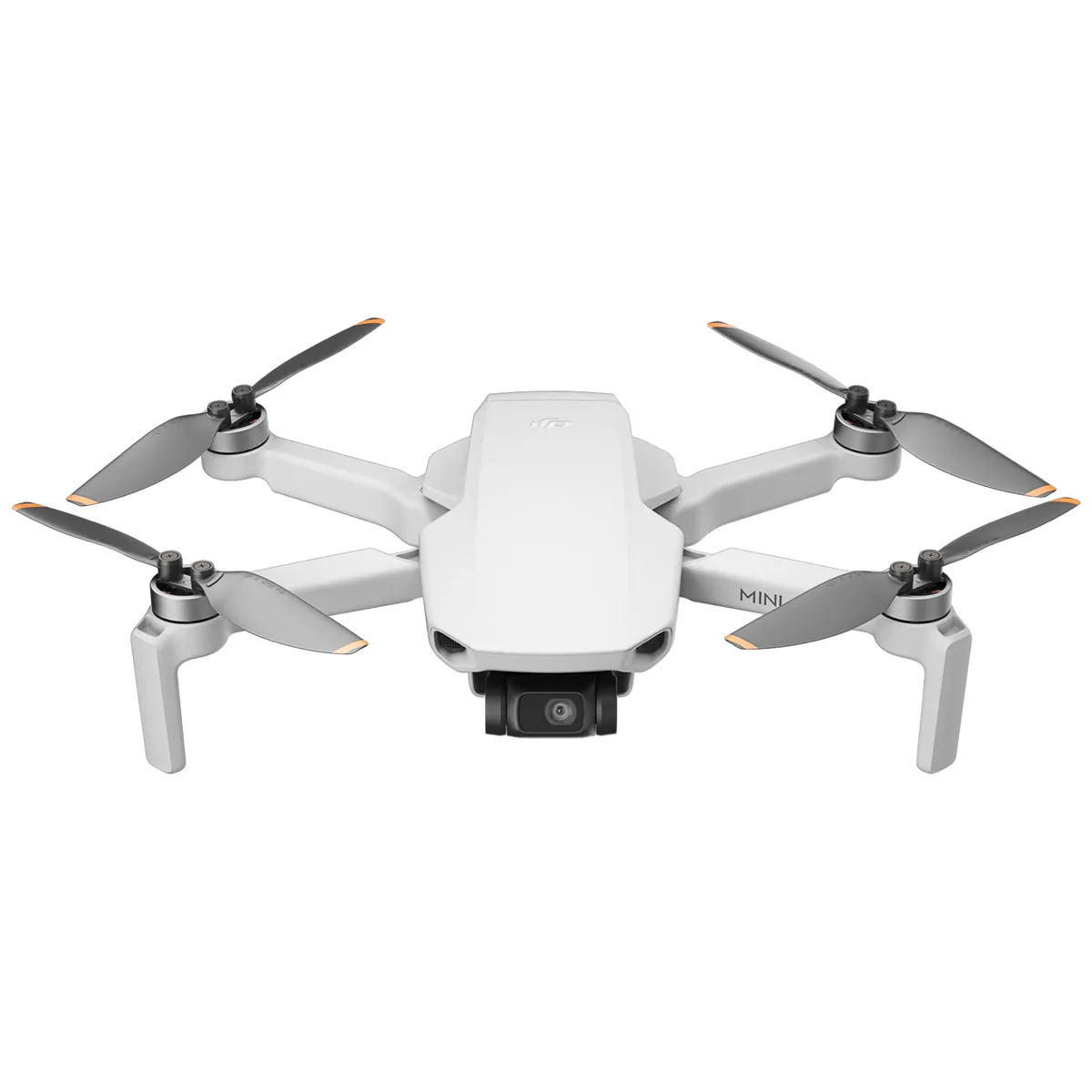
DJI
DJI Mini 4K
Three hundred dollars is the entire point here. Strip a Mini down to a 1/2.3-inch 12MP sensor, 8-bit 4K/30, and a downward vision system with nothing looking forward, keep the three-axis gimbal and the GPS return-to-home, and you get the cheapest genuinely stable aerial camera DJI sells. Nothing about the footage will impress anyone who has seen a 1/1.3-inch sensor at dusk, but in daylight it is sharp and level, which is more than any sub-$200 quadcopter manages. O2 transmission is rated to 10 km and holds a 720p feed rather than O4's 1080p. Treat the lack of obstacle sensing as the defining spec: this aircraft will fly into a branch at full speed without hesitating, so it belongs in open fields while you learn.
- Sensor
- 28.1 mm²
- Claimed
- 31 min
- Bundle
- ~$449
Best for: A first drone flown in open space
Full spec sheet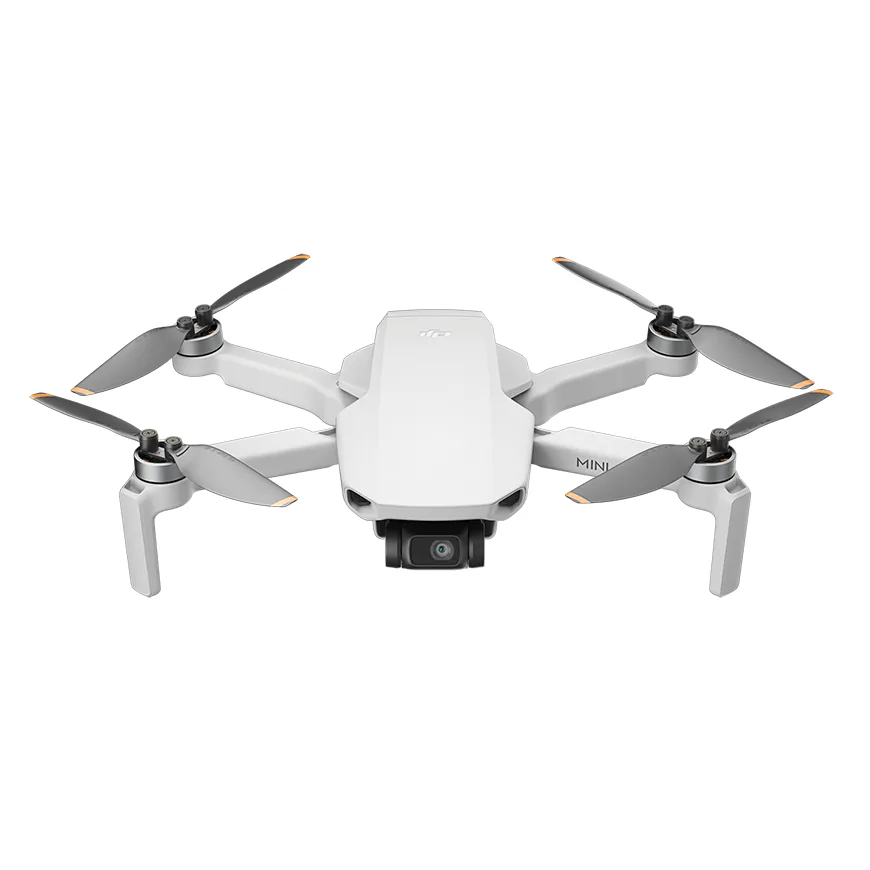
DJI's cheapest way into the ecosystem for two years running, and the model the Mini 4K was built to replace. Identical airframe, identical three-axis gimbal, identical O2 link to 10 km and the same 1/2.3-inch 12MP sensor — the only meaningful difference is that this one stops at 2.7K where the newer one records 4K. Both sit at $299, which makes the choice between them a short conversation unless the Mini 2 SE turns up substantially discounted. Everything that makes a Mini easy is here: GPS hold, automatic return-to-home, Level 5 wind resistance and a weight that keeps it out of the registration system. Everything a Mini lacks at this price is here too, chiefly any obstacle sensing at all.
- Sensor
- 28.1 mm²
- Claimed
- 31 min
- Bundle
- ~$399
Best for: The cheapest DJI, if it is discounted
Full spec sheet