DJI
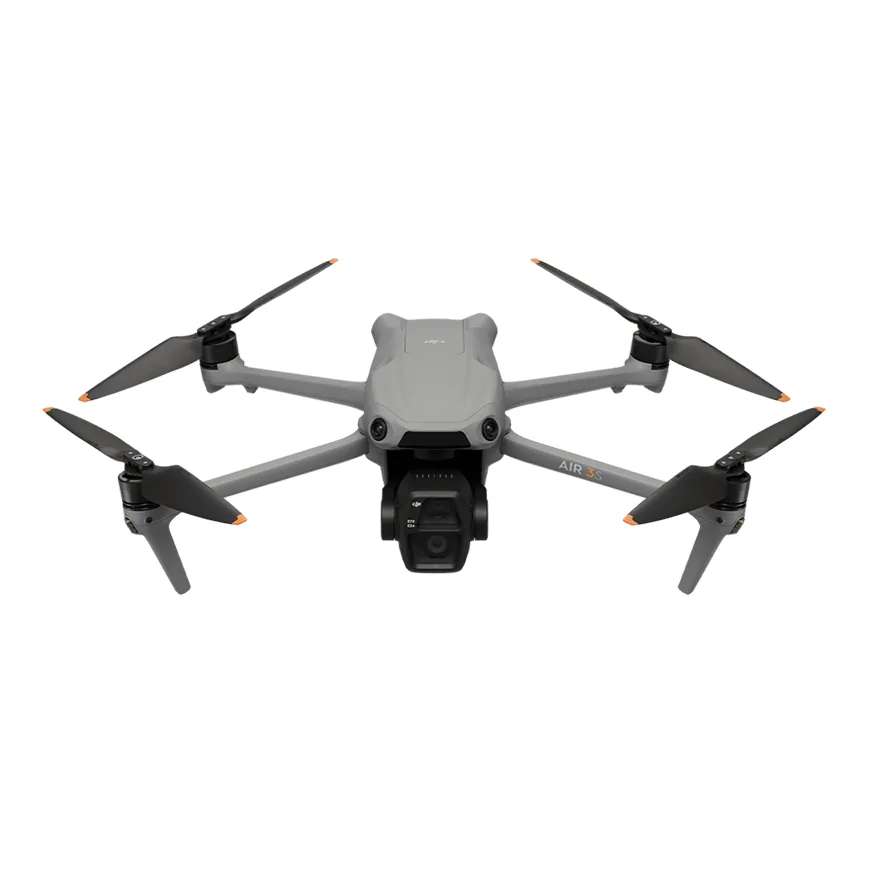
DJI Air 3S
Where the Air 3 gave you two matched 1/1.3-inch cameras, the Air 3S puts a one-inch 50MP sensor on the wide and keeps a 1/1.3-inch 48MP for the 70mm tele. That is the upgrade almost everyone wanted, and it comes with forward LiDAR bolted onto the omnidirectional vision system, which is the first time DJI's sensing has genuinely worked after dusk. Forty-two gigabytes of internal storage, a 6,000 m ceiling and 12 m/s wind resistance round it out. It sits in a strange spot in 2026: it is the best all-round camera drone DJI has FCC clearance to sell in the US, and the Mavic 4 Pro that beats it never officially arrived here. If you want one aircraft that handles wind, low light and long flights without a caveat, this is the shortest answer in the catalog.
The 250-gram line
Over 249 g: FAA registration is required ($5, 3 years) and it broadcasts Remote ID itself.
Every recreational flyer must also take TRUST and carry proof of it, at any weight. Rules checked against faa.gov on 2026-09-24. Not legal advice — how this is worked out.
What that 45-minute claim is measured at
45 minutes measured at a constant 32.4 kph forward flight, at sea level, in windless conditions. Hovering, filming and any headwind all come off that number.
That works out to 3.2 claimed minutes per $100 of the multi-battery bundle. Compared with the rest of the catalog.
Buying one in the US: limited
Checked 24 Sep 2026. FCC-authorised on 16 Sep 2024, so US retail stock is legal to sell; DJI cannot import replacements, and 2026 pricing has moved with supply rather than demand.
Specifications
True first-year cost: ~$1,508 — the multi-battery bundle at ~$1,399 plus ~$109 for the first year of crash cover.
What it has
- 1-inch 50MP wide camera plus a 1/1.3-inch 48MP 3x telephoto
- Forward LiDAR added to omnidirectional binocular vision
- 10-bit D-Log M on both cameras, 4K/120 slow motion
- 42 GB internal storage
- 6,000 m service ceiling and 12 m/s wind resistance
- O4 transmission rated to 20 km in FCC regions
- Built-in Remote ID broadcast
In its favour
- Largest sensor of any DJI drone here that was officially sold in the US
- LiDAR keeps the obstacle sensing working in low light, which vision alone does not
- Two genuinely usable focal lengths from one aircraft
- 42 GB internal storage is enough to shoot a session with no card at all
- Holds position in wind far better than anything under 250 g
- Care Refresh is priced sanely at $109 for the first year
Against it
- Registration and Remote ID are mandatory at 724 g
- Costs roughly double a Mini 4 Pro once you add the bundle
- The 45-minute claim assumes constant forward flight in still air
- Fixed aperture, so bright conditions need ND filters
- Supply is remaining US inventory, and pricing reflects that
The two lists above are drawn from the manufacturer’s published specifications and from the cited reviews, not from owner reports.
What owners report
Summarised from public owner discussions plus the dated, published sources listed at the end.
This is the aircraft owner discussions currently treat as the default answer for anyone who wants one capable drone and does not want to think about it further. The one-inch wide camera is the headline and owners confirm it, but the feature people who fly at the ends of the day single out is the forward LiDAR: it is the first DJI sensing package that still works once the sun has gone, where the vision-only systems on every Mini and on the Air 3 quietly become decorative.
Owners doing paid work are noticeably present in these discussions — traffic-control filming, property photography, survey — and they describe the aircraft paying for itself quickly. The practical notes from people upgrading are small and useful: the batteries changed from lithium polymer to lithium ion and sit slightly loose in the old Air 3 charging hub, and the ND filter set that Air 3 owners had to buy separately to balance the two lenses now comes in the box.
The caveat is not the aircraft. US stock is what was imported before the FCC's December 2025 Covered List decision, and pricing through 2026 has tracked availability rather than demand. It is legal to buy and legal to fly; it is simply not being restocked at the rate it once was.
What owners like
- Owners describe the one-inch wide camera as the upgrade that finally made the Air line a serious stills platform
- Forward LiDAR keeps the sensing working when the light goes, which vision-only systems on every other Air and Mini do not
- 42 GB of internal storage means a forgotten memory card stops being a wasted trip
- Owners doing paid work — traffic filming, property, survey — report it earning its cost back quickly and being the right tool for it
- The included ND filter set covers the aperture difference between the two lenses, which owners upgrading from the Air 3 had previously bought separately
- 45 claimed minutes with real mass behind it makes long sessions in wind practical
Common complaints
- Registration, TRUST and Remote ID all apply at 724 grams
- The batteries changed chemistry from the Air 3's and fit the old charging hub loosely enough to rattle, which owners have noticed
- US supply is remaining inventory rather than fresh imports, and 2026 pricing has moved with availability rather than demand
- Fixed aperture, so bright conditions still need filters
- Roughly double a Mini 4 Pro once bundled
Questions owners ask
Is the LiDAR a gimmick?
Should I upgrade from an Air 3?
Can I still buy one in the US?
Is Care Refresh worth it on this one?
Published sources: dji.com, advexure.com, uavcoach.com
DJI Air 3S, head-to-head
Shopped alongside it
More from DJI →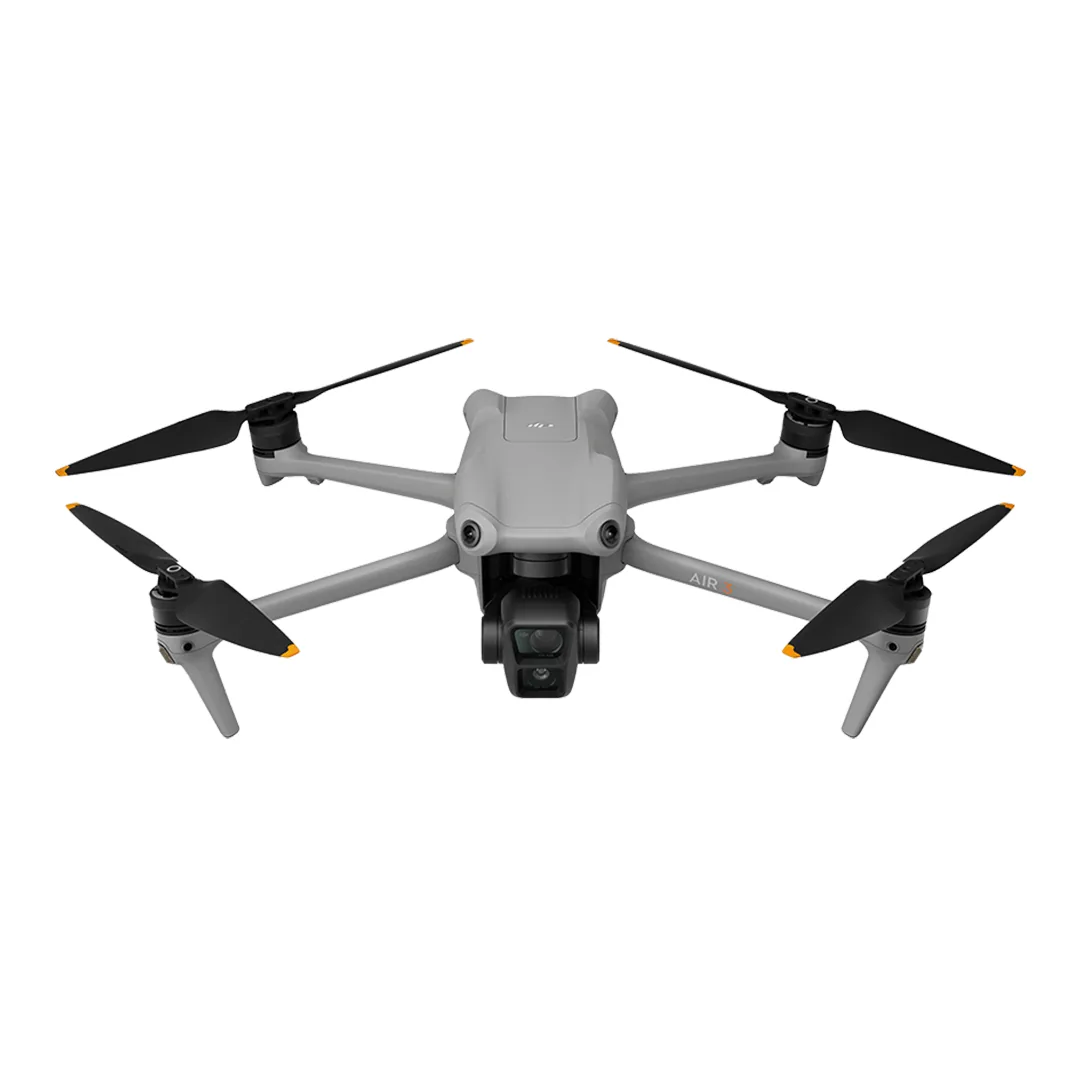
DJI
DJI Air 3
Two 1/1.3-inch cameras rather than one big one was the Air 3's bet, and for a lot of people it paid off. A 24mm wide and a 70mm medium telephoto share the same sensor size and the same 48 megapixels, so cutting between them does not produce the jarring quality drop that a small tele sensor causes. Both shoot 4K/60 HDR, 4K/100 slow motion and 10-bit D-Log M. Omnidirectional sensing, 46 claimed minutes on a 62.6 Wh pack and a 6,000 m ceiling make it the class workhorse it was meant to be. Read that 46 carefully, though: DJI quotes it with obstacle sensing switched off and the camera set to 1080p/24, which is not how anyone flies. The Air 3S replaced it with a one-inch wide camera and forward LiDAR, so the Air 3 is now the value pick in the line rather than the current one.
- Sensor
- 69.1 mm²
- Claimed
- 46 min
- Bundle
- ~$1,349
Best for: Long flights with two usable focal lengths
Full spec sheet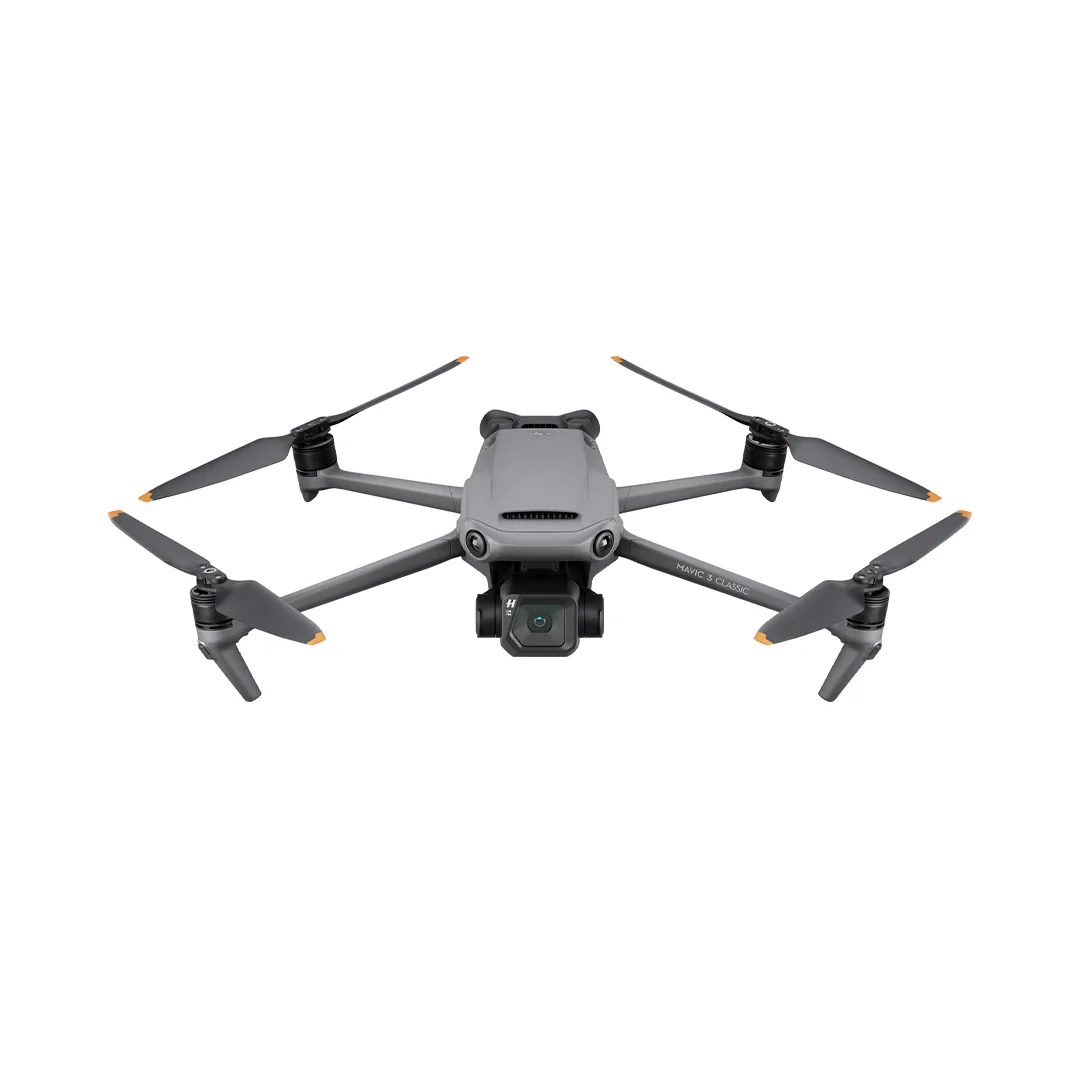
Strip the tele camera off a Mavic 3 and you get the cheapest route to a Four Thirds sensor in the air. Twenty megapixels on 225 mm² — nearly twice the area of a one-inch chip and eight times a 1/2.3-inch one — with a mechanical f/2.8 to f/11 aperture, 10-bit D-Log at 200 Mbps, and 5.1K/50 or 4K/120 recording. That aperture matters more than the resolution: it is the only way in this catalog to cut light without screwing filters onto the front. Omnidirectional sensing, a 77 Wh pack and a 6,000 m ceiling make it a serious tool rather than a hobby aircraft, and at 895 grams it is firmly in registration-and-Remote-ID territory. O3+ transmission is a generation behind the O4 in the Air line, which is the main thing four years have cost it.
- Sensor
- 224.9 mm²
- Claimed
- 46 min
- Bundle
- ~$1,749
Best for: Four Thirds image quality at the lowest price
Full spec sheet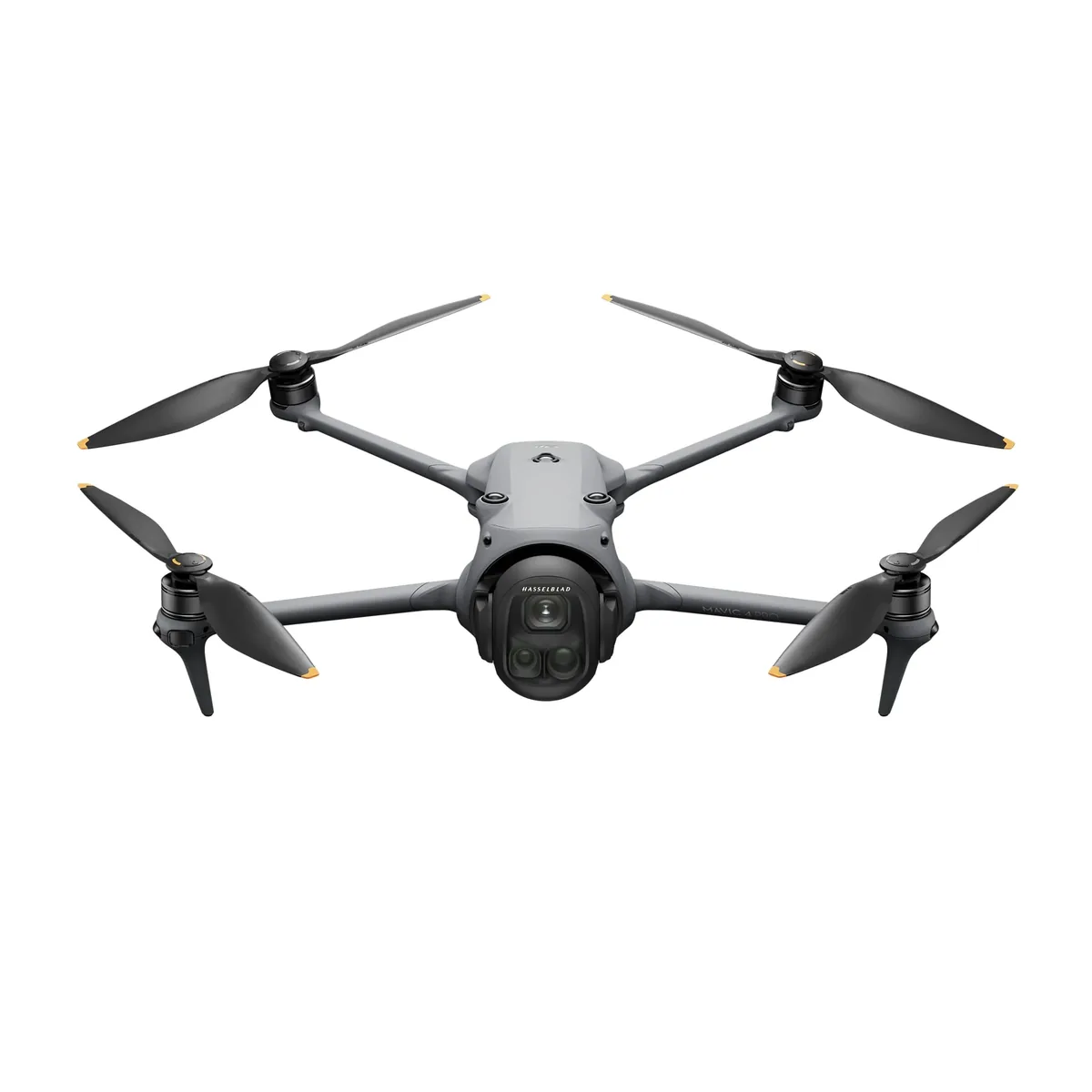
Everything DJI knows how to build, sold everywhere except here. A 100MP Four Thirds wide camera shooting 6K/60, a 70mm 48MP medium tele and a 168mm 50MP tele, all on an Infinity gimbal that rotates a full 360 degrees so vertical framing and continuous rolls stop being compromises. Six low-light fisheye sensors and a forward LiDAR handle obstacles down to 0.1 lux. O4+ carries a 10-bit feed to 30 km in FCC regions and the 95 Wh pack is quoted at 51 minutes, though a reviewer flying it in moderate wind landed closer to 35. The reason it is in this catalog with a warning rather than a recommendation is the US position: DJI said at launch it would not ship here, so anything you find domestically arrived by another route and almost certainly carries no US warranty. For anyone weighing an import against an Air 3S bought normally, the practical questions are service and resale: a domestic warranty claim on this aircraft has nowhere to go, and a buyer three years from now will ask the same question you are asking today.
- Sensor
- 224.9 mm²
- Claimed
- 51 min
- Base kit
- ~$2,499
Best for: Maximum image quality, if you accept the import risk
Full spec sheet