DJI
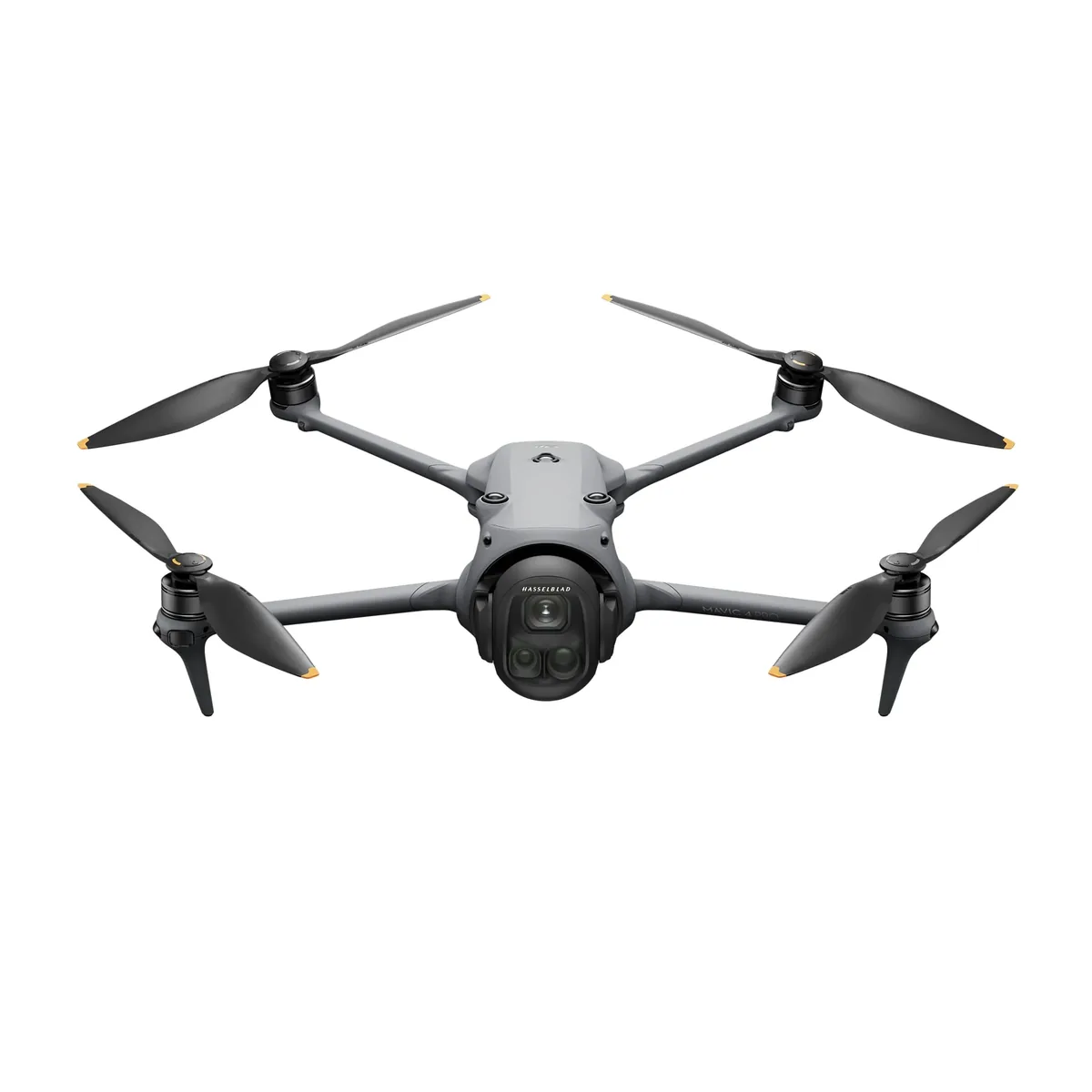
DJI Mavic 4 Pro
Everything DJI knows how to build, sold everywhere except here. A 100MP Four Thirds wide camera shooting 6K/60, a 70mm 48MP medium tele and a 168mm 50MP tele, all on an Infinity gimbal that rotates a full 360 degrees so vertical framing and continuous rolls stop being compromises. Six low-light fisheye sensors and a forward LiDAR handle obstacles down to 0.1 lux. O4+ carries a 10-bit feed to 30 km in FCC regions and the 95 Wh pack is quoted at 51 minutes, though a reviewer flying it in moderate wind landed closer to 35. The reason it is in this catalog with a warning rather than a recommendation is the US position: DJI said at launch it would not ship here, so anything you find domestically arrived by another route and almost certainly carries no US warranty. For anyone weighing an import against an Air 3S bought normally, the practical questions are service and resale: a domestic warranty claim on this aircraft has nowhere to go, and a buyer three years from now will ask the same question you are asking today.
The 250-gram line
Over 249 g: FAA registration is required ($5, 3 years) and it broadcasts Remote ID itself.
Every recreational flyer must also take TRUST and carry proof of it, at any weight. Rules checked against faa.gov on 2026-09-24. Not legal advice — how this is worked out.
What that 51-minute claim is measured at
DJI's 51 minutes is a constant forward-flight figure in still air on the 95 Wh pack. One reviewer flying in moderate wind reported closer to 35 minutes in practice.
That works out to 2.0 claimed minutes per $100 of the base kit. Compared with the rest of the catalog.
Buying one in the US: grey market
Checked 24 Sep 2026. DJI confirmed at the May 2025 launch that the Mavic 4 Pro would not ship to the United States, citing tariffs and customs. Some US retailers have listed imported stock anyway; DJI's warranty and Care Refresh are tied to the region of purchase, so a US buyer is usually outside both.
Specifications
True first-year cost: ~$2,499 — the base kit at ~$2,499; no crash-plan price has been verified for this model, so nothing is added for it.
What it has
- 100MP Four Thirds wide camera with 6K/60 recording
- 70mm 48MP and 168mm 50MP telephoto cameras
- Infinity gimbal with 360-degree rotation and 70-degree upward tilt
- Six low-light fisheye sensors plus forward LiDAR, usable to 0.1 lux
- O4+ transmission rated to 30 km in FCC regions
- 95 Wh battery, 64 GB or 512 GB internal storage
- DJI RC Pro 2 with a 7-inch rotating screen in the box
In its favour
- The most capable camera package in this catalog by a clear margin
- The rotating gimbal makes vertical and rolling shots native rather than cropped
- LiDAR plus six fisheye sensors give it sensing that works at 0.1 lux
- A 7-inch screened controller is included rather than an upgrade
- O4+ at 30 km and 56 mph make it the fastest and furthest-reaching drone here
Against it
- DJI does not sell it in the US — domestic stock is imported, with no US warranty or Care Refresh
- At 1,063 g it needs registration, Remote ID and a serious case
- A reviewer in moderate wind got about 35 minutes against the 51-minute claim
- No official US service path if something breaks
- Flagship price with none of the flagship support
The two lists above are drawn from the manufacturer’s published specifications and from the cited reviews, not from owner reports.
What owners report
Summarised from public owner discussions plus the dated, published sources listed at the end.
Everything DJI knows how to build, sold everywhere except the United States. The specification is not in dispute — a 100-megapixel Four Thirds wide shooting 6K/60, two long lenses, an Infinity gimbal that rotates through 360 degrees, six low-light fisheye sensors and a forward LiDAR that works down to 0.1 lux, and a 7-inch screened controller included rather than sold separately.
The reason it carries a warning rather than a recommendation is the US position. DJI confirmed at the May 2025 launch that it would not ship the Mavic 4 Pro here, citing tariffs and customs, and where it appears at US retailers the stock arrived by another route. DJI's warranty and Care Refresh are tied to the region of purchase, which means a US buyer of one is typically outside both — on an aircraft at this price, with no domestic service path if something fails.
The one figure worth discounting is the flight time. A reviewer flying it in moderate wind reported closer to 35 minutes against the 51 on the box, which is the usual gap between a still-air cruise measurement and a real afternoon.
What owners like
- The rotating gimbal is the feature owners who have flown one mention first — vertical framing and continuous rolls stop being compromises
- Six low-light fisheye sensors plus forward LiDAR give it sensing that genuinely works at 0.1 lux
- A 7-inch screened controller is in the box rather than a $300 upgrade
- 100 megapixels on a Four Thirds sensor, with 6K/60, puts it beyond anything else in this catalog
Common complaints
- Not sold in the US by DJI, so domestic units are imported and carry no US warranty and no Care Refresh
- A reviewer flying in moderate wind measured about 35 minutes against the 51-minute claim
- 1,063 grams: registration, Remote ID, a serious case, and a different relationship with a day out
- No official US service path, which on a $2,499 aircraft is the risk rather than the price
Questions owners ask
Can I buy one in the US?
Does it really fly for 51 minutes?
What does the rotating gimbal actually change?
Published sources: cined.com, nofilmschool.com, pix-pro.com
DJI Mavic 4 Pro, head-to-head
Shopped alongside it
More from DJI →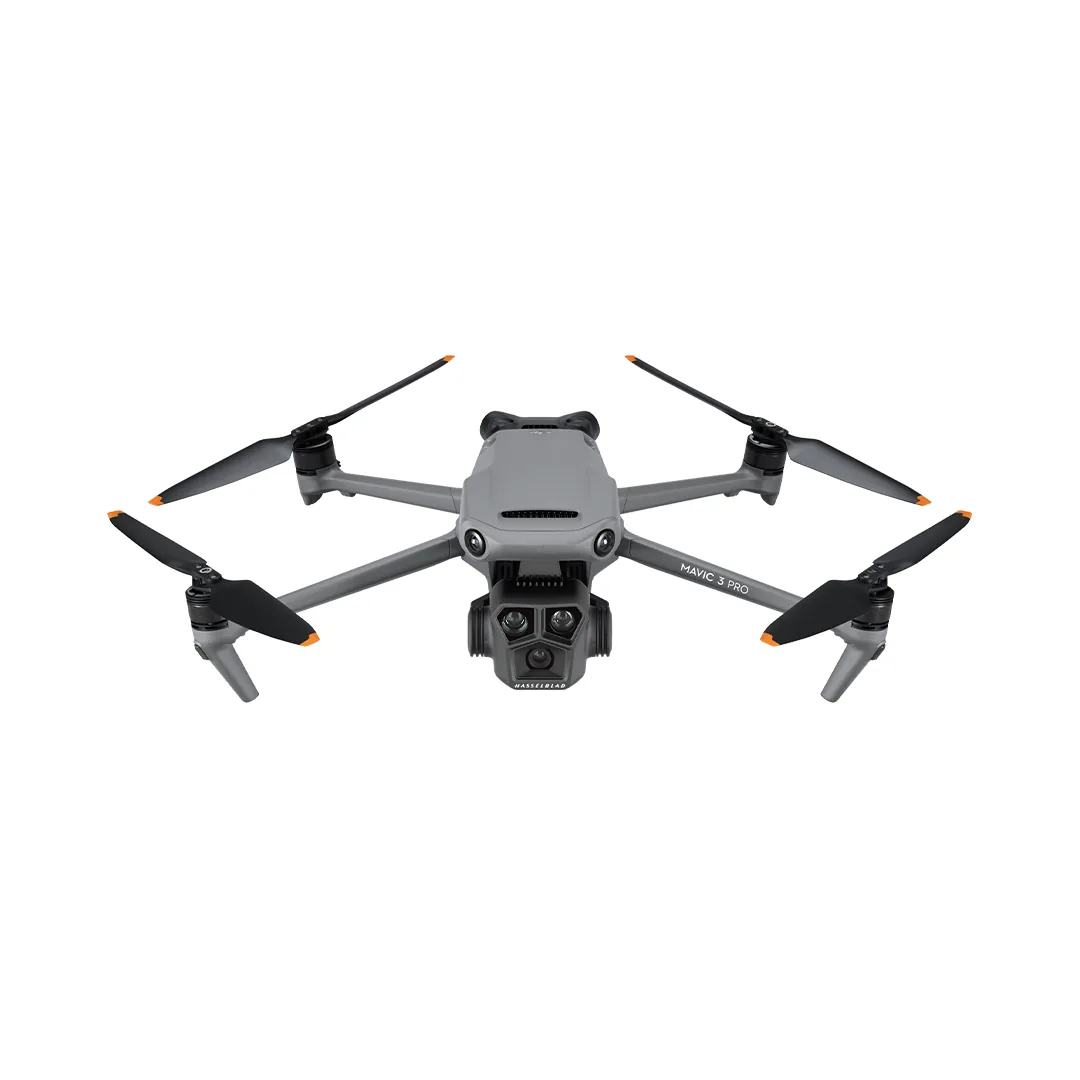
Three focal lengths on one gimbal, all recording 10-bit at 200 Mbps, is a thing no other consumer aircraft does. The 24mm Hasselblad uses the same Four Thirds sensor as the Mavic 3 Classic; a 70mm medium tele on a 1/1.3-inch 48MP chip covers the everyday reach; and a 166mm tele on a 1/2-inch 12MP sensor gets genuinely compressed shots that a digital crop never will. In practice the two longer lenses are what change how you shoot — you stop repositioning the aircraft and start choosing a lens. That third camera is also the weak link, since a 1/2-inch sensor at 166mm wants good light. At $2,199 before a bundle, plus $299 a year for crash cover, this is where a camera drone stops being a purchase and starts being equipment.
- Sensor
- 224.9 mm²
- Claimed
- 43 min
- Bundle
- ~$2,999
Best for: Choosing a lens instead of moving the aircraft
Full spec sheet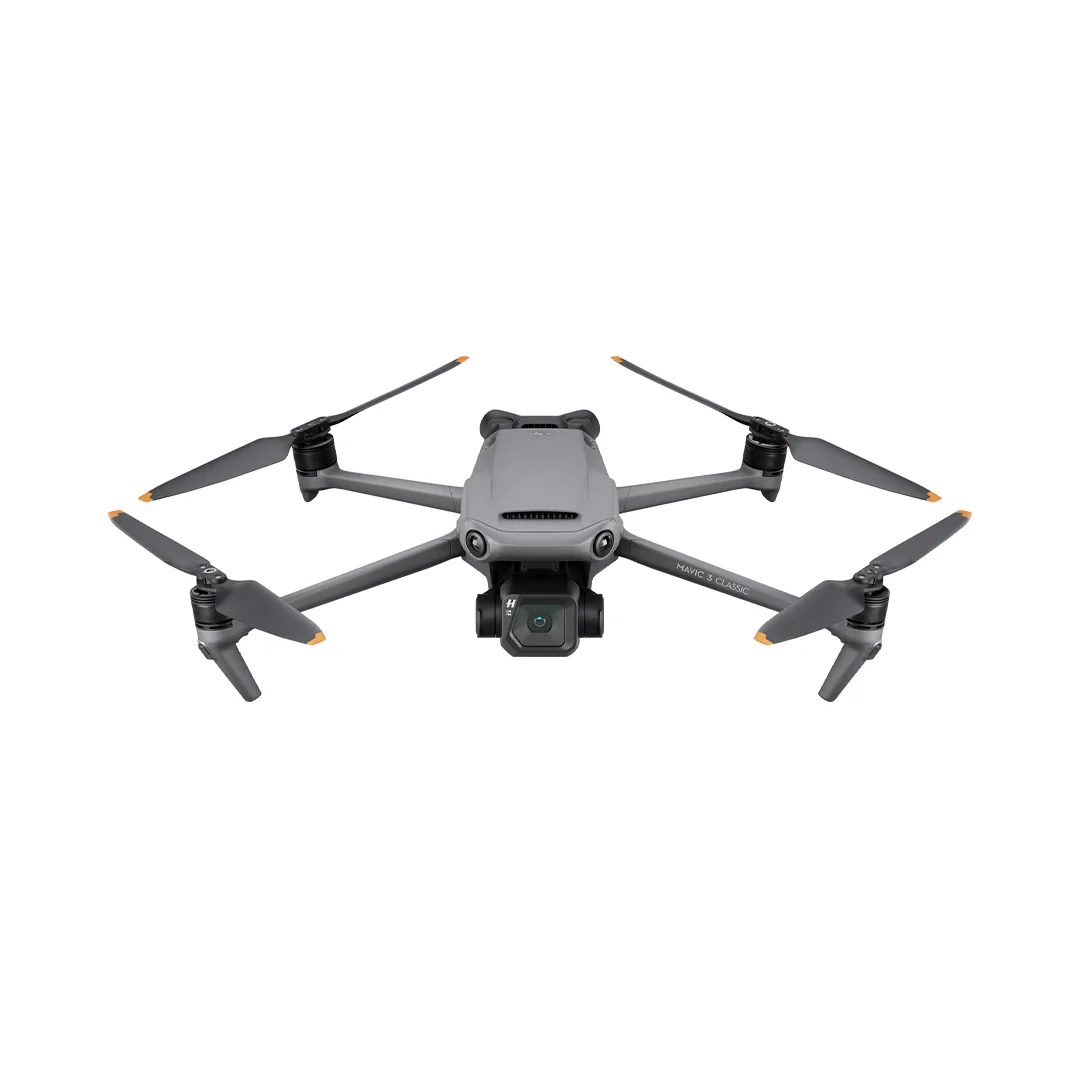
Strip the tele camera off a Mavic 3 and you get the cheapest route to a Four Thirds sensor in the air. Twenty megapixels on 225 mm² — nearly twice the area of a one-inch chip and eight times a 1/2.3-inch one — with a mechanical f/2.8 to f/11 aperture, 10-bit D-Log at 200 Mbps, and 5.1K/50 or 4K/120 recording. That aperture matters more than the resolution: it is the only way in this catalog to cut light without screwing filters onto the front. Omnidirectional sensing, a 77 Wh pack and a 6,000 m ceiling make it a serious tool rather than a hobby aircraft, and at 895 grams it is firmly in registration-and-Remote-ID territory. O3+ transmission is a generation behind the O4 in the Air line, which is the main thing four years have cost it.
- Sensor
- 224.9 mm²
- Claimed
- 46 min
- Bundle
- ~$1,749
Best for: Four Thirds image quality at the lowest price
Full spec sheet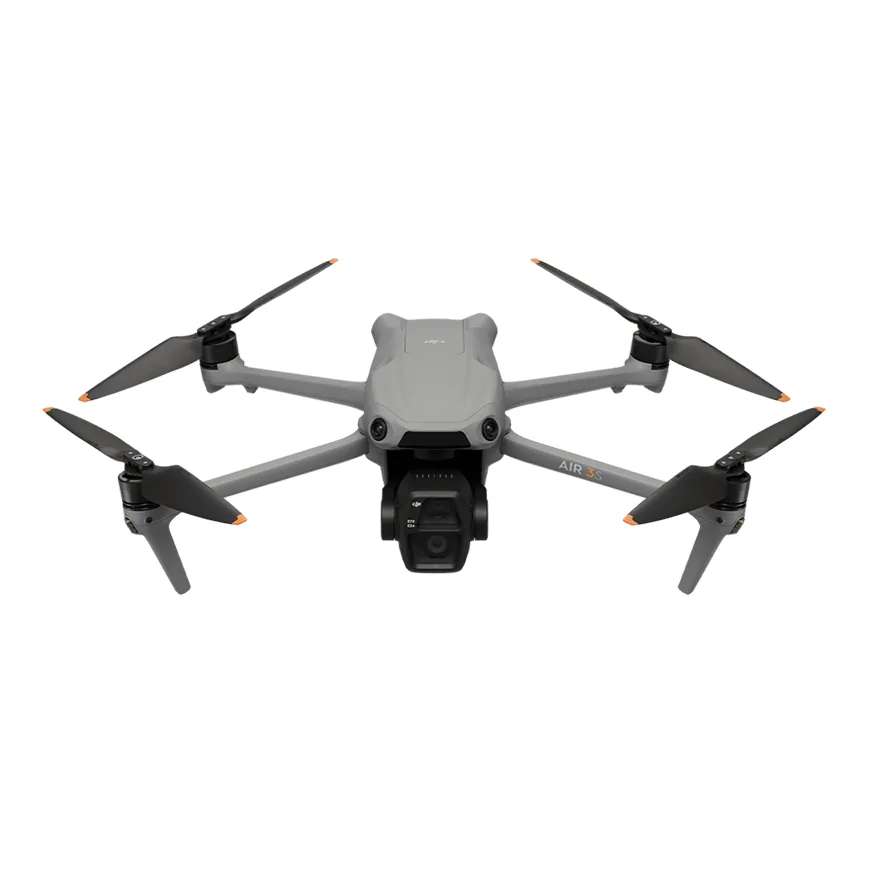
DJI
DJI Air 3S
Where the Air 3 gave you two matched 1/1.3-inch cameras, the Air 3S puts a one-inch 50MP sensor on the wide and keeps a 1/1.3-inch 48MP for the 70mm tele. That is the upgrade almost everyone wanted, and it comes with forward LiDAR bolted onto the omnidirectional vision system, which is the first time DJI's sensing has genuinely worked after dusk. Forty-two gigabytes of internal storage, a 6,000 m ceiling and 12 m/s wind resistance round it out. It sits in a strange spot in 2026: it is the best all-round camera drone DJI has FCC clearance to sell in the US, and the Mavic 4 Pro that beats it never officially arrived here. If you want one aircraft that handles wind, low light and long flights without a caveat, this is the shortest answer in the catalog.
- Sensor
- 116.2 mm²
- Claimed
- 45 min
- Bundle
- ~$1,399
Best for: One aircraft for wind, low light and long flights
Full spec sheet