DJI Air 3 vs DJI Air 3S
Both are over the 250-gram line, so the legal position is identical and the decision comes down to the rows tinted below — the specs where these two actually differ. The DJI Air 3 is the cheaper of the two at ~$1,349.
| Drone | ||
|---|---|---|
| Bundle price | ~$1,349multi-battery bundle | ~$1,399multi-battery bundle |
| True first-year price | ~$1,349 | ~$1,508 |
| Flight min per $100 | 3.4 | 3.2 |
| Rating | No cited rating | No cited rating |
| Takeoff weight | 720 g | 724 g |
| FAA registration | Required | Required |
| Remote ID | Built-in | Built-in |
| Sensor size | 1/1.3" | 1" |
| Sensor area | 69.1 mm² | 116.2 mm² |
| Megapixels | 48 MP | 50 MP |
| Max video | 4K/60fps HDR, 4K/100fps slow motion | 4K/60fps HDR, 4K/120fps slow motion |
| Colour depth | 10-bit | 10-bit |
| Log profile | D-Log M | D-Log M |
| Gimbal | 3-axis | 3-axis |
| Obstacle sensing | Omnidirectional | Omnidirectional + LiDAR |
| Claimed flight time | 46 min | 45 min |
| Tested flight time | — | — |
| Battery | 62.6 Wh | 62.5 Wh |
| Transmission | O4 | O4 |
| Max range | 20 km | 20 km |
| Max speed | 47 mph | 47 mph |
| Wind resistance | 12 m/s | 12 m/s |
| Service ceiling | 6000 m | 6000 m |
| Internal storage | 8 GB | 42 GB |
| Controller | DJI RC-N2 (phone required); DJI RC 2 with built-in screen at extra cost | DJI RC-N3 (phone required); DJI RC 2 with built-in screen at extra cost |
| Return to home | Yes | Yes |
| Geofencing | Yes | Yes |
| Care plan (1 yr) | Not in our snapshot | ~$109 |
| US availability | Limited | Limited |
| Released | 2023 | 2024 |
| Flight claim measured at | DJI measures 46 minutes at "a constant speed of 28.8 kph in a windless environment at sea level, with APAS off, AirSense off, camera parameters set to 1080p/24fps" — obstacle sensing disabled and the camera in its least demanding mode. | 45 minutes measured at a constant 32.4 kph forward flight, at sea level, in windless conditions. Hovering, filming and any headwind all come off that number. |
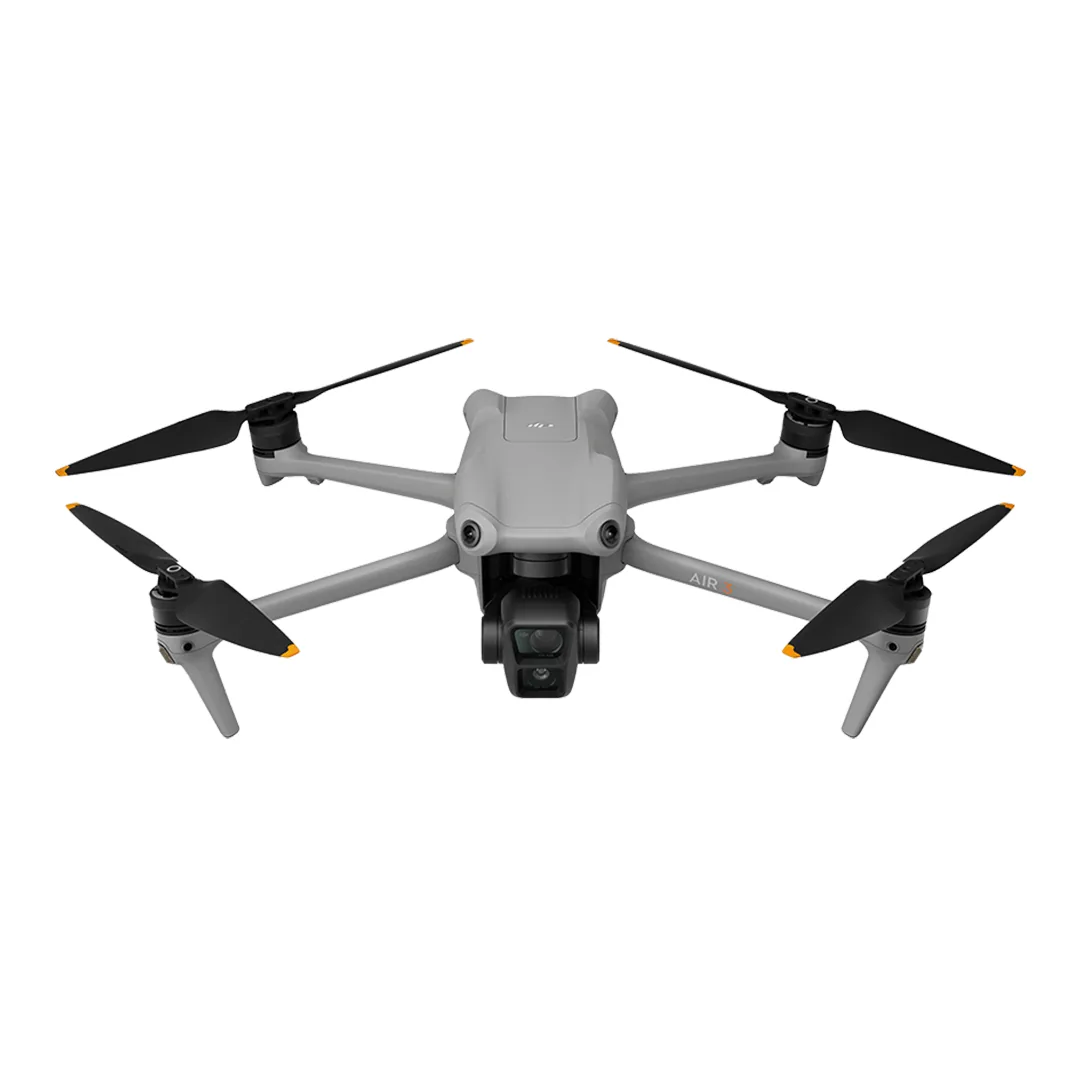
DJI Air 3
Two 1/1.3-inch cameras rather than one big one was the Air 3's bet, and for a lot of people it paid off. A 24mm wide and a 70mm medium telephoto share the same sensor size and the same 48 megapixels, so cutting between them does not produce the jarring quality drop that a small tele sensor causes. Both shoot 4K/60 HDR, 4K/100 slow motion and 10-bit D-Log M. Omnidirectional sensing, 46 claimed minutes on a 62.6 Wh pack and a 6,000 m ceiling make it the class workhorse it was meant to be. Read that 46 carefully, though: DJI quotes it with obstacle sensing switched off and the camera set to 1080p/24, which is not how anyone flies. The Air 3S replaced it with a one-inch wide camera and forward LiDAR, so the Air 3 is now the value pick in the line rather than the current one.
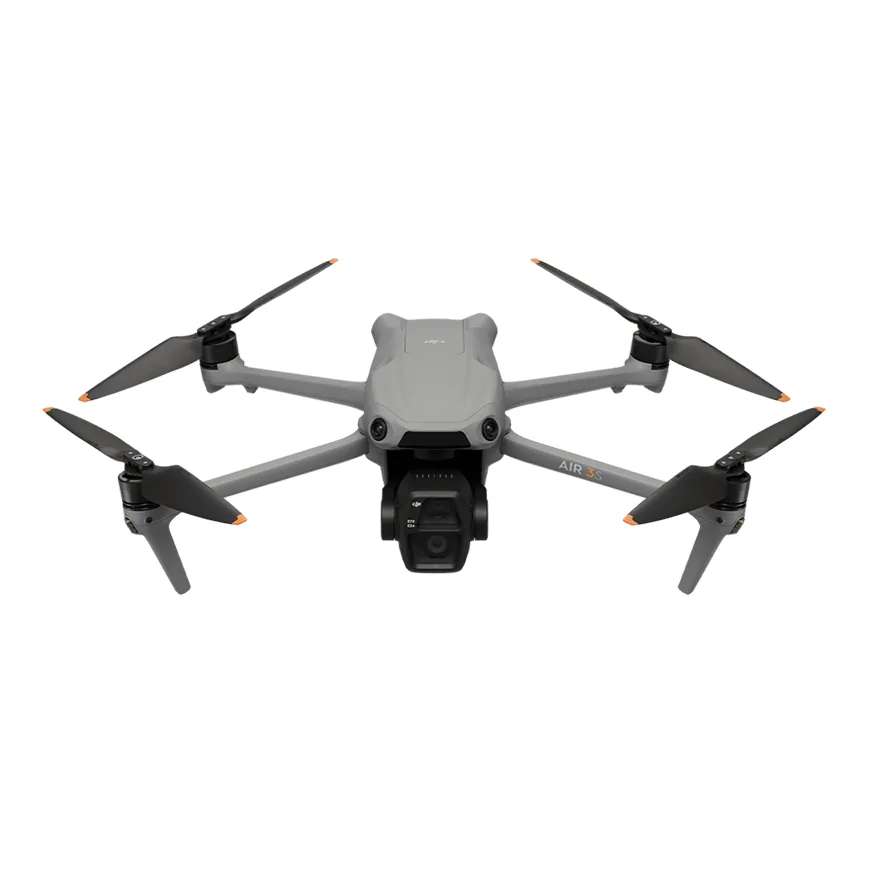
Full spec sheet →DJI Air 3S
Where the Air 3 gave you two matched 1/1.3-inch cameras, the Air 3S puts a one-inch 50MP sensor on the wide and keeps a 1/1.3-inch 48MP for the 70mm tele. That is the upgrade almost everyone wanted, and it comes with forward LiDAR bolted onto the omnidirectional vision system, which is the first time DJI's sensing has genuinely worked after dusk. Forty-two gigabytes of internal storage, a 6,000 m ceiling and 12 m/s wind resistance round it out. It sits in a strange spot in 2026: it is the best all-round camera drone DJI has FCC clearance to sell in the US, and the Mavic 4 Pro that beats it never officially arrived here. If you want one aircraft that handles wind, low light and long flights without a caveat, this is the shortest answer in the catalog.
Full spec sheet →