DJI
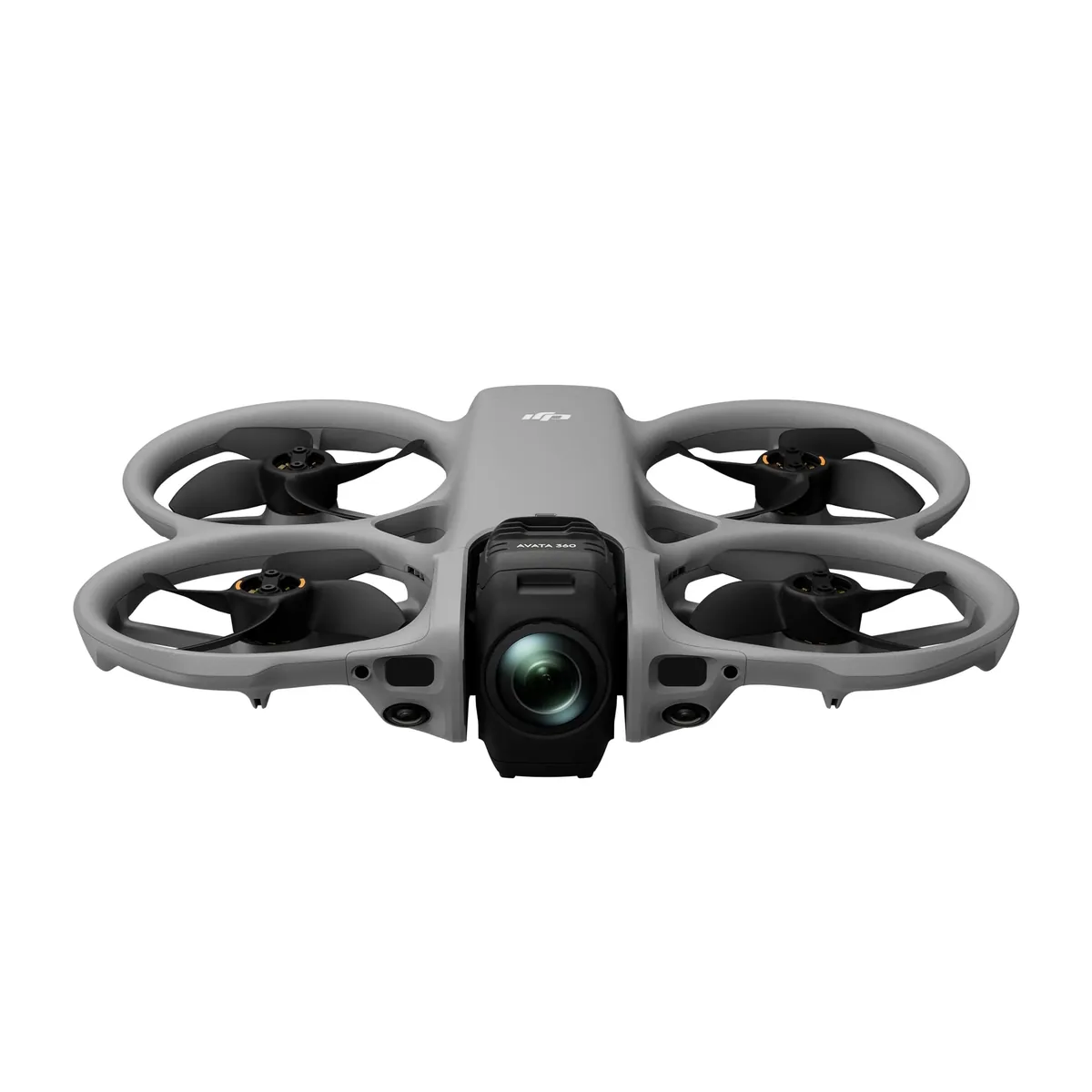
DJI Avata 360
DJI's answer to the 360 drone, and the direct rival to the Antigravity A1. Dual one-inch-equivalent lenses capture 8K/60 HDR in full 360 or 4K/60 through a single lens, with 120MP stills and 42 GB of internal storage — roughly half an hour of 8K spherical footage before you need to offload. Integrated prop guards and a replaceable front lens element acknowledge what actually happens to 360 drones. Omnidirectional sensing with nightscape support and O4+ transmission to 20 km put it comfortably ahead of the Avata 2 on everything except price. At 455 grams it needs registration and Remote ID, which it broadcasts itself, and unlike most of DJI's current line it genuinely arrived in the US.
The 250-gram line
Over 249 g: FAA registration is required ($5, 3 years) and it broadcasts Remote ID itself.
Every recreational flyer must also take TRUST and carry proof of it, at any weight. Rules checked against faa.gov on 2026-09-24. Not legal advice — how this is worked out.
What that 23-minute claim is measured at
DJI quotes up to 23 minutes. As with every FPV aircraft, that assumes level cruising — throttle punches and climbs spend it far faster.
That works out to 2.3 claimed minutes per $100 of the multi-battery bundle. Compared with the rest of the catalog.
Buying one in the US: sold
Checked 24 Sep 2026. Released in the US in April 2026 — one of very few current-generation DJI aircraft a US buyer can order new through normal channels.
Specifications
True first-year cost: ~$979 — the multi-battery bundle at ~$979; no crash-plan price has been verified for this model, so nothing is added for it.
What it has
- Dual one-inch-equivalent lenses capturing 8K/60 HDR in 360
- 4K/60 single-lens mode and 120MP stills
- 42 GB internal storage, about 30 minutes of 8K 360 footage
- Omnidirectional obstacle sensing with nightscape support
- O4+ transmission rated to 20 km with a 1080p/60 feed
- Integrated prop guards and a replaceable front lens element
- Built-in Remote ID broadcast
In its favour
- One of very few current-generation DJI aircraft actually available new in the US
- 8K spherical capture means framing decisions move to the edit
- Omnidirectional sensing on an FPV-style aircraft, which is rare
- Replaceable front lens element — the part that gets scratched first
- Cheaper than the Antigravity A1 by a wide margin
Against it
- 455 g means registration, TRUST and Remote ID
- 23 minutes assumes cruising, not FPV flying
- No gimbal at all — stabilisation and framing happen in software
- The controller and goggle combination you want pushes the price well past the headline
- A brand-new aircraft, so long-term firmware and workflow are unproven
The two lists above are drawn from the manufacturer’s published specifications and from the cited reviews, not from owner reports.
What owners report
No owner discussion has been collected for the DJI Avata 360 yet. Rather than fill the gap with something plausible, this section stays empty until there is a real body of owner reports to read. The specs above come from the maker’s published documentation.
DJI Avata 360, head-to-head
Shopped alongside it
More from DJI →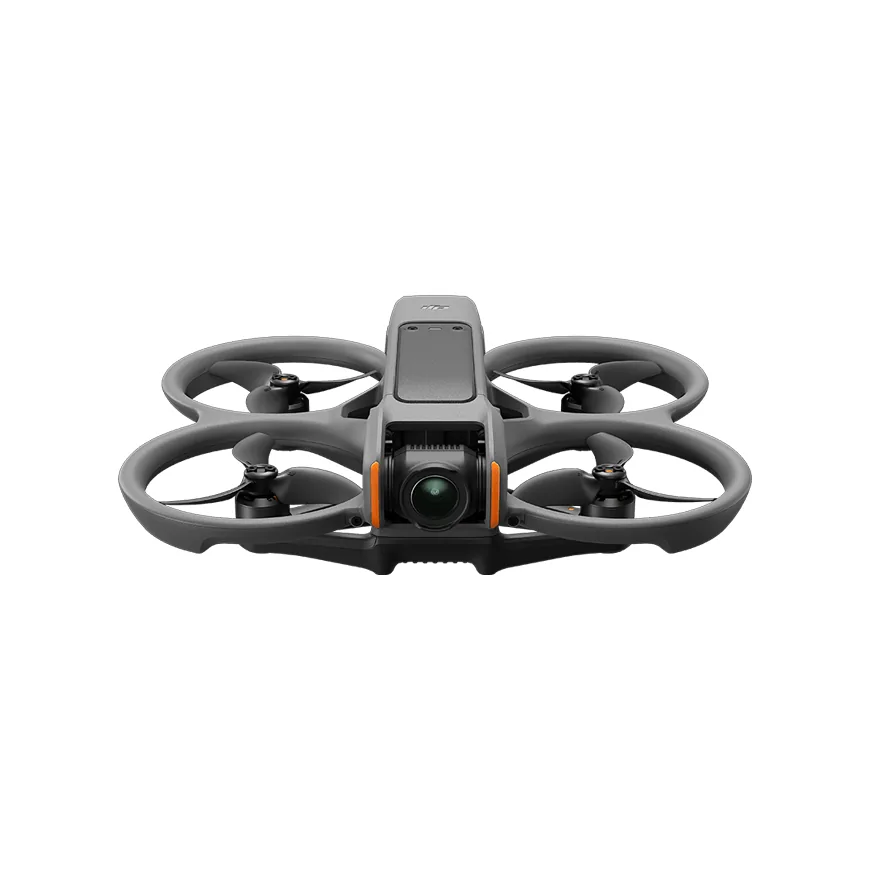
DJI
DJI Avata 2
Ducted props, goggles in the box, and a flight model that forgives you — this is how most people who fly FPV now start. The Avata 2 puts a 1/1.3-inch 12MP camera on a single-axis gimbal behind full prop ducts, records 4K/60 in 10-bit D-Log M to 46 GB of internal storage, and flies on DJI Goggles 3 with the FPV Remote Controller 3. Normal mode hovers and holds position like a camera drone; Sport and Manual progressively hand you the throttle until you are flying a real quad at 60 mph. The ducts mean a clipped branch usually means a bounce rather than a repair, which is the entire reason this is a better first FPV aircraft than a bare 5-inch freestyle build. The honest limits are endurance and sensing: 23 minutes is a cruise figure, and nothing watches forward. Two things the price tag hides in both directions: the goggles and controller are the expensive half of this system and are shared with the Avata 360 and the Neo, so the cost amortises if you add another aircraft; and a ducted airframe over water has no float and no second chance.
- Sensor
- 69.1 mm²
- Claimed
- 23 min
- Bundle
- ~$1,199
Best for: A first goggle-flown drone that survives mistakes
Full spec sheet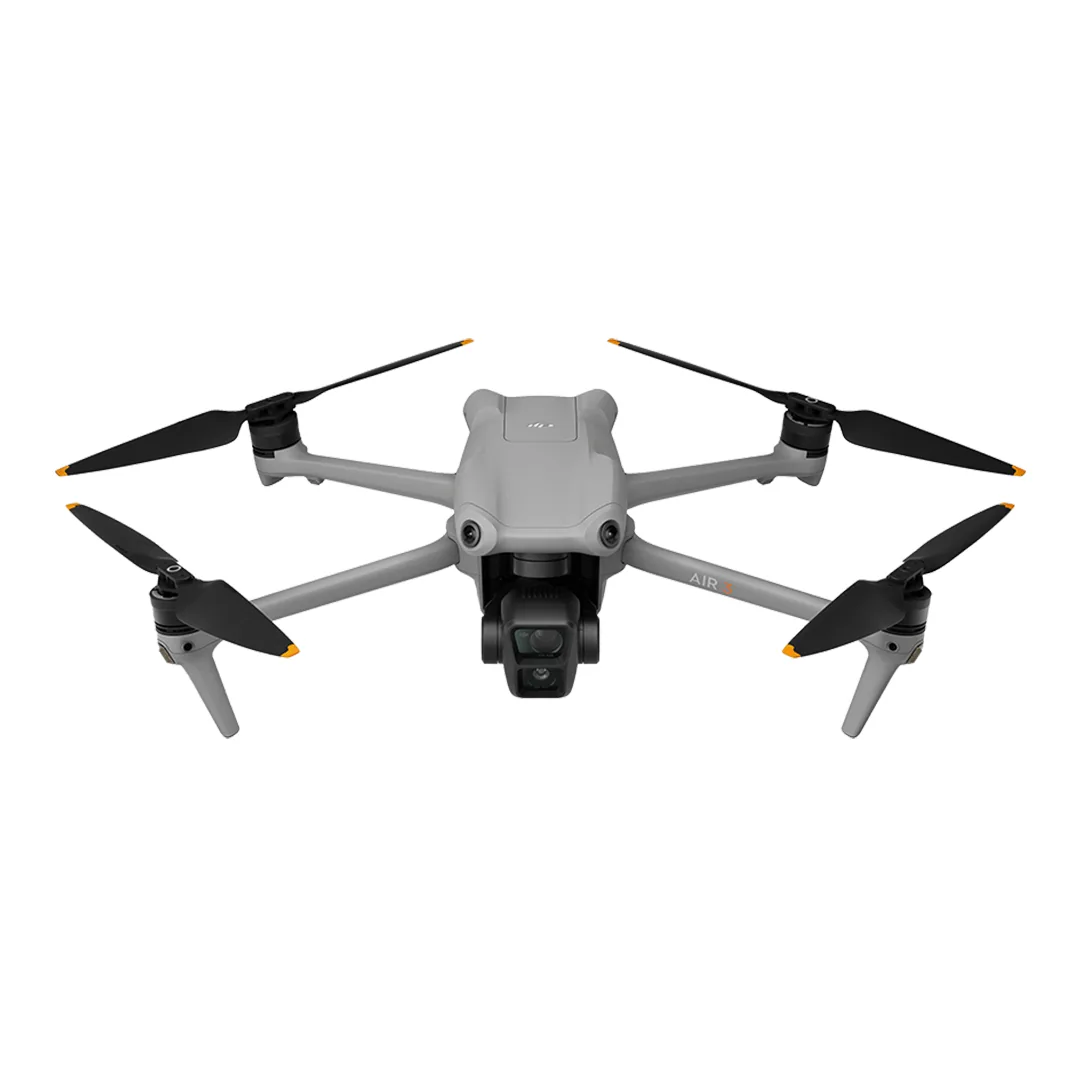
DJI
DJI Air 3
Two 1/1.3-inch cameras rather than one big one was the Air 3's bet, and for a lot of people it paid off. A 24mm wide and a 70mm medium telephoto share the same sensor size and the same 48 megapixels, so cutting between them does not produce the jarring quality drop that a small tele sensor causes. Both shoot 4K/60 HDR, 4K/100 slow motion and 10-bit D-Log M. Omnidirectional sensing, 46 claimed minutes on a 62.6 Wh pack and a 6,000 m ceiling make it the class workhorse it was meant to be. Read that 46 carefully, though: DJI quotes it with obstacle sensing switched off and the camera set to 1080p/24, which is not how anyone flies. The Air 3S replaced it with a one-inch wide camera and forward LiDAR, so the Air 3 is now the value pick in the line rather than the current one.
- Sensor
- 69.1 mm²
- Claimed
- 46 min
- Bundle
- ~$1,349
Best for: Long flights with two usable focal lengths
Full spec sheet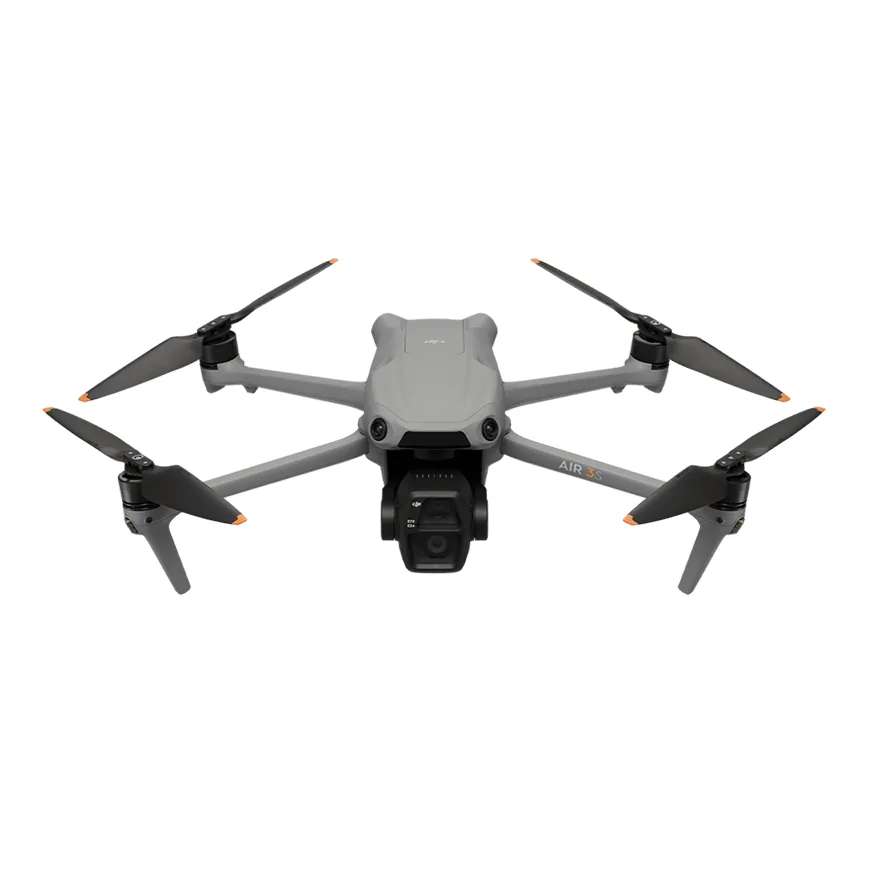
DJI
DJI Air 3S
Where the Air 3 gave you two matched 1/1.3-inch cameras, the Air 3S puts a one-inch 50MP sensor on the wide and keeps a 1/1.3-inch 48MP for the 70mm tele. That is the upgrade almost everyone wanted, and it comes with forward LiDAR bolted onto the omnidirectional vision system, which is the first time DJI's sensing has genuinely worked after dusk. Forty-two gigabytes of internal storage, a 6,000 m ceiling and 12 m/s wind resistance round it out. It sits in a strange spot in 2026: it is the best all-round camera drone DJI has FCC clearance to sell in the US, and the Mavic 4 Pro that beats it never officially arrived here. If you want one aircraft that handles wind, low light and long flights without a caveat, this is the shortest answer in the catalog.
- Sensor
- 116.2 mm²
- Claimed
- 45 min
- Bundle
- ~$1,399
Best for: One aircraft for wind, low light and long flights
Full spec sheet