DJI Mini 5 Pro vs DJI Avata 360
These two sit on opposite sides of the 250-gram line, which is usually where the decision ends rather than begins. The DJI Mini 5 Pro needs no FAA registration to fly recreationally; the DJI Avata 360 needs registration and Remote ID. The DJI Avata 360 is the cheaper of the two at ~$979.
| Drone | ||
|---|---|---|
| Bundle price | ~$1,043multi-battery bundle | ~$979multi-battery bundle |
| True first-year price | ~$1,043 | ~$979 |
| Flight min per $100 | 3.5 | 2.3 |
| Rating | No cited rating | No cited rating |
| Takeoff weight | 249 g | 455 g |
| FAA registration | Not required | Required |
| Remote ID | Built-in | Built-in |
| Sensor size | 1" | 1" |
| Sensor area | 116.2 mm² | 116.2 mm² |
| Megapixels | 50 MP | 120 MP |
| Max video | 4K/60fps HDR, 4K/120fps slow motion | 8K/60fps 360 HDR, 4K/60fps single lens |
| Colour depth | 10-bit | 10-bit |
| Log profile | D-Log M | D-Log M |
| Gimbal | 3-axis | None |
| Obstacle sensing | Omnidirectional + LiDAR | Omnidirectional |
| Claimed flight time | 36 min | 23 min |
| Tested flight time | — | — |
| Battery | 25.7 Wh | — |
| Transmission | O4+ | O4+ |
| Max range | 20 km | 20 km |
| Max speed | 40 mph | 40 mph |
| Wind resistance | Level 5 (12 m/s) | Level 5 (10.7 m/s) |
| Service ceiling | 4000 m | — |
| Internal storage | 42 GB | 42 GB |
| Controller | DJI RC-N3 (phone required); DJI RC 2 or RC Pro 2 with built-in screens | DJI RC 2; RC Motion 3 and goggles depending on kit |
| Return to home | Yes | Yes |
| Geofencing | Yes | Yes |
| Care plan (1 yr) | Not in our snapshot | Not in our snapshot |
| US availability | Limited | Sold |
| Released | 2025 | 2026 |
| Flight claim measured at | 36 minutes on the standard battery in DJI's windless forward-flight test; the 52-minute headline requires the Intelligent Flight Battery Plus, which takes the aircraft over 249 g. | DJI quotes up to 23 minutes. As with every FPV aircraft, that assumes level cruising — throttle punches and climbs spend it far faster. |
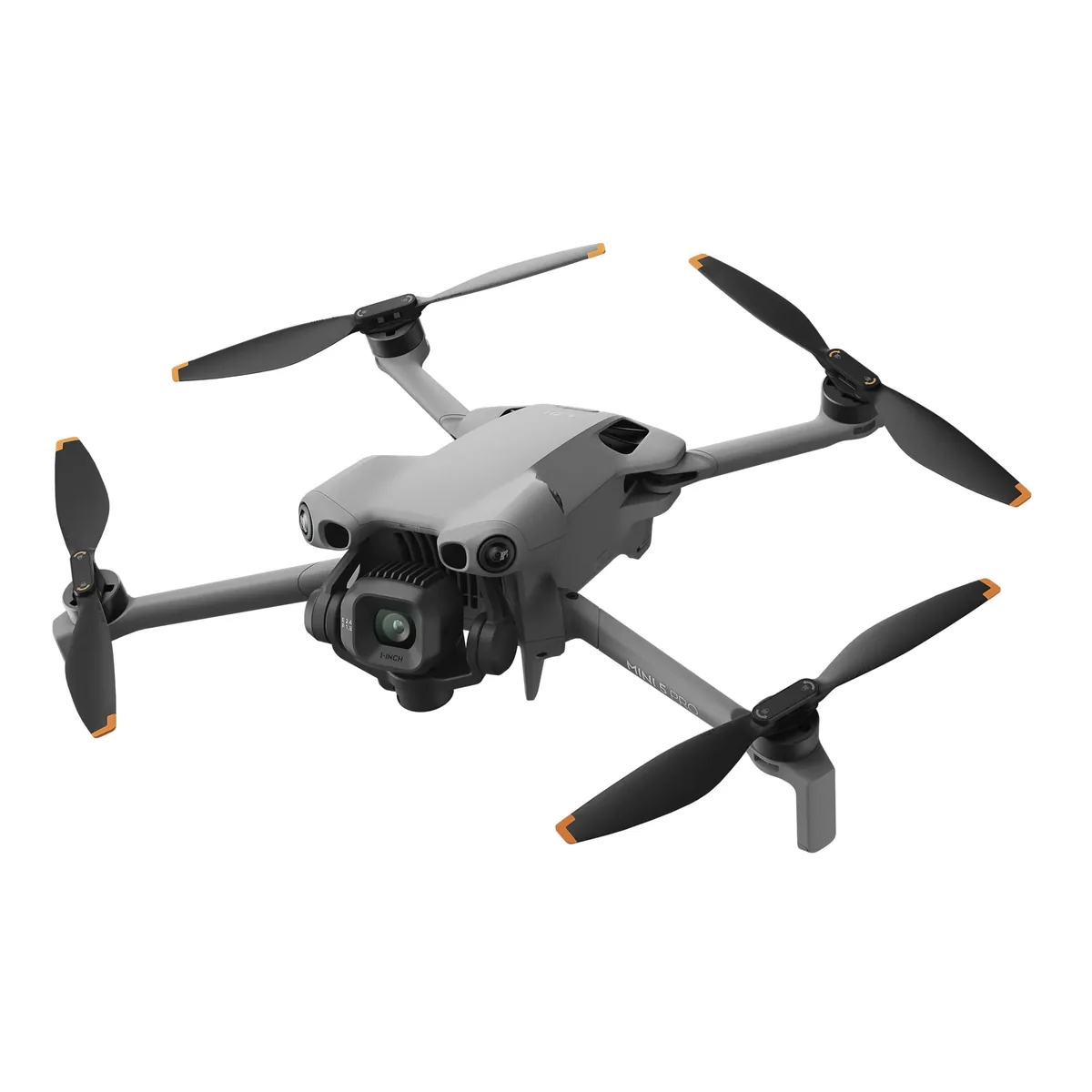
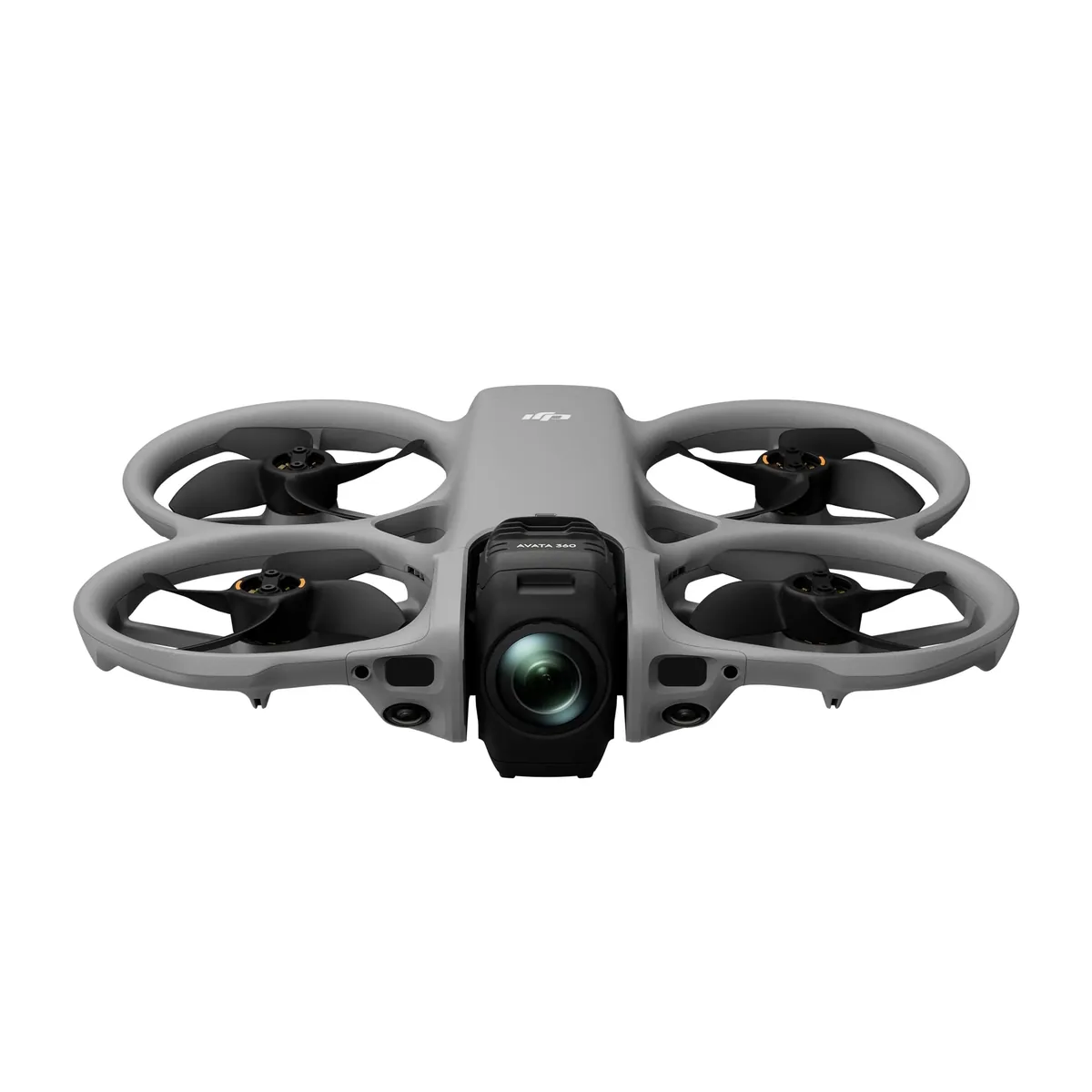
DJI Mini 5 Pro
A one-inch sensor under 250 grams was supposed to be impossible, and this is the drone that did it. Fifty megapixels on a 116 mm² sensor at f/1.8 is roughly two-thirds more light-gathering area than the Mini 4 Pro's 1/1.3-inch chip, which shows up exactly where you would expect: dusk, interiors of shadow, and anything where the smaller Minis start smearing. It adds forward LiDAR to the omnidirectional vision system, so it sees in the dark rather than just in daylight, and the gimbal swings through 225 degrees for true vertical framing. The complication is where you buy it. DJI never put it in its own US store, and the units on US shelves arrived through import channels, which changes what happens when you crash it.
Full spec sheet →DJI Avata 360
DJI's answer to the 360 drone, and the direct rival to the Antigravity A1. Dual one-inch-equivalent lenses capture 8K/60 HDR in full 360 or 4K/60 through a single lens, with 120MP stills and 42 GB of internal storage — roughly half an hour of 8K spherical footage before you need to offload. Integrated prop guards and a replaceable front lens element acknowledge what actually happens to 360 drones. Omnidirectional sensing with nightscape support and O4+ transmission to 20 km put it comfortably ahead of the Avata 2 on everything except price. At 455 grams it needs registration and Remote ID, which it broadcasts itself, and unlike most of DJI's current line it genuinely arrived in the US.
Full spec sheet →