DJI
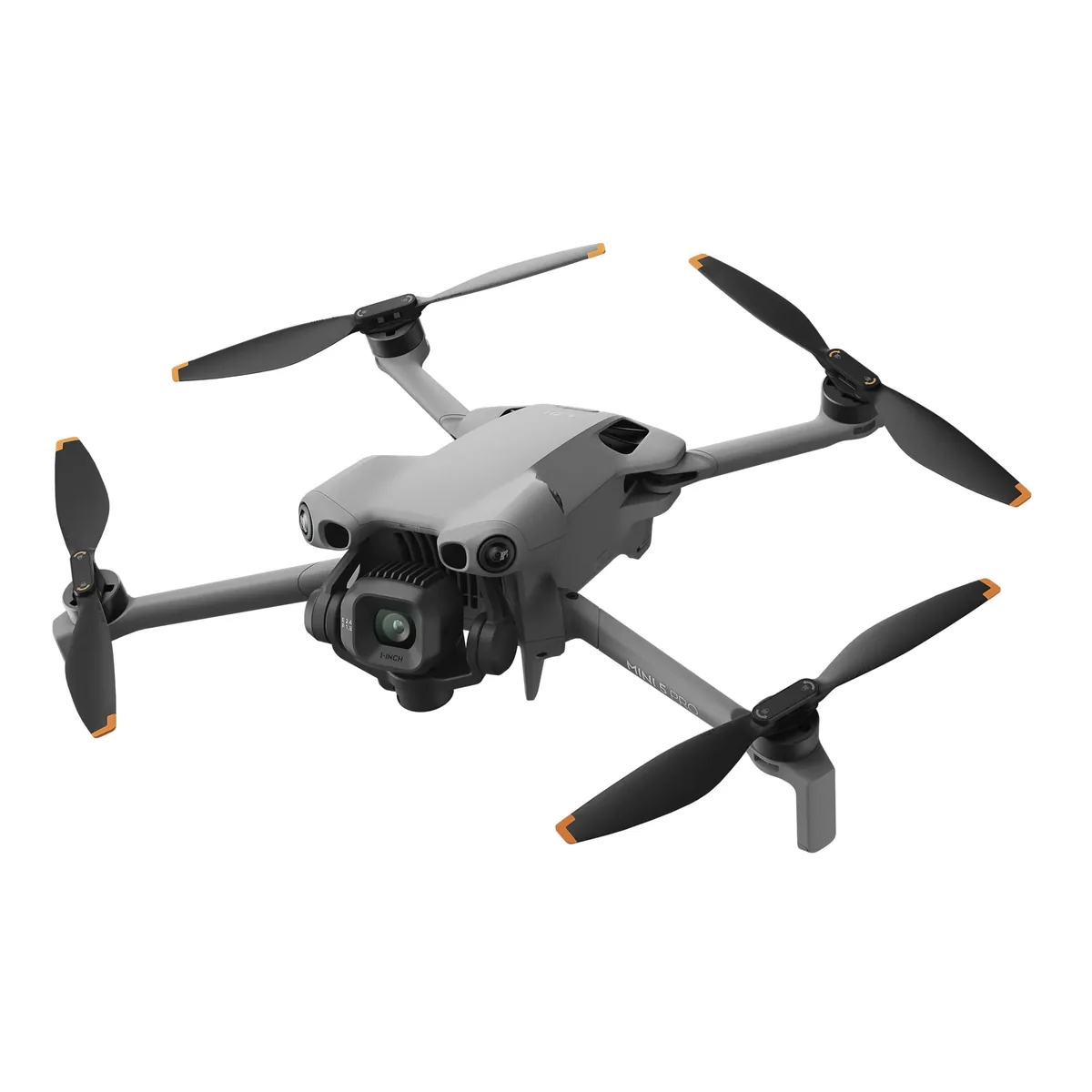
DJI Mini 5 Pro
A one-inch sensor under 250 grams was supposed to be impossible, and this is the drone that did it. Fifty megapixels on a 116 mm² sensor at f/1.8 is roughly two-thirds more light-gathering area than the Mini 4 Pro's 1/1.3-inch chip, which shows up exactly where you would expect: dusk, interiors of shadow, and anything where the smaller Minis start smearing. It adds forward LiDAR to the omnidirectional vision system, so it sees in the dark rather than just in daylight, and the gimbal swings through 225 degrees for true vertical framing. The complication is where you buy it. DJI never put it in its own US store, and the units on US shelves arrived through import channels, which changes what happens when you crash it.
The 250-gram line
Under 250 g: recreational flight needs no FAA registration, and Remote ID does not apply.
Every recreational flyer must also take TRUST and carry proof of it, at any weight. Rules checked against faa.gov on 2026-09-24. Not legal advice — how this is worked out.
What that 36-minute claim is measured at
36 minutes on the standard battery in DJI's windless forward-flight test; the 52-minute headline requires the Intelligent Flight Battery Plus, which takes the aircraft over 249 g.
That works out to 3.5 claimed minutes per $100 of the multi-battery bundle. Compared with the rest of the catalog.
Buying one in the US: limited
Checked 24 Sep 2026. DJI did not launch the Mini 5 Pro through its own US store, but the model was FCC-authorised on 21 May 2025 and US photo retailers including B&H carry a listing for it. Buy it here and you are buying imported stock, so confirm the warranty terms before you order.
Specifications
True first-year cost: ~$1,043 — the multi-battery bundle at ~$1,043; no crash-plan price has been verified for this model, so nothing is added for it.
What it has
- 1-inch 50MP sensor at f/1.8 — the largest under 250 g
- Forward LiDAR alongside omnidirectional binocular vision
- 225-degree gimbal rotation for true vertical shooting
- 4K/120 slow motion and 10-bit D-Log M
- O4+ transmission with a 1080p/60 live feed
- 42 GB internal storage
- Built-in Remote ID broadcast
In its favour
- The largest sensor available in a registration-exempt airframe, by a wide margin
- LiDAR means the obstacle sensing still works when the light goes
- 225-degree gimbal rotation makes vertical framing a genuine second format
- 42 GB of internal storage covers a forgotten memory card
- 4K/120 slow motion from a drone this size is new
Against it
- Not sold through DJI's US store — US stock is imported, and warranty terms vary by seller
- The 52-minute battery pushes it over the 249 g line
- Costs roughly what an Air-class drone does, without the second camera
- No mechanical aperture, so bright scenes still want ND filters
The two lists above are drawn from the manufacturer’s published specifications and from the cited reviews, not from owner reports.
What owners report
Summarised from public owner discussions plus the dated, published sources listed at the end.
The Mini 5 Pro is the aircraft that broke the assumption that a one-inch sensor could not fit under 250 grams, and where owners have flown one the verdict is that the low-light difference against a 1/1.3-inch Mini is not subtle. The forward LiDAR matters for the same reason — it is the first sub-250-gram aircraft whose obstacle sensing does not quietly stop working as the sun goes down.
The complication is not the drone. DJI did not launch it through its own US store, and US buyers are working through photo retailers stocking imported units. That has implications for warranty and for Care Refresh, both of which are tied to the region of purchase, and it is the single thing worth confirming before ordering. Owner discussion is also still comparatively thin, so there is not yet the multi-year body of reliability reports that surrounds the Mini 4 Pro.
What owners like
- A one-inch sensor under 250 grams is the headline and owners confirm the low-light gap over a 1/1.3-inch Mini is obvious rather than marginal
- Forward LiDAR means the sensing keeps working after dusk, when vision-only systems on other Minis stop being useful
- The 225-degree gimbal rotation makes vertical framing a genuine second format rather than a crop
- 42 GB of internal storage covers a forgotten card, which owners of earlier Minis with 2 GB point out immediately
Common complaints
- DJI did not launch it through its own US store, so US buyers are working through photo retailers and should confirm warranty terms in writing before ordering
- The 52-minute battery is the extended pack, which takes the aircraft over 249 g and cancels the registration exemption
- Priced close to an Air-class drone without the second camera
- Owner discussion is still thin compared with the Mini 4 Pro, so long-term reliability reports are scarce
Questions owners ask
Can I actually buy one in the US?
How much better is a one-inch sensor really?
Does the 52-minute battery keep it under 250 grams?
Mini 5 Pro or Air 3S?
Published sources: heliguy.com, dpreview.com, fstoppers.com
DJI Mini 5 Pro, head-to-head
Shopped alongside it
More from DJI →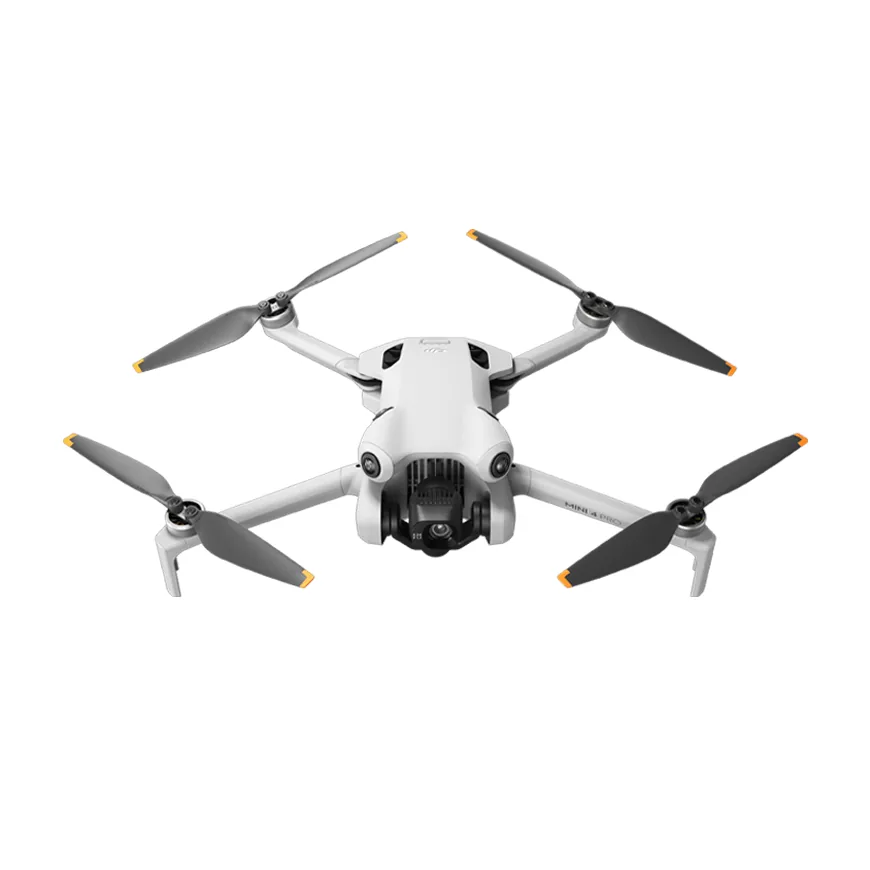
Omnidirectional sensing on a 249-gram airframe is the trick nothing else in this catalog fully matches. Binocular vision on all sides plus a downward 3D infrared sensor means the Mini 4 Pro will stop for a branch it is backing into, which matters far more than it sounds once you fly near trees. The 1/1.3-inch 48MP sensor records 4K/60 HDR and 4K/100 slow motion at 150 Mbps in 10-bit D-Log M, so the footage grades rather than just plays. O4 transmission is rated to 20 km in FCC regions, which is far beyond any legal line-of-sight flight but does mean a clean 1080p feed at the distances people actually fly. The caveat is the one everyone trips on: the 45-minute battery is a separate, heavier pack that takes the aircraft over the registration threshold, so the honest number for a registration-free flight is 34 minutes.
- Sensor
- 69.1 mm²
- Claimed
- 34 min
- Bundle
- ~$1,099
Best for: Flying near trees and buildings without registering
Full spec sheet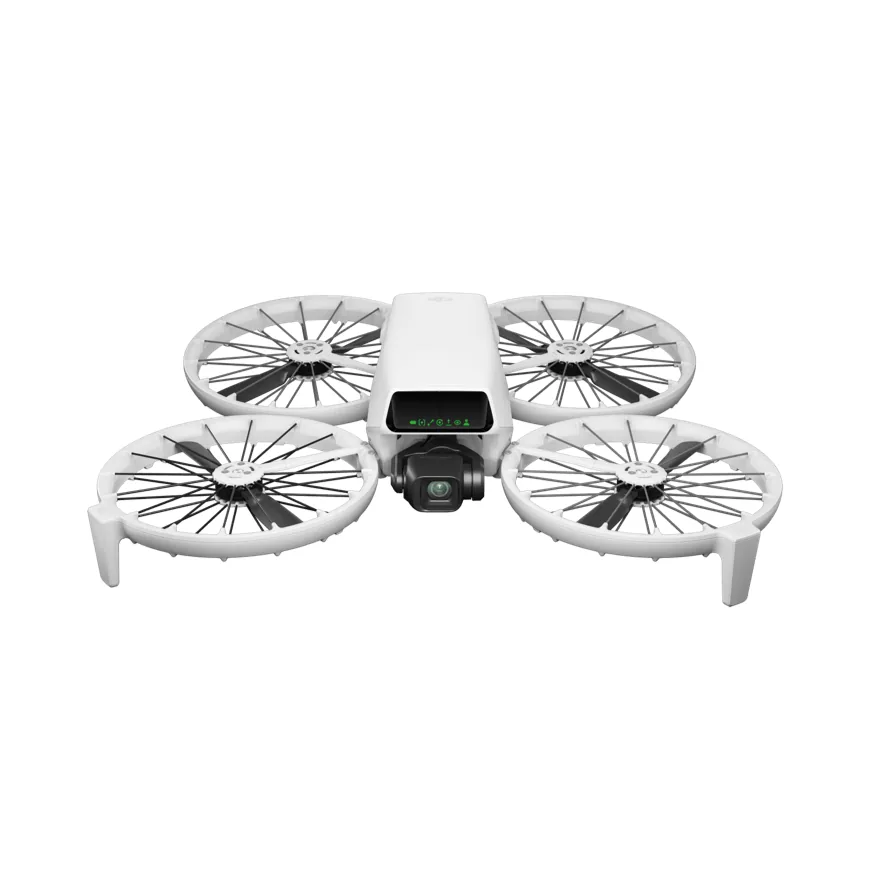
DJI
DJI Flip
Full-coverage propeller guards that fold flat is the idea, and it is a better one than the spec sheet suggests. Unfolded, the Flip's four cages sit around the props like a Neo's but carry a proper 1/1.3-inch 48MP camera on a three-axis gimbal behind them; folded, the whole thing collapses to something close to a Mini's footprint. It will take off from a palm and fly a preset without a controller at all, and it will also fly properly on an RC-N3 with 10-bit D-Log M and O4 transmission. Forward 3D infrared sensing covers the direction you are most likely to hit something and nothing else, which is an honest middle ground between the Neo's nothing and the Mini 4 Pro's everything. The bundle pricing is the awkward part — the screened-controller combo costs nearly twice the base kit.
- Sensor
- 69.1 mm²
- Claimed
- 31 min
- Bundle
- ~$779
Best for: Flying safely around people with a real camera
Full spec sheet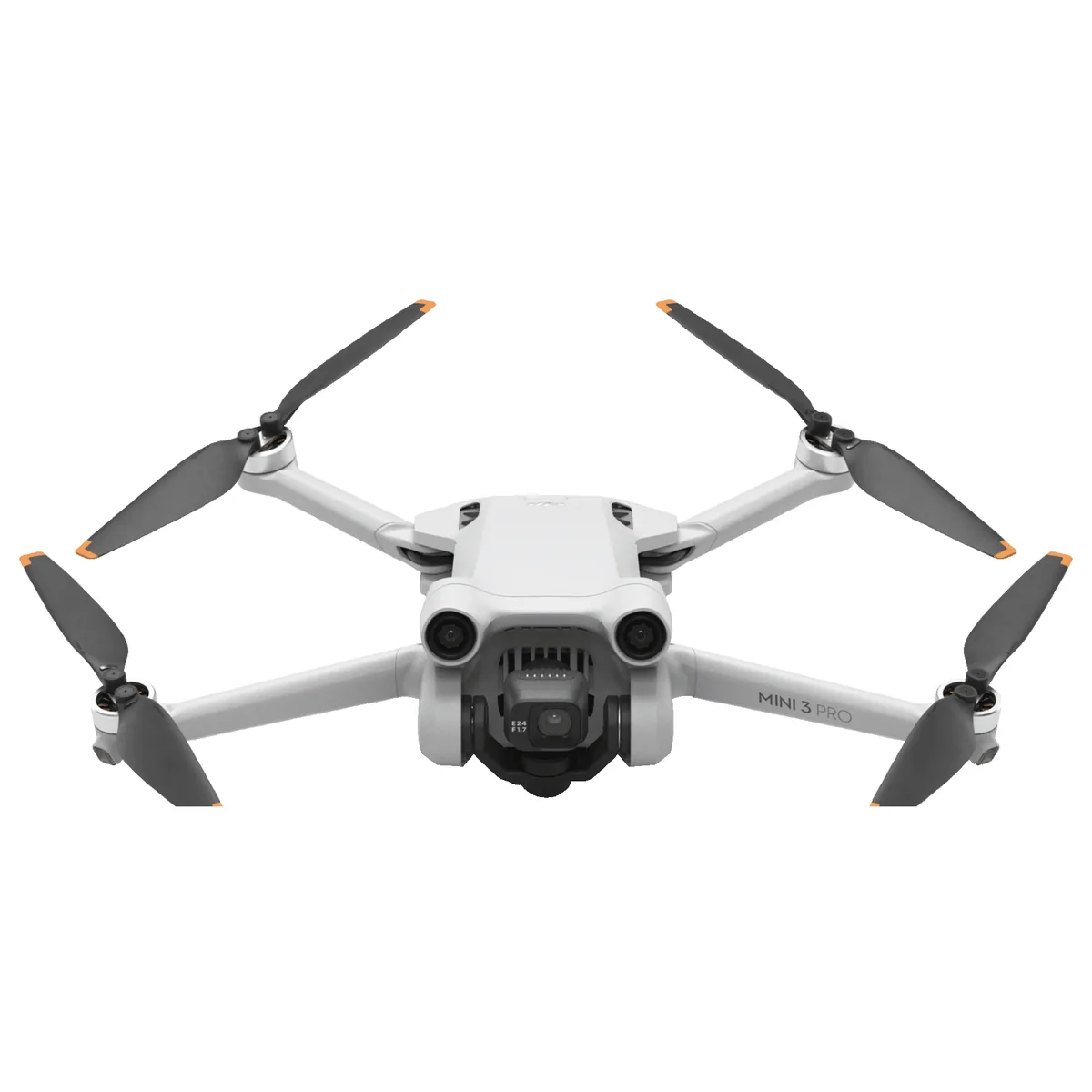
This was the aircraft that made obstacle sensing possible under 250 grams, and everything in the Mini line since has built on it. Forward, backward and downward sensors, a 1/1.3-inch 48MP sensor that rotates 90 degrees for true vertical shooting, 4K/60 HDR at 150 Mbps in 10-bit D-Cinelike, and a genuine 34 minutes on the standard pack. What the Mini 4 Pro added two years later was sensing on the remaining sides, O4 in place of O3, and 4K/100 slow motion. If you find one at a real discount the older aircraft still does most of the job, but DJI discontinued it in 2024, so you are shopping for the last of the stock and betting on battery availability a few years out.
- Sensor
- 69.1 mm²
- Claimed
- 34 min
- Base kit
- ~$759
Best for: Sensing under 250 g at a discount
Full spec sheet