DJI
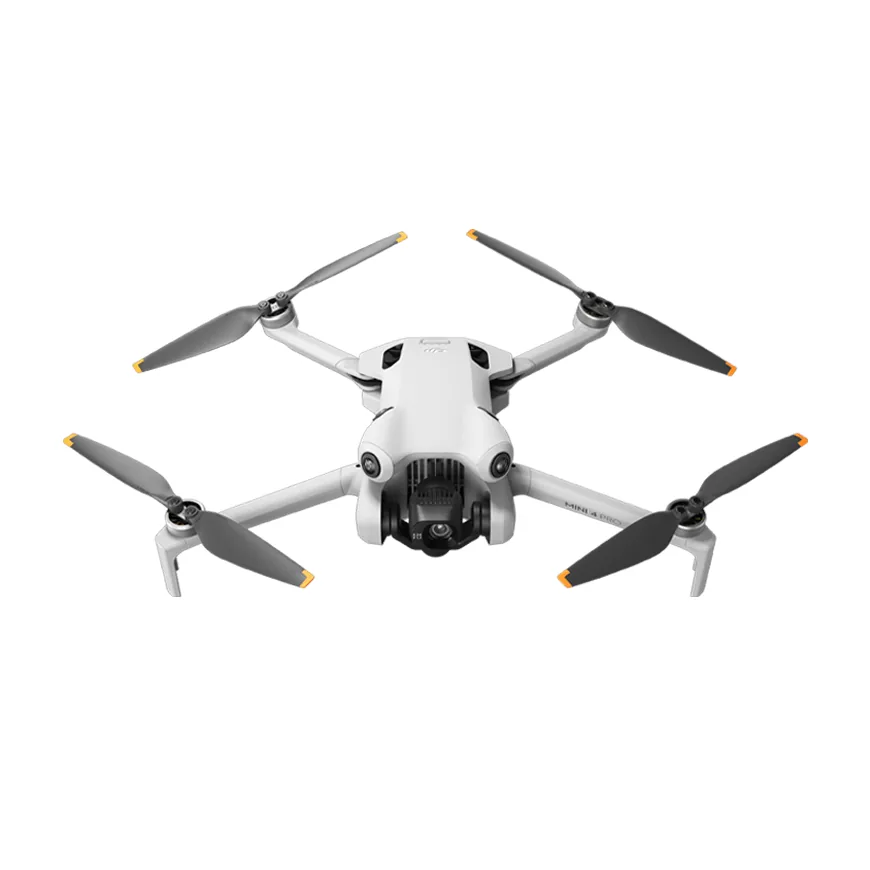
DJI Mini 4 Pro
Omnidirectional sensing on a 249-gram airframe is the trick nothing else in this catalog fully matches. Binocular vision on all sides plus a downward 3D infrared sensor means the Mini 4 Pro will stop for a branch it is backing into, which matters far more than it sounds once you fly near trees. The 1/1.3-inch 48MP sensor records 4K/60 HDR and 4K/100 slow motion at 150 Mbps in 10-bit D-Log M, so the footage grades rather than just plays. O4 transmission is rated to 20 km in FCC regions, which is far beyond any legal line-of-sight flight but does mean a clean 1080p feed at the distances people actually fly. The caveat is the one everyone trips on: the 45-minute battery is a separate, heavier pack that takes the aircraft over the registration threshold, so the honest number for a registration-free flight is 34 minutes.
The 250-gram line
Under 250 g: recreational flight needs no FAA registration, and Remote ID does not apply.
Every recreational flyer must also take TRUST and carry proof of it, at any weight. Rules checked against faa.gov on 2026-09-24. Not legal advice — how this is worked out.
What that 34-minute claim is measured at
DJI's 34 minutes is measured flying forward at a constant speed in windless conditions on the standard 18.96 Wh battery. The 45-minute figure printed elsewhere needs the 28.4 Wh Intelligent Flight Battery Plus, which pushes takeoff weight past 249 g and cancels the registration exemption in the US.
That works out to 3.1 claimed minutes per $100 of the multi-battery bundle. Compared with the rest of the catalog.
Buying one in the US: limited
Checked 24 Sep 2026. FCC-authorised long before the 23 Dec 2025 Covered List cutoff, so US stock is legal to sell and fly, but no fresh units are being imported and CBP has been holding shipments under the UFLPA since Oct 2024. What is on shelves is what there is.
Specifications
True first-year cost: ~$1,099 — the multi-battery bundle at ~$1,099; no crash-plan price has been verified for this model, so nothing is added for it.
What it has
- Omnidirectional binocular vision plus downward 3D infrared
- 10-bit D-Log M and HLG recording at 150 Mbps
- True vertical shooting — the gimbal rotates 90 degrees
- ActiveTrack 360 with trace, spotlight and parallel modes
- Waypoint flight and cruise control
- Built-in Remote ID broadcast
- 2 GB internal storage as an overflow for a full card
In its favour
- The only sub-250 g drone here with sensing on every side, including backward
- 10-bit D-Log M gives real grading latitude from a drone this small
- Built-in Remote ID, so nothing has to be bolted on if you later fly under Part 107
- Vertical shooting is a true gimbal rotation, not a crop
- O4 keeps a usable feed at ranges where older Mini transmission broke up
Against it
- The 45-minute battery pushes it over 249 g and costs you the registration exemption
- Level 5 wind resistance is honest but thin — this is still a 249 g aircraft in gusts
- No mechanical aperture, so bright days need ND filters
- US supply is remaining inventory only, and prices move with it
- The screened RC 2 controller is a separate purchase on the base kit
The two lists above are drawn from the manufacturer’s published specifications and from the cited reviews, not from owner reports.
What owners report
Summarised from public owner discussions plus the dated, published sources listed at the end.
This is the aircraft most people in owner discussions end up recommending to someone buying their first serious drone, and the reason is almost always the sensing rather than the camera. Owners describe it stopping for branches that a Mini 3 or a Mini 4K would have hit, and one reports a collision with a power cable that ended in a couple of barrel rolls and a nicked propeller rather than a recovery mission. The camera earns its own praise separately: aurora shots, dusk landscapes and wedding work all turn up, and owners moving from the Mini 3 Pro single out the full Lightroom colour-profile support as a visible improvement rather than a spec-sheet one.
The complaints cluster around two things, and neither is the camera. The first is the link: several owners report instant disconnections with a clear sky and an unobstructed view of the aircraft, with the interference warning appearing only after the fact. The second is what happens next — return-to-home within roughly 50 metres of the home point does not always climb to the configured return altitude before setting off, which has cost at least one owner an aircraft into a tree at the edge of their own property. The other recurring theme is quieter and entirely self-inflicted: compass and IMU calibration gets skipped for a year until it produces a crash.
The practical trap for buyers is the Fly More Combo. The extended batteries that give the advertised 45 minutes take takeoff weight to around 292 grams, which puts the aircraft over the registration threshold and, for owners outside the US, into licence territory. Several have discovered this after weighing the drone rather than before buying the bundle.
What owners like
- Owners consistently report the omnidirectional sensing earning its keep near trees, where every other sub-250 g drone would have kept going
- Low-light results surprise people — aurora and dusk footage from this aircraft turns up regularly and holds up
- Raw files are fully supported in Lightroom with an embedded colour profile, which owners moving up from a Mini 3 Pro call a visible jump
- Several owners describe it replacing a mirrorless camera for a whole trip, which is not a claim people make about smaller Minis
- Repairs under warranty have gone better than expected, including out-of-policy cases handled without an argument
- A collision with a cable has been reported ending in a barrel roll and a continued flight rather than a crash
Common complaints
- Abrupt disconnections reported as 'aircraft interference' with a clear sky and full line of sight, with the warning appearing only after the link has already gone
- Return-to-home triggered within about 50 m of the pilot may not climb to the configured altitude first — one owner lost an aircraft to a branch this way, three metres inside that radius
- Compass and IMU calibration is skipped by almost everyone until it causes a crash, and it is not prompted often enough
- Firmware updates have run the aircraft hot enough to shut itself down mid-update
- Propeller tips wear visibly within a month of regular flying
- The Fly More Combo's extended batteries take the aircraft to roughly 292 g, which quietly moves owners into registration and, in some countries, a licence
Questions owners ask
Does the Mini 4 Pro really disconnect at short range?
Why did return-to-home fly it into a tree?
Do the Fly More batteries push it over 250 grams?
How often should the compass be calibrated?
Is the camera actually better than the Mini 3's?
Published sources: dji.com, uavcoach.com, dronesgator.com
DJI Mini 4 Pro, head-to-head
Shopped alongside it
More from DJI →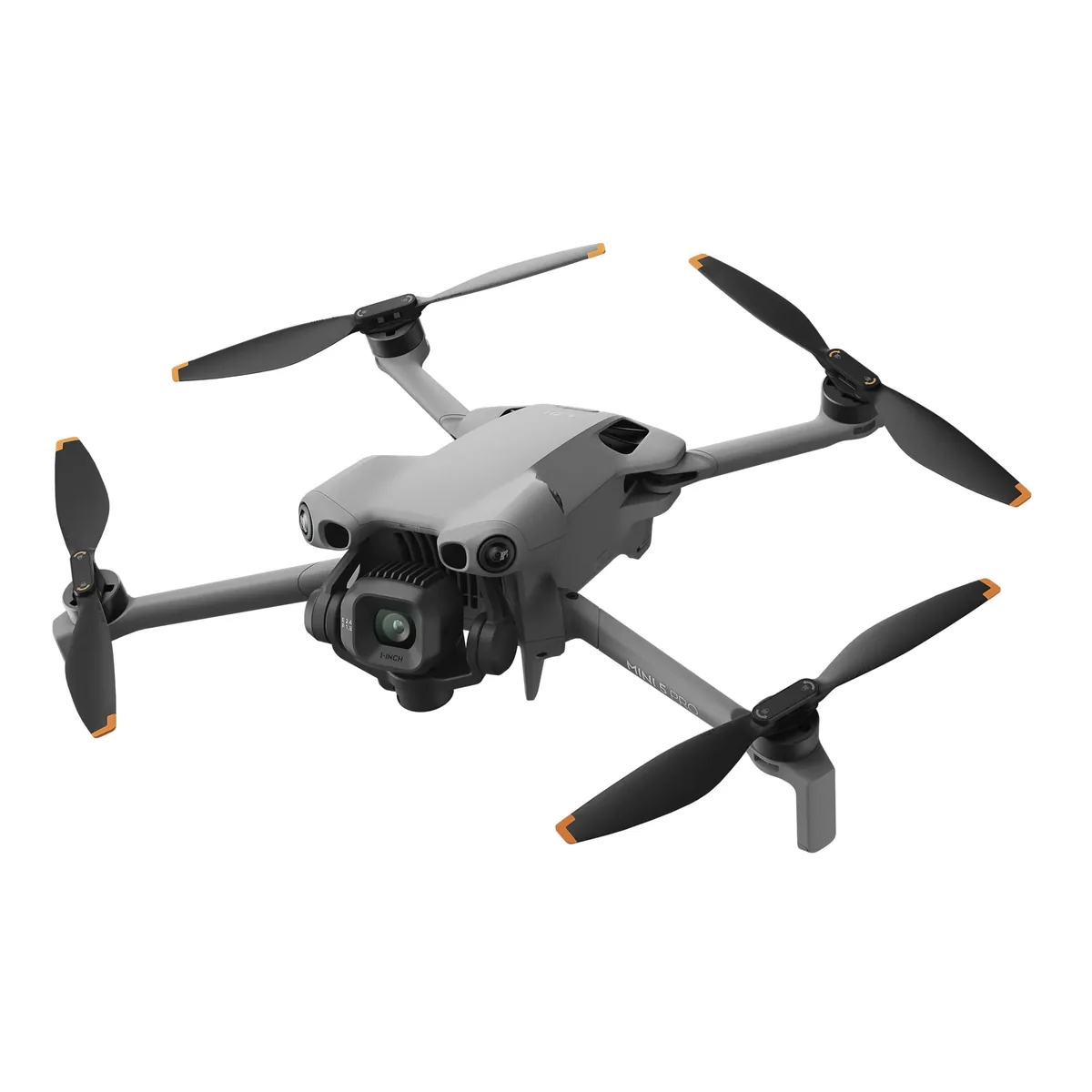
A one-inch sensor under 250 grams was supposed to be impossible, and this is the drone that did it. Fifty megapixels on a 116 mm² sensor at f/1.8 is roughly two-thirds more light-gathering area than the Mini 4 Pro's 1/1.3-inch chip, which shows up exactly where you would expect: dusk, interiors of shadow, and anything where the smaller Minis start smearing. It adds forward LiDAR to the omnidirectional vision system, so it sees in the dark rather than just in daylight, and the gimbal swings through 225 degrees for true vertical framing. The complication is where you buy it. DJI never put it in its own US store, and the units on US shelves arrived through import channels, which changes what happens when you crash it.
- Sensor
- 116.2 mm²
- Claimed
- 36 min
- Bundle
- ~$1,043
Best for: Low light and vertical video without registering
Full spec sheet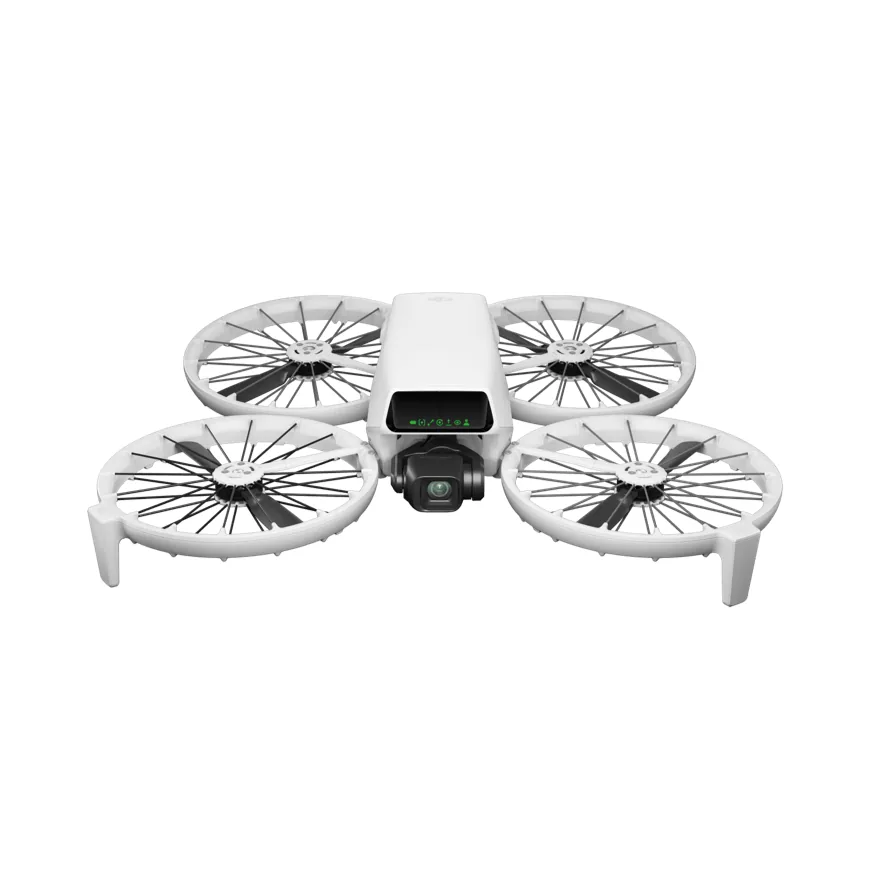
DJI
DJI Flip
Full-coverage propeller guards that fold flat is the idea, and it is a better one than the spec sheet suggests. Unfolded, the Flip's four cages sit around the props like a Neo's but carry a proper 1/1.3-inch 48MP camera on a three-axis gimbal behind them; folded, the whole thing collapses to something close to a Mini's footprint. It will take off from a palm and fly a preset without a controller at all, and it will also fly properly on an RC-N3 with 10-bit D-Log M and O4 transmission. Forward 3D infrared sensing covers the direction you are most likely to hit something and nothing else, which is an honest middle ground between the Neo's nothing and the Mini 4 Pro's everything. The bundle pricing is the awkward part — the screened-controller combo costs nearly twice the base kit.
- Sensor
- 69.1 mm²
- Claimed
- 31 min
- Bundle
- ~$779
Best for: Flying safely around people with a real camera
Full spec sheet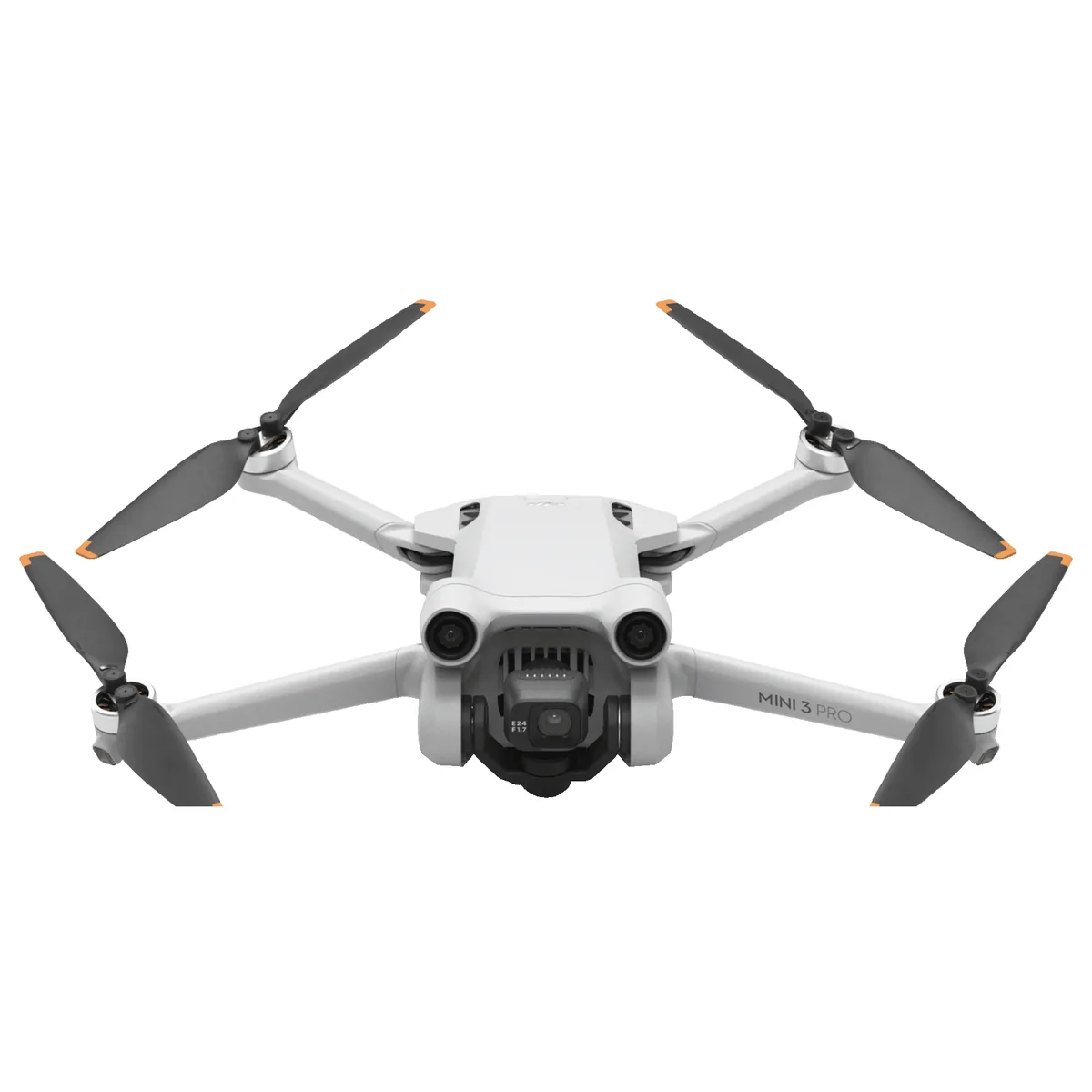
This was the aircraft that made obstacle sensing possible under 250 grams, and everything in the Mini line since has built on it. Forward, backward and downward sensors, a 1/1.3-inch 48MP sensor that rotates 90 degrees for true vertical shooting, 4K/60 HDR at 150 Mbps in 10-bit D-Cinelike, and a genuine 34 minutes on the standard pack. What the Mini 4 Pro added two years later was sensing on the remaining sides, O4 in place of O3, and 4K/100 slow motion. If you find one at a real discount the older aircraft still does most of the job, but DJI discontinued it in 2024, so you are shopping for the last of the stock and betting on battery availability a few years out.
- Sensor
- 69.1 mm²
- Claimed
- 34 min
- Base kit
- ~$759
Best for: Sensing under 250 g at a discount
Full spec sheet