DJI
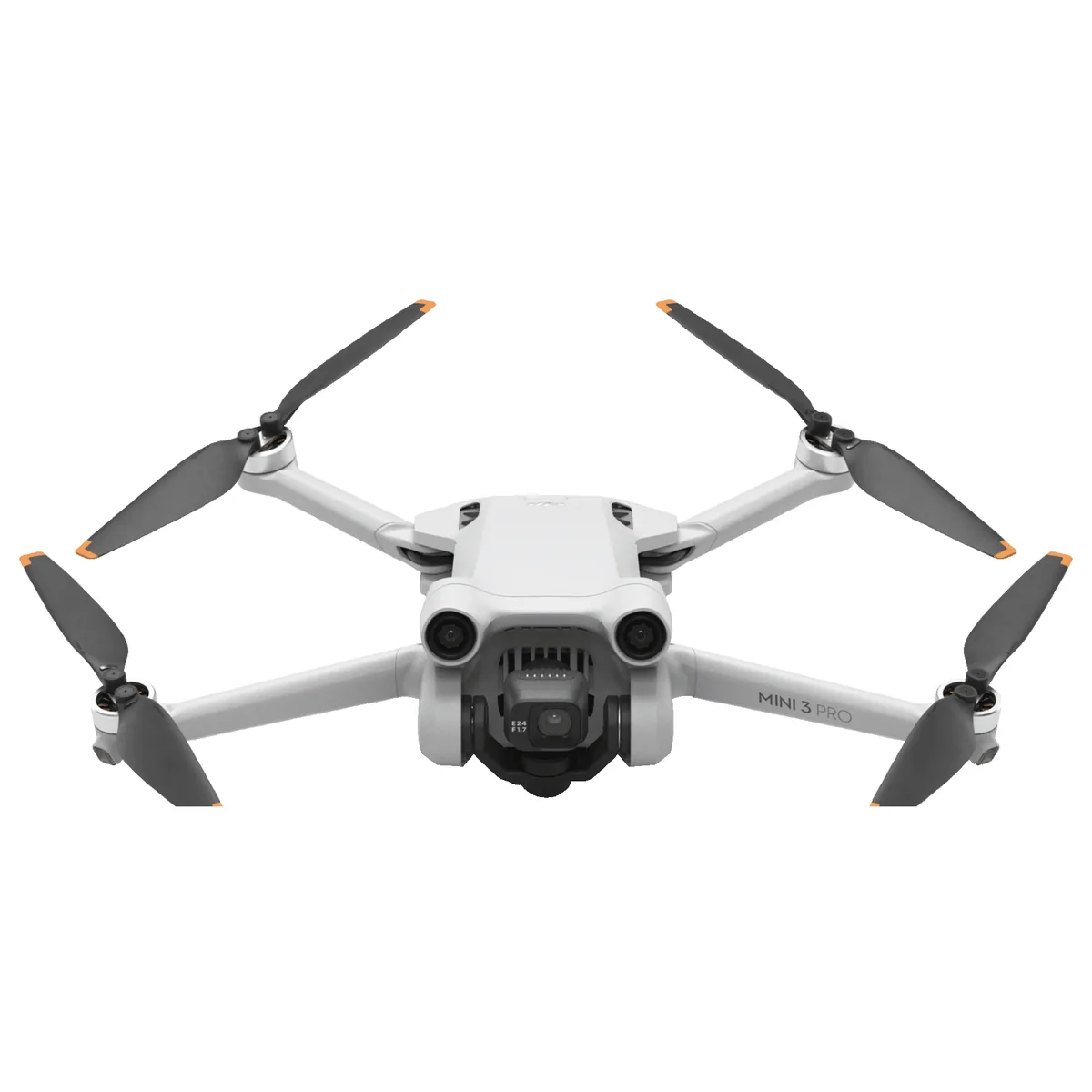
DJI Mini 3 Pro
This was the aircraft that made obstacle sensing possible under 250 grams, and everything in the Mini line since has built on it. Forward, backward and downward sensors, a 1/1.3-inch 48MP sensor that rotates 90 degrees for true vertical shooting, 4K/60 HDR at 150 Mbps in 10-bit D-Cinelike, and a genuine 34 minutes on the standard pack. What the Mini 4 Pro added two years later was sensing on the remaining sides, O4 in place of O3, and 4K/100 slow motion. If you find one at a real discount the older aircraft still does most of the job, but DJI discontinued it in 2024, so you are shopping for the last of the stock and betting on battery availability a few years out.
The 250-gram line
Under 250 g: recreational flight needs no FAA registration, and Remote ID does not apply.
Every recreational flyer must also take TRUST and carry proof of it, at any weight. Rules checked against faa.gov on 2026-09-24. Not legal advice — how this is worked out.
What that 34-minute claim is measured at
34 minutes on the standard battery, measured flying forward at a constant speed in windless conditions. The 47-minute Intelligent Flight Battery Plus takes the aircraft past 249 g.
That works out to 4.5 claimed minutes per $100 of the base kit. Compared with the rest of the catalog.
Buying one in the US: limited
Checked 24 Sep 2026. Discontinued by DJI in 2024 when the Mini 4 Pro arrived, but still turning up new at US retailers and on DJI's own store listings. End-of-life stock.
Specifications
True first-year cost: ~$759 — the base kit at ~$759; no crash-plan price has been verified for this model, so nothing is added for it.
What it has
- Forward, backward and downward obstacle sensing under 250 g
- 1/1.3-inch 48MP sensor with 90-degree gimbal rotation for vertical video
- 4K/60 HDR at 150 Mbps in 10-bit D-Cinelike
- O3 transmission rated to 12 km in FCC regions
- Built-in Remote ID broadcast
- MasterShots and FocusTrack subject tracking
In its favour
- Three-way sensing and a big sensor for less than a Mini 4 Pro
- True vertical shooting via gimbal rotation, not a crop
- 10-bit D-Cinelike gives real grading room
- 34 minutes on the pack that keeps it under 249 g
Against it
- Discontinued in 2024, so batteries and spares get harder from here
- No side sensing — the Mini 4 Pro's main advantage
- O3 rather than O4, with a shorter rated range and older feed
- 4K tops out at 60fps, with no 100fps slow motion
- Often priced close to a Mini 4 Pro, which makes the older aircraft hard to justify
The two lists above are drawn from the manufacturer’s published specifications and from the cited reviews, not from owner reports.
What owners report
Summarised from public owner discussions plus the dated, published sources listed at the end.
The Mini 3 Pro was the aircraft that made obstacle sensing possible under 250 grams, and owner discussions still treat it with a certain respect for that. People who own one and have flown a Mini 4 Pro generally describe the newer aircraft as an incremental improvement — side sensing, O4 instead of O3, higher frame rates — rather than a different class of thing, which is why plenty of owners have not upgraded.
The case against buying one now is not about the aircraft. It was discontinued in 2024, and the recurring advice in discussions is that the price it turns up at is rarely far enough below a Mini 4 Pro to justify buying into a line that has stopped. The other specific gripe from owners who edit is colour: the raw files get a generic profile in Lightroom where the Mini 4 Pro's are fully supported with an embedded one, and people who have used both describe the difference as immediately visible.
What owners like
- Tri-directional sensing under 250 grams was genuinely new when it arrived, and owners still cite it as the reason to pick this over a Mini 3
- The rotating gimbal for true vertical video is the feature owners shooting for phones mention first
- Long-standing model with abundant third-party accessories, spare props and batteries still readily available
- Owners who moved to a Mini 4 Pro describe the jump as incremental rather than transformative, which is a compliment to the older aircraft
Common complaints
- Discontinued in 2024, so owners are increasingly discussing battery availability as a reason to buy something newer instead
- Lightroom support for its raw files is noticeably weaker than the Mini 4 Pro's — owners describe only a generic colour profile being offered
- No side sensing, which is exactly the gap the Mini 4 Pro closed
- Frequently priced close enough to a Mini 4 Pro that owners in discussions tell people not to bother
Questions owners ask
Is it still worth buying in 2026?
What does the Mini 4 Pro actually add?
Are batteries still available?
Published sources: dronecompare.org, dronedj.com
DJI Mini 3 Pro, head-to-head
Shopped alongside it
More from DJI →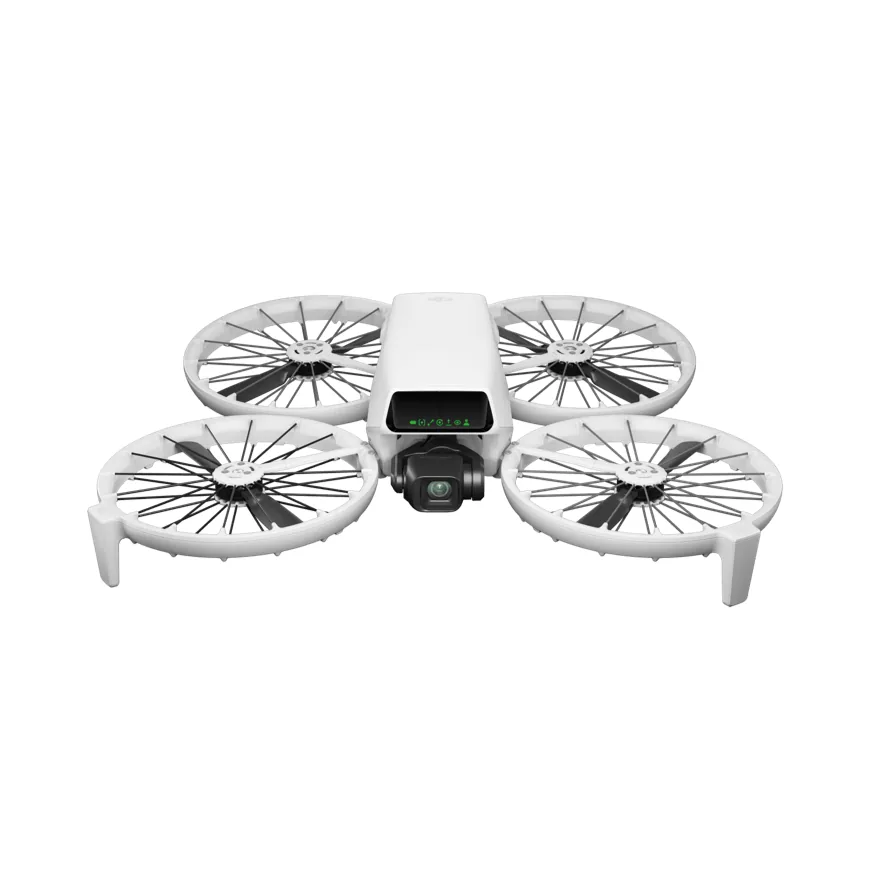
DJI
DJI Flip
Full-coverage propeller guards that fold flat is the idea, and it is a better one than the spec sheet suggests. Unfolded, the Flip's four cages sit around the props like a Neo's but carry a proper 1/1.3-inch 48MP camera on a three-axis gimbal behind them; folded, the whole thing collapses to something close to a Mini's footprint. It will take off from a palm and fly a preset without a controller at all, and it will also fly properly on an RC-N3 with 10-bit D-Log M and O4 transmission. Forward 3D infrared sensing covers the direction you are most likely to hit something and nothing else, which is an honest middle ground between the Neo's nothing and the Mini 4 Pro's everything. The bundle pricing is the awkward part — the screened-controller combo costs nearly twice the base kit.
- Sensor
- 69.1 mm²
- Claimed
- 31 min
- Bundle
- ~$779
Best for: Flying safely around people with a real camera
Full spec sheet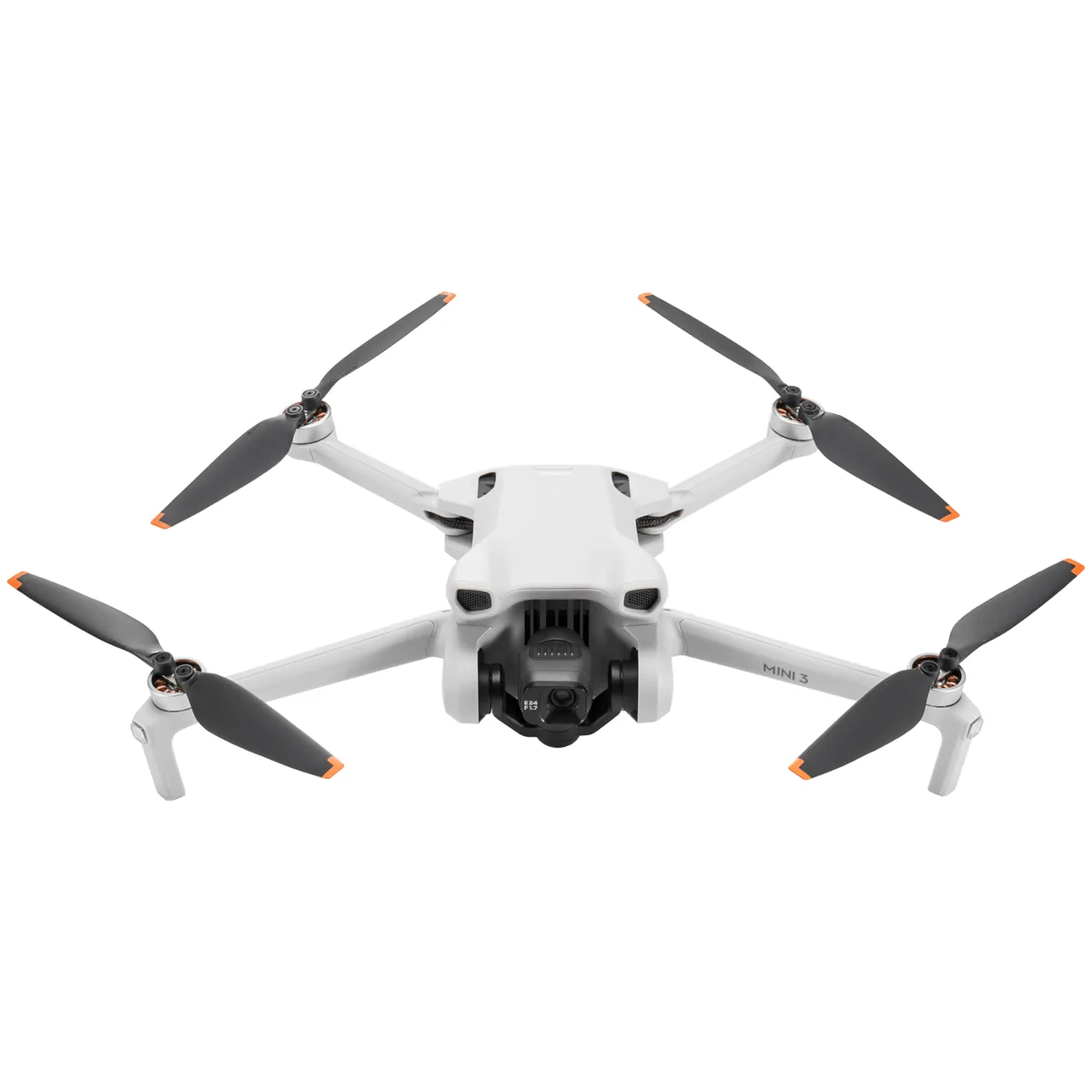
DJI
DJI Mini 3
Everything the Mini 4 Pro has except the sensing and the frame rates, for a good deal less money. Mini 3 carries the same 1/1.3-inch 48MP sensor, the same three-axis gimbal and the same true vertical shooting, then stops at 4K/30 in 8-bit with no log profile and no obstacle detection beyond the downward vision system. Its 38-minute headline is the most quotable example of why this site records flight conditions: DJI measures it hovering in a windless lab, in photo mode, running the battery from full to empty. Fly it forward with the camera rolling and land with a reserve and you are in the mid-twenties. As a daylight stills and simple-video aircraft that never needs registering, it still holds up; as a drone to fly through anything, it does not. There is one more consideration for anyone comparing it against a Mini 4K at a similar price: the Mini 3 has been out long enough that the accessory market is deep and second-hand batteries are plentiful, while the newer aircraft is still building that.
- Sensor
- 69.1 mm²
- Claimed
- 38 min
- Bundle
- ~$598
Best for: Daylight stills and simple video with no registration
Full spec sheet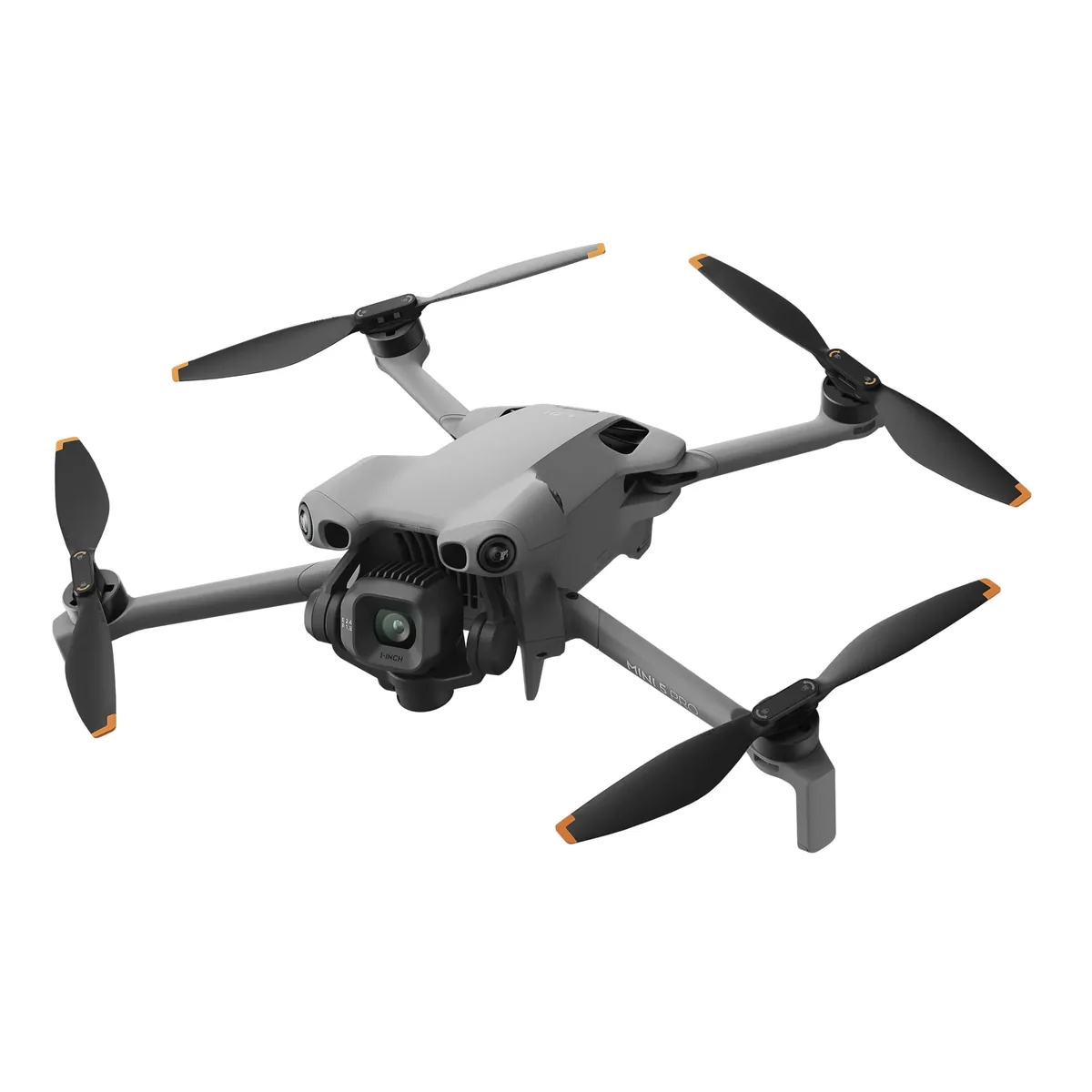
A one-inch sensor under 250 grams was supposed to be impossible, and this is the drone that did it. Fifty megapixels on a 116 mm² sensor at f/1.8 is roughly two-thirds more light-gathering area than the Mini 4 Pro's 1/1.3-inch chip, which shows up exactly where you would expect: dusk, interiors of shadow, and anything where the smaller Minis start smearing. It adds forward LiDAR to the omnidirectional vision system, so it sees in the dark rather than just in daylight, and the gimbal swings through 225 degrees for true vertical framing. The complication is where you buy it. DJI never put it in its own US store, and the units on US shelves arrived through import channels, which changes what happens when you crash it.
- Sensor
- 116.2 mm²
- Claimed
- 36 min
- Bundle
- ~$1,043
Best for: Low light and vertical video without registering
Full spec sheet