DJI Mini 4 Pro vs DJI Mini 4K
Both are under the 250-gram line, so the legal position is identical and the decision comes down to the rows tinted below — the specs where these two actually differ. The DJI Mini 4K is the cheaper of the two at ~$449.
| Drone | ||
|---|---|---|
| Bundle price | ~$1,099multi-battery bundle | ~$449multi-battery bundle |
| True first-year price | ~$1,099 | ~$449 |
| Flight min per $100 | 3.1 | 6.9 |
| Rating | No cited rating | No cited rating |
| Takeoff weight | 249 g | 246 g |
| FAA registration | Not required | Not required |
| Remote ID | Built-in | Built-in |
| Sensor size | 1/1.3" | 1/2.3" |
| Sensor area | 69.1 mm² | 28.1 mm² |
| Megapixels | 48 MP | 12 MP |
| Max video | 4K/60fps HDR, 4K/100fps slow motion | 4K/30fps |
| Colour depth | 10-bit | 8-bit |
| Log profile | D-Log M | — |
| Gimbal | 3-axis | 3-axis |
| Obstacle sensing | Omnidirectional | None |
| Claimed flight time | 34 min | 31 min |
| Tested flight time | — | — |
| Battery | 18.96 Wh | 17.32 Wh |
| Transmission | O4 | O2 |
| Max range | 20 km | 10 km |
| Max speed | 36 mph | 36 mph |
| Wind resistance | Level 5 (10.7 m/s) | Level 5 (10.7 m/s) |
| Service ceiling | 4000 m | 4000 m |
| Internal storage | 2 GB | None |
| Controller | DJI RC-N2 (phone required); DJI RC 2 with built-in screen at extra cost | DJI RC-N1 (phone required) |
| Return to home | Yes | Yes |
| Geofencing | Yes | Yes |
| Care plan (1 yr) | Not in our snapshot | Not in our snapshot |
| US availability | Limited | Limited |
| Released | 2023 | 2024 |
| Flight claim measured at | DJI's 34 minutes is measured flying forward at a constant speed in windless conditions on the standard 18.96 Wh battery. The 45-minute figure printed elsewhere needs the 28.4 Wh Intelligent Flight Battery Plus, which pushes takeoff weight past 249 g and cancels the registration exemption in the US. | DJI quotes 31 minutes for a single 2250 mAh battery in windless conditions. It is a hover-and-cruise laboratory figure, not a number from a windy afternoon with the camera rolling. |
DJI Mini 4 Pro
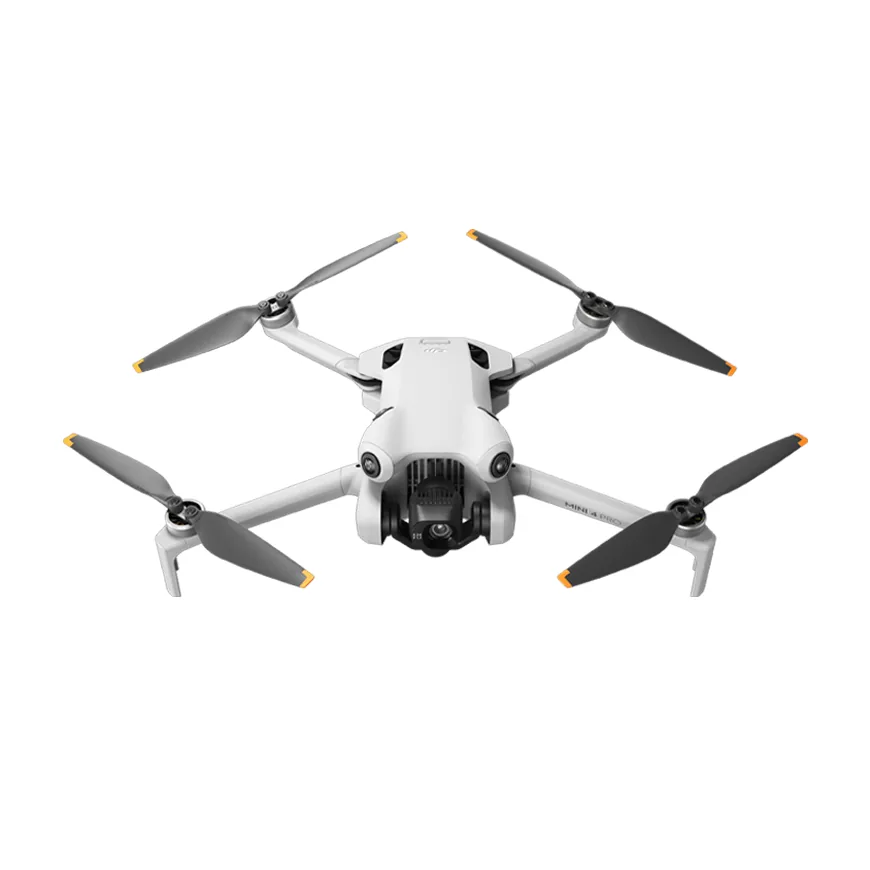
Omnidirectional sensing on a 249-gram airframe is the trick nothing else in this catalog fully matches. Binocular vision on all sides plus a downward 3D infrared sensor means the Mini 4 Pro will stop for a branch it is backing into, which matters far more than it sounds once you fly near trees. The 1/1.3-inch 48MP sensor records 4K/60 HDR and 4K/100 slow motion at 150 Mbps in 10-bit D-Log M, so the footage grades rather than just plays. O4 transmission is rated to 20 km in FCC regions, which is far beyond any legal line-of-sight flight but does mean a clean 1080p feed at the distances people actually fly. The caveat is the one everyone trips on: the 45-minute battery is a separate, heavier pack that takes the aircraft over the registration threshold, so the honest number for a registration-free flight is 34 minutes.
Full spec sheet →DJI Mini 4K
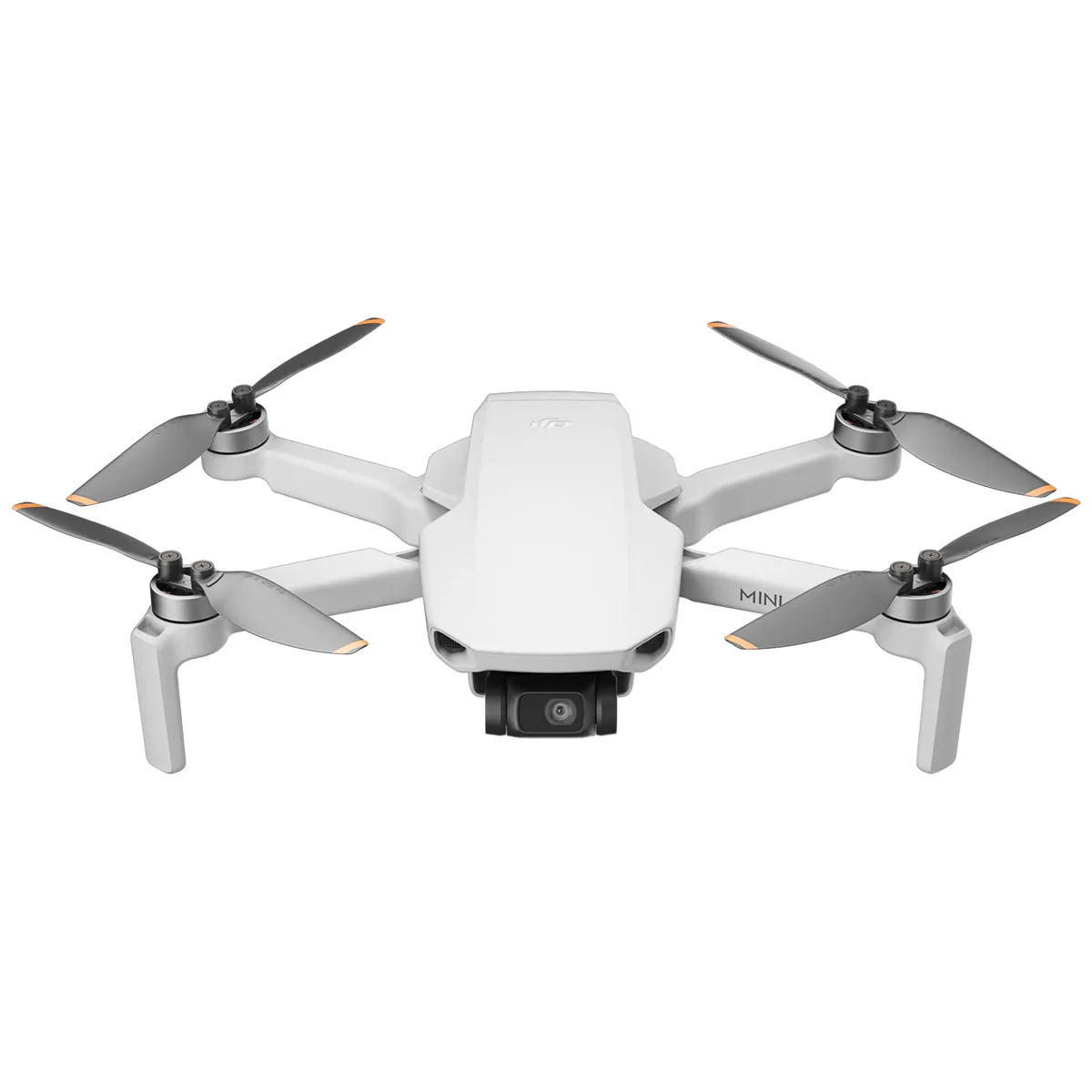
Three hundred dollars is the entire point here. Strip a Mini down to a 1/2.3-inch 12MP sensor, 8-bit 4K/30, and a downward vision system with nothing looking forward, keep the three-axis gimbal and the GPS return-to-home, and you get the cheapest genuinely stable aerial camera DJI sells. Nothing about the footage will impress anyone who has seen a 1/1.3-inch sensor at dusk, but in daylight it is sharp and level, which is more than any sub-$200 quadcopter manages. O2 transmission is rated to 10 km and holds a 720p feed rather than O4's 1080p. Treat the lack of obstacle sensing as the defining spec: this aircraft will fly into a branch at full speed without hesitating, so it belongs in open fields while you learn.
Full spec sheet →