DJI
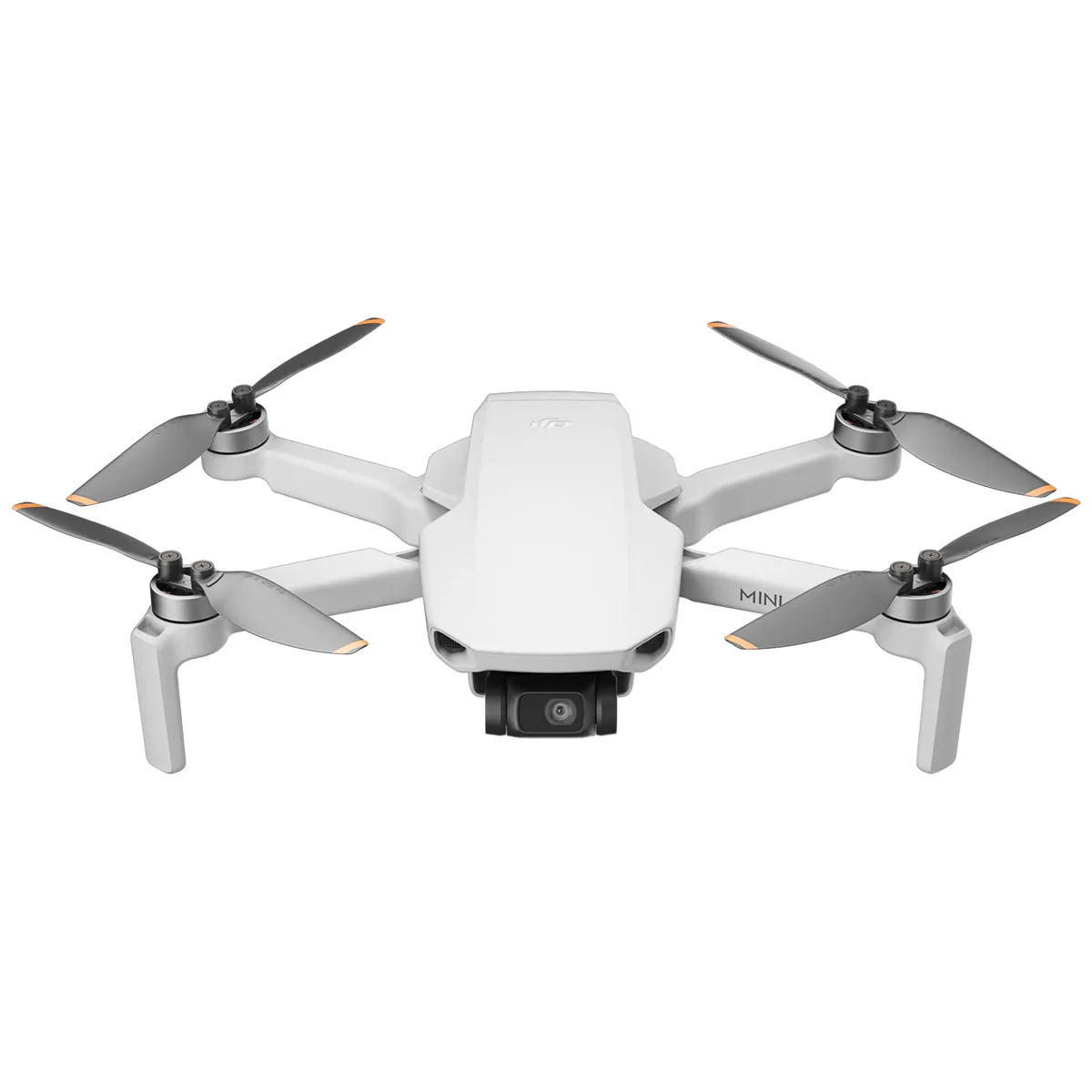
DJI Mini 4K
Three hundred dollars is the entire point here. Strip a Mini down to a 1/2.3-inch 12MP sensor, 8-bit 4K/30, and a downward vision system with nothing looking forward, keep the three-axis gimbal and the GPS return-to-home, and you get the cheapest genuinely stable aerial camera DJI sells. Nothing about the footage will impress anyone who has seen a 1/1.3-inch sensor at dusk, but in daylight it is sharp and level, which is more than any sub-$200 quadcopter manages. O2 transmission is rated to 10 km and holds a 720p feed rather than O4's 1080p. Treat the lack of obstacle sensing as the defining spec: this aircraft will fly into a branch at full speed without hesitating, so it belongs in open fields while you learn.
The 250-gram line
Under 250 g: recreational flight needs no FAA registration, and Remote ID does not apply.
Every recreational flyer must also take TRUST and carry proof of it, at any weight. Rules checked against faa.gov on 2026-09-24. Not legal advice — how this is worked out.
What that 31-minute claim is measured at
DJI quotes 31 minutes for a single 2250 mAh battery in windless conditions. It is a hover-and-cruise laboratory figure, not a number from a windy afternoon with the camera rolling.
That works out to 6.9 claimed minutes per $100 of the multi-battery bundle. Compared with the rest of the catalog.
Buying one in the US: limited
Checked 24 Sep 2026. Authorised well before the FCC Covered List cutoff of 23 Dec 2025, so existing US stock sells normally; restocking is the problem, not legality.
Specifications
True first-year cost: ~$449 — the multi-battery bundle at ~$449; no crash-plan price has been verified for this model, so nothing is added for it.
What it has
- Three-axis mechanical gimbal at the lowest price DJI offers one
- 4K/30 video and 12MP stills
- GPS return-to-home and downward vision positioning
- O2 transmission rated to 10 km in FCC regions
- Built-in Remote ID broadcast
- QuickShots automated moves
In its favour
- The cheapest route to genuinely gimbal-stabilised 4K in this catalog
- Under 250 g, so recreational flight needs no FAA registration
- Return-to-home and GPS hold make it far harder to lose than a toy quadcopter
- Simple enough that a first flight is genuinely uneventful
Against it
- No obstacle sensing in any direction — it will hit what you point it at
- 1/2.3-inch sensor falls apart in low light, with no log profile and 8-bit colour
- O2 caps the live feed at 720p where newer models run 1080p
The two lists above are drawn from the manufacturer’s published specifications and from the cited reviews, not from owner reports.
What owners report
Summarised from public owner discussions plus the dated, published sources listed at the end.
The Mini 4K occupies a specific place in owner discussions: it is what people recommend when the question is "what should my first drone be" and the answer must not involve spending $759. Owners are consistently pleased with the footage for the money, and the three-axis gimbal is the reason — at this price a stabilised shot is not a given. The usual pattern in threads is somebody buying one, enjoying it for a few weeks, and then buying a Mini 4 Pro because they have discovered what obstacle sensing and 10-bit do.
Two practical problems come up. The first is memory cards: several owners have found 4K/30 recording stopping after a few seconds on cheap cards bought in bulk, and resolving instantly when they swap to a card from a known brand. The second is the sensing, or rather its absence — this aircraft has a downward vision system and nothing else, and owners learn what that means the first time they misjudge a tree line. Neither is a fault so much as the shape of the product at the price.
What owners like
- Owners repeatedly describe it as the right first drone: cheap enough that a crash is survivable financially, and stable enough that the first flight is uneventful
- The three-axis gimbal produces footage people are genuinely happy with at a price where electronic stabilisation is normal
- Turns up heavily discounted and refurbished, with owners reporting well under list for essentially new units
- Light enough and simple enough that owners hand it to complete beginners without worrying
Common complaints
- The lack of forward sensing is the complaint that arrives second, usually after the first close call with a tree
- Cheap microSD cards cannot sustain 4K/30 — owners report recordings cutting out after about twelve seconds until they switch to a known-good card
- Owners who buy it first commonly report wanting the Mini 4 Pro's features within a couple of months and buying one anyway
- Whether it broadcasts Remote ID has been a moving target across firmware versions, which matters for anyone planning to fly it over 249 g equivalents or under Part 107
Questions owners ask
Why does 4K recording keep stopping after a few seconds?
Should I buy this or the Mini 4 Pro?
Does the Mini 4K actually broadcast Remote ID?
Is it worth buying refurbished?
Published sources: dronexl.co, support.dji.com
DJI Mini 4K, head-to-head
Shopped alongside it
More from DJI →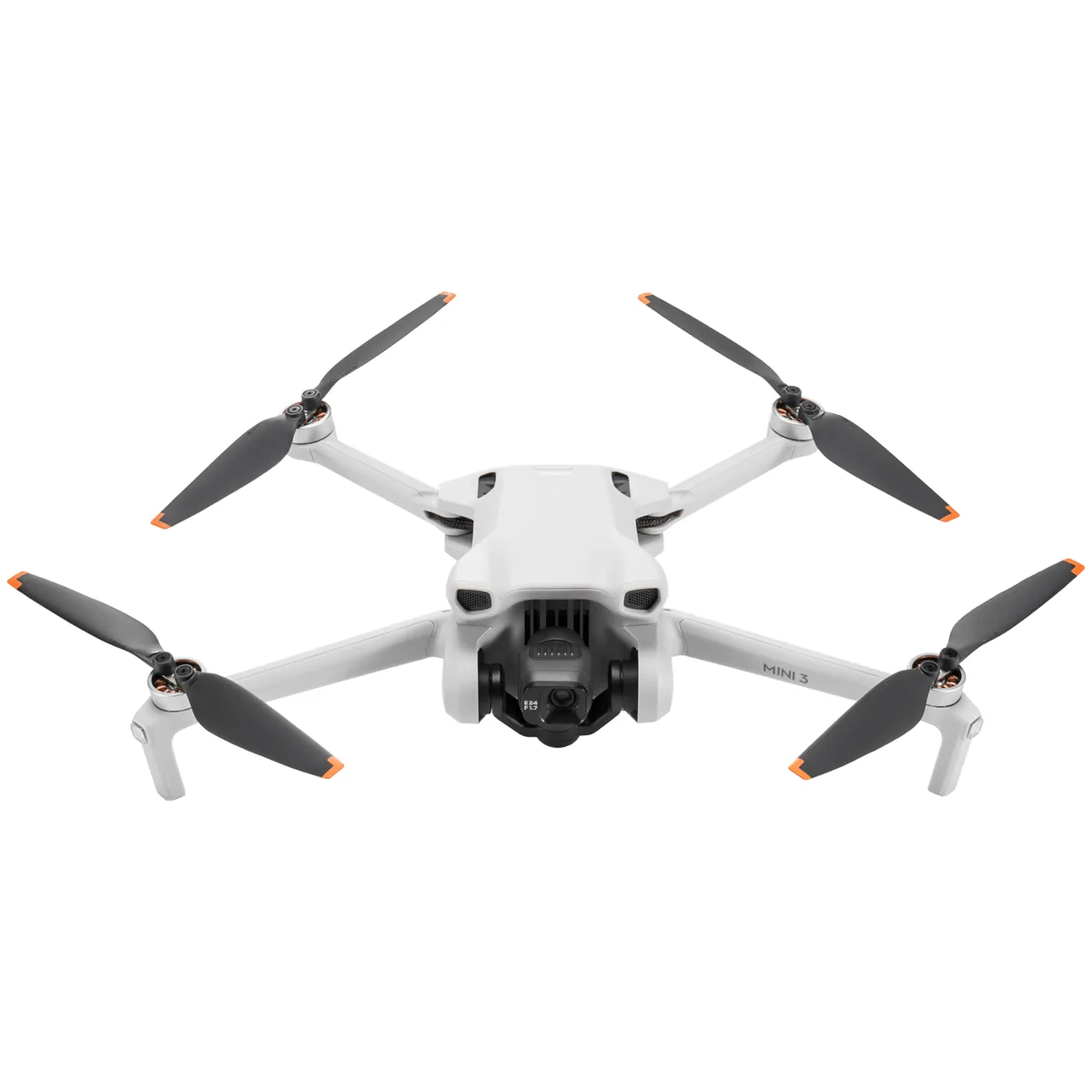
DJI
DJI Mini 3
Everything the Mini 4 Pro has except the sensing and the frame rates, for a good deal less money. Mini 3 carries the same 1/1.3-inch 48MP sensor, the same three-axis gimbal and the same true vertical shooting, then stops at 4K/30 in 8-bit with no log profile and no obstacle detection beyond the downward vision system. Its 38-minute headline is the most quotable example of why this site records flight conditions: DJI measures it hovering in a windless lab, in photo mode, running the battery from full to empty. Fly it forward with the camera rolling and land with a reserve and you are in the mid-twenties. As a daylight stills and simple-video aircraft that never needs registering, it still holds up; as a drone to fly through anything, it does not. There is one more consideration for anyone comparing it against a Mini 4K at a similar price: the Mini 3 has been out long enough that the accessory market is deep and second-hand batteries are plentiful, while the newer aircraft is still building that.
- Sensor
- 69.1 mm²
- Claimed
- 38 min
- Bundle
- ~$598
Best for: Daylight stills and simple video with no registration
Full spec sheet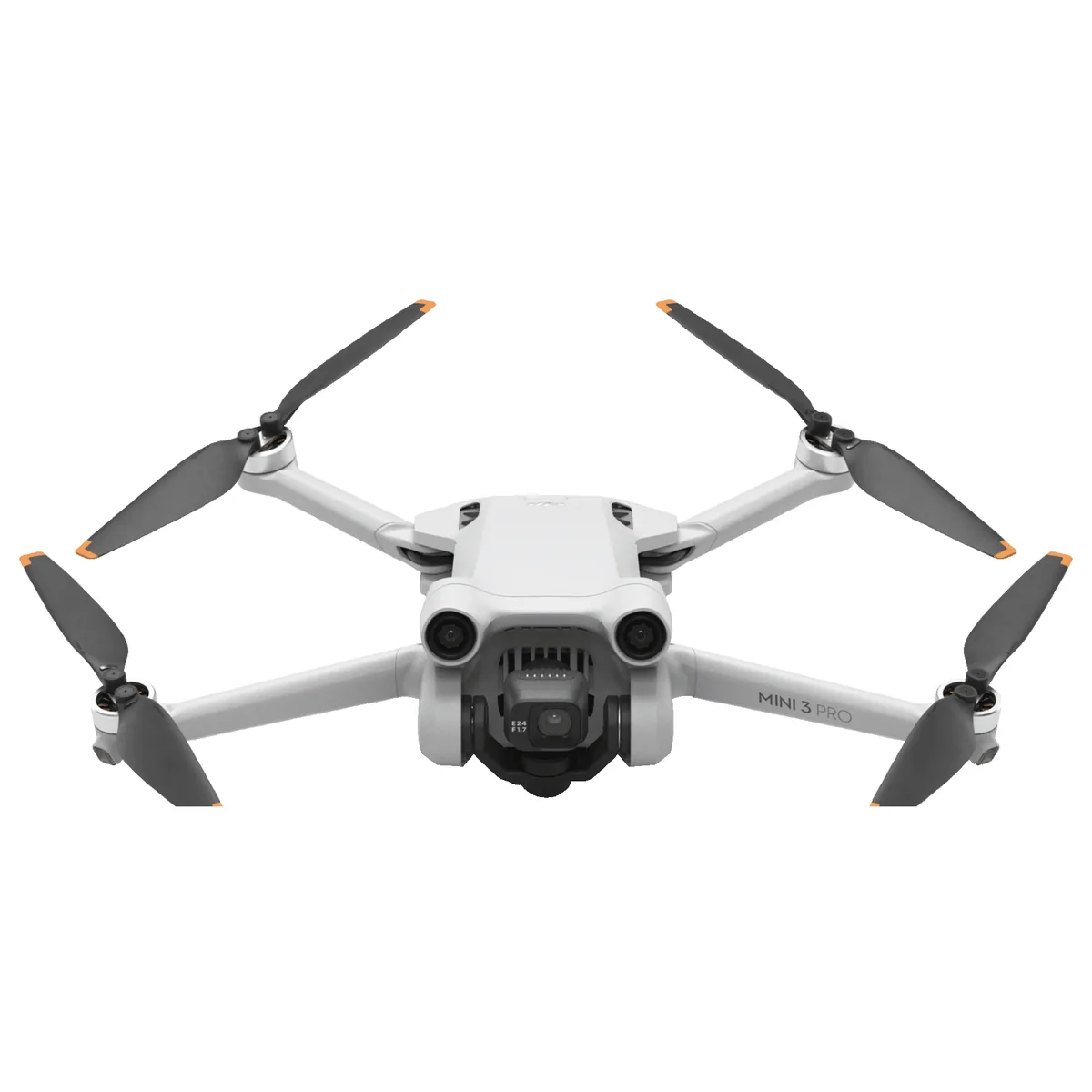
This was the aircraft that made obstacle sensing possible under 250 grams, and everything in the Mini line since has built on it. Forward, backward and downward sensors, a 1/1.3-inch 48MP sensor that rotates 90 degrees for true vertical shooting, 4K/60 HDR at 150 Mbps in 10-bit D-Cinelike, and a genuine 34 minutes on the standard pack. What the Mini 4 Pro added two years later was sensing on the remaining sides, O4 in place of O3, and 4K/100 slow motion. If you find one at a real discount the older aircraft still does most of the job, but DJI discontinued it in 2024, so you are shopping for the last of the stock and betting on battery availability a few years out.
- Sensor
- 69.1 mm²
- Claimed
- 34 min
- Base kit
- ~$759
Best for: Sensing under 250 g at a discount
Full spec sheet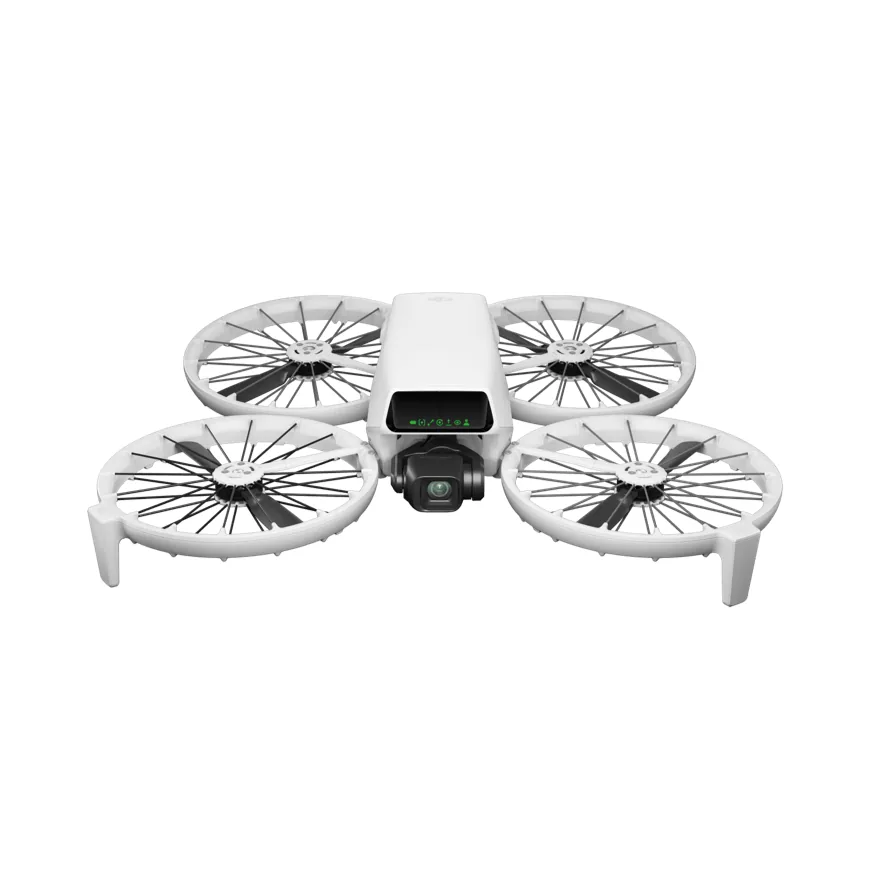
DJI
DJI Flip
Full-coverage propeller guards that fold flat is the idea, and it is a better one than the spec sheet suggests. Unfolded, the Flip's four cages sit around the props like a Neo's but carry a proper 1/1.3-inch 48MP camera on a three-axis gimbal behind them; folded, the whole thing collapses to something close to a Mini's footprint. It will take off from a palm and fly a preset without a controller at all, and it will also fly properly on an RC-N3 with 10-bit D-Log M and O4 transmission. Forward 3D infrared sensing covers the direction you are most likely to hit something and nothing else, which is an honest middle ground between the Neo's nothing and the Mini 4 Pro's everything. The bundle pricing is the awkward part — the screened-controller combo costs nearly twice the base kit.
- Sensor
- 69.1 mm²
- Claimed
- 31 min
- Bundle
- ~$779
Best for: Flying safely around people with a real camera
Full spec sheet