DJI Avata 2 vs DJI Avata 360
Both are over the 250-gram line, so the legal position is identical and the decision comes down to the rows tinted below — the specs where these two actually differ. The DJI Avata 360 is the cheaper of the two at ~$979.
| Drone | ||
|---|---|---|
| Bundle price | ~$1,199multi-battery bundle | ~$979multi-battery bundle |
| True first-year price | ~$1,199 | ~$979 |
| Flight min per $100 | 1.9 | 2.3 |
| Rating | No cited rating | No cited rating |
| Takeoff weight | 377 g | 455 g |
| FAA registration | Required | Required |
| Remote ID | Built-in | Built-in |
| Sensor size | 1/1.3" | 1" |
| Sensor area | 69.1 mm² | 116.2 mm² |
| Megapixels | 12 MP | 120 MP |
| Max video | 4K/60fps | 8K/60fps 360 HDR, 4K/60fps single lens |
| Colour depth | 10-bit | 10-bit |
| Log profile | D-Log M | D-Log M |
| Gimbal | 1-axis | None |
| Obstacle sensing | Rear + side | Omnidirectional |
| Claimed flight time | 23 min | 23 min |
| Tested flight time | — | — |
| Battery | 31.7 Wh | — |
| Transmission | O4 | O4+ |
| Max range | 13 km | 20 km |
| Max speed | 60 mph | 40 mph |
| Wind resistance | Level 5 (10.7 m/s) | Level 5 (10.7 m/s) |
| Service ceiling | 5000 m | — |
| Internal storage | 46 GB | 42 GB |
| Controller | DJI FPV Remote Controller 3; DJI Goggles 3 included in the Fly More Combo | DJI RC 2; RC Motion 3 and goggles depending on kit |
| Return to home | Yes | Yes |
| Geofencing | Yes | Yes |
| Care plan (1 yr) | Not in our snapshot | Not in our snapshot |
| US availability | Limited | Sold |
| Released | 2024 | 2026 |
| Flight claim measured at | 23 minutes "flying forward at a constant speed of 21.6 kph" in windless conditions at sea level. Hovering is quoted separately at 21 minutes, and actual FPV flying — throttle punches, dives, climbs — spends the 31.7 Wh pack much faster. | DJI quotes up to 23 minutes. As with every FPV aircraft, that assumes level cruising — throttle punches and climbs spend it far faster. |
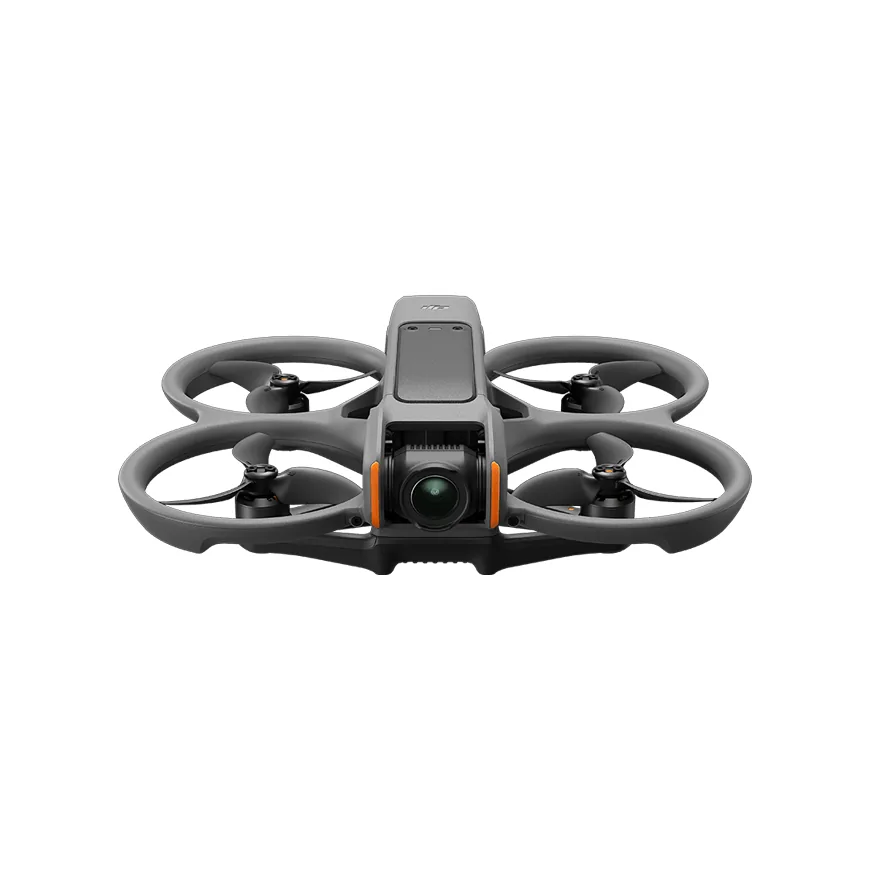
DJI Avata 2
Ducted props, goggles in the box, and a flight model that forgives you — this is how most people who fly FPV now start. The Avata 2 puts a 1/1.3-inch 12MP camera on a single-axis gimbal behind full prop ducts, records 4K/60 in 10-bit D-Log M to 46 GB of internal storage, and flies on DJI Goggles 3 with the FPV Remote Controller 3. Normal mode hovers and holds position like a camera drone; Sport and Manual progressively hand you the throttle until you are flying a real quad at 60 mph. The ducts mean a clipped branch usually means a bounce rather than a repair, which is the entire reason this is a better first FPV aircraft than a bare 5-inch freestyle build. The honest limits are endurance and sensing: 23 minutes is a cruise figure, and nothing watches forward. Two things the price tag hides in both directions: the goggles and controller are the expensive half of this system and are shared with the Avata 360 and the Neo, so the cost amortises if you add another aircraft; and a ducted airframe over water has no float and no second chance.
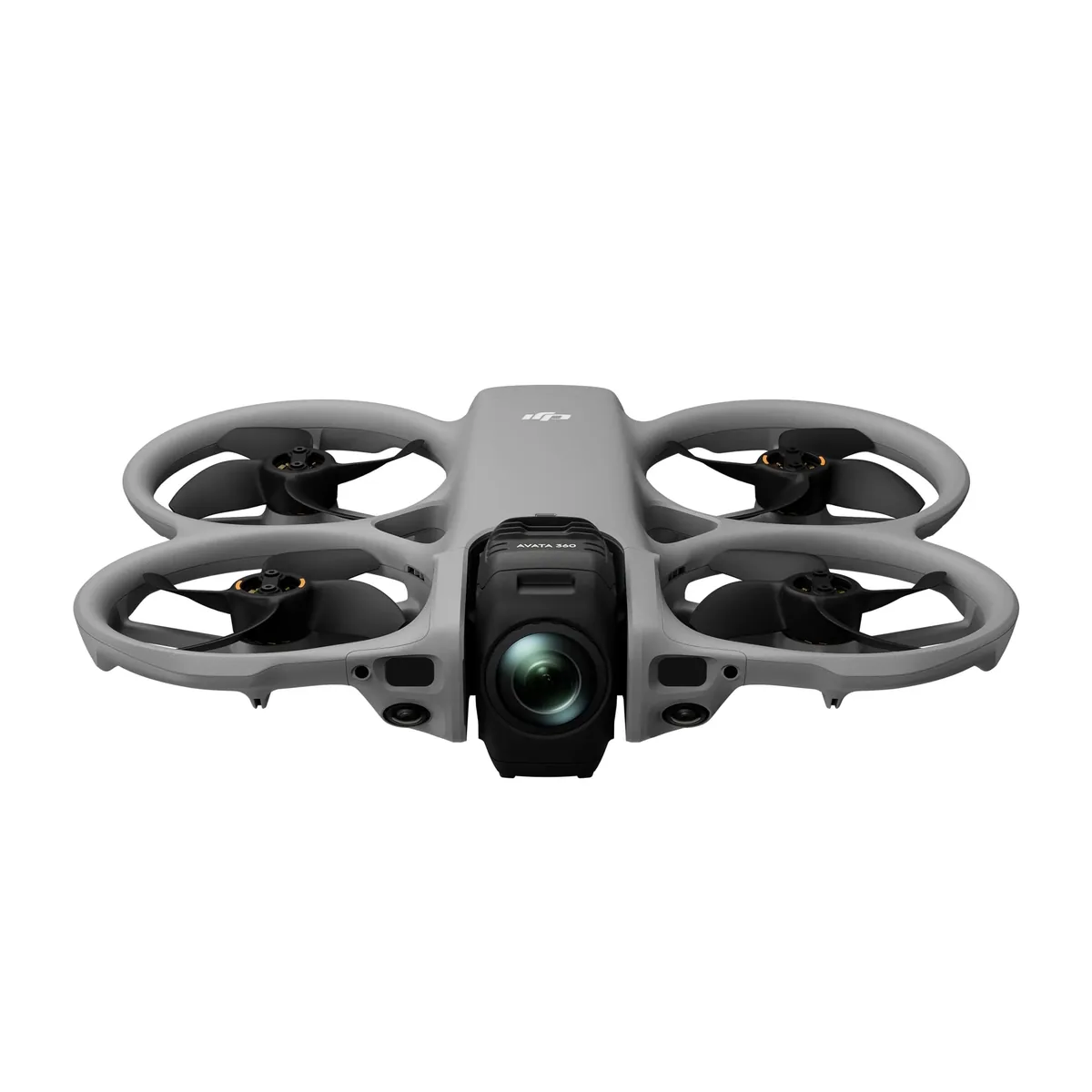
Full spec sheet →DJI Avata 360
DJI's answer to the 360 drone, and the direct rival to the Antigravity A1. Dual one-inch-equivalent lenses capture 8K/60 HDR in full 360 or 4K/60 through a single lens, with 120MP stills and 42 GB of internal storage — roughly half an hour of 8K spherical footage before you need to offload. Integrated prop guards and a replaceable front lens element acknowledge what actually happens to 360 drones. Omnidirectional sensing with nightscape support and O4+ transmission to 20 km put it comfortably ahead of the Avata 2 on everything except price. At 455 grams it needs registration and Remote ID, which it broadcasts itself, and unlike most of DJI's current line it genuinely arrived in the US.
Full spec sheet →