Holy Stone
Holy Stone HS900 Sirius
Holy Stone spent years making competent toys and then built this, which is the first of their aircraft that invites comparison with a Mini rather than with a hobby quadcopter. Three-axis brushless gimbal, a 48MP 1/2.3-inch Sony sensor, 6 km of transmission, subject tracking, built-in Remote ID and 249 grams on the nose. Reviewers have been noticeably warmer about it than about anything else in the brand's catalog. The gaps are still real: no obstacle sensing in any direction, a fixed-focus f/2.6 lens, and a measured 22 minutes against a 30-minute claim. At roughly half a Mini 4 Pro's price with a real gimbal and real Remote ID, though, it is the most credible budget alternative here.
The 250-gram line
Under 250 g: recreational flight needs no FAA registration, and Remote ID does not apply.
Every recreational flyer must also take TRUST and carry proof of it, at any weight. Rules checked against faa.gov on 2026-09-24. Not legal advice — how this is worked out.
What that 30-minute claim is measured at
Holy Stone quotes up to 30 minutes on the 2,250 mAh pack; a reviewer measured about 22 minutes in real flying.
That works out to 7.1 claimed minutes per $100 of the multi-battery bundle. Compared with the rest of the catalog.
Buying one in the US: sold
Checked 24 Sep 2026. Current Holy Stone flagship, sold new in the US through the maker's own store and general retailers.
Specifications
True first-year cost: ~$420 — the multi-battery bundle at ~$420; no crash-plan price has been verified for this model, so nothing is added for it.
What it has
- Three-axis brushless gimbal
- 48MP 1/2.3-inch Sony sensor with a fixed-focus f/2.6 lens
- Built-in Remote ID broadcast
- 6 km (20,000 ft) transmission range
- AI follow-me and QuickShot moves
- Smart return-to-home
In its favour
- One of the few budget drones here that states built-in Remote ID
- Three-axis brushless gimbal rather than electronic stabilisation
- 6 km of rated range is unusual at this price
- Well reviewed against much more expensive aircraft
- Roughly half the price of a Mini 4 Pro
Against it
- Tracks a subject but cannot see an obstacle, so the tracking modes need open ground
- Measured flight time of about 22 minutes against a 30-minute claim
- Fixed-focus lens, so close subjects are never sharp
- 1/2.3-inch sensor struggles once the light drops
- No log profile and 8-bit only
The two lists above are drawn from the manufacturer’s published specifications and from the cited reviews, not from owner reports.
What owners report
Summarised from public owner discussions plus the dated, published sources listed at the end.
The HS900 is the aircraft that changed how Holy Stone gets discussed. Previous models in owner threads are the ones people lost in trees and remembered fondly as cheap fun; this one gets compared with a DJI Mini on its merits, and reviewers testing it against a Mini 3 have been complimentary rather than condescending. The three-axis brushless gimbal is the main reason, and the stated built-in Remote ID is a real differentiator among budget brands.
The gaps remain honest ones. There is no obstacle sensing at all; the lens is fixed-focus, so anything close is soft; and a reviewer measured about 22 minutes against the 30 claimed. At roughly half a Mini 4 Pro's price with a real gimbal and a real Remote ID broadcast, none of that stops it being the most credible budget alternative in this catalog.
What owners like
- Reviewers have been noticeably warmer about this than about anything else the brand has made, and compare it directly with a Mini rather than with toys
- A real three-axis brushless gimbal rather than the two-axis-plus-software arrangement common at this price
- States built-in Remote ID, which very few budget makers do
- A 6 km rated link is unusual below $400
- Under 249 grams, so no registration for recreational flight
Common complaints
- Measured flight time of about 22 minutes against a 30-minute claim
- No obstacle sensing in any direction
- The fixed-focus f/2.6 lens means close subjects are never properly sharp
- The 1/2.3-inch sensor keeps it firmly a good-light aircraft
Questions owners ask
How does it compare with a DJI Mini?
What flight time should I expect?
Does it need Remote ID at 249 grams?
Does the fixed-focus lens matter?
Published sources: techradar.com, digitalcameraworld.com, store.holystone.com
Holy Stone HS900 Sirius, head-to-head
Shopped alongside it
More from Holy Stone →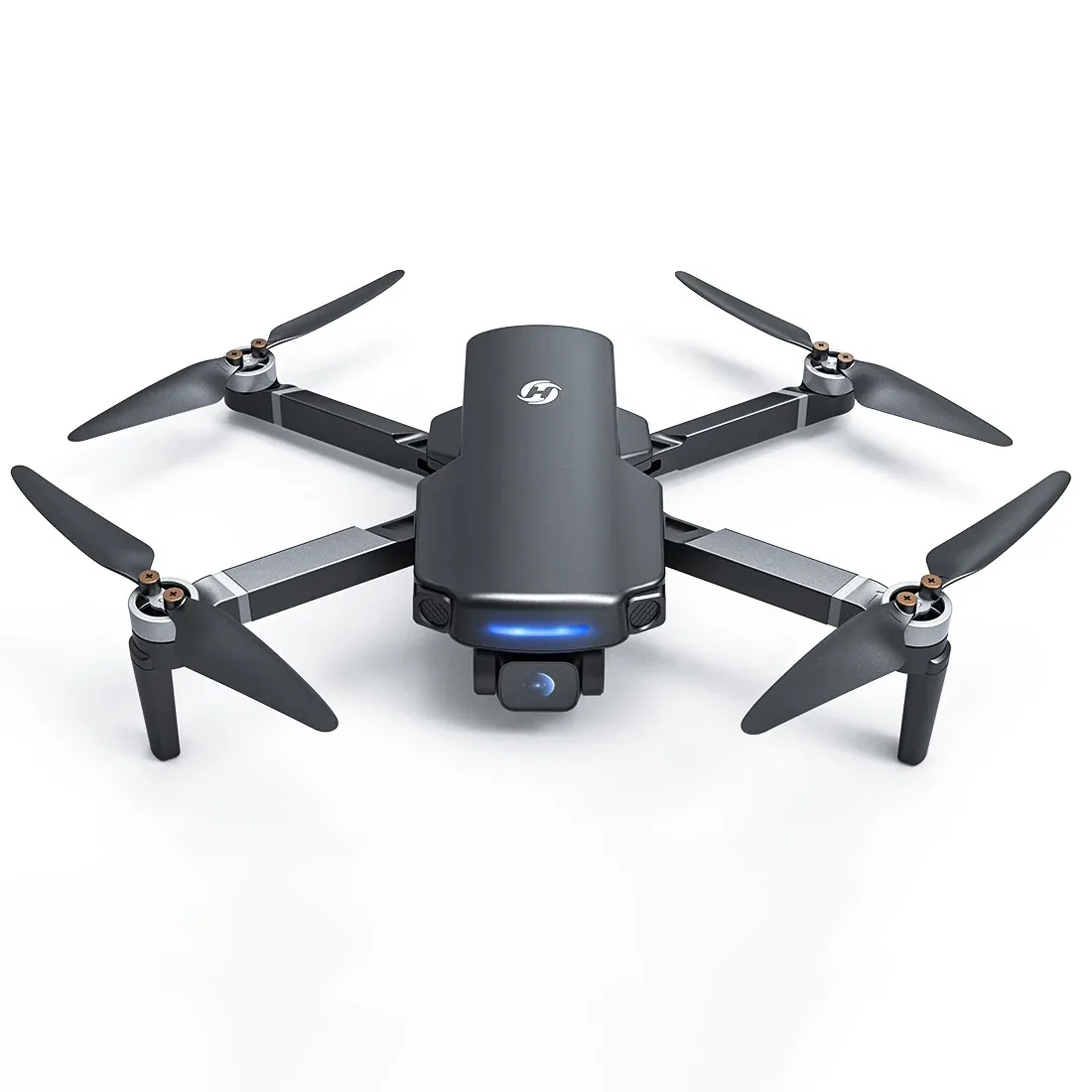
Holy Stone
Holy Stone HS360S
Two hundred dollars, GPS, optical-flow hold for indoor flying, a modular battery and 249 grams on the scale. Read the camera spec twice, though: the 1/3-inch GalaxyCore sensor records 4K at 20 frames per second, which is below the 24fps floor most people consider watchable and well below the 30fps everything else here manages. Stills at 4K resolution are fine. There is no gimbal and no obstacle sensing, and return-to-home fires automatically on low battery or lost link, which is the feature that keeps a first drone out of a tree line. As an aircraft to learn on in an open field before spending real money, it does the job; as a camera, it is the weakest in this catalog.
- Sensor
- 17.3 mm²
- Claimed
- 20 min
- Bundle
- ~$239
Best for: Learning to fly before spending real money
Full spec sheet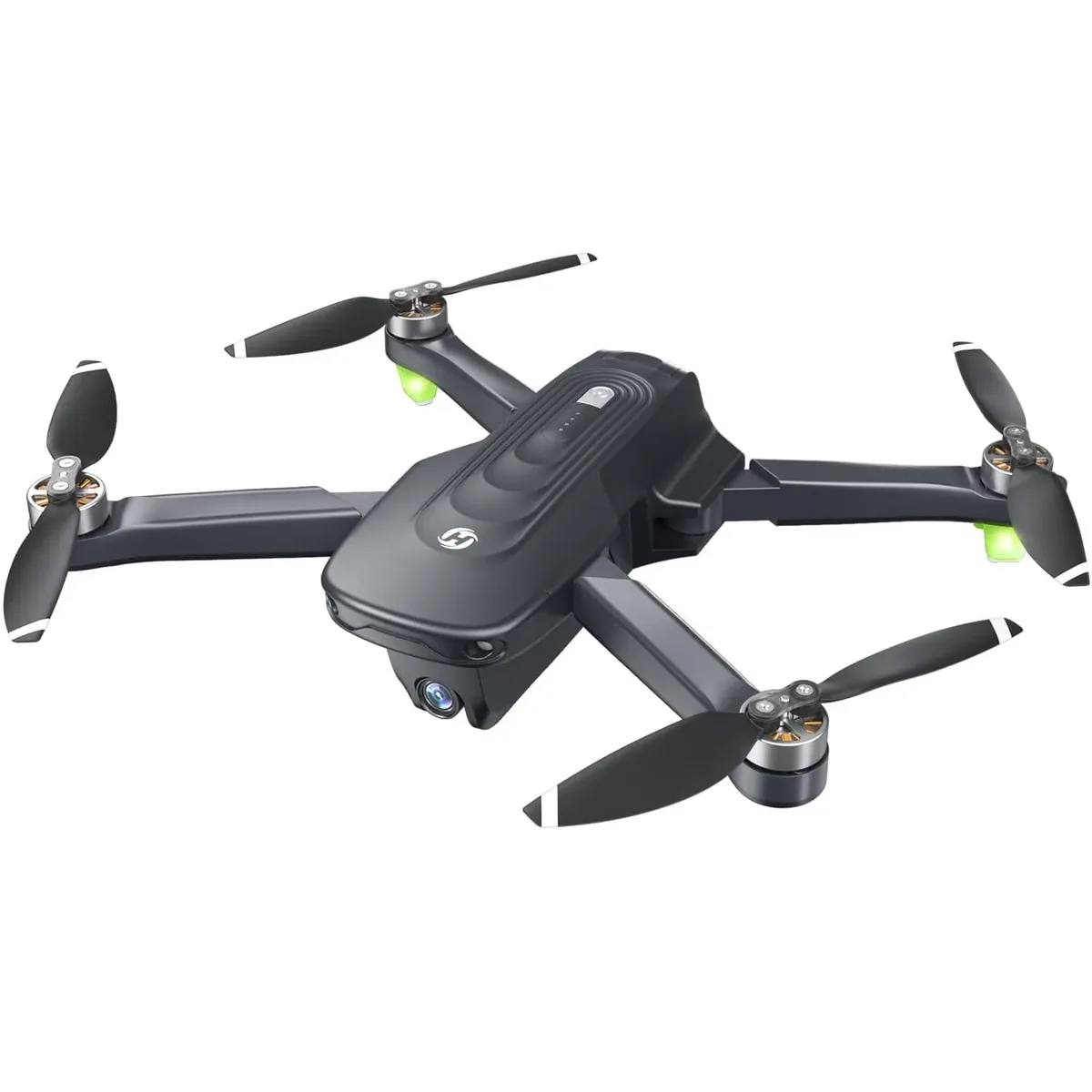
Holy Stone
Holy Stone HS175D
Worth including mainly as a warning about how the word "4K" gets used at the bottom of this market. Holy Stone's listings put 4K on the box, and the aircraft will indeed produce a 4096x3072 still image — but video tops out at 2,688 by 1,512 at 25 frames per second, which is 2.7K, not 4K, and below 30fps. Everything else is what $170 buys in 2026: brushless motors, GPS hold, return-to-home, a 90-degree manually adjustable lens with no gimbal at all, and about a kilometre of range. Two batteries come in the box, which is where the advertised 46 minutes comes from. At 215 grams it stays under the registration line, and as a genuinely cheap way to learn stick control outdoors, it still works.
- Sensor
- 17.3 mm²
- Claimed
- 23 min
- Base kit
- ~$170
Best for: The cheapest way to learn stick control outdoors
Full spec sheet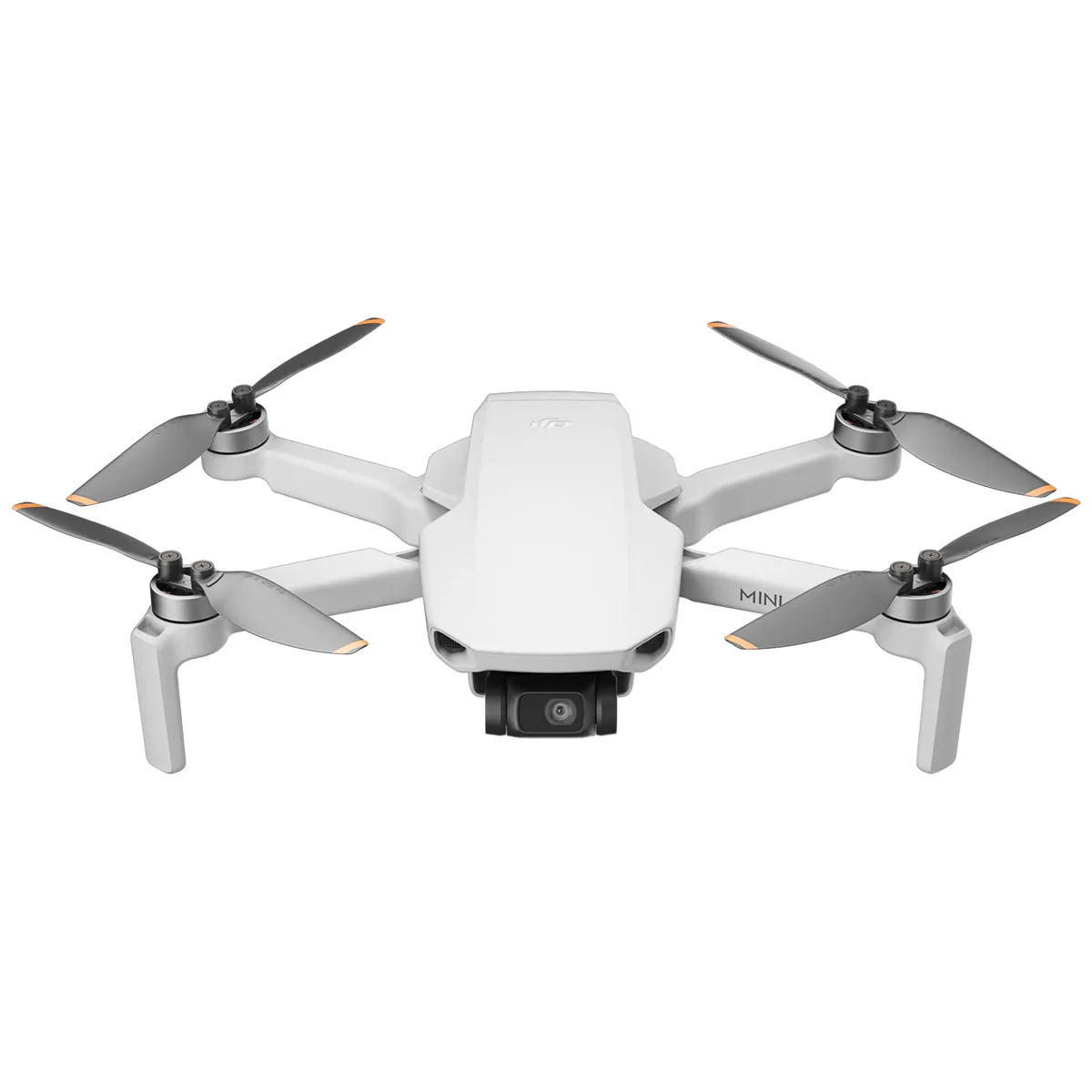
DJI
DJI Mini 4K
Three hundred dollars is the entire point here. Strip a Mini down to a 1/2.3-inch 12MP sensor, 8-bit 4K/30, and a downward vision system with nothing looking forward, keep the three-axis gimbal and the GPS return-to-home, and you get the cheapest genuinely stable aerial camera DJI sells. Nothing about the footage will impress anyone who has seen a 1/1.3-inch sensor at dusk, but in daylight it is sharp and level, which is more than any sub-$200 quadcopter manages. O2 transmission is rated to 10 km and holds a 720p feed rather than O4's 1080p. Treat the lack of obstacle sensing as the defining spec: this aircraft will fly into a branch at full speed without hesitating, so it belongs in open fields while you learn.
- Sensor
- 28.1 mm²
- Claimed
- 31 min
- Bundle
- ~$449
Best for: A first drone flown in open space
Full spec sheet