DJI Flip vs HoverAir X1 Pro
Both are under the 250-gram line, so the legal position is identical and the decision comes down to the rows tinted below — the specs where these two actually differ. The HoverAir X1 Pro is the cheaper of the two at ~$699.
| Drone | ||
|---|---|---|
| Bundle price | ~$779multi-battery bundle | ~$699multi-battery bundle |
| True first-year price | ~$779 | ~$699 |
| Flight min per $100 | 4.0 | 2.3 |
| Rating | No cited rating | No cited rating |
| Takeoff weight | 249 g | 192 g |
| FAA registration | Not required | Not required |
| Remote ID | Built-in | None |
| Sensor size | 1/1.3" | 1/1.3" |
| Sensor area | 69.1 mm² | 69.1 mm² |
| Megapixels | 48 MP | — |
| Max video | 4K/60fps | 4K/60fps |
| Colour depth | 10-bit | — |
| Log profile | D-Log M | — |
| Gimbal | 3-axis | None |
| Obstacle sensing | Forward | Rear + side |
| Claimed flight time | 31 min | 16 min |
| Tested flight time | — | — |
| Battery | 22.3 Wh | — |
| Transmission | O4 | Wi-Fi |
| Max range | 13 km | 1 km |
| Max speed | 27 mph | 26 mph |
| Wind resistance | Level 5 (10.7 m/s) | Level 5 (10.7 m/s) |
| Service ceiling | 3000 m | — |
| Internal storage | 2 GB | 32 GB |
| Controller | DJI RC-N3 (phone required); DJI RC 2 with built-in screen at extra cost | None in the base kit — palm launch and phone app; Beacon 2 remote in the combo |
| Return to home | Yes | No |
| Geofencing | Yes | No |
| Care plan (1 yr) | Not in our snapshot | Not in our snapshot |
| US availability | Sold | Sold |
| Released | 2025 | 2024 |
| Flight claim measured at | DJI specifies 31 minutes "flying forward at a constant speed of 6 m/s, Obstacle Avoidance Action set to Brake, and the camera in Photo mode, until a forced landing due to battery depletion" — a figure that ends with the battery empty rather than with a reserve. | HoverAir quotes 16 minutes. Reviewers flying the near-identical Pro Max in tracking modes have reported 11 to 13 minutes, so treat the number as a best case rather than a plan. |
DJI Flip
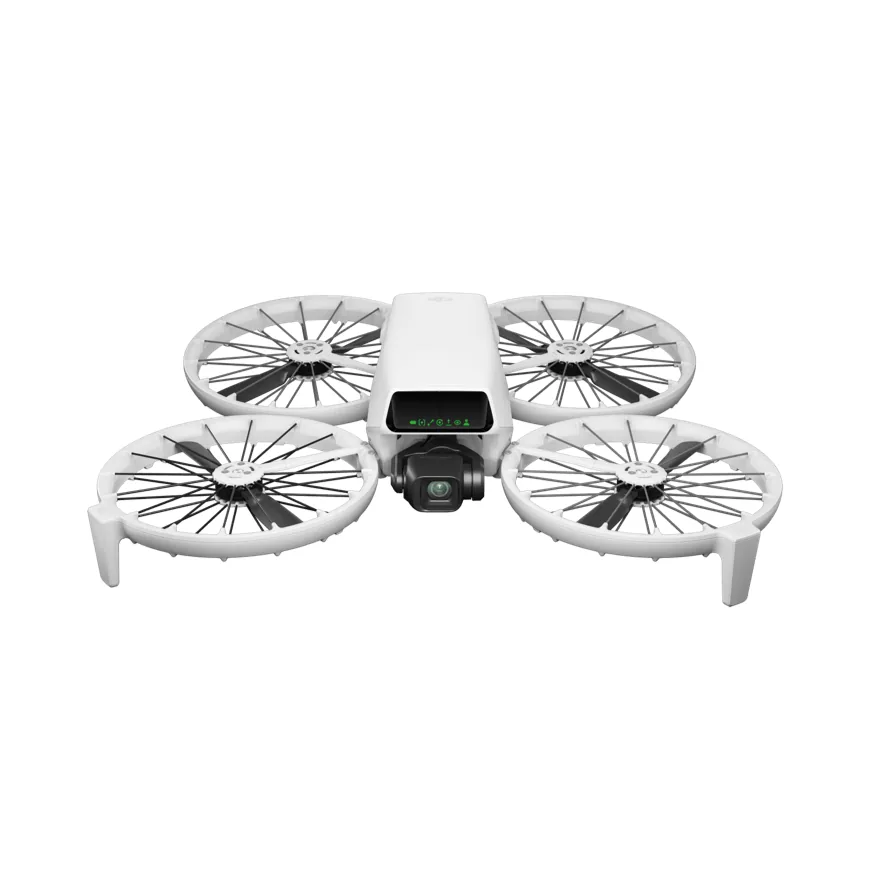
Full-coverage propeller guards that fold flat is the idea, and it is a better one than the spec sheet suggests. Unfolded, the Flip's four cages sit around the props like a Neo's but carry a proper 1/1.3-inch 48MP camera on a three-axis gimbal behind them; folded, the whole thing collapses to something close to a Mini's footprint. It will take off from a palm and fly a preset without a controller at all, and it will also fly properly on an RC-N3 with 10-bit D-Log M and O4 transmission. Forward 3D infrared sensing covers the direction you are most likely to hit something and nothing else, which is an honest middle ground between the Neo's nothing and the Mini 4 Pro's everything. The bundle pricing is the awkward part — the screened-controller combo costs nearly twice the base kit.
Full spec sheet →HoverAir X1 Pro
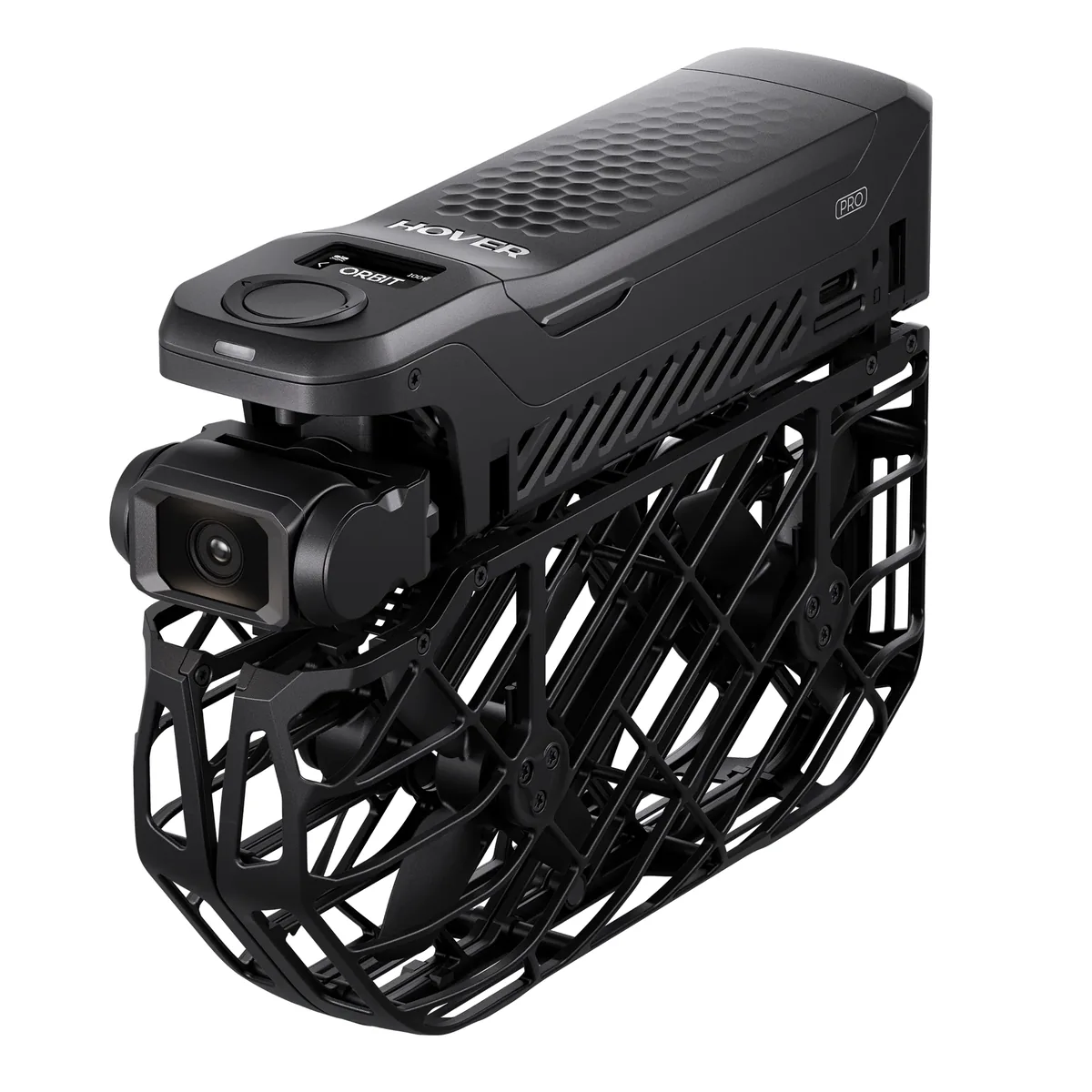
The jump from the original X1 is mostly the sensor: a 1/1.3-inch chip, the same size DJI puts in a Mini 4 Pro, behind a rotating camera module that shoots 4K/60 and handles portrait framing without a crop. Tracking got faster too — it will hold a rider at 26 mph — and rear and side sensors now watch the directions a following drone actually gets into trouble. Still no GPS and still no return-to-home, which is the line dividing this whole category from camera drones: if the Wi-Fi link drops, the aircraft lands rather than coming home. Sixteen claimed minutes is the other number to hold loosely, since testers running the near-identical Pro Max in tracking modes landed at 11 to 13. Worth it if you ski, ride or run and want the camera to do the following.
Full spec sheet →