BetaFPV
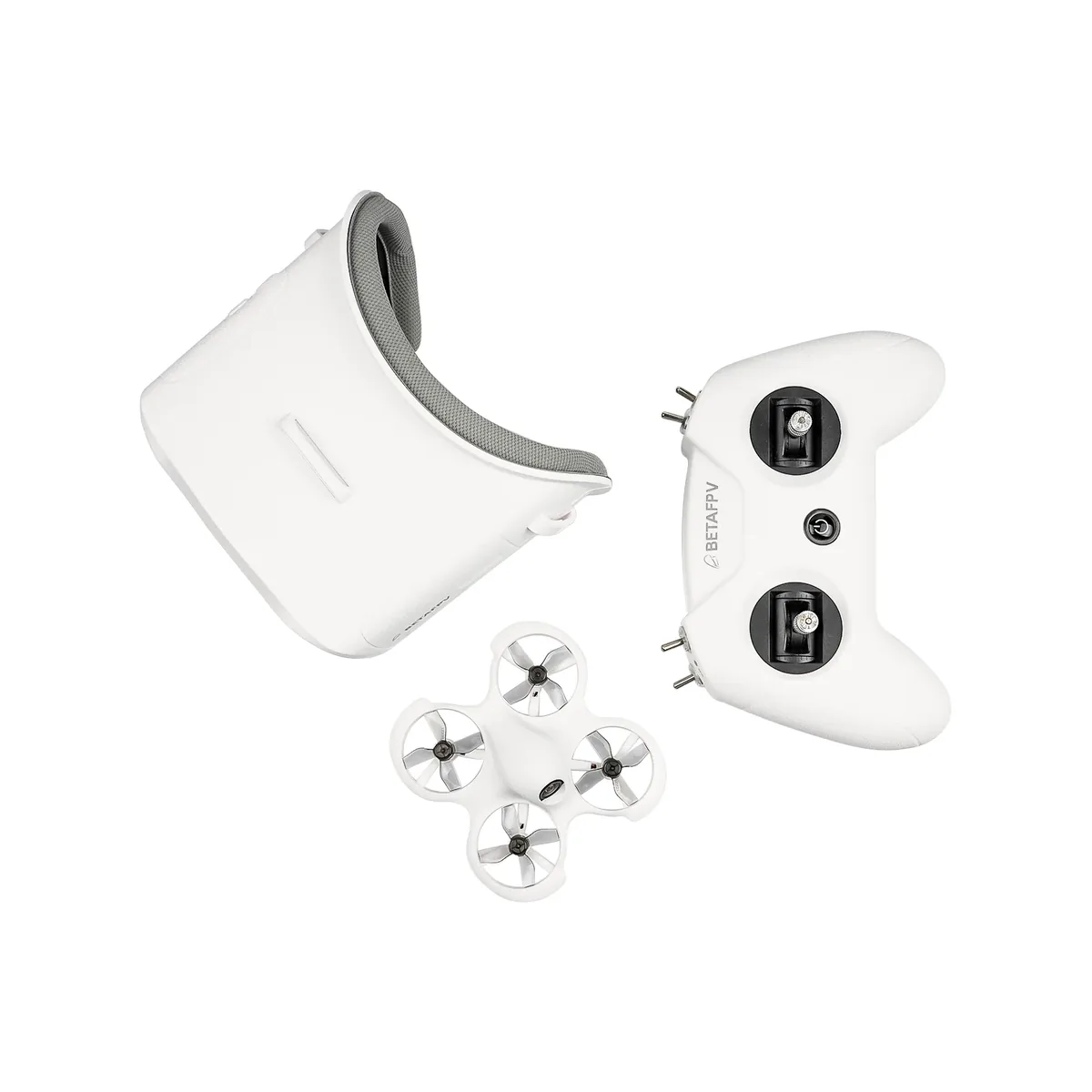
BetaFPV Cetus FPV Kit
Thirty-five grams of brushed motors, a 31 mm four-blade prop on each corner, and — crucially — a radio and a set of goggles in the same box. This is where most people who fly FPV actually begin, because it removes the two things that stop them: choosing a radio, and choosing goggles. Three flight modes step you from a self-levelling hover to full manual, and turtle mode flips it upright after a crash so you keep flying instead of walking across a room. Four to five minutes per battery and 80 metres of analog range mean this is an indoor aircraft, and its brushed motors will feel slow the moment you have learned anything. That is fine: the radio pairs to the free simulators, which is where most of the useful practice happens anyway.
The 250-gram line
Under 250 g: recreational flight needs no FAA registration, and Remote ID does not apply.
Every recreational flyer must also take TRUST and carry proof of it, at any weight. Rules checked against faa.gov on 2026-09-24. Not legal advice — how this is worked out.
What that 4-minute claim is measured at
BetaFPV quotes 4 to 5 minutes on a 300 mAh 1S pack, which is a gentle indoor hover. Anything resembling actual flying lands at the bottom of that range.
That works out to 2.5 claimed minutes per $100 of the base kit. Compared with the rest of the catalog.
Buying one in the US: sold
Checked 24 Sep 2026. Sold through BetaFPV's own store and US FPV retailers; individual kits go in and out of stock.
Specifications
True first-year cost: ~$160 — the base kit at ~$160; no crash-plan price has been verified for this model, so nothing is added for it.
What it has
- Radio and goggles included — a complete first FPV setup in one box
- Brushed motors and full prop guards for indoor flying
- Normal, Sport and Manual flight modes
- Turtle mode to self-right after a crash
- LiteRadio transmitter works with FPV simulators over USB
- Two 300 mAh batteries and a charger included
In its favour
- The cheapest complete FPV setup here — nothing else to buy to start
- Prop guards and 35 grams make indoor practice genuinely harmless
- The included radio doubles as a simulator controller, where most learning happens
- Self-levelling mode means a first flight does not end in a wall
Against it
- Brushed motors feel slow within a few weeks of practice
- The VR02 goggles have no DVR, so nothing you fly is recorded
- 80 metres of analog range — this never leaves a room or a small yard
- Four to five minutes per pack, so a session means a lot of batteries
The two lists above are drawn from the manufacturer’s published specifications and from the cited reviews, not from owner reports.
What owners report
No owner discussion has been collected for the BetaFPV Cetus FPV Kit yet. Rather than fill the gap with something plausible, this section stays empty until there is a real body of owner reports to read. The specs above come from the maker’s published documentation.
BetaFPV Cetus FPV Kit, head-to-head
Shopped alongside it
More from BetaFPV →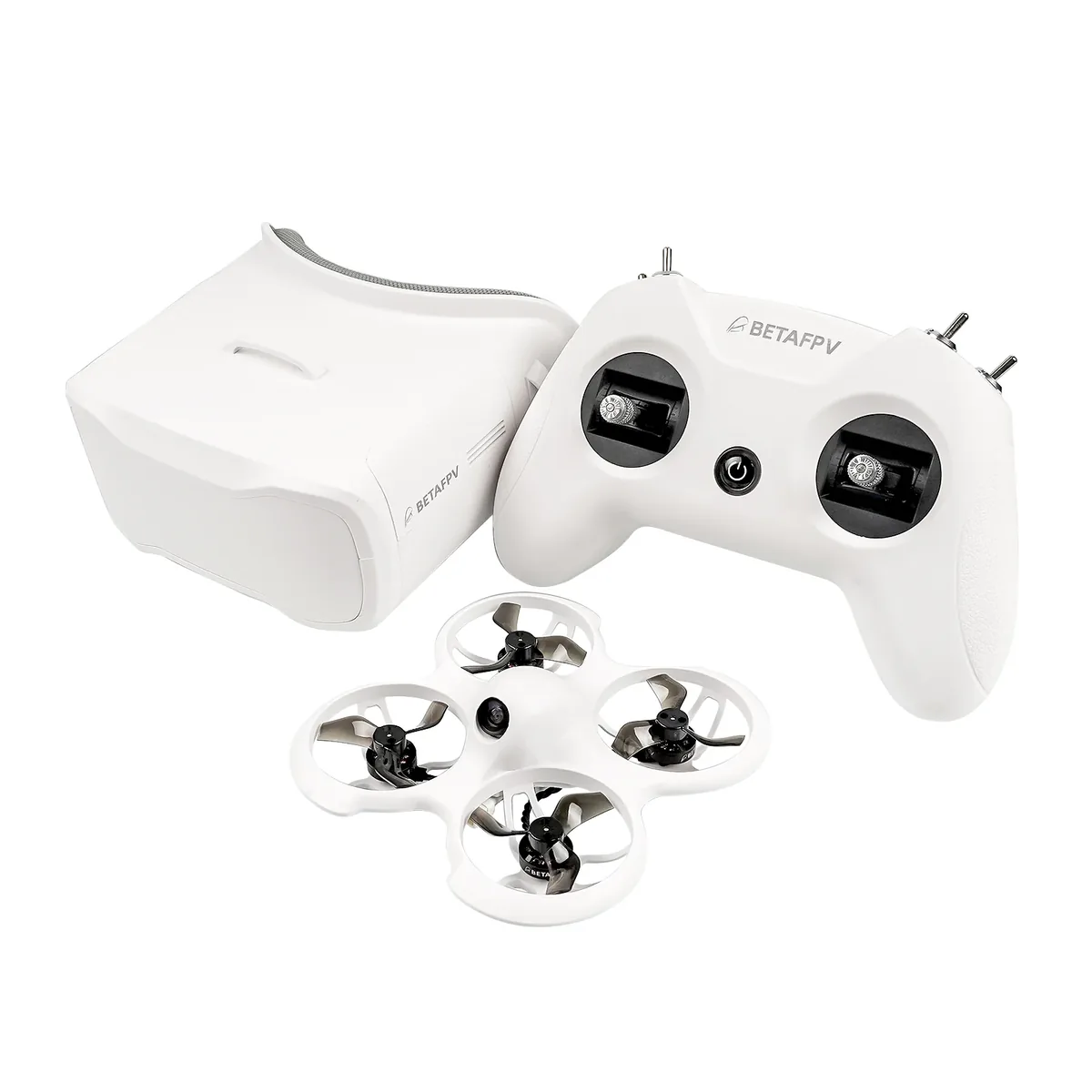
BetaFPV
BetaFPV Cetus Pro FPV Kit
Brushless motors and 40 mm props are the entire difference from the standard Cetus, and they change what the aircraft can teach you. Brushed motors have a ceiling of authority that makes real stick control impossible to practise; brushless ones respond hard enough that manual mode starts behaving like a full-size quad, which is the point of learning on a whoop at all. It keeps the ducted frame, the turtle mode, the three flight modes and the same radio-and-goggles-in-the-box completeness. The trade-offs are unchanged: 4 to 5 minutes per pack, 80 metres of analog range, and goggles with no DVR so nothing gets recorded. Most people who stick with FPV either start here or wish they had.
- Sensor
- —
- Claimed
- 4 min
- Base kit
- ~$211
Best for: Learning manual mode without wrecking anything
Full spec sheet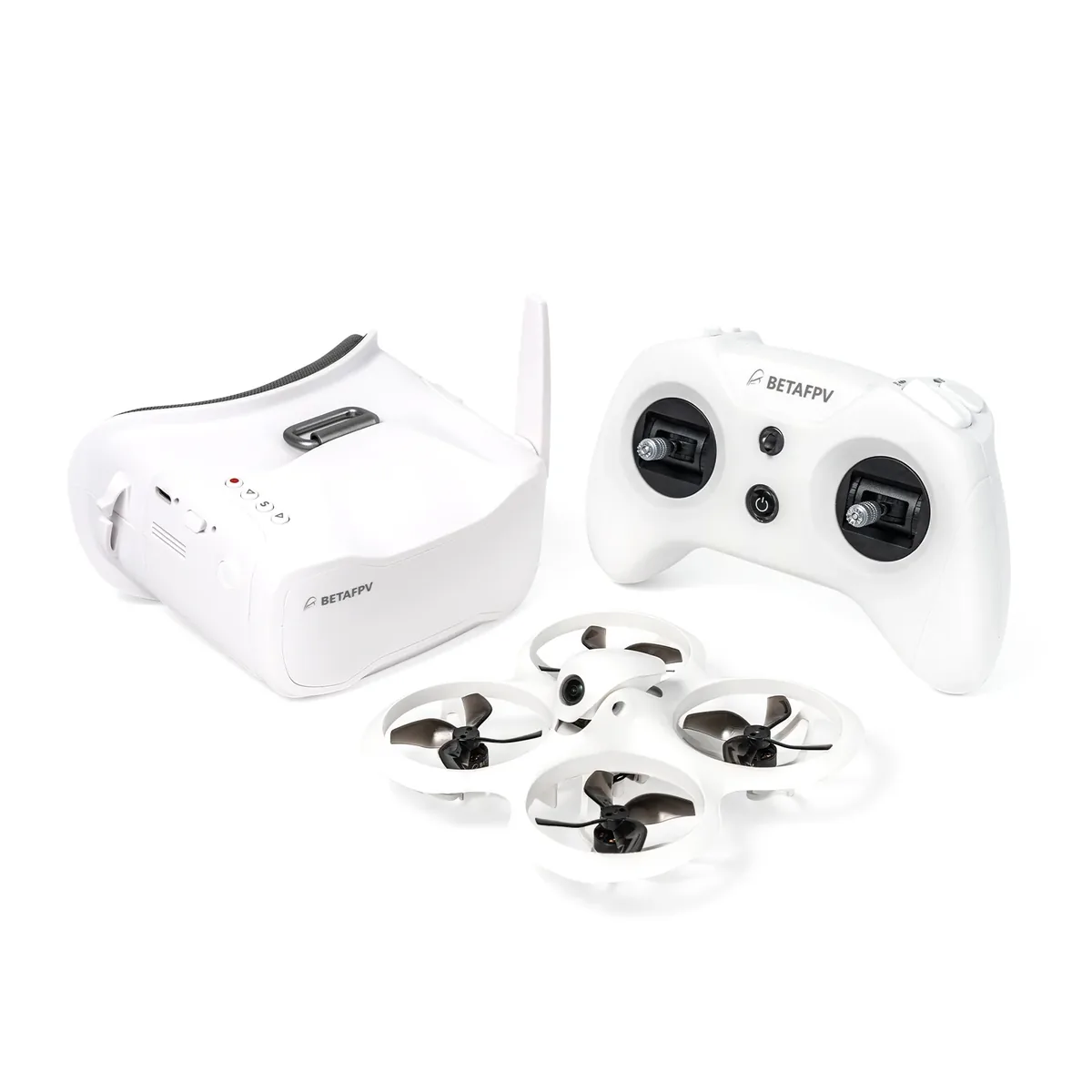
BetaFPV
BetaFPV Cetus X FPV Kit
The step where a training whoop turns into something you fly outdoors. A 1103 11000KV motor on each arm, 2020 four-blade props, a 400 mW video transmitter and 600 metres of rated range mean the Cetus X will hold a line in a park rather than skittering around a living room. The kit's real upgrade is quieter than the motors: the VR03 goggles have a DVR, so your flights exist afterwards, which the cheaper Cetus kits cannot do. Angle, Horizon and Air modes cover the whole learning curve from self-levelling to fully manual. Five minutes per pack is still five minutes — four batteries come in the box for a reason — and there is nothing here to stop you hitting a tree. One practical note: everything in this kit is replaceable for single-digit dollars, which is the real difference between learning FPV on a whoop and learning it on a camera drone. A destroyed frame is a five-minute job at a kitchen table rather than a service ticket.
- Sensor
- —
- Claimed
- 5 min
- Base kit
- ~$260
Best for: Moving FPV practice outdoors
Full spec sheet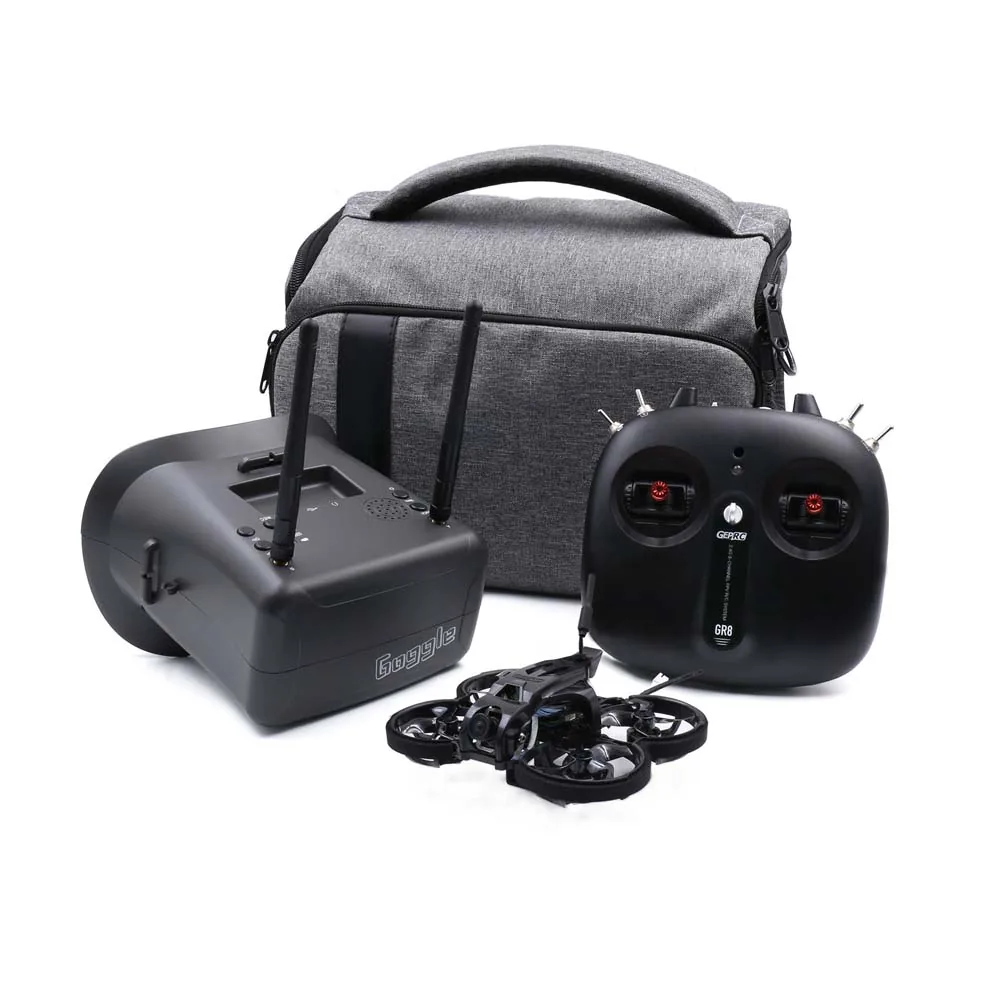
GEPRC
GEPRC TinyGO 4K
Most beginner whoops record nothing, or record the same low-resolution analog picture you were looking at through the goggles. This one carries a Caddx Loris that writes 4K/60 to its own card while the analog feed handles the flying — which is exactly how full-size FPV builds work, and the reason a TinyGO flight can produce footage worth keeping. The frame is 79 mm on 10,000KV motors with 1.6-inch props, so it sits between a tiny whoop and the Cetus X in authority. Four batteries and a four-channel charger come in the box at six minutes each. A RunCam-camera version sells for roughly sixty dollars less and loses the 4K recording, which is the whole reason to buy this one.
- Sensor
- —
- Claimed
- 6 min
- Base kit
- ~$280
Best for: Beginner FPV that produces usable footage
Full spec sheet