HoverAir
HoverAir X1
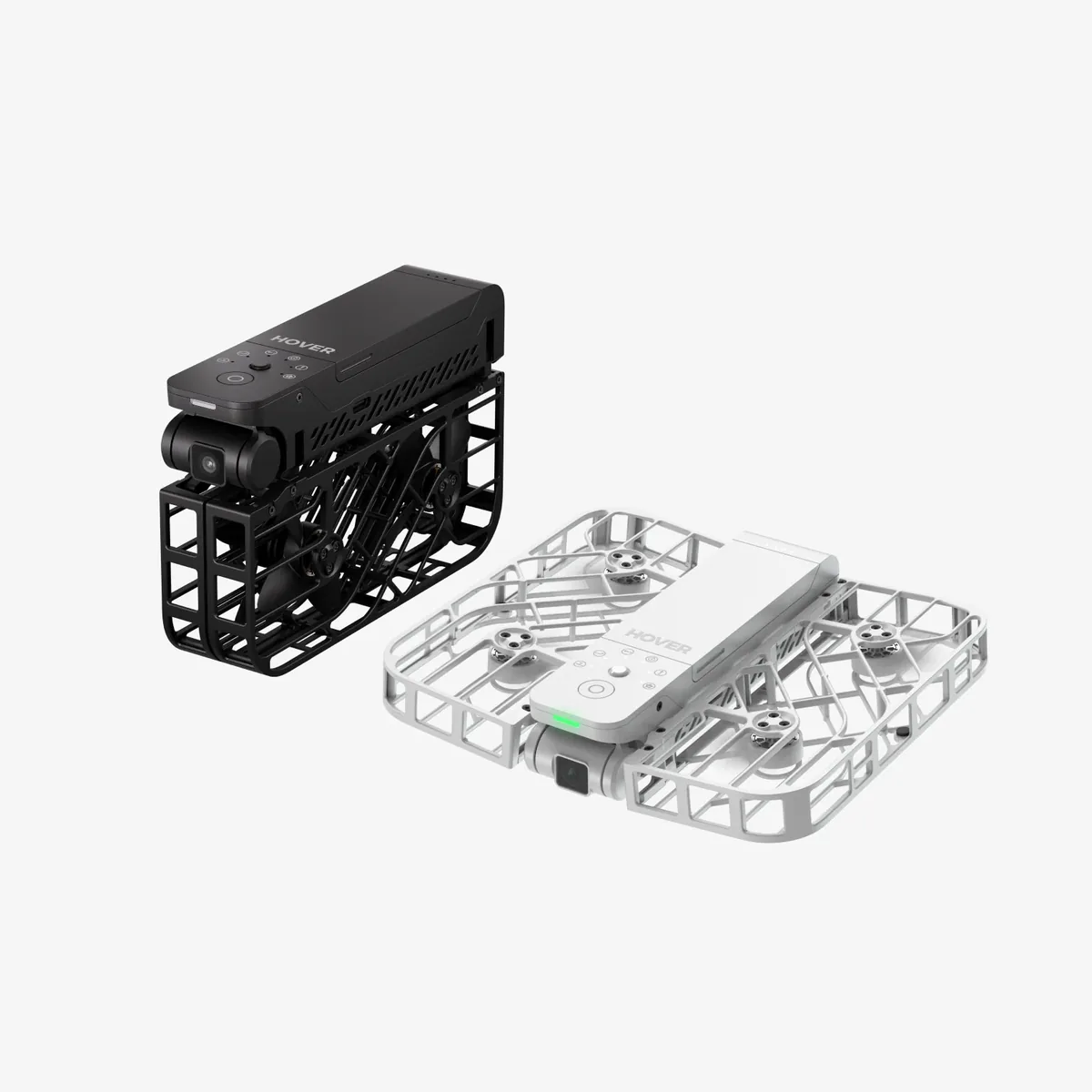
Zerotech's original palm-sized flying camera did one thing and did it before anyone else: you hold it out flat, press a button, and it lifts off, films a preset move around you, and lands back on your hand. No controller, no sticks, no app to fight with. Electronic stabilisation rather than a gimbal holds 2.7K/30 HDR steady enough for social video, and a 1/2.3-inch sensor keeps it honest about what that footage is. What it lacks is everything a camera drone has — no GPS, no return-to-home, no obstacle sensing, and a Wi-Fi link measured in tens of metres. That is not a flaw so much as the category: this is a camera that hovers, aimed at people who want to be in the shot rather than behind it, and at 125 grams it never needs registering.
The 250-gram line
Under 250 g: recreational flight needs no FAA registration, and Remote ID does not apply.
Every recreational flyer must also take TRUST and carry proof of it, at any weight. Rules checked against faa.gov on 2026-09-24. Not legal advice — how this is worked out.
What that 11-minute claim is measured at
HoverAir quotes roughly 11 minutes per battery. There is no published test condition for the figure, and tracking a moving subject spends it faster than the hover it implies.
That works out to 2.6 claimed minutes per $100 of the multi-battery bundle. Compared with the rest of the catalog.
Buying one in the US: sold
Checked 24 Sep 2026. Sold through HoverAir's own US store and mainstream US retailers; unaffected by the DJI-specific FCC and customs actions.
Specifications
True first-year cost: ~$429 — the multi-battery bundle at ~$429; no crash-plan price has been verified for this model, so nothing is added for it.
What it has
- Palm takeoff and landing, no controller required
- Fully enclosed propellers in a folding frame
- Preset shot modes: Hover, Follow, Orbit, Zoom Out, Bird's Eye
- Electronic image stabilisation with horizon levelling
- 32 GB internal storage with direct phone transfer
In its favour
- Lightest aircraft in the catalog and the least intimidating to hand to a beginner
- Enclosed props make it genuinely safe indoors and around people
- Folds to roughly a phone's footprint and lives in a jacket pocket
- No registration, no Remote ID, no test — just fly it
Against it
- About 11 minutes per battery, and no published conditions for the figure
- No GPS, so there is no return-to-home if it drifts out of range
- 2.7K maximum on electronic rather than mechanical stabilisation, over a Wi-Fi link measured in tens of metres
- Superseded by the X1 Pro line, which is better in every direction
The two lists above are drawn from the manufacturer’s published specifications and from the cited reviews, not from owner reports.
What owners report
Summarised from public owner discussions plus the dated, published sources listed at the end.
The original X1 established a category and owner discussions still treat it that way: a camera that hovers, not a drone that films. What owners like is what it removes — there is no controller to learn, no app to fight, and no way to lose it in a tree because you were framing a shot. You hold it out, press a button, and it flies a preset around you and lands back on your hand.
The limits are structural rather than faults. There is no GPS, so there is no return-to-home; the link is Wi-Fi measured in tens of metres; and 2.7K on a 1/2.3-inch sensor with electronic stabilisation is exactly what it sounds like next to a gimballed Mini. Owners who understand what they bought are happy; owners expecting a cheap camera drone are not, and the X1 Pro line has since made the original hard to recommend at anything but a discount.
What owners like
- Owners describe it as the drone non-pilots will actually use — palm launch, one button, footage on the phone, no learning curve at all
- Fully enclosed props make it genuinely comfortable to hand to someone indoors
- Folds to roughly a phone's footprint and travels in a jacket pocket rather than a bag
- Nothing to register, nothing to certify, nothing to bolt on
Common complaints
- About eleven minutes per battery, and owners plan sessions around packs rather than time
- No GPS and therefore no return-to-home — a lost link ends in a landing wherever the aircraft is
- 2.7K with electronic rather than mechanical stabilisation, which owners comparing it to a Mini describe as the obvious gap
- Superseded by the X1 Pro line, which is better in every direction
Questions owners ask
Does it have return-to-home?
How far can it go?
Is it worth buying over the X1 Pro?
Published sources: dronexl.co, space.com
HoverAir X1, head-to-head
Shopped alongside it
More from HoverAir →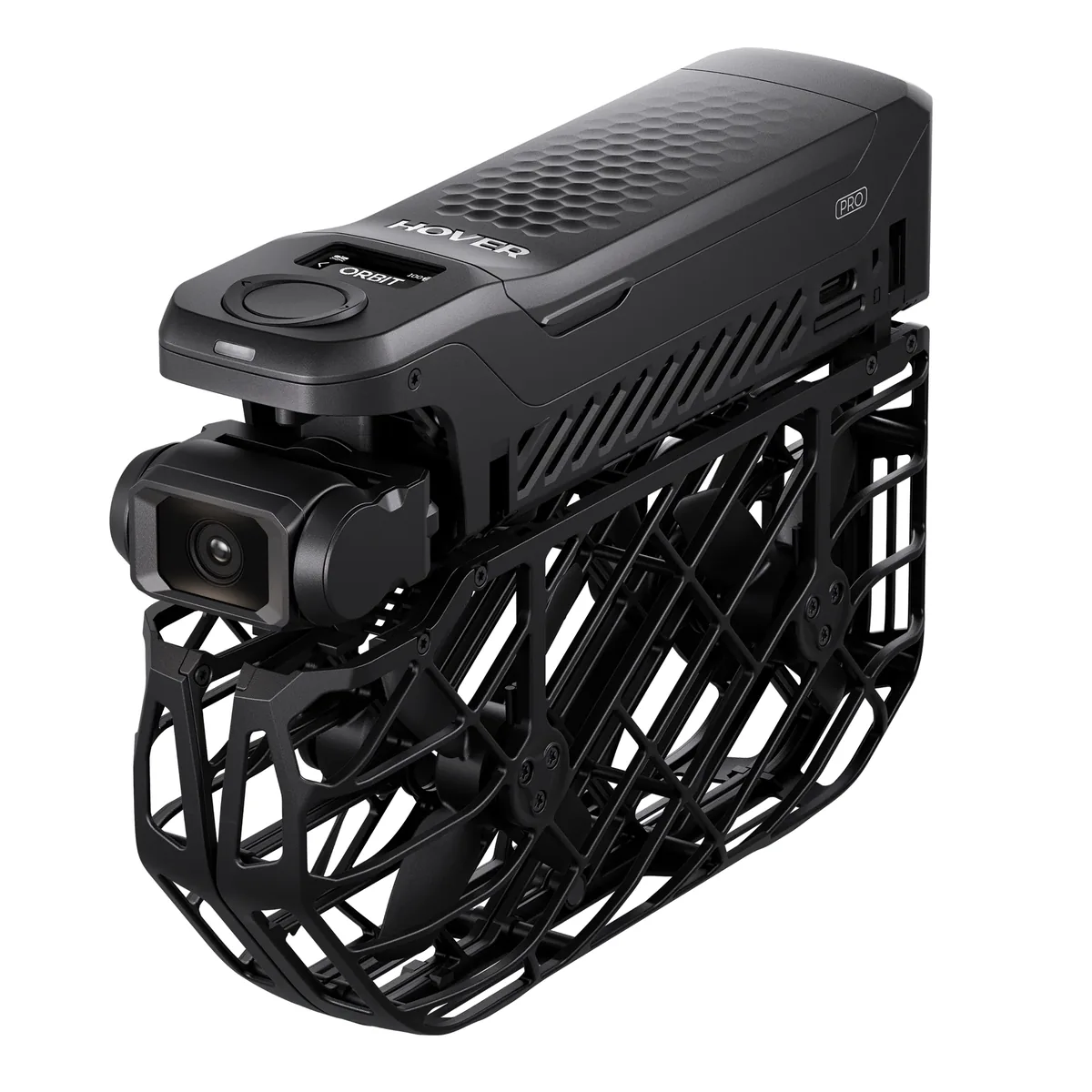
HoverAir
HoverAir X1 Pro
The jump from the original X1 is mostly the sensor: a 1/1.3-inch chip, the same size DJI puts in a Mini 4 Pro, behind a rotating camera module that shoots 4K/60 and handles portrait framing without a crop. Tracking got faster too — it will hold a rider at 26 mph — and rear and side sensors now watch the directions a following drone actually gets into trouble. Still no GPS and still no return-to-home, which is the line dividing this whole category from camera drones: if the Wi-Fi link drops, the aircraft lands rather than coming home. Sixteen claimed minutes is the other number to hold loosely, since testers running the near-identical Pro Max in tracking modes landed at 11 to 13. Worth it if you ski, ride or run and want the camera to do the following.
- Sensor
- 69.1 mm²
- Claimed
- 16 min
- Bundle
- ~$699
Best for: Action sports where the camera has to follow you
Full spec sheet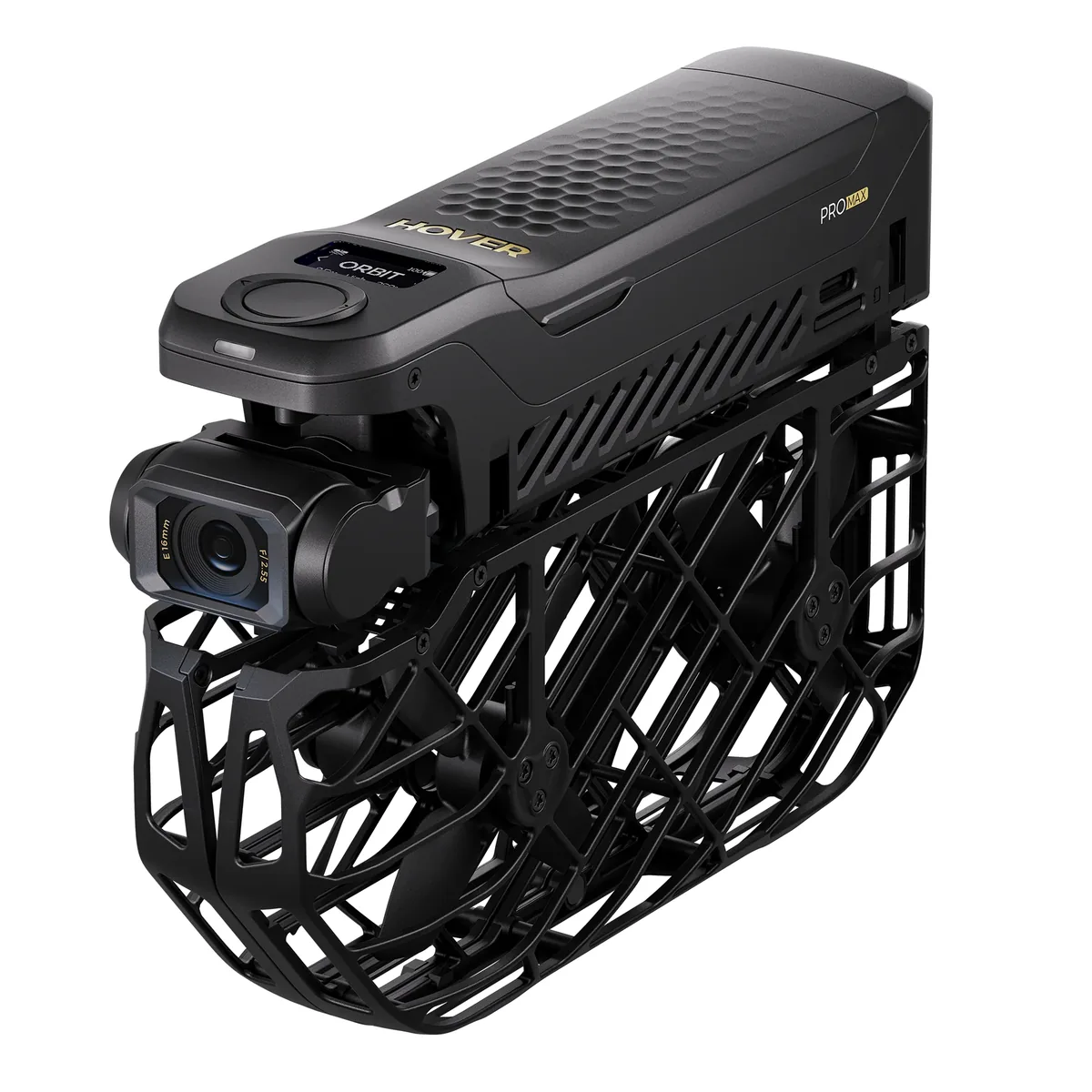
HoverAir
HoverAir X1 Pro Max
Eight-kilo-pixel video off a 193-gram aircraft that launches from your palm is a genuinely odd spec sheet, and it exists because this is a camera that follows you rather than a drone you fly. The 1/1.3-inch sensor and seven-element lens hold 8K/30 or 4K/120, which gives you room to reframe a tracking shot in post rather than steering during it. Everything else is inherited from the X1 Pro: rear and side sensing, tracking to 26 mph, caged props, and no GPS. That last omission is the one that decides whether this is right for you. Without GPS there is no return-to-home, so a dropped link ends in a landing wherever the aircraft happens to be. Reviewers measuring real tracking flights land at 11 to 13 minutes against the 16 on the box.
- Sensor
- 69.1 mm²
- Claimed
- 16 min
- Bundle
- ~$899
Best for: 8K follow footage you reframe afterwards
Full spec sheet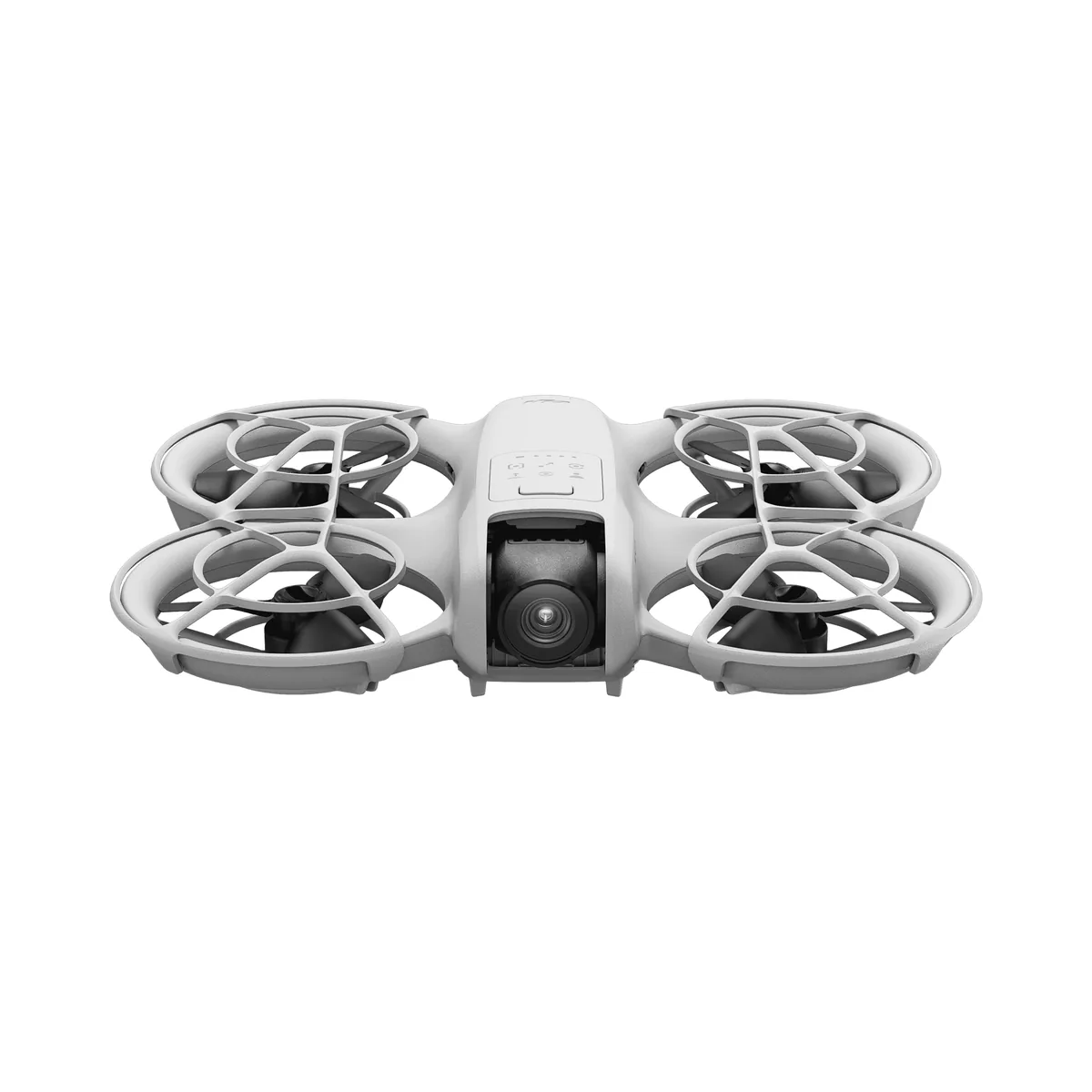
DJI
DJI Neo
At 135 grams with the propellers already caged, this is the drone you hand to someone who has never flown one. It launches off a palm, picks a preset move — orbit, follow, dronie — flies it, and lands back on the hand, with no controller and no app interaction required. A single-axis gimbal and electronic stabilisation keep 4K/30 usably steady, and 22 GB of internal storage means there is no card to forget. The trade is total: there is no obstacle sensing, the Wi-Fi link is good for about 50 metres without the optional controller, and the 18-minute claim is measured crawling forward at 2 m/s. Think of it as a hovering camera with eight fixed moves, not a camera drone you compose with.
- Sensor
- 30.7 mm²
- Claimed
- 18 min
- Bundle
- ~$289
Best for: Hands-free follow shots without piloting
Full spec sheet