4 drones · 2 brands
Selfie / follow-me
These are cameras that fly, not drones that film. You launch from a palm, pick a preset move, and the aircraft executes it and comes back to your hand — there is no framing during the flight and, on most of them, no GPS and therefore no return-to-home. If the link drops, they land where they are. That single omission is the line between this category and every camera drone on the site, and it is worth understanding before the price comparison starts.
HoverAir
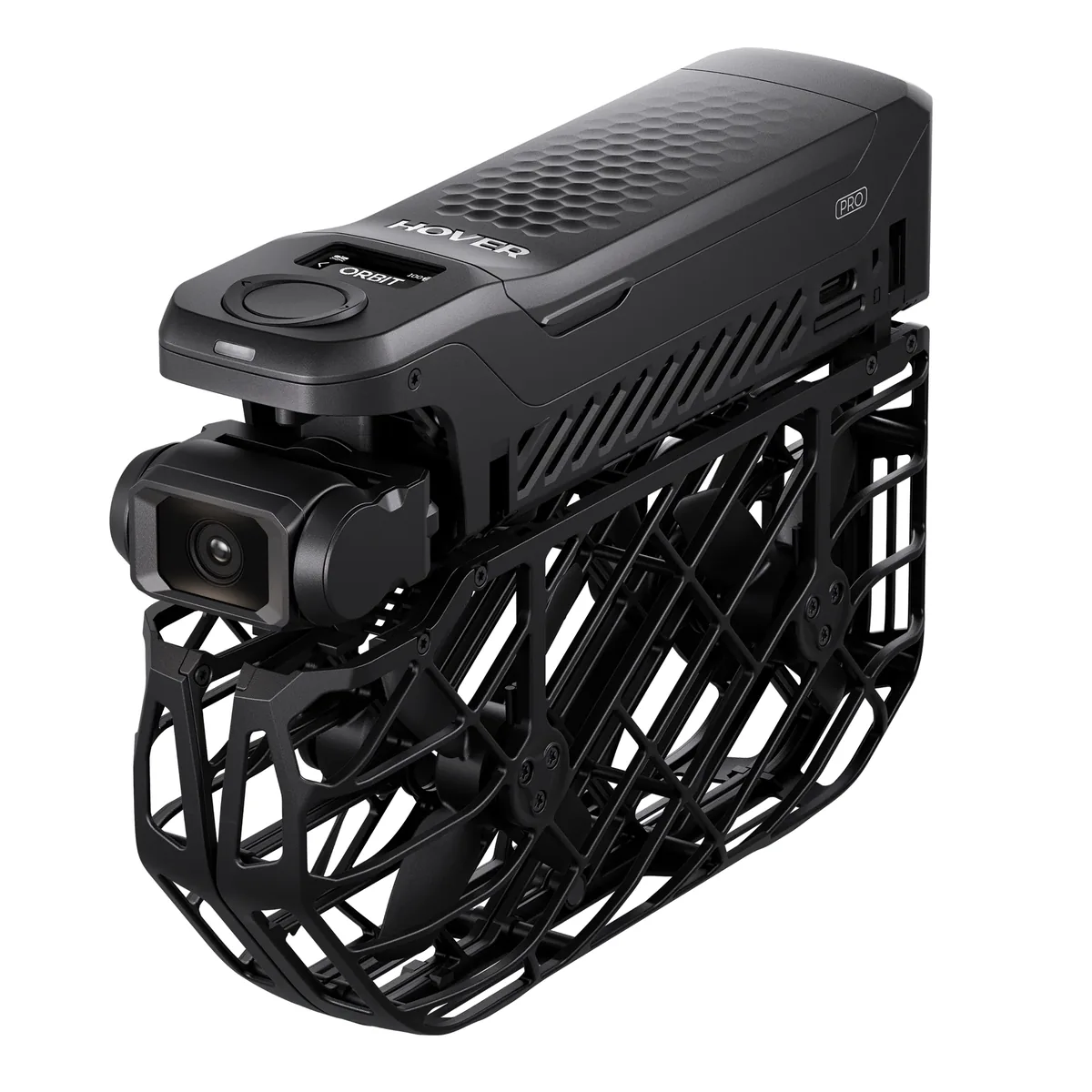
HoverAir X1 Pro
The jump from the original X1 is mostly the sensor: a 1/1.3-inch chip, the same size DJI puts in a Mini 4 Pro, behind a rotating camera module that shoots 4K/60 and handles portrait framing without a crop. Tracking got faster too — it will hold a rider at 26 mph — and rear and side sensors now watch the directions a following drone actually gets into trouble. Still no GPS and still no return-to-home, which is the line dividing this whole category from camera drones: if the Wi-Fi link drops, the aircraft lands rather than coming home. Sixteen claimed minutes is the other number to hold loosely, since testers running the near-identical Pro Max in tracking modes landed at 11 to 13. Worth it if you ski, ride or run and want the camera to do the following.
- Sensor
- 69.1 mm²
- Claimed
- 16 min
- Bundle
- ~$699
Best for: Action sports where the camera has to follow you
Full spec sheet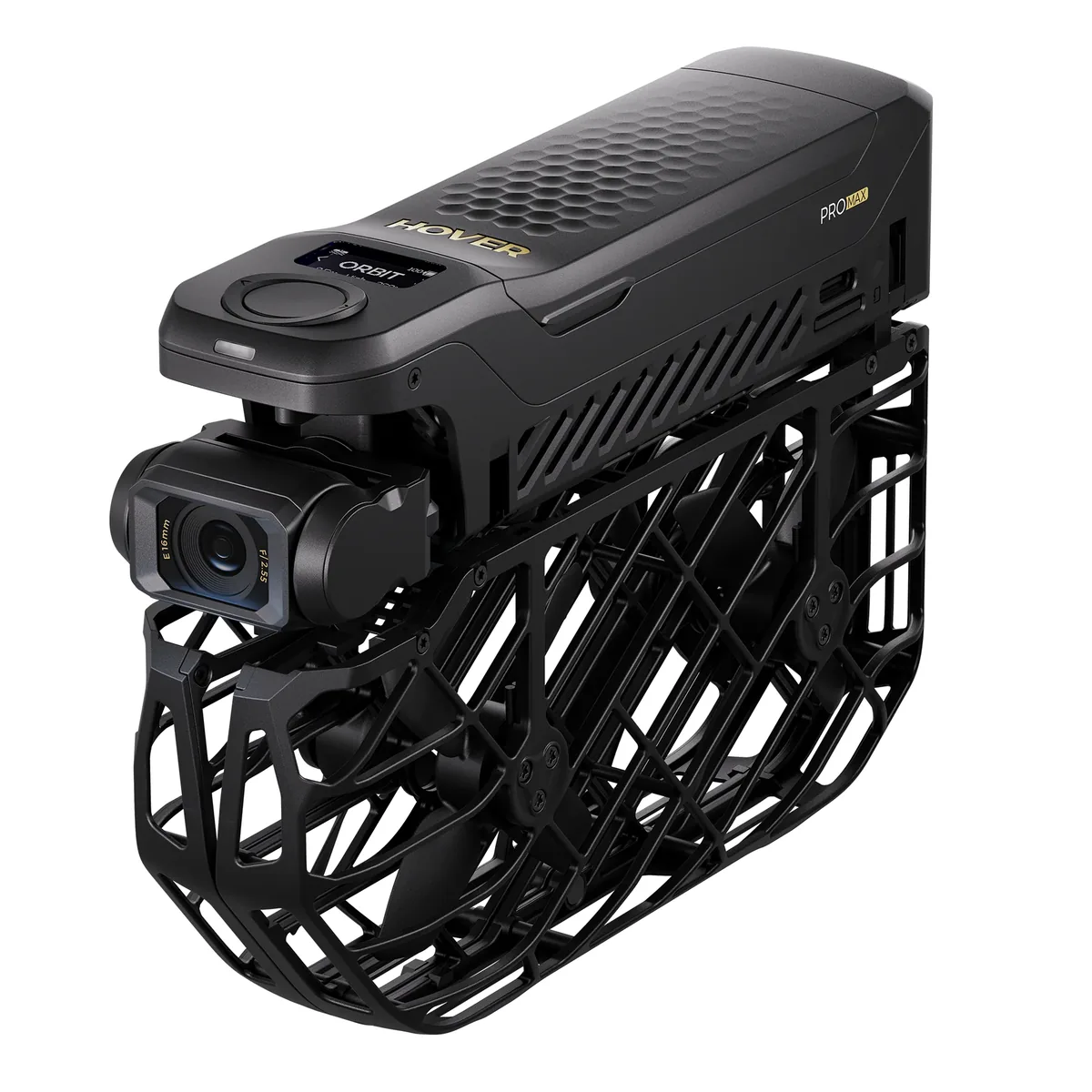
HoverAir
HoverAir X1 Pro Max
Eight-kilo-pixel video off a 193-gram aircraft that launches from your palm is a genuinely odd spec sheet, and it exists because this is a camera that follows you rather than a drone you fly. The 1/1.3-inch sensor and seven-element lens hold 8K/30 or 4K/120, which gives you room to reframe a tracking shot in post rather than steering during it. Everything else is inherited from the X1 Pro: rear and side sensing, tracking to 26 mph, caged props, and no GPS. That last omission is the one that decides whether this is right for you. Without GPS there is no return-to-home, so a dropped link ends in a landing wherever the aircraft happens to be. Reviewers measuring real tracking flights land at 11 to 13 minutes against the 16 on the box.
- Sensor
- 69.1 mm²
- Claimed
- 16 min
- Bundle
- ~$899
Best for: 8K follow footage you reframe afterwards
Full spec sheet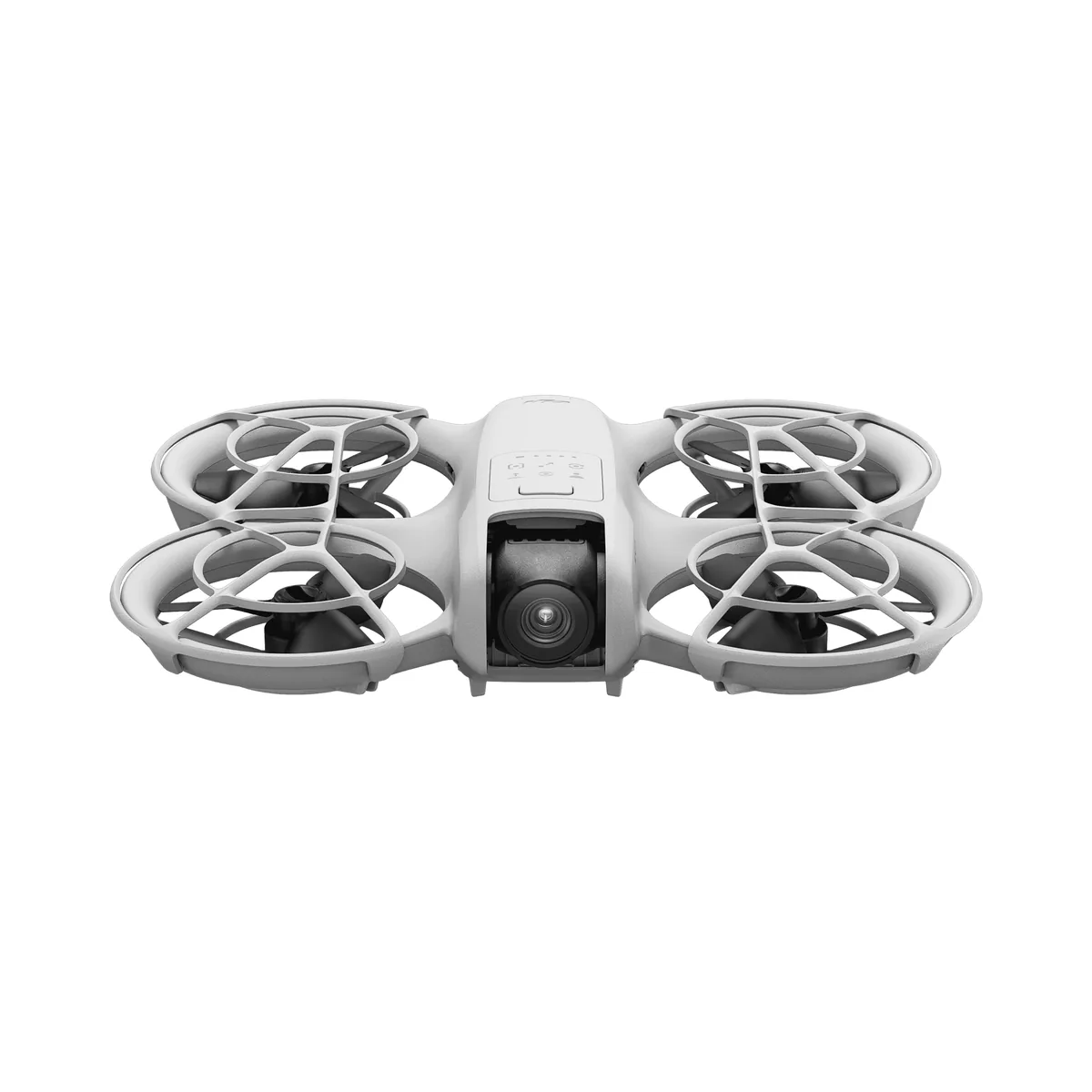
DJI
DJI Neo
At 135 grams with the propellers already caged, this is the drone you hand to someone who has never flown one. It launches off a palm, picks a preset move — orbit, follow, dronie — flies it, and lands back on the hand, with no controller and no app interaction required. A single-axis gimbal and electronic stabilisation keep 4K/30 usably steady, and 22 GB of internal storage means there is no card to forget. The trade is total: there is no obstacle sensing, the Wi-Fi link is good for about 50 metres without the optional controller, and the 18-minute claim is measured crawling forward at 2 m/s. Think of it as a hovering camera with eight fixed moves, not a camera drone you compose with.
- Sensor
- 30.7 mm²
- Claimed
- 18 min
- Bundle
- ~$289
Best for: Hands-free follow shots without piloting
Full spec sheet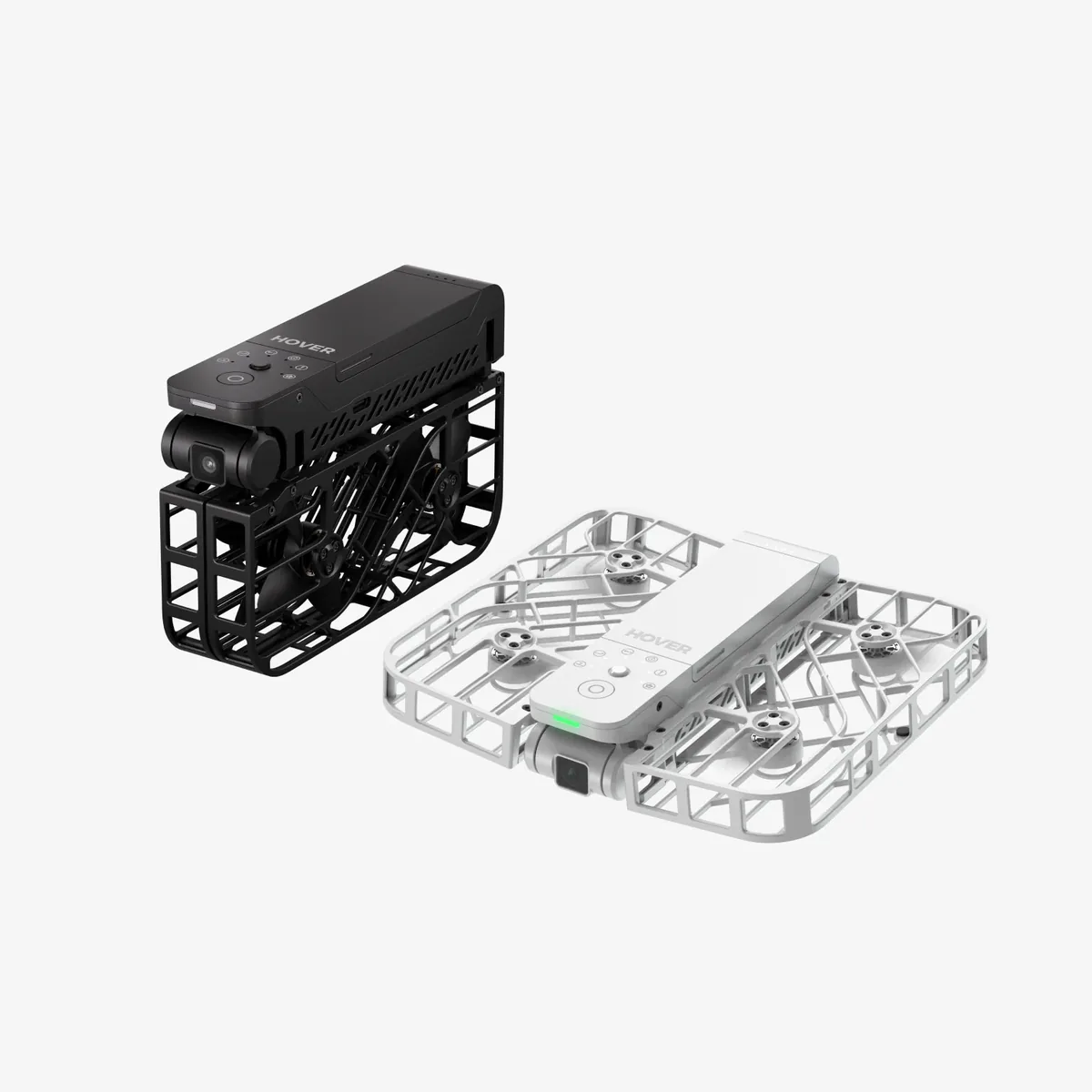
HoverAir
HoverAir X1
Zerotech's original palm-sized flying camera did one thing and did it before anyone else: you hold it out flat, press a button, and it lifts off, films a preset move around you, and lands back on your hand. No controller, no sticks, no app to fight with. Electronic stabilisation rather than a gimbal holds 2.7K/30 HDR steady enough for social video, and a 1/2.3-inch sensor keeps it honest about what that footage is. What it lacks is everything a camera drone has — no GPS, no return-to-home, no obstacle sensing, and a Wi-Fi link measured in tens of metres. That is not a flaw so much as the category: this is a camera that hovers, aimed at people who want to be in the shot rather than behind it, and at 125 grams it never needs registering.
- Sensor
- 28.1 mm²
- Claimed
- 11 min
- Bundle
- ~$429
Best for: Being in the shot without learning to fly
Full spec sheet