DJI Air 3 vs DJI Avata 2
Both are over the 250-gram line, so the legal position is identical and the decision comes down to the rows tinted below — the specs where these two actually differ. The DJI Avata 2 is the cheaper of the two at ~$1,199.
| Drone | ||
|---|---|---|
| Bundle price | ~$1,349multi-battery bundle | ~$1,199multi-battery bundle |
| True first-year price | ~$1,349 | ~$1,199 |
| Flight min per $100 | 3.4 | 1.9 |
| Rating | No cited rating | No cited rating |
| Takeoff weight | 720 g | 377 g |
| FAA registration | Required | Required |
| Remote ID | Built-in | Built-in |
| Sensor size | 1/1.3" | 1/1.3" |
| Sensor area | 69.1 mm² | 69.1 mm² |
| Megapixels | 48 MP | 12 MP |
| Max video | 4K/60fps HDR, 4K/100fps slow motion | 4K/60fps |
| Colour depth | 10-bit | 10-bit |
| Log profile | D-Log M | D-Log M |
| Gimbal | 3-axis | 1-axis |
| Obstacle sensing | Omnidirectional | Rear + side |
| Claimed flight time | 46 min | 23 min |
| Tested flight time | — | — |
| Battery | 62.6 Wh | 31.7 Wh |
| Transmission | O4 | O4 |
| Max range | 20 km | 13 km |
| Max speed | 47 mph | 60 mph |
| Wind resistance | 12 m/s | Level 5 (10.7 m/s) |
| Service ceiling | 6000 m | 5000 m |
| Internal storage | 8 GB | 46 GB |
| Controller | DJI RC-N2 (phone required); DJI RC 2 with built-in screen at extra cost | DJI FPV Remote Controller 3; DJI Goggles 3 included in the Fly More Combo |
| Return to home | Yes | Yes |
| Geofencing | Yes | Yes |
| Care plan (1 yr) | Not in our snapshot | Not in our snapshot |
| US availability | Limited | Limited |
| Released | 2023 | 2024 |
| Flight claim measured at | DJI measures 46 minutes at "a constant speed of 28.8 kph in a windless environment at sea level, with APAS off, AirSense off, camera parameters set to 1080p/24fps" — obstacle sensing disabled and the camera in its least demanding mode. | 23 minutes "flying forward at a constant speed of 21.6 kph" in windless conditions at sea level. Hovering is quoted separately at 21 minutes, and actual FPV flying — throttle punches, dives, climbs — spends the 31.7 Wh pack much faster. |
DJI Air 3
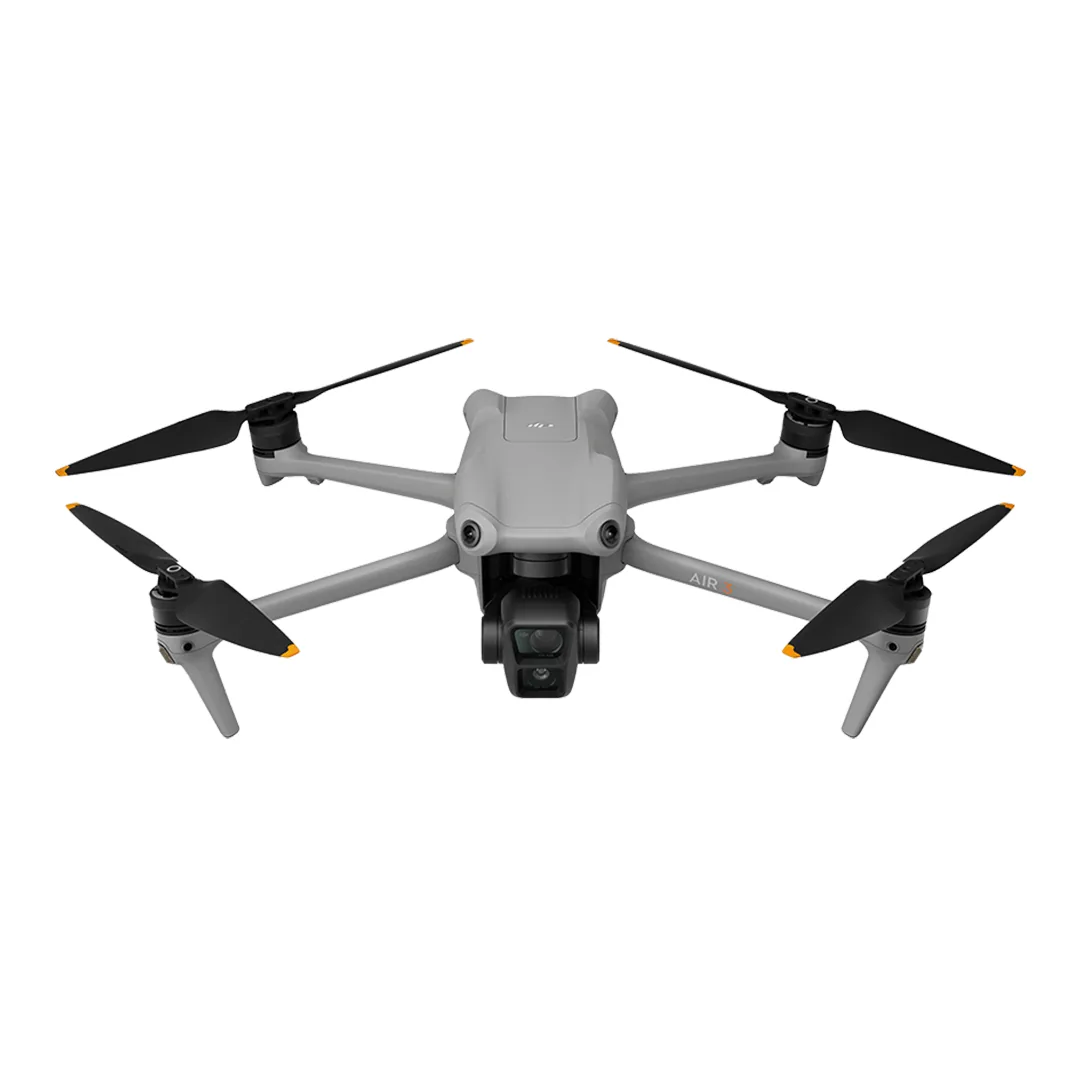
Two 1/1.3-inch cameras rather than one big one was the Air 3's bet, and for a lot of people it paid off. A 24mm wide and a 70mm medium telephoto share the same sensor size and the same 48 megapixels, so cutting between them does not produce the jarring quality drop that a small tele sensor causes. Both shoot 4K/60 HDR, 4K/100 slow motion and 10-bit D-Log M. Omnidirectional sensing, 46 claimed minutes on a 62.6 Wh pack and a 6,000 m ceiling make it the class workhorse it was meant to be. Read that 46 carefully, though: DJI quotes it with obstacle sensing switched off and the camera set to 1080p/24, which is not how anyone flies. The Air 3S replaced it with a one-inch wide camera and forward LiDAR, so the Air 3 is now the value pick in the line rather than the current one.
Full spec sheet →DJI Avata 2
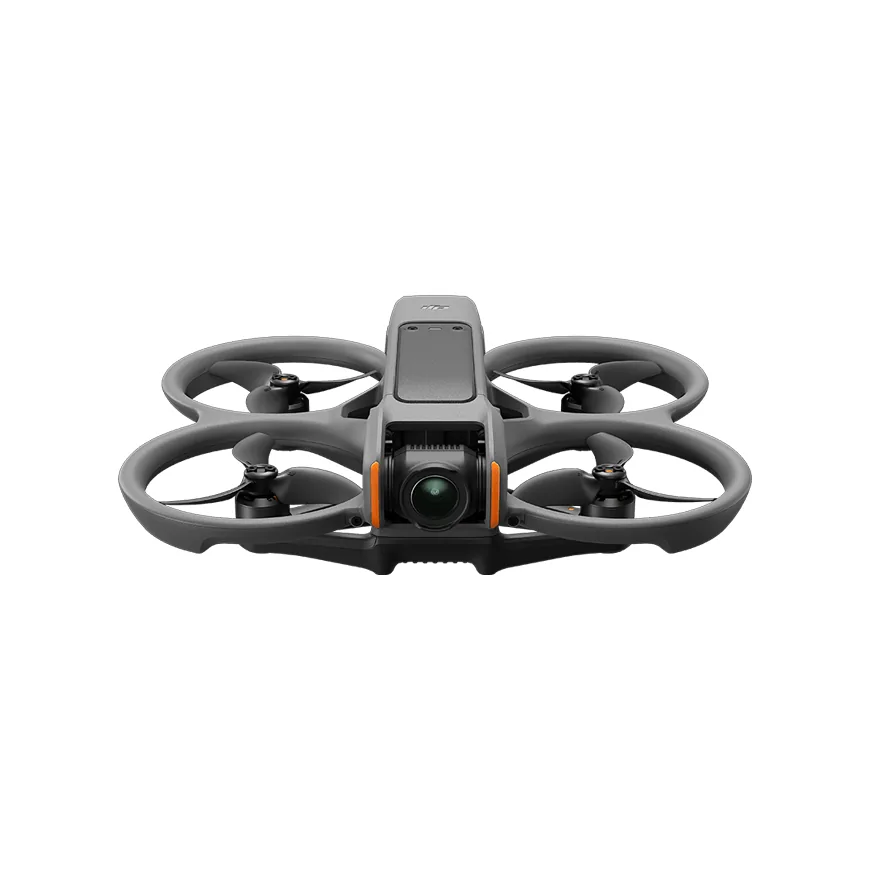
Ducted props, goggles in the box, and a flight model that forgives you — this is how most people who fly FPV now start. The Avata 2 puts a 1/1.3-inch 12MP camera on a single-axis gimbal behind full prop ducts, records 4K/60 in 10-bit D-Log M to 46 GB of internal storage, and flies on DJI Goggles 3 with the FPV Remote Controller 3. Normal mode hovers and holds position like a camera drone; Sport and Manual progressively hand you the throttle until you are flying a real quad at 60 mph. The ducts mean a clipped branch usually means a bounce rather than a repair, which is the entire reason this is a better first FPV aircraft than a bare 5-inch freestyle build. The honest limits are endurance and sensing: 23 minutes is a cruise figure, and nothing watches forward. Two things the price tag hides in both directions: the goggles and controller are the expensive half of this system and are shared with the Avata 360 and the Neo, so the cost amortises if you add another aircraft; and a ducted airframe over water has no float and no second chance.
Full spec sheet →