DJI Air 3S vs Autel EVO Lite+
Both are over the 250-gram line, so the legal position is identical and the decision comes down to the rows tinted below — the specs where these two actually differ. The DJI Air 3S is the cheaper of the two at ~$1,399.
| Drone | ||
|---|---|---|
| Bundle price | ~$1,399multi-battery bundle | ~$1,499multi-battery bundle |
| True first-year price | ~$1,508 | ~$1,499 |
| Flight min per $100 | 3.2 | 2.7 |
| Rating | No cited rating | No cited rating |
| Takeoff weight | 724 g | 835 g |
| FAA registration | Required | Required |
| Remote ID | Built-in | Broadcast module |
| Sensor size | 1" | 1" |
| Sensor area | 116.2 mm² | 116.2 mm² |
| Megapixels | 50 MP | 20 MP |
| Max video | 4K/60fps HDR, 4K/120fps slow motion | 6K/30fps |
| Colour depth | 10-bit | 10-bit |
| Log profile | D-Log M | Log |
| Gimbal | 3-axis | 3-axis |
| Obstacle sensing | Omnidirectional + LiDAR | Forward + backward |
| Claimed flight time | 45 min | 40 min |
| Tested flight time | — | — |
| Battery | 62.5 Wh | 43 Wh |
| Transmission | O4 | SkyLink 2.0 |
| Max range | 20 km | 12 km |
| Max speed | 47 mph | 40 mph |
| Wind resistance | 12 m/s | Level 5 (10.7 m/s) |
| Service ceiling | 6000 m | 6000 m |
| Internal storage | 42 GB | 6 GB |
| Controller | DJI RC-N3 (phone required); DJI RC 2 with built-in screen at extra cost | Autel Smart Controller SE (phone required) |
| Return to home | Yes | Yes |
| Geofencing | Yes | No |
| Care plan (1 yr) | ~$109 | Not in our snapshot |
| US availability | Limited | Limited |
| Released | 2024 | 2022 |
| Flight claim measured at | 45 minutes measured at a constant 32.4 kph forward flight, at sea level, in windless conditions. Hovering, filming and any headwind all come off that number. | Autel's 40 minutes is a still-air cruise figure with no published detail on camera settings or sensing state. |
DJI Air 3S
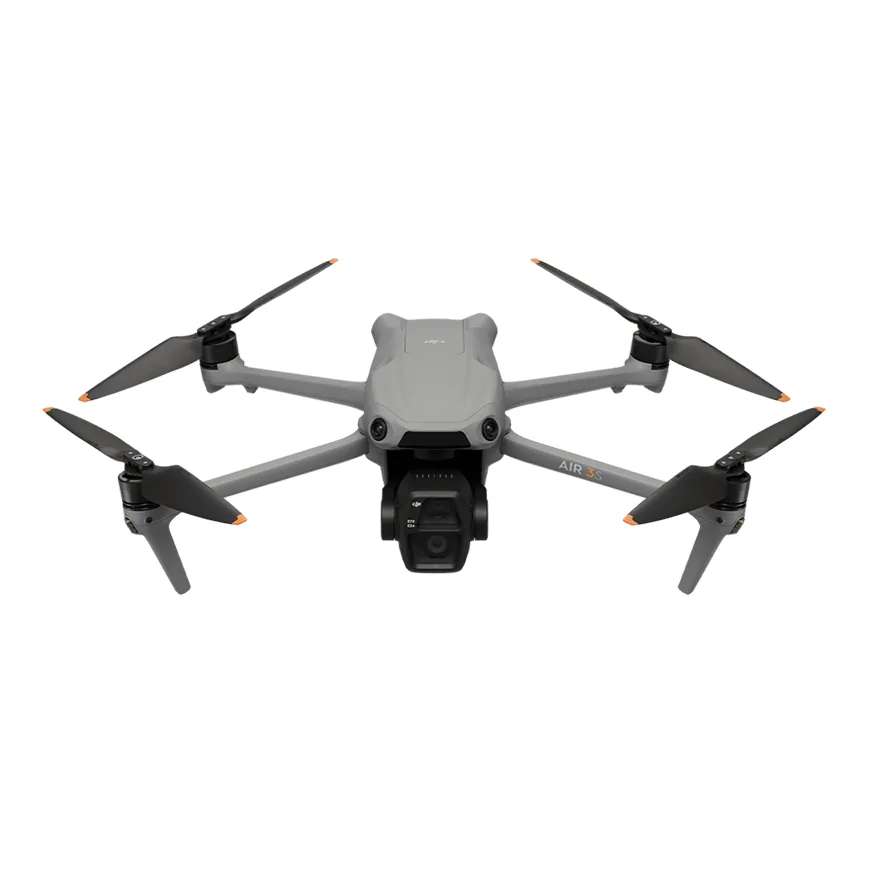
Where the Air 3 gave you two matched 1/1.3-inch cameras, the Air 3S puts a one-inch 50MP sensor on the wide and keeps a 1/1.3-inch 48MP for the 70mm tele. That is the upgrade almost everyone wanted, and it comes with forward LiDAR bolted onto the omnidirectional vision system, which is the first time DJI's sensing has genuinely worked after dusk. Forty-two gigabytes of internal storage, a 6,000 m ceiling and 12 m/s wind resistance round it out. It sits in a strange spot in 2026: it is the best all-round camera drone DJI has FCC clearance to sell in the US, and the Mavic 4 Pro that beats it never officially arrived here. If you want one aircraft that handles wind, low light and long flights without a caveat, this is the shortest answer in the catalog.
Full spec sheet →Autel EVO Lite+
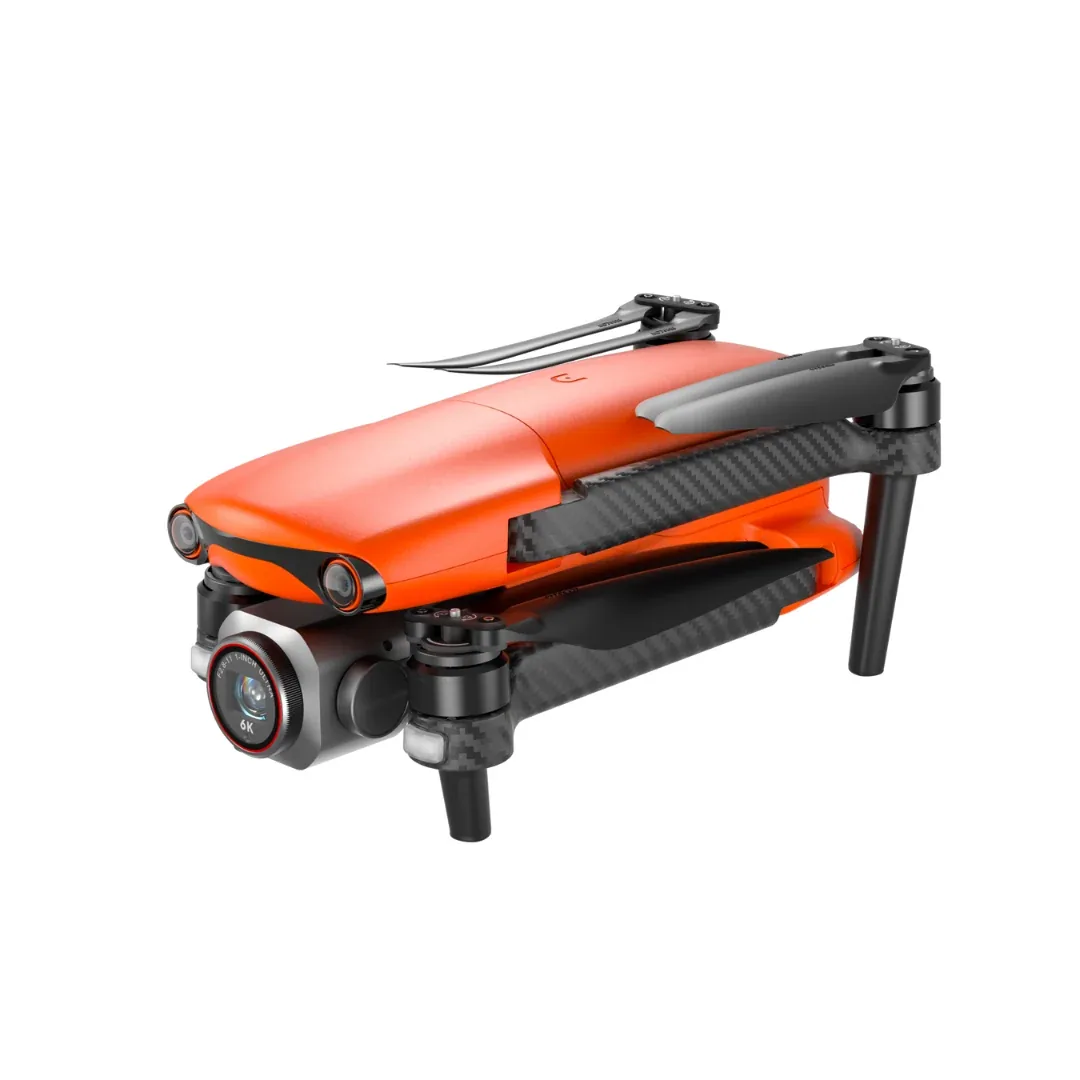
Pair a one-inch sensor with an adjustable f/2.8-to-f/11 aperture and 6K recording and you have what was, for a while, the most interesting non-DJI camera drone of its generation, and it still shoots well. Autel's Moonlight algorithm pushes ISO absurdly high — the marketing claims up to 48,000 — which produces noisy but usable night frames that most rivals simply cannot attempt. Forty claimed minutes on a 43 Wh pack and a 12 km SkyLink link round it out, and as with every Autel there is no manufacturer geofencing. The reason to think hard before buying is the same as with the Nano+: Autel discontinued its whole consumer range in July 2025. Batteries, props and firmware for an 835-gram aircraft with a four-year-old app are not going to get easier to find, and at 835 grams it needs registration and a Remote ID solution either way.
Full spec sheet →