DJI
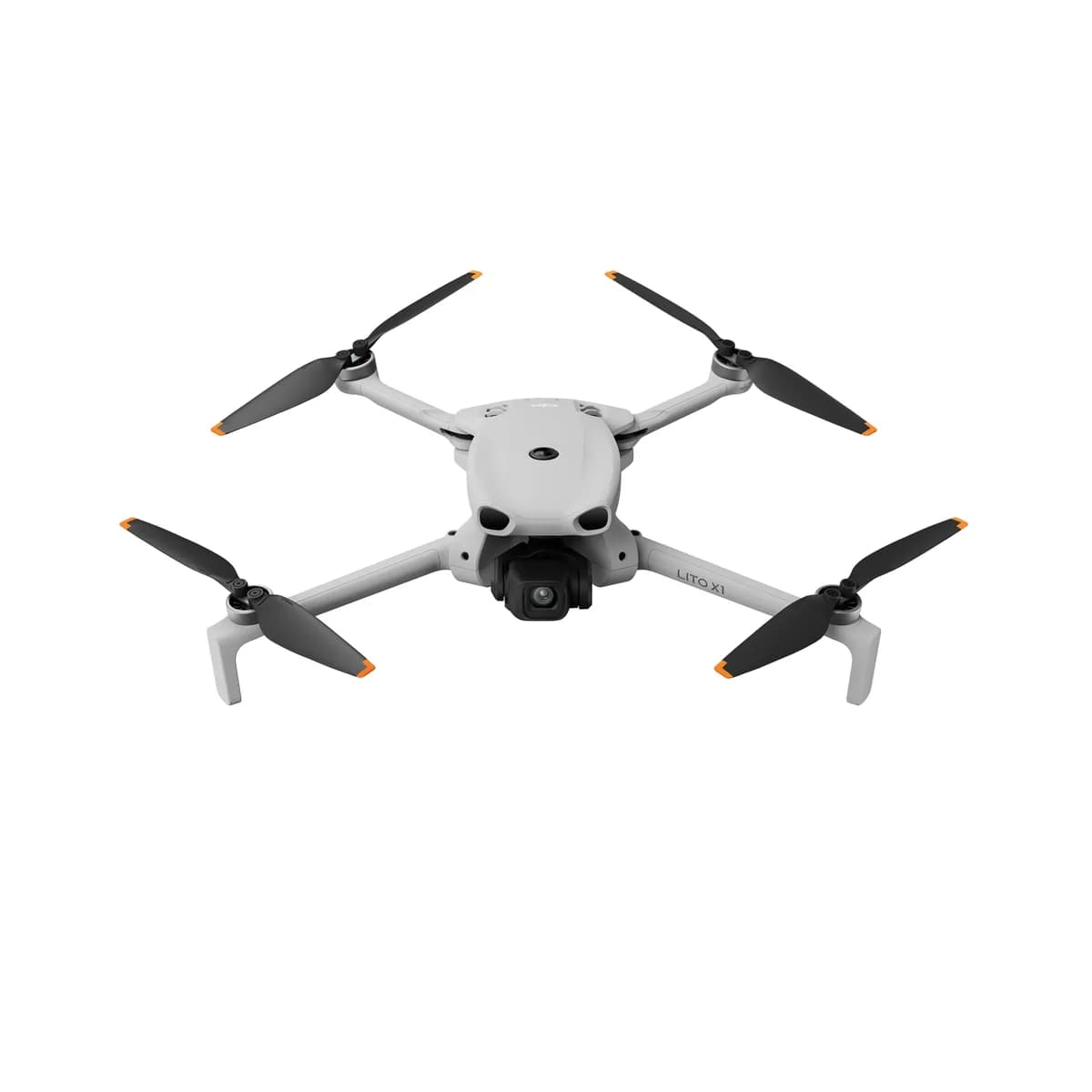
DJI Lito X1
Think of this as a Mini 4 Pro's sensor in a cheaper body that DJI built for first-time pilots. The Lito X1 carries a 1/1.3-inch 48MP sensor behind an f/1.7 lens on a three-axis gimbal, records 4K up to 100fps in 10-bit D-Log M at 130 Mbps, and adds omnidirectional vision sensing with a forward LiDAR at 249 grams. The RC-N3 controller comes in the base box, internal storage is 42 GB, and DJI rates the standard 19.52 Wh battery at 36 minutes. Where it gives ground to the Mini line is the lens (24 mm equivalent, wide only, with digital zoom) and the link: O4 is rated to 15 km under Canada's IC rules, and DJI publishes no FCC figure at all. That absence is the US story. DJI says US authorization is pending, so for an American buyer the Lito X1 is an import with no domestic warranty, and the 52-minute Plus battery would push it over 249 g into registration.
The 250-gram line
Under 250 g: recreational flight needs no FAA registration, and Remote ID does not apply.
Every recreational flyer must also take TRUST and carry proof of it, at any weight. Rules from faa.gov. Not legal advice — how this is worked out.
Buying, flying and fixing it in the US
DJI launched the Lito series on 23 Apr 2026 everywhere but the US, saying its US authorization application was still pending after the 22 Dec 2025 Covered List decision, and its spec page publishes Canadian (IC) range figures rather than FCC ones, so a US unit is an import with no US warranty; prices here convert DJI's Hong Kong list price (HK$2,829 base) because DJI publishes no US price.
- Buy it newImport only
- Never sold in the US by the maker; units here are imports with no US warranty.
- FCC authorisationDisputed
- An FCC grant is on record (SS3-DGP14, 27 Nov 2025), but DJI said at launch that its US authorisation was still pending.
- FAA rulesNo registration
- Under 250 g, so recreational flight needs no FAA registration or Remote ID.
- Protection planNone in US
- No US Care Refresh; a plan bought abroad follows the region of purchase.
- RepairsNot published
- No US repair route published for it; DJI's warranty follows the region of purchase.
- Spare batteriesNone from DJI
- No US listing from DJI, and its new US store sells no drone batteries.
- App and accountAccount needed
- Flies with DJI Fly, listed in the US App Store, and is bound to a DJI account.
- Support commitmentNot published
- Not published by the maker.
DJI, across every model
- DJI is on the FCC Covered List by name. Models authorised before 22 Dec 2025 stay legal to sell and fly; new DJI models cannot be authorised.
- Since 5 Nov 2026 DJI's own store no longer serves US buyers. US sales moved to us.store.dji.com, run independently by BRICART Inc., which lists no drones and no drone batteries.
- Every DJI Care Refresh plan is marked discontinued for US buyers, so DJI crash cover can no longer be bought in the US.
- US repairs go to Care Pro (CarePro Technology Inc, Sacramento), the company DJI's US support page names for after-sales service.
- Aircraft are bound to a DJI account. Since June 2025 DJI will not unbind one without the original owner, which matters when buying used.
Every drone’s US status · Remote ID declarations. Stated as published by the maker, the FCC and the FAA; not legal advice.
Published sources: apps.apple.com, dronexl.co (1, 2), thedronegirl.com, fcc.gov, mayerbrown.com, store.dji.com (1, 2), us.store.dji.com, dji.com, tecarepro.com
What that 36-minute claim is measured at
36 minutes on the 19.52 Wh standard battery, measured in a windless wind tunnel at sea level flying forward at a constant 21.6 km/h, obstacle avoidance set to brake and the camera set to 1080p/24 but not recording, until a forced landing. DJI also publishes a 'typical' 23 minutes in a light breeze with 4K/60 recording and RTH at the low-battery prompt. The 52-minute figure needs the Plus battery, which takes the aircraft over 249 g.
That works out to 7.3 claimed minutes per $100 of the multi-battery bundle. Compared with the rest of the catalog.
Specifications
True first-year cost: ~$493 — the multi-battery bundle at ~$493; no crash plan on sale in the US has a verified price for this model, so nothing is added for it.
What it has
- 1/1.3-inch 48MP sensor, f/1.7, on a three-axis gimbal
- 4K at up to 100fps, 10-bit D-Log M, 130 Mbps
- Omnidirectional vision sensing with a forward LiDAR
- O4 transmission rated 15 km (IC); no FCC figure published
- RC-N3 controller included in the base kit
- 42 GB internal storage plus microSD
In its favour
- Large 1/1.3-inch sensor and an f/1.7 lens in a beginner-priced aircraft
- Omnidirectional sensing plus LiDAR, the same tier as DJI's dearer sub-250 g models
- 10-bit D-Log M and 4K/100 for real grading room
- Controller included in the base kit
- DJI publishes a realistic 23-minute typical figure beside the 36-minute headline
- 42 GB internal storage as a backup to the card
Against it
- Not sold by DJI in the US, so no US warranty and no FCC range rating
- Fixed 24 mm wide lens with digital zoom only
- The Plus battery takes it past 249 g, which means FAA registration
- No published Remote ID declaration for the US
The two lists above are drawn from the manufacturer’s published specifications and from the cited reviews, not from owner reports.
What owners report
Summarised from reports by people who own and fly it; a single report is written as one owner.
Several owners bought the X1 as their first drone, and one early owner praises the camera's definition and another its whisper-quiet flight; one who already had a Neo 2 and a Flip bought it for wind resistance and a better sensor, and found it steadier than the Flip in gusts but its stills a little softer and noisier than the Flip's.
Wires are the recurring hazard: owners have hit a harbour line, power lines and fibre cables, and the August 2026 wire strike that ended in a 100 m post-crash flyaway is the most detailed failure story so far. Two owners found arm damage, one a stress-whitened rear arm and one a hinge broken in a fall, and that owner's own hinge repair left loose mounts and an unstable hover. Missing tracking modes are the feature gap two owners point to against the Mini 4 Pro.
It does not suit everyone who wants first-person flying: one owner found it boring after trying a friend's Avata 2 and is thinking of switching. One US owner paid about $750 for an RC 2 combo shipped from a Korean seller in May 2026.
What owners like
- The camera has great definition for one owner who shot travel footage in Bermuda with no regrets, and another found default 12 MP photos pretty decent once moved to a phone
- One owner who flew it beside a Flip in gusty conditions found the X1 clearly steadier and better flying overall
- One owner calls it whisper quiet next to the Neo and Air 2 they flew before
- Battery life impresses the two owners who give figures: one reports anywhere from 20 to 42 minutes, and another flew a 30-minute session over water at 40-60 m
What owners ran into
- Sensing does not save it from wires: owners have clipped a harbour line, power lines and fibre cables, and one wire strike in August 2026 left it flipping, relaunching on its own and flying about 100 m before it was recovered
- After that strike DJI told the owner that post-crash behaviour falls outside normal design conditions, though it offered a goodwill repair, which the owner declined
- Two owners found trouble at the arms: one found stress-whitening on a rear arm after two days, and another's self-replaced front hinge had two screws that would not tighten, which the owner suspects is the mounting points, and the drone drifted
- Stills can disappoint: one owner found them softer and noisier than a Flip's, another got blurrier 48 MP shots than 12 MP defaults, and in July 2026 one could not open its DNG files in DxO PhotoLab or Darktable
- Tracking lacks modes two owners each looked for: one wanted the Mini 4 Pro's automatic Active Shots choice, the other a parallel follow
Questions owners ask
What did one US owner pay to get a Lito X1?
Is the Lito X1 camera better than the Flip's?
What happens if the Lito X1 hits a wire?
Does the Lito X1 have the same tracking modes as the Mini 4 Pro?
Shopped alongside it
More from DJI →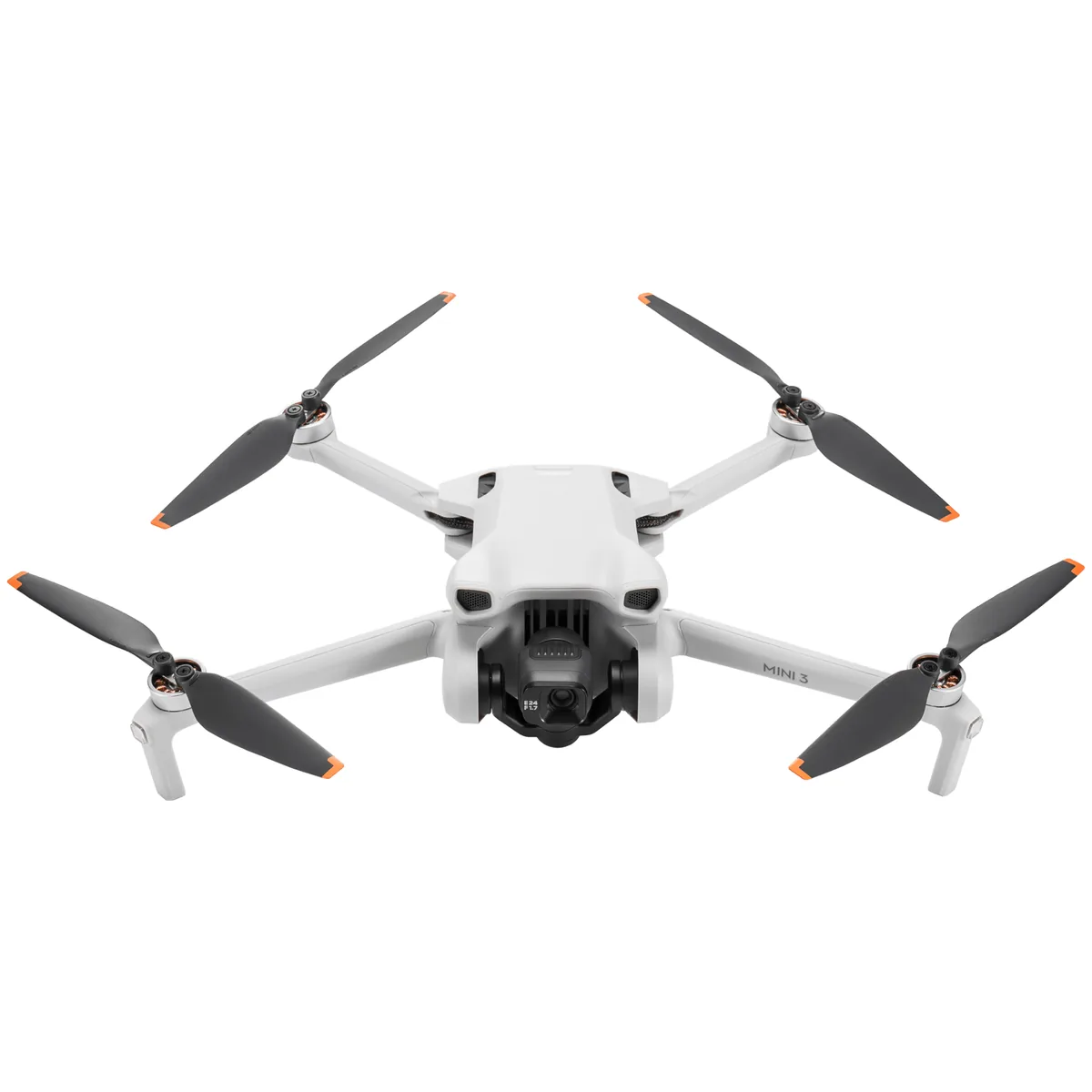
DJI
DJI Mini 3
Everything the Mini 4 Pro has except the sensing and the frame rates, for a good deal less money. Mini 3 carries the same 1/1.3-inch 48MP sensor, the same three-axis gimbal and the same true vertical shooting, then stops at 4K/30 in 8-bit with no log profile and no obstacle detection beyond the downward vision system. Its 38-minute headline is the most quotable example of why this site records flight conditions: DJI measures it cruising forward at a constant 21.6 kph in photo mode, in a wind tunnel, until the battery is depleted — and quotes a separate 33 minutes for hovering in a windless lab. Fly it with the camera rolling and land with a reserve and you are in the mid-twenties. As a daylight stills and simple-video aircraft that never needs registering, it still holds up; as a drone to fly through anything, it does not. There is one more consideration for anyone comparing it against a Mini 4K at a similar price: the Mini 3 has been out long enough that the accessory market is deep and second-hand batteries are plentiful, while the newer aircraft is still building that.
- Sensor
- 69.1 mm²
- Claimed
- 38 min
- Bundle
- ~$598
Best for: Daylight stills and simple video with no registration
Full spec sheet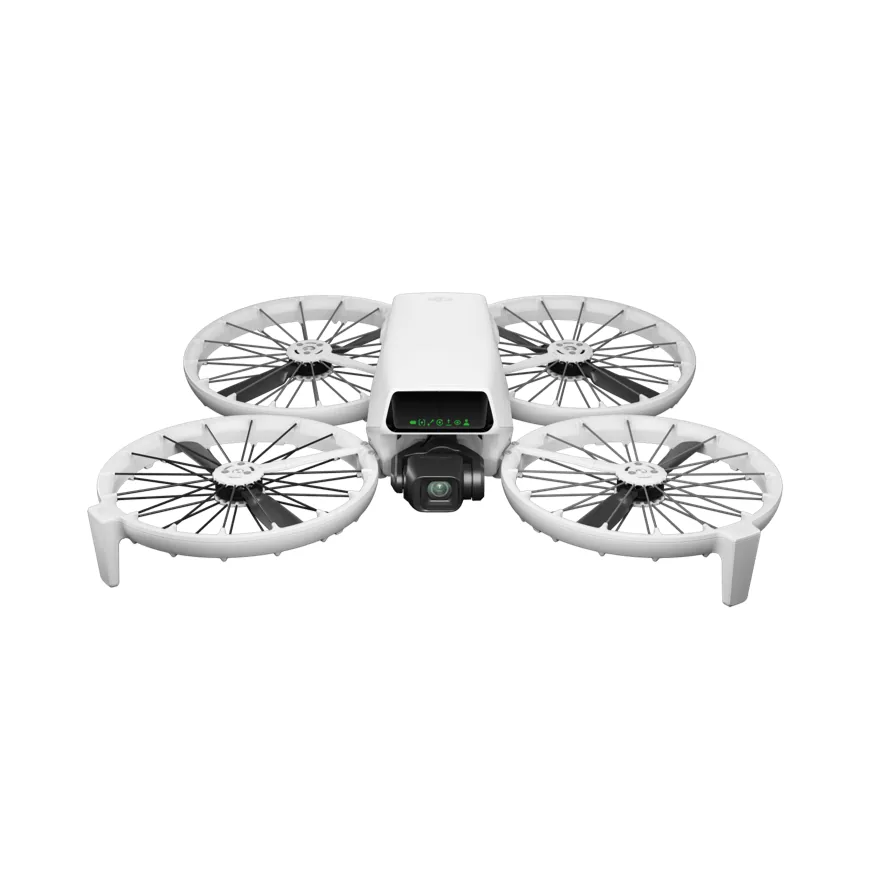
DJI
DJI Flip
Full-coverage propeller guards that fold flat is the idea, and it is a better one than the spec sheet suggests. Unfolded, the Flip's four cages sit around the props like a Neo's but carry a proper 1/1.3-inch 48MP camera on a three-axis gimbal behind them; folded, the whole thing collapses to something close to a Mini's footprint. It will take off from a palm and fly a preset without a controller at all, and it will also fly properly on an RC-N3 with 10-bit D-Log M and O4 transmission. Forward 3D infrared sensing covers the direction you are most likely to hit something and nothing else, which is an honest middle ground between the Neo's nothing and the Mini 4 Pro's everything. The bundle pricing is the awkward part — the screened-controller combo costs nearly twice the base kit.
- Sensor
- 69.1 mm²
- Claimed
- 31 min
- Bundle
- ~$779
Best for: Flying safely around people with a real camera
Full spec sheet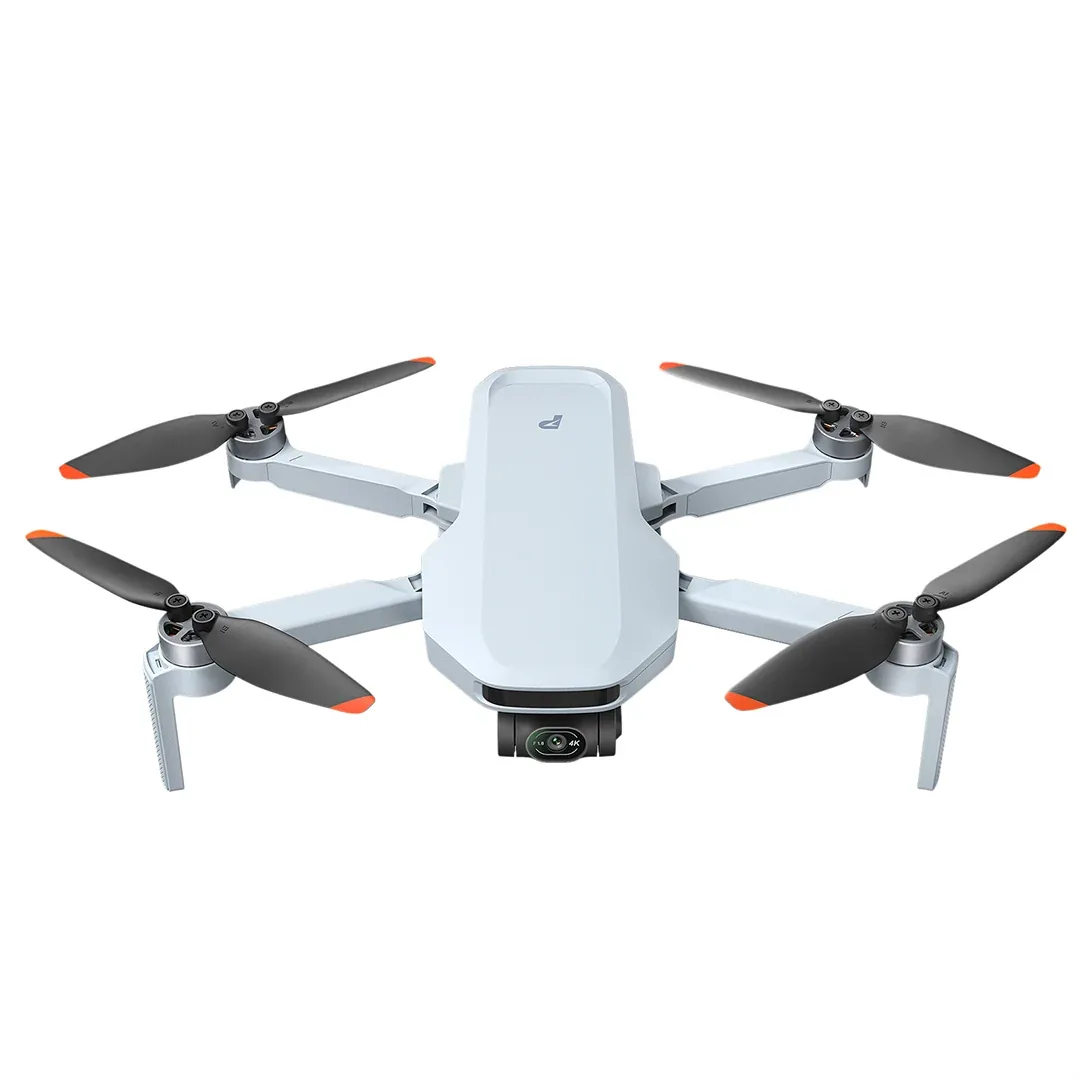
Potensic
Potensic Atom 2
Potensic's pitch is simple arithmetic: a three-axis gimbal, a 10 km link, waypoints and subject tracking for the price DJI charges for a Mini 4K with none of those things. The 1/2-inch 48MP sensor is genuinely smaller than the Mini's 1/1.3-inch chip, so the footage is a step behind in anything but good light, but the stabilisation is real and vertical shooting is supported. The flight-time claim is where this entry earns its place in the catalog: the box says 32 minutes, a reviewer could not get past 20 on any flight, and Potensic's own spokesperson put typical real-world endurance at around 20 minutes. That is a well-documented gap between claim and reality, and it is worth knowing before you plan a session around three batteries. Two things to check before ordering: whether the Fly More bundle is genuinely cheaper than buying batteries later, because the discount varies week to week; and whether you need the screened RC PTD 1 controller, because the base kit's controller needs your phone and your phone's battery.
- Sensor
- 30.7 mm²
- Claimed
- 32 min
- Bundle
- ~$449
Best for: A gimballed first drone on a tight budget
Full spec sheet