Potensic
Potensic Atom 2
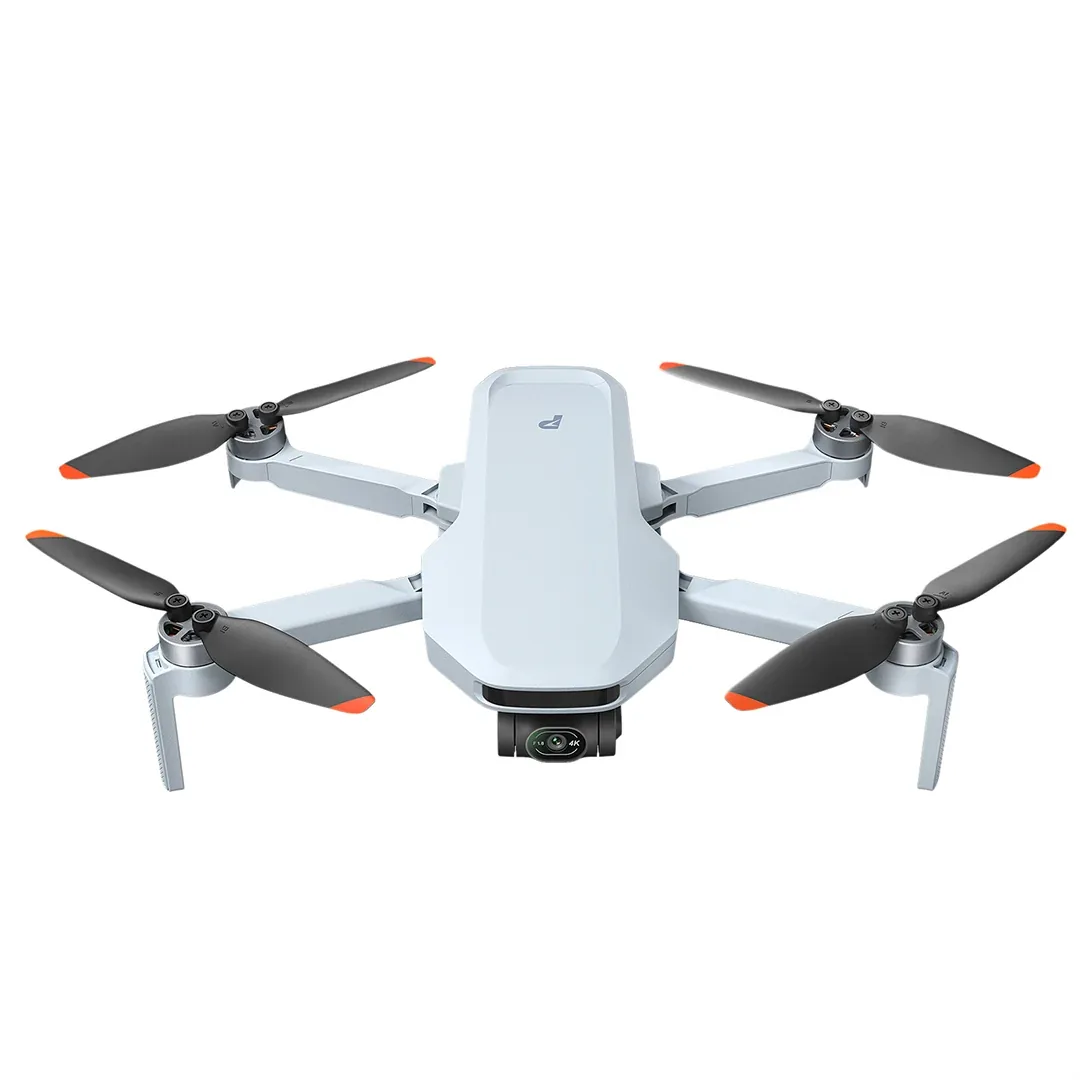
Potensic's pitch is simple arithmetic: a three-axis gimbal, a 10 km link, waypoints and subject tracking for the price DJI charges for a Mini 4K with none of those things. The 1/2-inch 48MP sensor is genuinely smaller than the Mini's 1/1.3-inch chip, so the footage is a step behind in anything but good light, but the stabilisation is real and vertical shooting is supported. The flight-time claim is where this entry earns its place in the catalog: the box says 32 minutes, a reviewer could not get past 20 on any flight, and Potensic's own spokesperson put typical real-world endurance at around 20 minutes. That is the most clearly documented gap between claim and reality anywhere in this dataset, and it is worth knowing before you plan a session around three batteries. Two things to check before ordering: whether the Fly More bundle is genuinely cheaper than buying batteries later, because the discount varies week to week; and whether you need the screened RC PTD 1 controller, because the base kit's controller needs your phone and your phone's battery.
The 250-gram line
Under 250 g: recreational flight needs no FAA registration, and Remote ID does not apply.
Every recreational flyer must also take TRUST and carry proof of it, at any weight. Rules checked against faa.gov on 2026-09-24. Not legal advice — how this is worked out.
What that 32-minute claim is measured at
Potensic advertises up to 32 minutes. A Potensic spokesperson told a reviewer that typical real-world flight time is around 20 minutes depending on flying style and conditions, and that reviewer could not exceed 20 minutes on any test flight.
That works out to 7.1 claimed minutes per $100 of the multi-battery bundle. Compared with the rest of the catalog.
Buying one in the US: sold
Checked 24 Sep 2026. In production and sold new in the US through Potensic's own store and mainstream retailers, with no import constraints.
Specifications
True first-year cost: ~$449 — the multi-battery bundle at ~$449; no crash-plan price has been verified for this model, so nothing is added for it.
What it has
- Three-axis mechanical gimbal at a sub-$350 price
- 48MP stills and 4K/30 HDR video
- PixSync 4.0 transmission rated to 10 km
- AI subject tracking with follow, spotlight and parallel modes
- Waypoint flight planning
- Vertical shooting mode
- Return-to-home with dynamic home point
In its favour
- A proper three-axis gimbal at a price where rivals offer electronic stabilisation
- Waypoints and tracking, which DJI reserves for more expensive models
- Under 249 g, so recreational flight needs no registration
- In production and shipping in the US, unlike most of the DJI line
- The Fly More bundle with three batteries is genuinely priced
Against it
- The 32-minute claim is contradicted by the maker's own spokesperson at around 20
- Subject tracking with nothing watching for obstacles, which is the combination that puts drones in trees
- 1/2-inch sensor is a real step down from a Mini's 1/1.3-inch
- 8-bit, no log profile, and no published bitrate
- No stated Remote ID hardware, so it is fine recreationally at 249 g and non-compliant the day you fly it under Part 107
The two lists above are drawn from the manufacturer’s published specifications and from the cited reviews, not from owner reports.
What owners report
Summarised from public owner discussions plus the dated, published sources listed at the end.
Potensic's argument is arithmetic and owners accept it: a three-axis gimbal, waypoints, AI tracking and a 10 km link for roughly a third of a Mini 4 Pro. For a first drone that will be flown in daylight over open ground, owner discussions are broadly positive, and several people mention specifically that buying from a maker still shipping normally to the US mattered to them.
The flight-time claim is the entry in this whole catalog with the clearest documented gap. Potensic advertises up to 32 minutes; a reviewer could not exceed 20 on any flight, and a Potensic spokesperson stated that typical real-world flight time is around 20 minutes depending on conditions. That is not a reviewer's opinion against a maker's number — it is the maker agreeing.
The other thing owners find out after buying is the vertical video mode. It supports a 9:16 ratio, but the camera does not rotate: the corners are cropped out and blacked, which is functionally the same as shooting 4K and cropping in an editor. Owners who bought it for phone-format content describe that as a disappointment rather than a defect.
What owners like
- A genuine three-axis gimbal at a price where electronic stabilisation is the norm, and owners say the footage shows it
- Waypoints and AI tracking at a price point where DJI reserves both for more expensive aircraft
- In production and shipping in the US, which several owners cite explicitly as the reason they did not buy a DJI
- Under 249 grams, so no registration and no Remote ID for recreational flight
Common complaints
- The 32-minute claim is contradicted by Potensic's own spokesperson, who put typical real-world flight time at around 20 minutes — and a reviewer could not exceed 20 on any test flight
- No obstacle sensing in any direction
- The 9:16 vertical mode is a crop with black bars rather than a gimbal rotation, which owners shooting for phones notice and dislike
- The 1/2-inch sensor is a real step down from a Mini's 1/1.3-inch once the light drops
Questions owners ask
Does it really fly for 32 minutes?
Is the vertical shooting mode a real rotation?
Atom 2 or a DJI Mini 4K?
Does it need FAA registration?
Published sources: store.potensic.com, thedronegirl.com, tomsguide.com
Potensic Atom 2, head-to-head
Shopped alongside it
More from Potensic →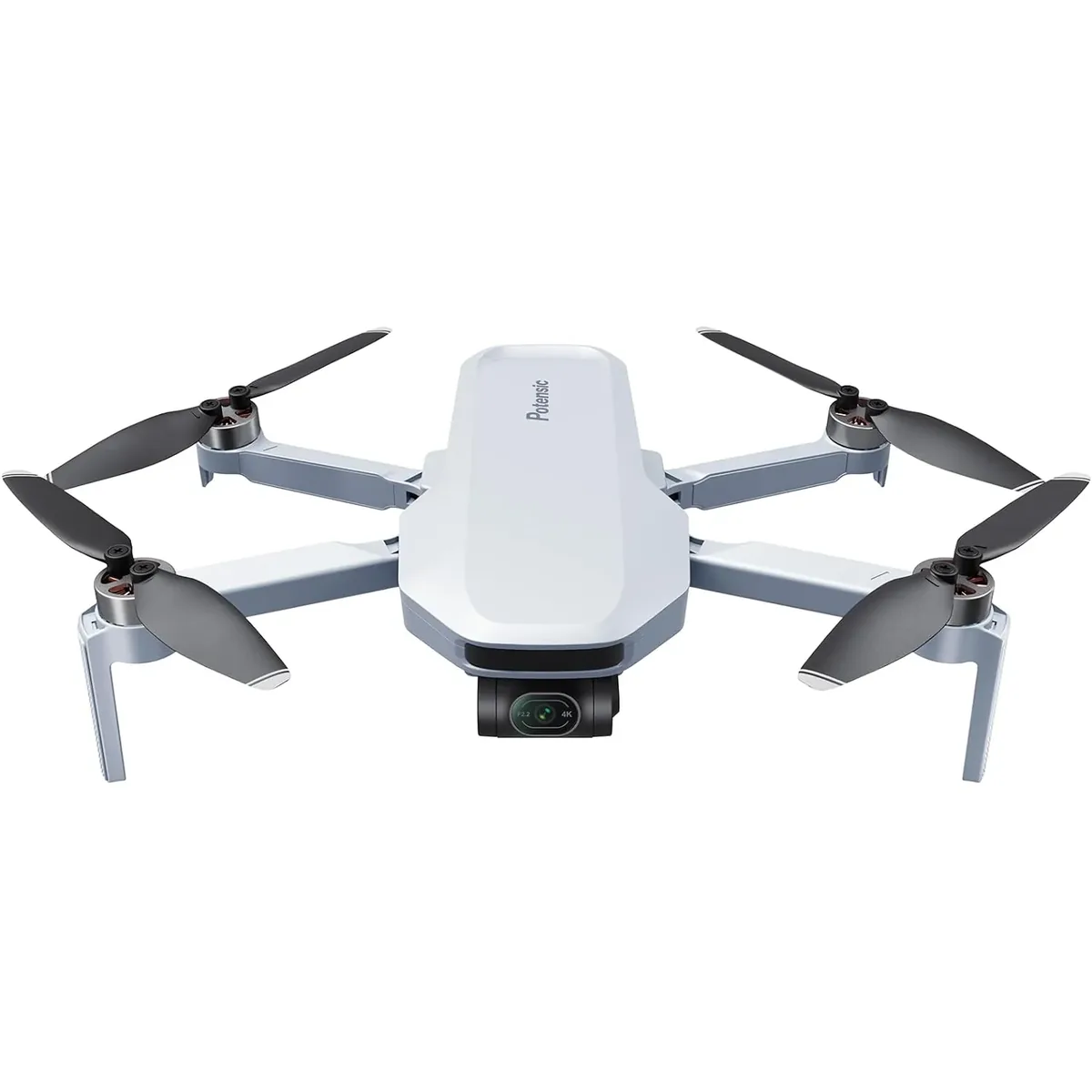
Potensic
Potensic Atom
Before the Atom 2 there was this, and the older model is still worth a look purely on price. Same sub-249-gram airframe, same three-axis gimbal, same GPS return-to-home and QuickShot moves, with a 1/2.3-inch 12MP sensor instead of the newer 1/2-inch 48MP one and PixSync 3.0 capped at 6 km rather than 10. Visual tracking will follow a walking subject or orbit it. What you are giving up against the Atom 2 is sensor area, HDR, vertical shooting and half the rated range — what you are gaining is roughly fifty dollars. For someone whose real question is "will this hold a steady shot without needing registration", the answer here is the same as the newer one, and neither has any obstacle sensing whatsoever.
- Sensor
- 28.1 mm²
- Claimed
- 32 min
- Bundle
- ~$359
Best for: The cheapest stable 4K in the catalog
Full spec sheet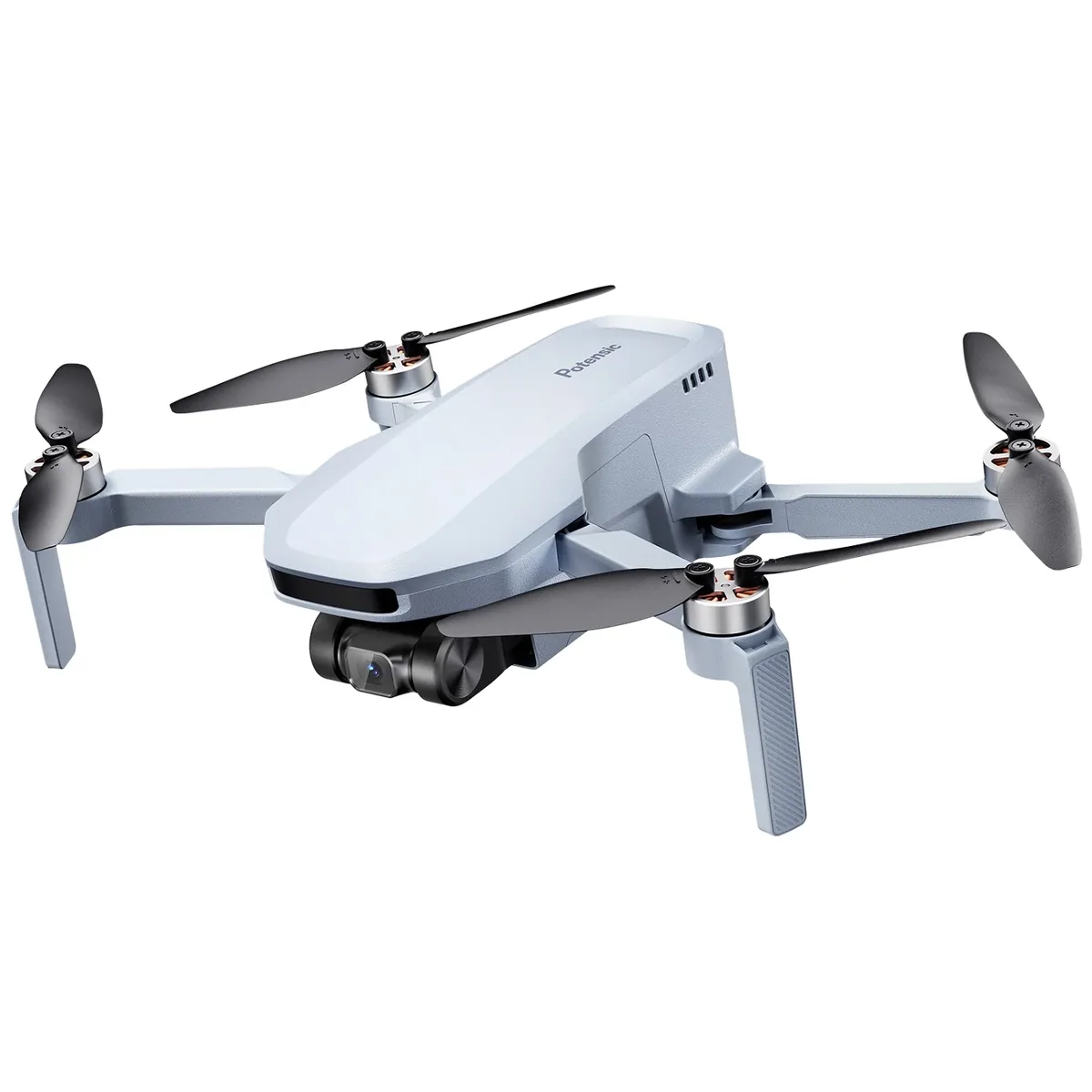
Potensic
Potensic Atom SE
Electronic stabilisation, a 1/3-inch sensor and a brushless motor on every arm — that combination, at this price, is what made the Atom SE the default "first GPS drone" recommendation for a couple of years. It holds position on GPS, comes home on a low battery, flies at 16 m/s in Sport mode and records 4K/30 that looks fine on a phone and soft on anything bigger. There is no gimbal, so smoothness depends on software cropping and on you flying gently. The specification to read carefully is the flight time: Potensic's own figure is 31 minutes for one battery, while retail listings routinely headline "62 minutes", which is two batteries added together and not something any single flight will ever deliver.
- Sensor
- 17.3 mm²
- Claimed
- 31 min
- Bundle
- ~$299
Best for: A first GPS drone under $250
Full spec sheet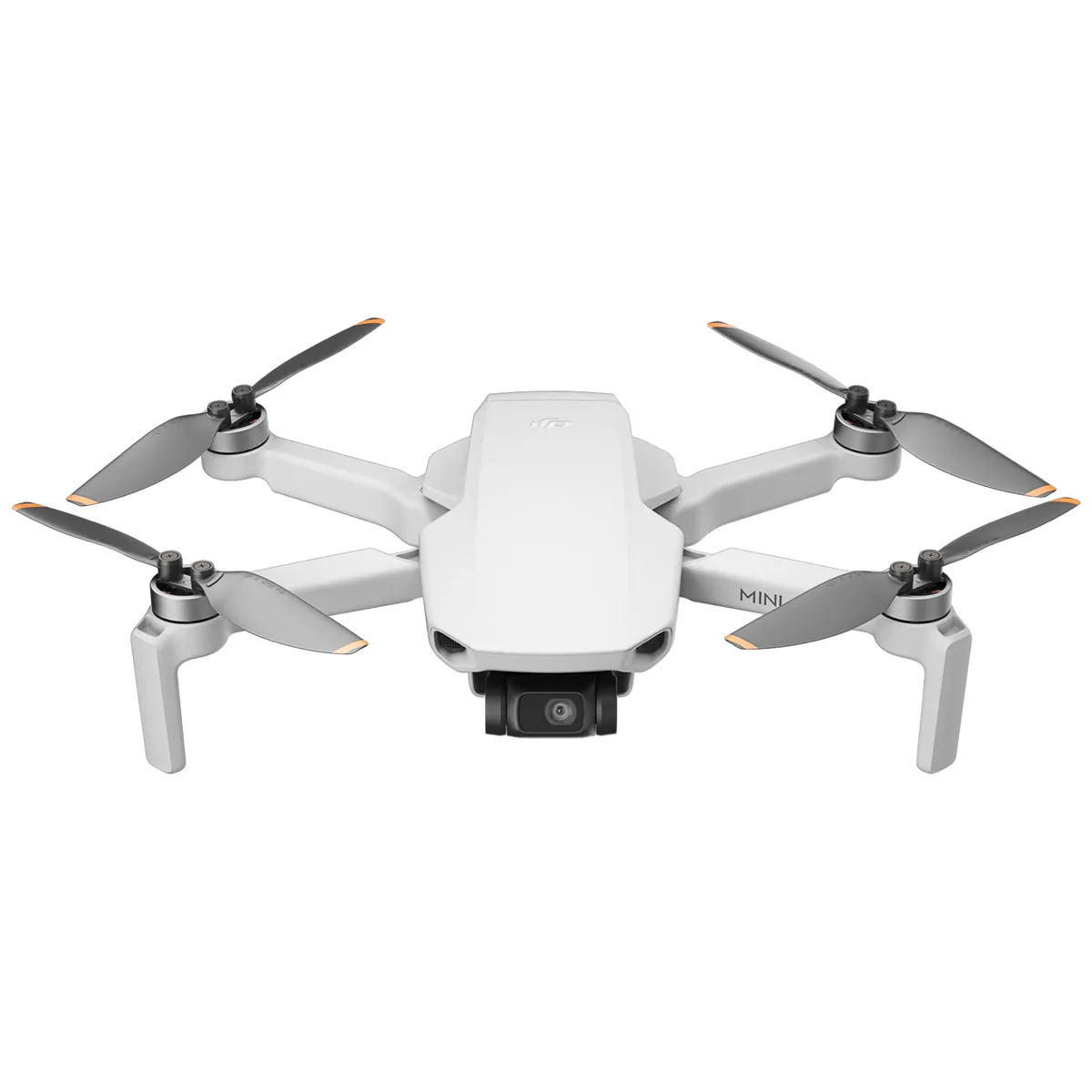
DJI
DJI Mini 4K
Three hundred dollars is the entire point here. Strip a Mini down to a 1/2.3-inch 12MP sensor, 8-bit 4K/30, and a downward vision system with nothing looking forward, keep the three-axis gimbal and the GPS return-to-home, and you get the cheapest genuinely stable aerial camera DJI sells. Nothing about the footage will impress anyone who has seen a 1/1.3-inch sensor at dusk, but in daylight it is sharp and level, which is more than any sub-$200 quadcopter manages. O2 transmission is rated to 10 km and holds a 720p feed rather than O4's 1080p. Treat the lack of obstacle sensing as the defining spec: this aircraft will fly into a branch at full speed without hesitating, so it belongs in open fields while you learn.
- Sensor
- 28.1 mm²
- Claimed
- 31 min
- Bundle
- ~$449
Best for: A first drone flown in open space
Full spec sheet