Potensic Atom 2 vs Potensic Atom
Both are under the 250-gram line, so the legal position is identical and the decision comes down to the rows tinted below — the specs where these two actually differ. The Potensic Atom is the cheaper of the two at ~$359.
| Drone | ||
|---|---|---|
| Bundle price | ~$449multi-battery bundle | ~$359multi-battery bundle |
| True first-year price | ~$449 | ~$359 |
| Flight min per $100 | 7.1 | 8.9 |
| Rating | No cited rating | No cited rating |
| Takeoff weight | 249 g | 249 g |
| FAA registration | Not required | Not required |
| Remote ID | Not published | Not published |
| Sensor size | 1/2" | 1/2.3" |
| Sensor area | 30.7 mm² | 28.1 mm² |
| Megapixels | 48 MP | 12 MP |
| Max video | 4K/30fps HDR | 4K/30fps |
| Colour depth | 8-bit | 8-bit |
| Log profile | — | — |
| Gimbal | 3-axis | 3-axis |
| Obstacle sensing | None | None |
| Claimed flight time | 32 min | 32 min |
| Tested flight time | 20 min | — |
| Battery | — | — |
| Transmission | PixSync 4.0 | PixSync 3.0 |
| Max range | 10 km | 6 km |
| Max speed | 36 mph | 36 mph |
| Wind resistance | Level 5 (10.7 m/s) | Level 5 (10.7 m/s) |
| Service ceiling | — | — |
| Internal storage | None | None |
| Controller | Potensic controller (phone required); RC PTD 1 with a screen as an upgrade | Potensic controller (phone required) |
| Return to home | Yes | Yes |
| Geofencing | No | No |
| Care plan (1 yr) | Not in our snapshot | Not in our snapshot |
| US availability | Sold | Sold |
| Released | 2025 | 2023 |
| Flight claim measured at | Potensic advertises up to 32 minutes. A Potensic spokesperson told a reviewer that typical real-world flight time is around 20 minutes depending on flying style and conditions, and that reviewer could not exceed 20 minutes on any test flight. | Potensic quotes 32 minutes per battery with no published test conditions. Its successor's claim of the same figure was measured at roughly 20 minutes in practice, which is a reasonable expectation here too. |
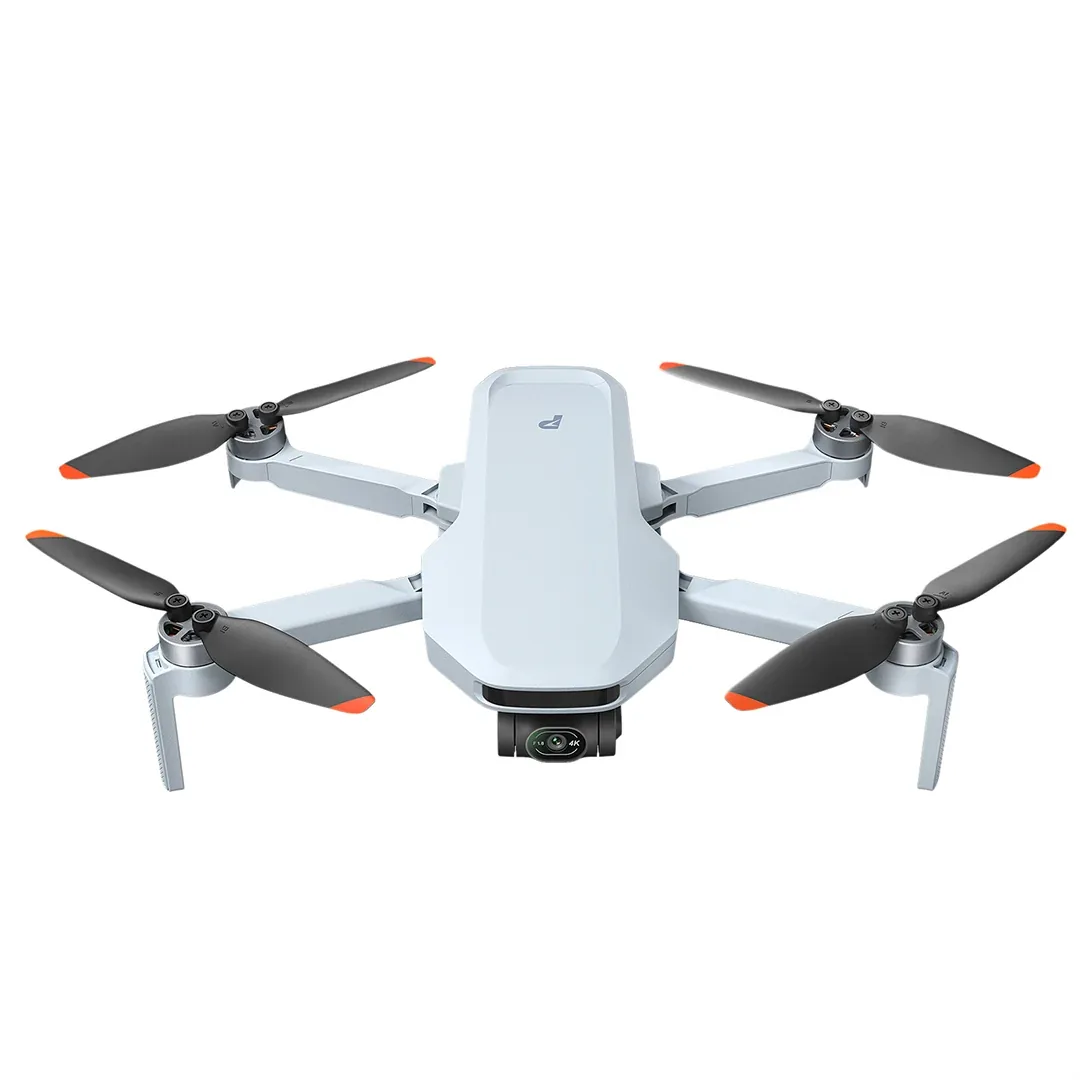
Potensic Atom 2
Potensic's pitch is simple arithmetic: a three-axis gimbal, a 10 km link, waypoints and subject tracking for the price DJI charges for a Mini 4K with none of those things. The 1/2-inch 48MP sensor is genuinely smaller than the Mini's 1/1.3-inch chip, so the footage is a step behind in anything but good light, but the stabilisation is real and vertical shooting is supported. The flight-time claim is where this entry earns its place in the catalog: the box says 32 minutes, a reviewer could not get past 20 on any flight, and Potensic's own spokesperson put typical real-world endurance at around 20 minutes. That is the most clearly documented gap between claim and reality anywhere in this dataset, and it is worth knowing before you plan a session around three batteries. Two things to check before ordering: whether the Fly More bundle is genuinely cheaper than buying batteries later, because the discount varies week to week; and whether you need the screened RC PTD 1 controller, because the base kit's controller needs your phone and your phone's battery.
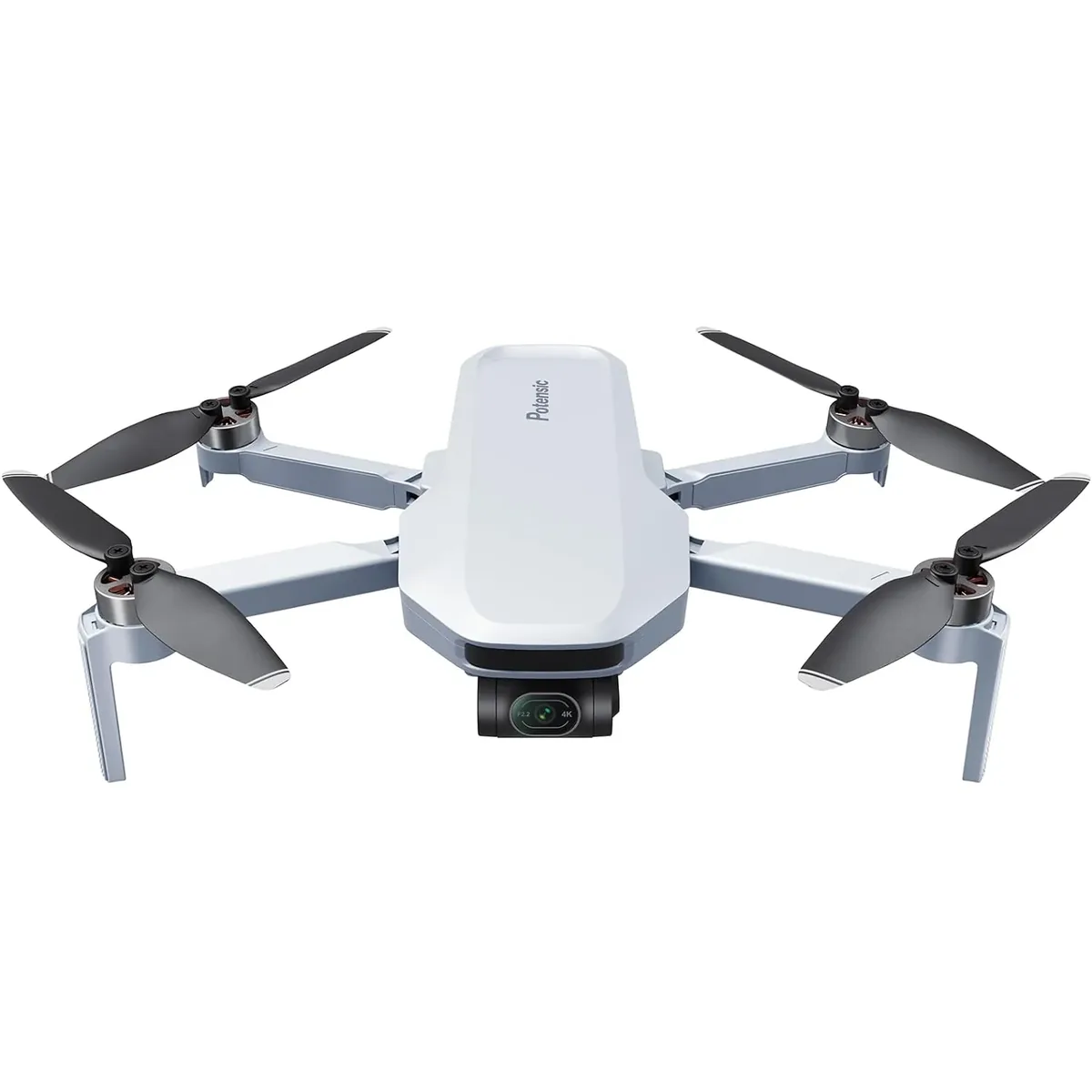
Full spec sheet →Potensic Atom
Before the Atom 2 there was this, and the older model is still worth a look purely on price. Same sub-249-gram airframe, same three-axis gimbal, same GPS return-to-home and QuickShot moves, with a 1/2.3-inch 12MP sensor instead of the newer 1/2-inch 48MP one and PixSync 3.0 capped at 6 km rather than 10. Visual tracking will follow a walking subject or orbit it. What you are giving up against the Atom 2 is sensor area, HDR, vertical shooting and half the rated range — what you are gaining is roughly fifty dollars. For someone whose real question is "will this hold a steady shot without needing registration", the answer here is the same as the newer one, and neither has any obstacle sensing whatsoever.
Full spec sheet →