iFlight
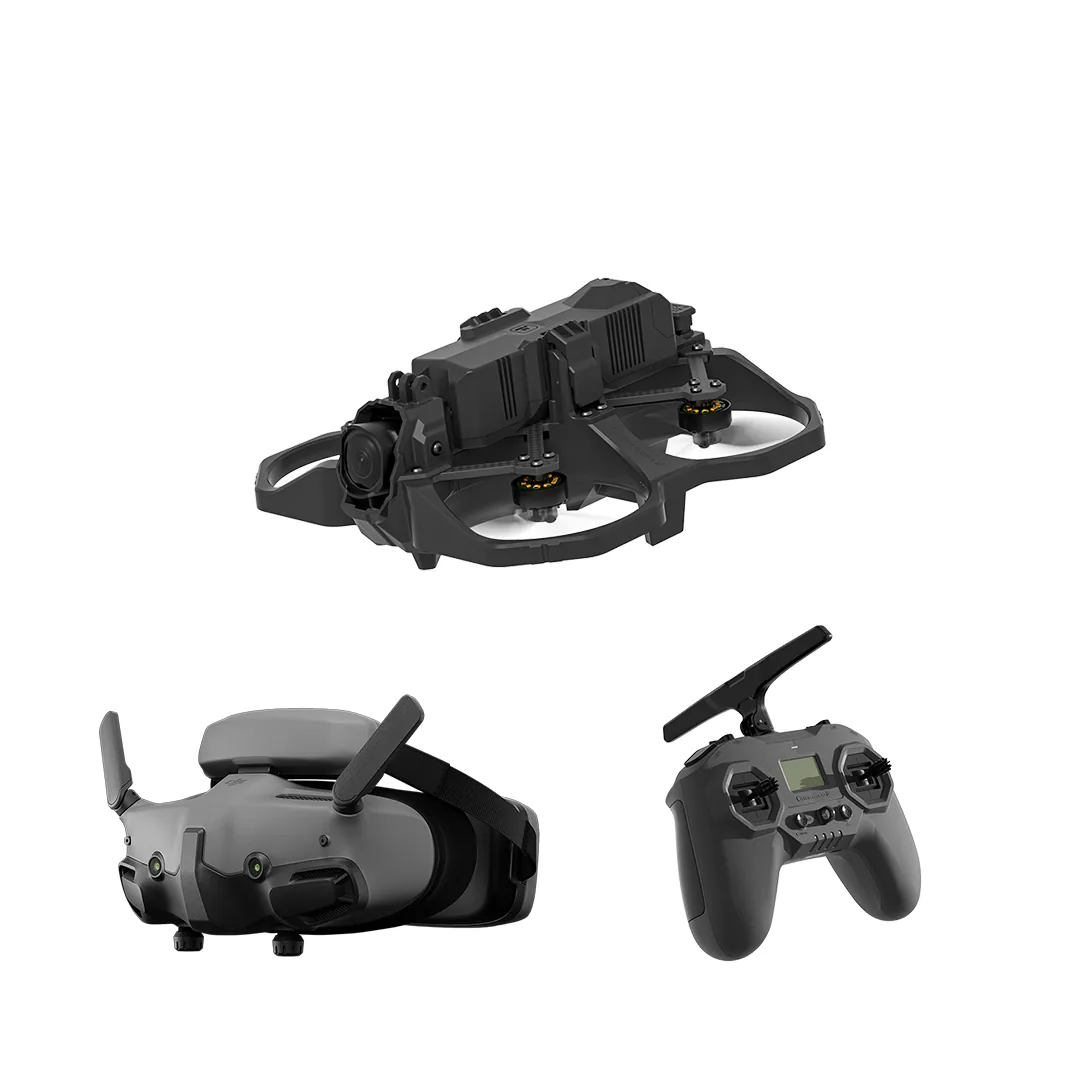
iFlight Defender 25 RTF
A cinewhoop is a ducted quad built to fly close to things and film them, and this is the sub-250-gram version. Two-and-a-half-inch props inside full ducts, a DJI O4 Air Unit Pro on a 1/1.3-inch sensor recording 4K/60 in 10-bit D-Log M, and 240 grams on the scale with the 550 mAh pack — which is the whole trick, because a 240-gram aircraft needs no registration and a 280-gram one does. It hits 100 km/h in manual mode and has no GPS, no return-to-home and no sensing, so it demands actual piloting. This is the aircraft an Avata 2 owner moves to when they want the same footage quality with a repairable airframe and no ecosystem lock, and it wants a pilot who already knows manual mode.
The 250-gram line
Under 250 g: recreational flight needs no FAA registration, and Remote ID does not apply.
Every recreational flyer must also take TRUST and carry proof of it, at any weight. Rules checked against faa.gov on 2026-09-24. Not legal advice — how this is worked out.
What that 6-minute claim is measured at
iFlight quotes about 6 minutes hovering on a 550 mAh pack and 8 on a 900 mAh one. The larger pack takes takeoff weight to roughly 280 g, past the US registration threshold.
That works out to 1.1 claimed minutes per $100 of the base kit. Compared with the rest of the catalog.
Buying one in the US: sold
Checked 24 Sep 2026. iFlight is a Chinese manufacturer unaffected by the DJI-specific FCC listing, but the kit depends on DJI goggles and an O4 air unit, whose own US supply is constrained.
Specifications
True first-year cost: ~$540 — the base kit at ~$540; no crash-plan price has been verified for this model, so nothing is added for it.
What it has
- DJI O4 Air Unit Pro recording 4K/60 in 10-bit D-Log M
- 2.5-inch ducted props for flying close to people and objects
- 240 g with the 550 mAh pack — under the US registration line
- 100 km/h in manual mode
- Fully repairable open airframe with off-the-shelf parts
- Compatible with DJI goggles and controllers
In its favour
- DJI-grade 4K/60 D-Log M footage from an airframe you can actually repair
- Ducted and under 249 g, so it flies close to people without registration
- No ecosystem lock on batteries, motors or props
- 100 km/h in manual mode for a genuinely fast cinematic move
- The 2.5-inch class survives the contact that close-quarters flying causes
Against it
- No GPS, no return-to-home, no sensing — this is manual flying only
- Six minutes on the pack that keeps it under 249 g; the longer pack costs the exemption
- $540 before spare batteries, props or a charger
- Depends on DJI goggles and air units, whose US supply is itself constrained
- Not a first FPV aircraft under any circumstances
The two lists above are drawn from the manufacturer’s published specifications and from the cited reviews, not from owner reports.
What owners report
No owner discussion has been collected for the iFlight Defender 25 RTF yet. Rather than fill the gap with something plausible, this section stays empty until there is a real body of owner reports to read. The specs above come from the maker’s published documentation.
iFlight Defender 25 RTF, head-to-head
Shopped alongside it
More from iFlight →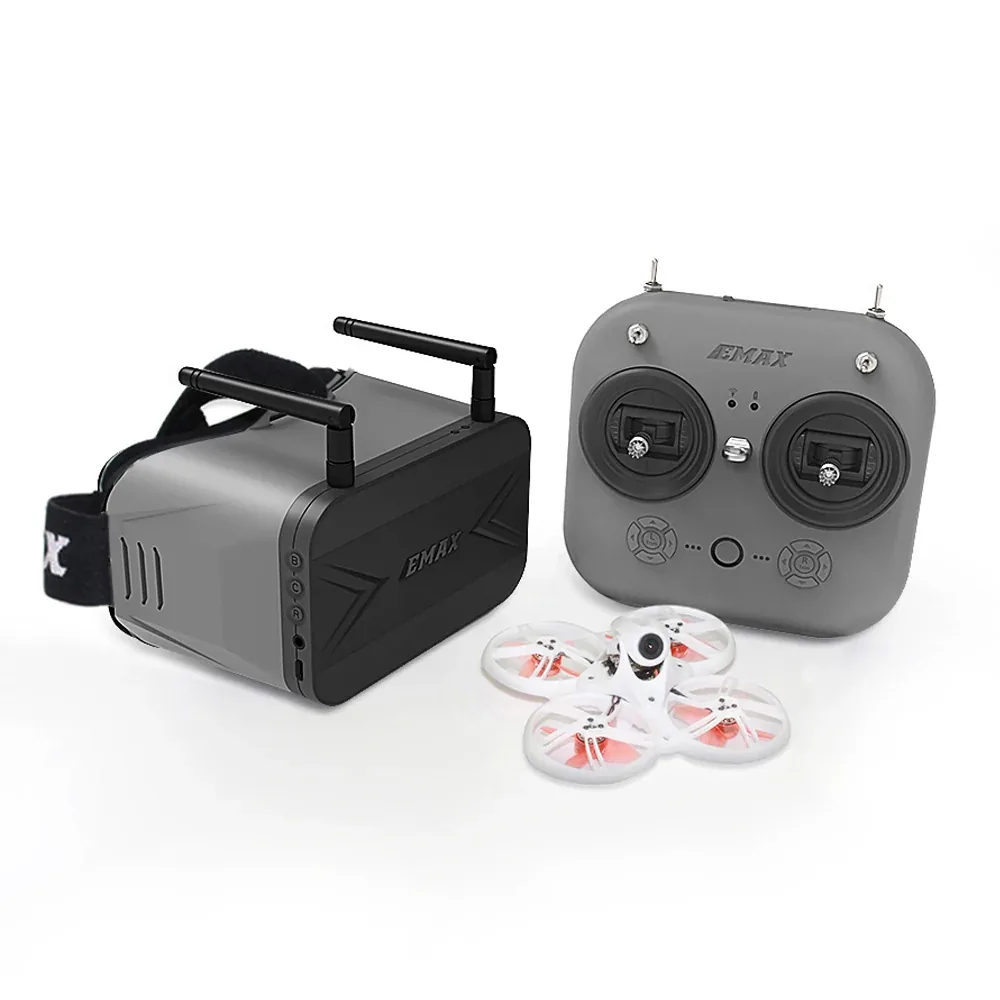
Seventy-five millimetres between motors rather than the 65 of a true tiny whoop, which is the reason this kit outflies its price. The extra size gives it authority in a breeze that the smaller whoops simply do not have, and TH0802 II motors at 15,000KV plus a RunCam Nano 4 camera make it a serious indoor racer as well. The goggles are where the money went: Transporter 2 with a DVR and diversity receivers, meaning two antennas instead of one and a noticeably more stable picture behind obstacles. That also explains a $359 kit price against $160 for a brushed starter. If you already know you want to keep flying FPV, the extra spend is the difference between equipment you replace in six months and equipment you keep.
- Sensor
- —
- Claimed
- 5 min
- Base kit
- ~$359
Best for: Buying goggles you keep after the quad
Full spec sheet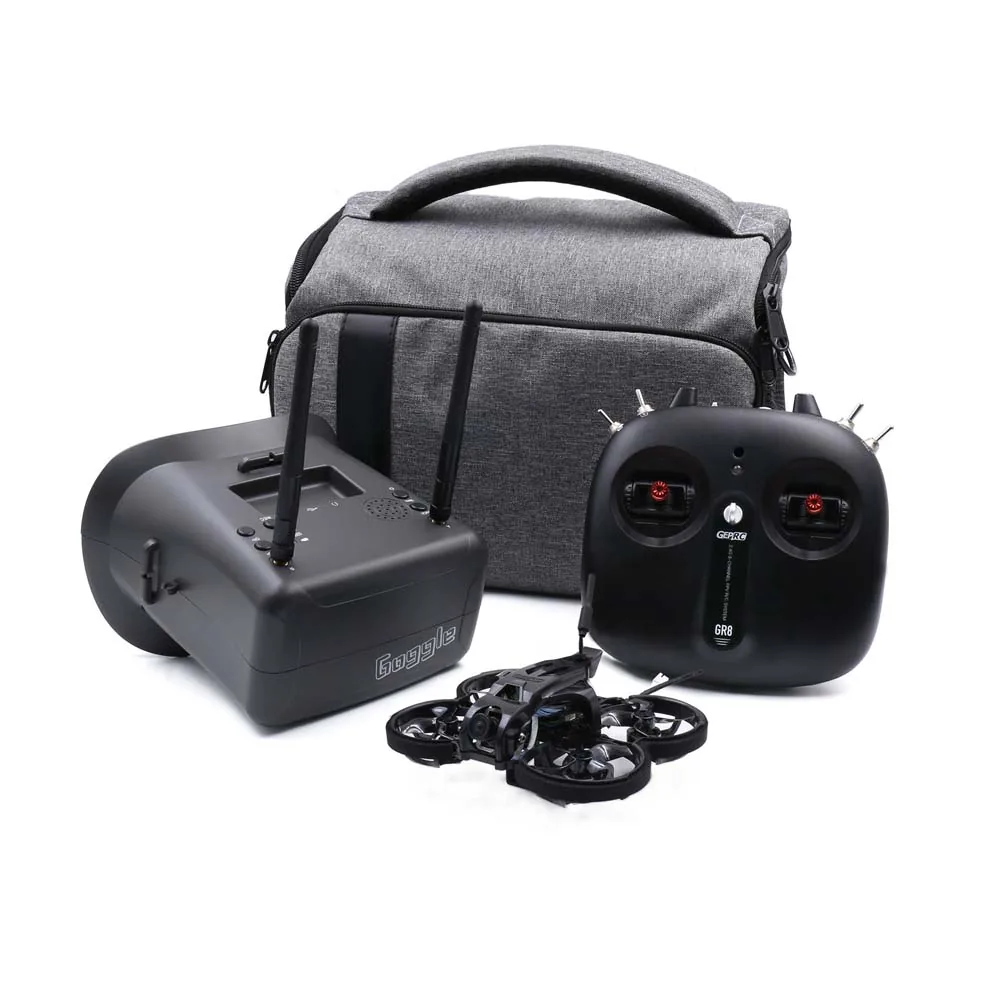
GEPRC
GEPRC TinyGO 4K
Most beginner whoops record nothing, or record the same low-resolution analog picture you were looking at through the goggles. This one carries a Caddx Loris that writes 4K/60 to its own card while the analog feed handles the flying — which is exactly how full-size FPV builds work, and the reason a TinyGO flight can produce footage worth keeping. The frame is 79 mm on 10,000KV motors with 1.6-inch props, so it sits between a tiny whoop and the Cetus X in authority. Four batteries and a four-channel charger come in the box at six minutes each. A RunCam-camera version sells for roughly sixty dollars less and loses the 4K recording, which is the whole reason to buy this one.
- Sensor
- —
- Claimed
- 6 min
- Base kit
- ~$280
Best for: Beginner FPV that produces usable footage
Full spec sheet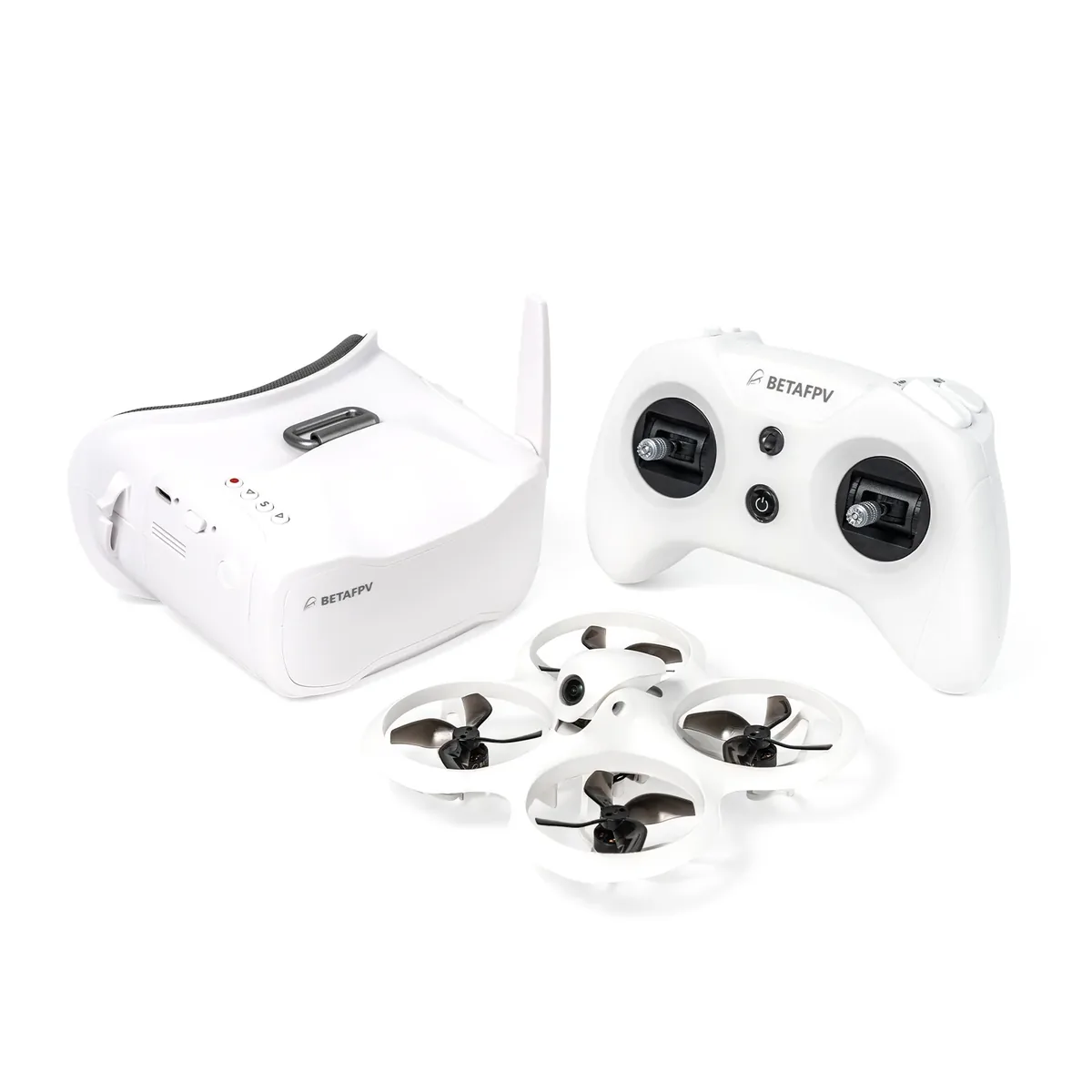
BetaFPV
BetaFPV Cetus X FPV Kit
The step where a training whoop turns into something you fly outdoors. A 1103 11000KV motor on each arm, 2020 four-blade props, a 400 mW video transmitter and 600 metres of rated range mean the Cetus X will hold a line in a park rather than skittering around a living room. The kit's real upgrade is quieter than the motors: the VR03 goggles have a DVR, so your flights exist afterwards, which the cheaper Cetus kits cannot do. Angle, Horizon and Air modes cover the whole learning curve from self-levelling to fully manual. Five minutes per pack is still five minutes — four batteries come in the box for a reason — and there is nothing here to stop you hitting a tree. One practical note: everything in this kit is replaceable for single-digit dollars, which is the real difference between learning FPV on a whoop and learning it on a camera drone. A destroyed frame is a five-minute job at a kitchen table rather than a service ticket.
- Sensor
- —
- Claimed
- 5 min
- Base kit
- ~$260
Best for: Moving FPV practice outdoors
Full spec sheet