DJI Avata 2 vs iFlight Defender 25 RTF
These two sit on opposite sides of the 250-gram line, which is usually where the decision ends rather than begins. The iFlight Defender 25 RTF needs no FAA registration to fly recreationally; the DJI Avata 2 needs registration and Remote ID. The iFlight Defender 25 RTF is the cheaper of the two at ~$540.
| Drone | ||
|---|---|---|
| Bundle price | ~$1,199multi-battery bundle | ~$540base kit |
| True first-year price | ~$1,199 | ~$540 |
| Flight min per $100 | 1.9 | 1.1 |
| Rating | No cited rating | No cited rating |
| Takeoff weight | 377 g | 240 g |
| FAA registration | Required | Not required |
| Remote ID | Built-in | None |
| Sensor size | 1/1.3" | 1/1.3" |
| Sensor area | 69.1 mm² | 69.1 mm² |
| Megapixels | 12 MP | — |
| Max video | 4K/60fps | 4K/60fps recorded by the DJI O4 Air Unit Pro |
| Colour depth | 10-bit | 10-bit |
| Log profile | D-Log M | D-Log M |
| Gimbal | 1-axis | None |
| Obstacle sensing | Rear + side | None |
| Claimed flight time | 23 min | 6 min |
| Tested flight time | — | — |
| Battery | 31.7 Wh | — |
| Transmission | O4 | O4 |
| Max range | 13 km | 10 km |
| Max speed | 60 mph | 62 mph |
| Wind resistance | Level 5 (10.7 m/s) | Not published |
| Service ceiling | 5000 m | — |
| Internal storage | 46 GB | None |
| Controller | DJI FPV Remote Controller 3; DJI Goggles 3 included in the Fly More Combo | DJI FPV Remote Controller and DJI Goggles in the RTF kit |
| Return to home | Yes | No |
| Geofencing | Yes | No |
| Care plan (1 yr) | Not in our snapshot | Not in our snapshot |
| US availability | Limited | Sold |
| Released | 2024 | 2024 |
| Flight claim measured at | 23 minutes "flying forward at a constant speed of 21.6 kph" in windless conditions at sea level. Hovering is quoted separately at 21 minutes, and actual FPV flying — throttle punches, dives, climbs — spends the 31.7 Wh pack much faster. | iFlight quotes about 6 minutes hovering on a 550 mAh pack and 8 on a 900 mAh one. The larger pack takes takeoff weight to roughly 280 g, past the US registration threshold. |
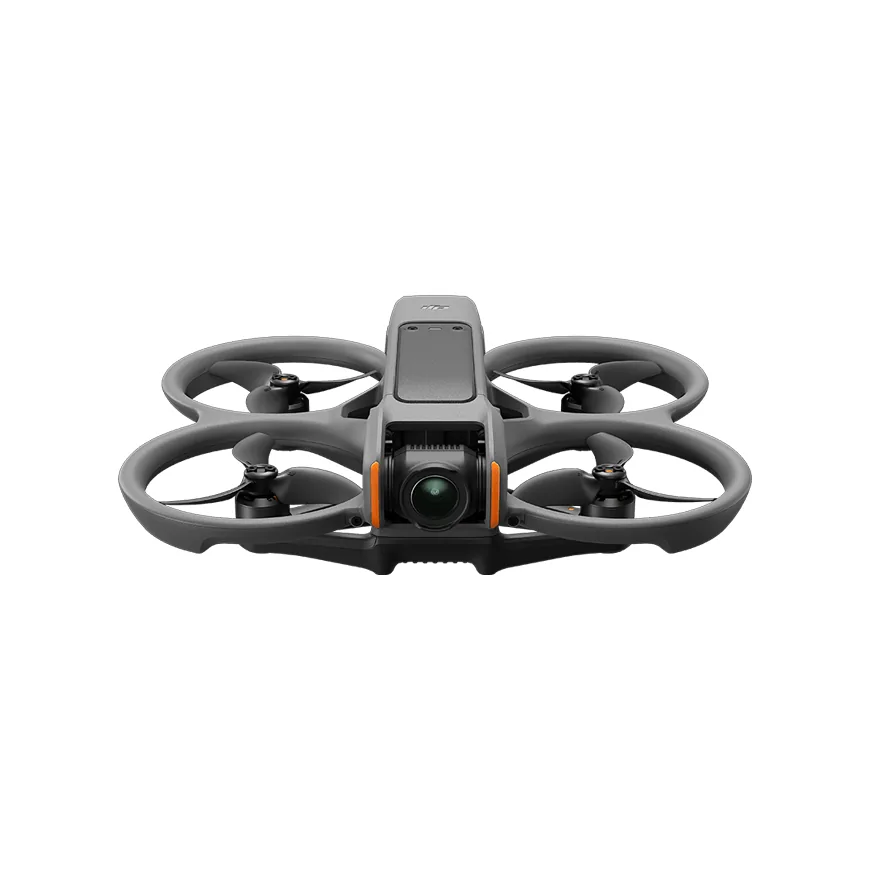
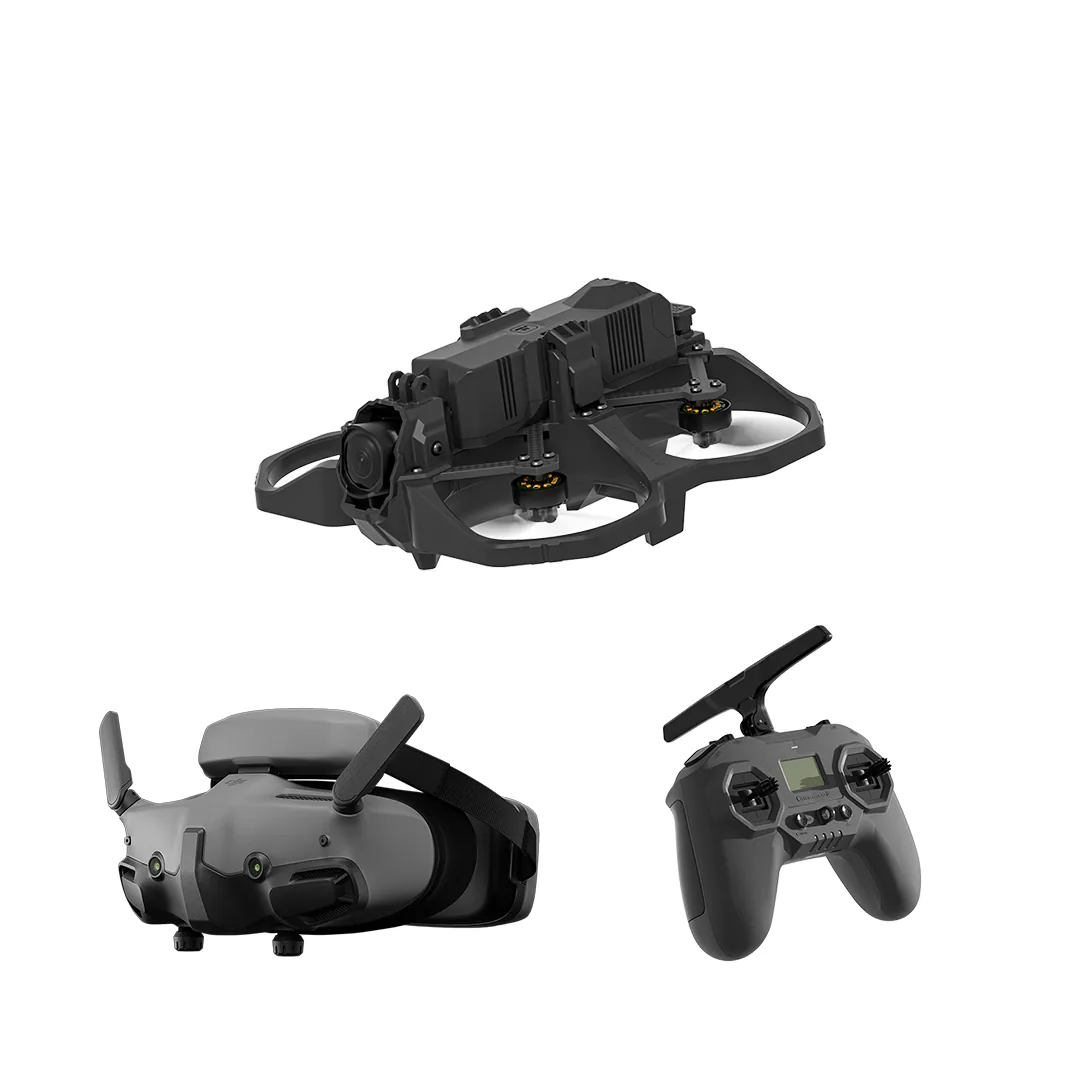
DJI Avata 2
Ducted props, goggles in the box, and a flight model that forgives you — this is how most people who fly FPV now start. The Avata 2 puts a 1/1.3-inch 12MP camera on a single-axis gimbal behind full prop ducts, records 4K/60 in 10-bit D-Log M to 46 GB of internal storage, and flies on DJI Goggles 3 with the FPV Remote Controller 3. Normal mode hovers and holds position like a camera drone; Sport and Manual progressively hand you the throttle until you are flying a real quad at 60 mph. The ducts mean a clipped branch usually means a bounce rather than a repair, which is the entire reason this is a better first FPV aircraft than a bare 5-inch freestyle build. The honest limits are endurance and sensing: 23 minutes is a cruise figure, and nothing watches forward. Two things the price tag hides in both directions: the goggles and controller are the expensive half of this system and are shared with the Avata 360 and the Neo, so the cost amortises if you add another aircraft; and a ducted airframe over water has no float and no second chance.
Full spec sheet →iFlight Defender 25 RTF
A cinewhoop is a ducted quad built to fly close to things and film them, and this is the sub-250-gram version. Two-and-a-half-inch props inside full ducts, a DJI O4 Air Unit Pro on a 1/1.3-inch sensor recording 4K/60 in 10-bit D-Log M, and 240 grams on the scale with the 550 mAh pack — which is the whole trick, because a 240-gram aircraft needs no registration and a 280-gram one does. It hits 100 km/h in manual mode and has no GPS, no return-to-home and no sensing, so it demands actual piloting. This is the aircraft an Avata 2 owner moves to when they want the same footage quality with a repairable airframe and no ecosystem lock, and it wants a pilot who already knows manual mode.
Full spec sheet →