DJI Mini 4 Pro vs Autel EVO Nano+
Both are under the 250-gram line, so the legal position is identical and the decision comes down to the rows tinted below — the specs where these two actually differ. The Autel EVO Nano+ is the cheaper of the two at ~$899.
| Drone | ||
|---|---|---|
| Bundle price | ~$1,099multi-battery bundle | ~$899multi-battery bundle |
| True first-year price | ~$1,099 | ~$899 |
| Flight min per $100 | 3.1 | 3.1 |
| Rating | No cited rating | No cited rating |
| Takeoff weight | 249 g | 249 g |
| FAA registration | Not required | Not required |
| Remote ID | Built-in | Broadcast module |
| Sensor size | 1/1.3" | 1/1.28" |
| Sensor area | 69.1 mm² | 71.5 mm² |
| Megapixels | 48 MP | 50 MP |
| Max video | 4K/60fps HDR, 4K/100fps slow motion | 4K/30fps |
| Colour depth | 10-bit | 8-bit |
| Log profile | D-Log M | — |
| Gimbal | 3-axis | 3-axis |
| Obstacle sensing | Omnidirectional | Forward + backward |
| Claimed flight time | 34 min | 28 min |
| Tested flight time | — | — |
| Battery | 18.96 Wh | 8.3 Wh |
| Transmission | O4 | SkyLink 2.0 |
| Max range | 20 km | 10 km |
| Max speed | 36 mph | 33 mph |
| Wind resistance | Level 5 (10.7 m/s) | Level 5 (10.7 m/s) |
| Service ceiling | 4000 m | 4000 m |
| Internal storage | 2 GB | None |
| Controller | DJI RC-N2 (phone required); DJI RC 2 with built-in screen at extra cost | Autel Smart Controller SE (phone required) |
| Return to home | Yes | Yes |
| Geofencing | Yes | No |
| Care plan (1 yr) | Not in our snapshot | Not in our snapshot |
| US availability | Limited | Limited |
| Released | 2023 | 2022 |
| Flight claim measured at | DJI's 34 minutes is measured flying forward at a constant speed in windless conditions on the standard 18.96 Wh battery. The 45-minute figure printed elsewhere needs the 28.4 Wh Intelligent Flight Battery Plus, which pushes takeoff weight past 249 g and cancels the registration exemption in the US. | Autel quotes 28 minutes with no published test conditions. Like every figure of this kind it assumes level cruising in still air rather than hovering to compose a shot. |
DJI Mini 4 Pro
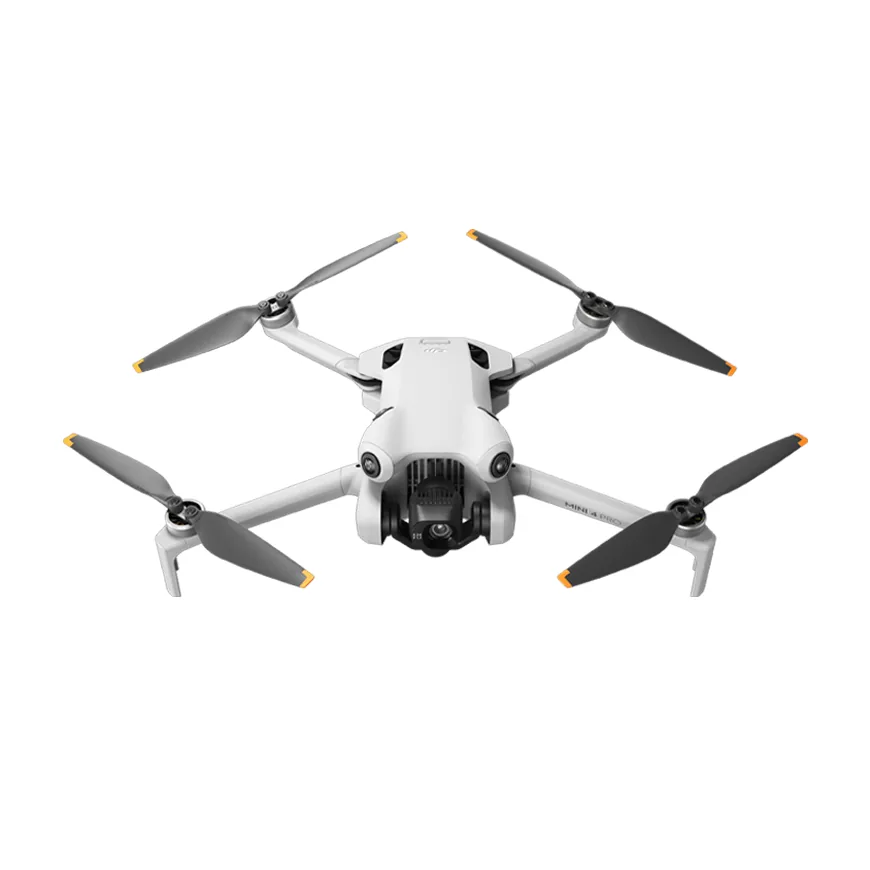
Omnidirectional sensing on a 249-gram airframe is the trick nothing else in this catalog fully matches. Binocular vision on all sides plus a downward 3D infrared sensor means the Mini 4 Pro will stop for a branch it is backing into, which matters far more than it sounds once you fly near trees. The 1/1.3-inch 48MP sensor records 4K/60 HDR and 4K/100 slow motion at 150 Mbps in 10-bit D-Log M, so the footage grades rather than just plays. O4 transmission is rated to 20 km in FCC regions, which is far beyond any legal line-of-sight flight but does mean a clean 1080p feed at the distances people actually fly. The caveat is the one everyone trips on: the 45-minute battery is a separate, heavier pack that takes the aircraft over the registration threshold, so the honest number for a registration-free flight is 34 minutes.
Full spec sheet →Autel EVO Nano+
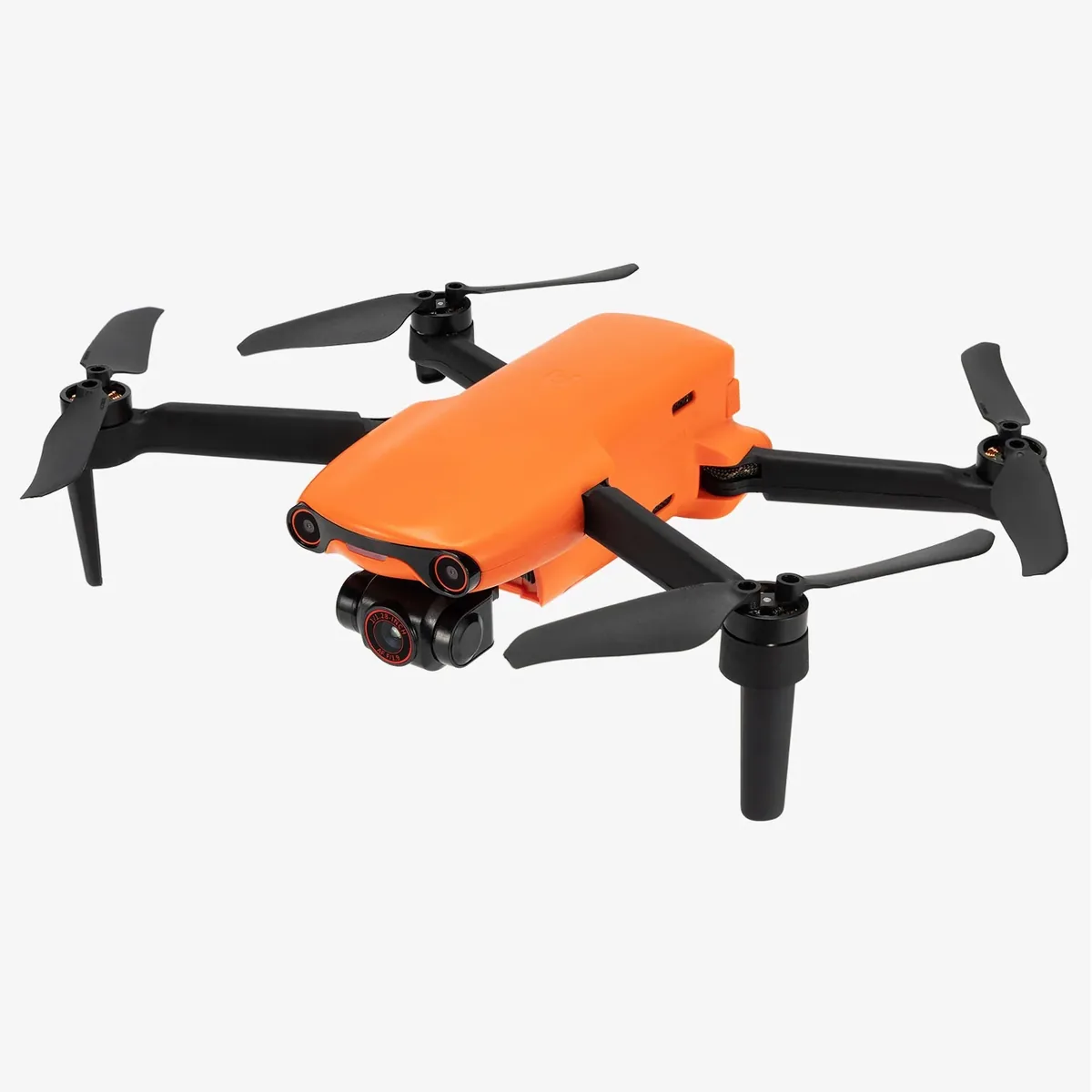
For a couple of years this was the answer to "what if I don't want a DJI", and its selling point has not changed: 50 megapixels on a 1/1.28-inch sensor, three-axis stabilisation, three-way obstacle sensing and no geofencing, all under 249 grams. Autel has never locked its aircraft out of airspace the way DJI does, which some pilots consider the entire reason to buy one and which puts the responsibility for knowing where you may fly squarely on you. Video tops out at 4K/30 in 8-bit with no log profile, so this is a stills-first aircraft. The complication is corporate rather than technical: Autel ended production of the whole Nano and Lite line in July 2025, so you are buying remaining inventory from a company that has left the consumer market, with service promised to 2030. One practical note for anyone coming from DJI: the absence of geofencing means the aircraft will take off anywhere it has satellites, including places you must not fly. That is either the reason you are buying it or the reason you should not, and it is worth deciding which before the first flight rather than after.
Full spec sheet →