Autel
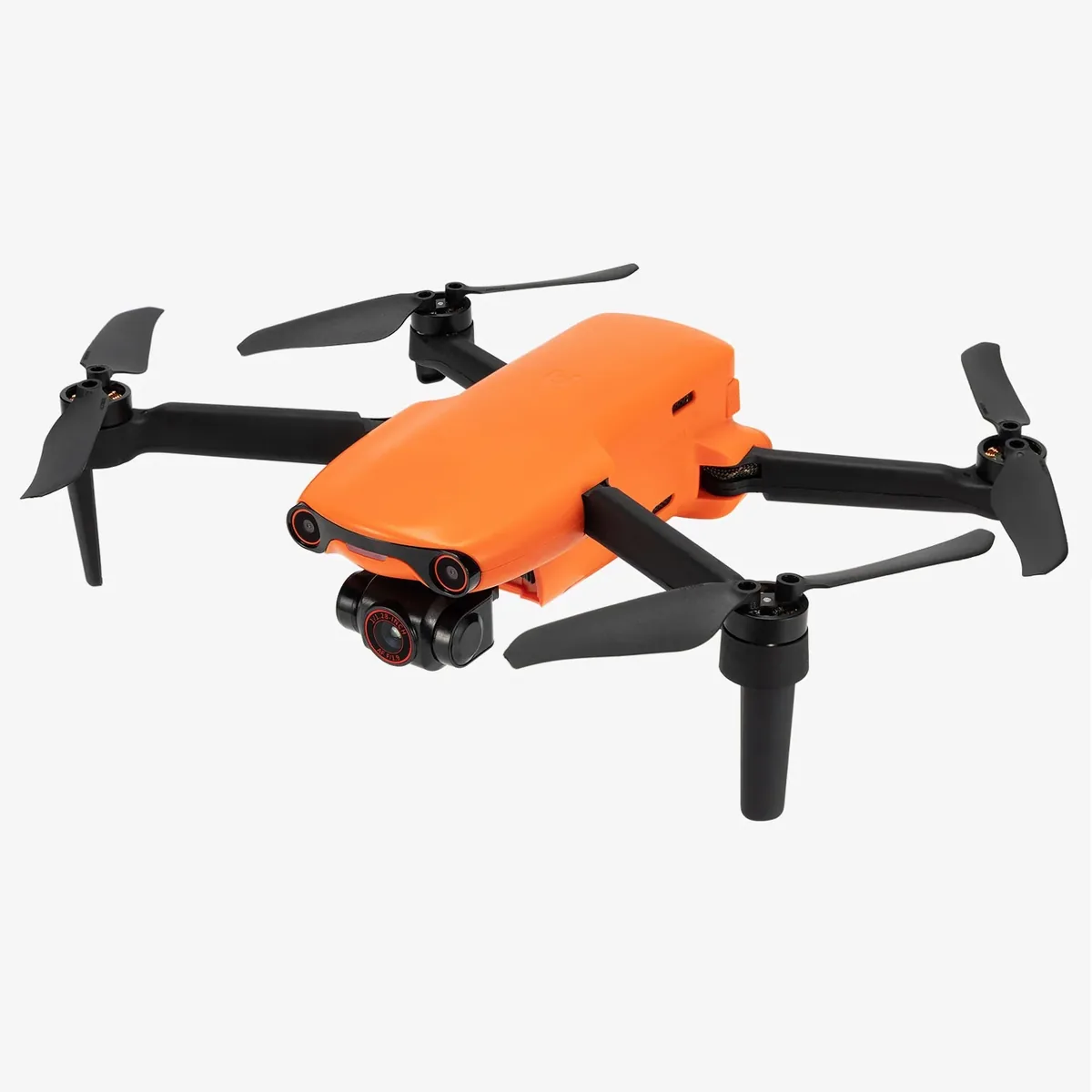
Autel EVO Nano+
For a couple of years this was the answer to "what if I don't want a DJI", and its selling point has not changed: 50 megapixels on a 1/1.28-inch sensor, three-axis stabilisation, three-way obstacle sensing and no geofencing, all under 249 grams. Autel has never locked its aircraft out of airspace the way DJI does, which some pilots consider the entire reason to buy one and which puts the responsibility for knowing where you may fly squarely on you. Video tops out at 4K/30 in 8-bit with no log profile, so this is a stills-first aircraft. The complication is corporate rather than technical: Autel ended production of the whole Nano and Lite line in July 2025, so you are buying remaining inventory from a company that has left the consumer market, with service promised to 2030. One practical note for anyone coming from DJI: the absence of geofencing means the aircraft will take off anywhere it has satellites, including places you must not fly. That is either the reason you are buying it or the reason you should not, and it is worth deciding which before the first flight rather than after.
The 250-gram line
Under 250 g: recreational flight needs no FAA registration, and Remote ID does not apply.
Every recreational flyer must also take TRUST and carry proof of it, at any weight. Rules checked against faa.gov on 2026-09-24. Not legal advice — how this is worked out.
What that 28-minute claim is measured at
Autel quotes 28 minutes with no published test conditions. Like every figure of this kind it assumes level cruising in still air rather than hovering to compose a shot.
That works out to 3.1 claimed minutes per $100 of the multi-battery bundle. Compared with the rest of the catalog.
Buying one in the US: limited
Checked 24 Sep 2026. Autel discontinued production and sales of the EVO Nano and EVO Lite series on 18 Jul 2025 and has committed to service support until 18 Jul 2030. What is on US shelves is the last of it.
Specifications
True first-year cost: ~$899 — the multi-battery bundle at ~$899; no crash-plan price has been verified for this model, so nothing is added for it.
What it has
- 50MP stills on a 1/1.28-inch sensor
- Three-axis mechanical gimbal
- Forward, backward and downward obstacle sensing
- No manufacturer geofencing — airspace compliance is the pilot's job
- SkyLink 2.0 transmission rated to 10 km
- Under 249 g takeoff weight
In its favour
- Largest sensor of any sub-250 g drone here other than the Mini 5 Pro
- Three-way obstacle sensing at a weight where most rivals have none
- No manufacturer geofencing, which some pilots specifically want
- Unaffected by the FCC and customs actions aimed at DJI
Against it
- Autel discontinued the line on 18 July 2025 — this is end-of-life stock
- 4K caps at 30fps in 8-bit, with no log profile
- No built-in Remote ID; a broadcast module is needed if you ever register it
- Accessory and battery supply will thin out as stock clears
- The app and firmware have not moved since the discontinuation
The two lists above are drawn from the manufacturer’s published specifications and from the cited reviews, not from owner reports.
What owners report
Summarised from public owner discussions plus the dated, published sources listed at the end.
For a couple of years the Nano+ was the answer to "what if I do not want a DJI", and it is a genuinely good aircraft: 50 megapixels on a 1/1.28-inch sensor, three-axis stabilisation, three-way obstacle sensing and no manufacturer geofencing, all under 249 grams. Reviewers and owners have consistently described it as a solid drone that lacks the polish of its competition — the app and the firmware being where that shows.
The reason it now needs a warning is corporate rather than technical. Autel ended production and sales of the entire Nano and Lite consumer range on 18 July 2025, with service committed until 2030. What is on shelves is the last of it, and batteries, propellers and firmware development all stop being a growing concern and start being a shrinking one. Buying one means buying into a line the manufacturer has left.
What owners like
- Fifty megapixels on a 1/1.28-inch sensor is the largest sub-250-gram sensor in this catalog outside the Mini 5 Pro
- Three-way obstacle sensing at a weight where most rivals have none at all
- No manufacturer geofencing, which some owners specifically buy it for
- Entirely unaffected by the FCC and customs actions aimed at DJI
Common complaints
- Autel discontinued the whole Nano and Lite consumer line on 18 July 2025 — this is end-of-life stock
- 4K stops at 30fps in 8-bit with no log profile, which owners who edit find limiting
- No built-in Remote ID, so a broadcast module is needed if the aircraft is ever registered
- Owners report the app and firmware lacking the polish of DJI's, and development has now stopped with the product line
Questions owners ask
Is Autel still making consumer drones?
Why would I buy one instead of a Mini?
Does it have Remote ID?
Will batteries still be available?
Published sources: autelrobotics.com, dpreview.com, digitalcameraworld.com
Autel EVO Nano+, head-to-head
Shopped alongside it
More from Autel →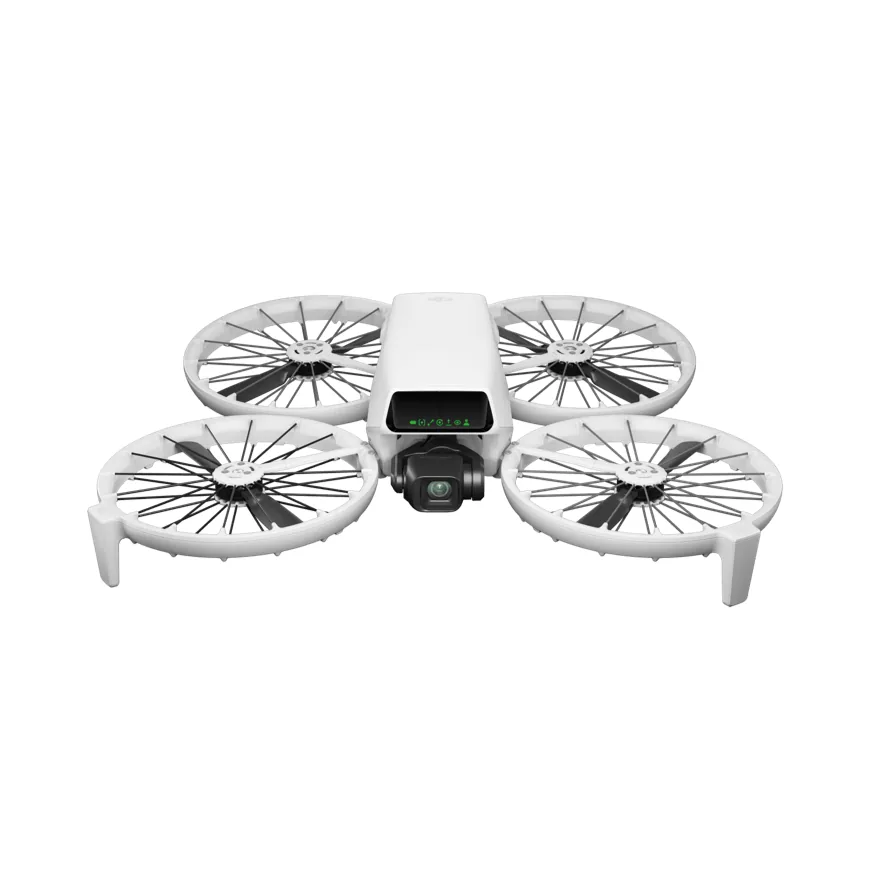
DJI
DJI Flip
Full-coverage propeller guards that fold flat is the idea, and it is a better one than the spec sheet suggests. Unfolded, the Flip's four cages sit around the props like a Neo's but carry a proper 1/1.3-inch 48MP camera on a three-axis gimbal behind them; folded, the whole thing collapses to something close to a Mini's footprint. It will take off from a palm and fly a preset without a controller at all, and it will also fly properly on an RC-N3 with 10-bit D-Log M and O4 transmission. Forward 3D infrared sensing covers the direction you are most likely to hit something and nothing else, which is an honest middle ground between the Neo's nothing and the Mini 4 Pro's everything. The bundle pricing is the awkward part — the screened-controller combo costs nearly twice the base kit.
- Sensor
- 69.1 mm²
- Claimed
- 31 min
- Bundle
- ~$779
Best for: Flying safely around people with a real camera
Full spec sheet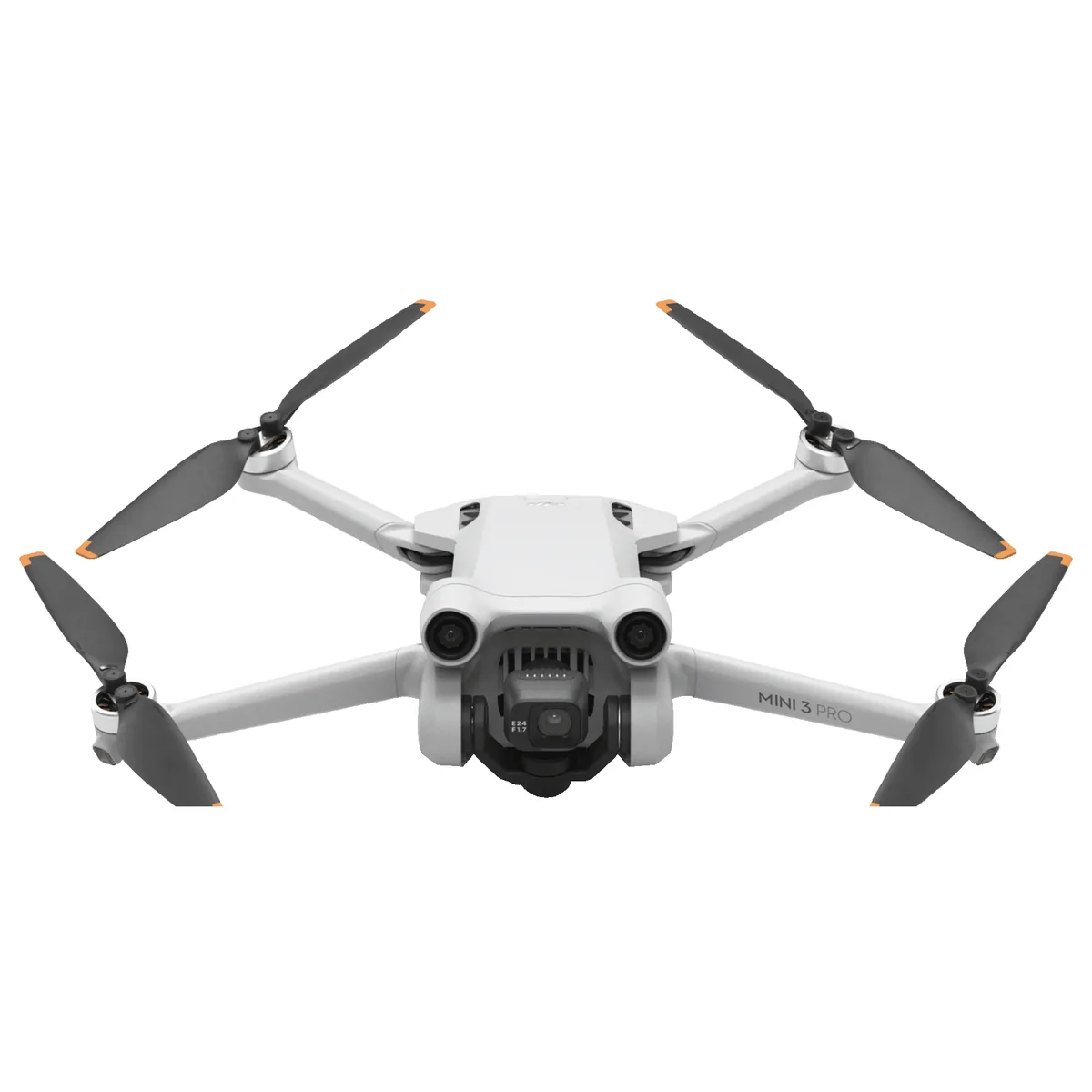
This was the aircraft that made obstacle sensing possible under 250 grams, and everything in the Mini line since has built on it. Forward, backward and downward sensors, a 1/1.3-inch 48MP sensor that rotates 90 degrees for true vertical shooting, 4K/60 HDR at 150 Mbps in 10-bit D-Cinelike, and a genuine 34 minutes on the standard pack. What the Mini 4 Pro added two years later was sensing on the remaining sides, O4 in place of O3, and 4K/100 slow motion. If you find one at a real discount the older aircraft still does most of the job, but DJI discontinued it in 2024, so you are shopping for the last of the stock and betting on battery availability a few years out.
- Sensor
- 69.1 mm²
- Claimed
- 34 min
- Base kit
- ~$759
Best for: Sensing under 250 g at a discount
Full spec sheet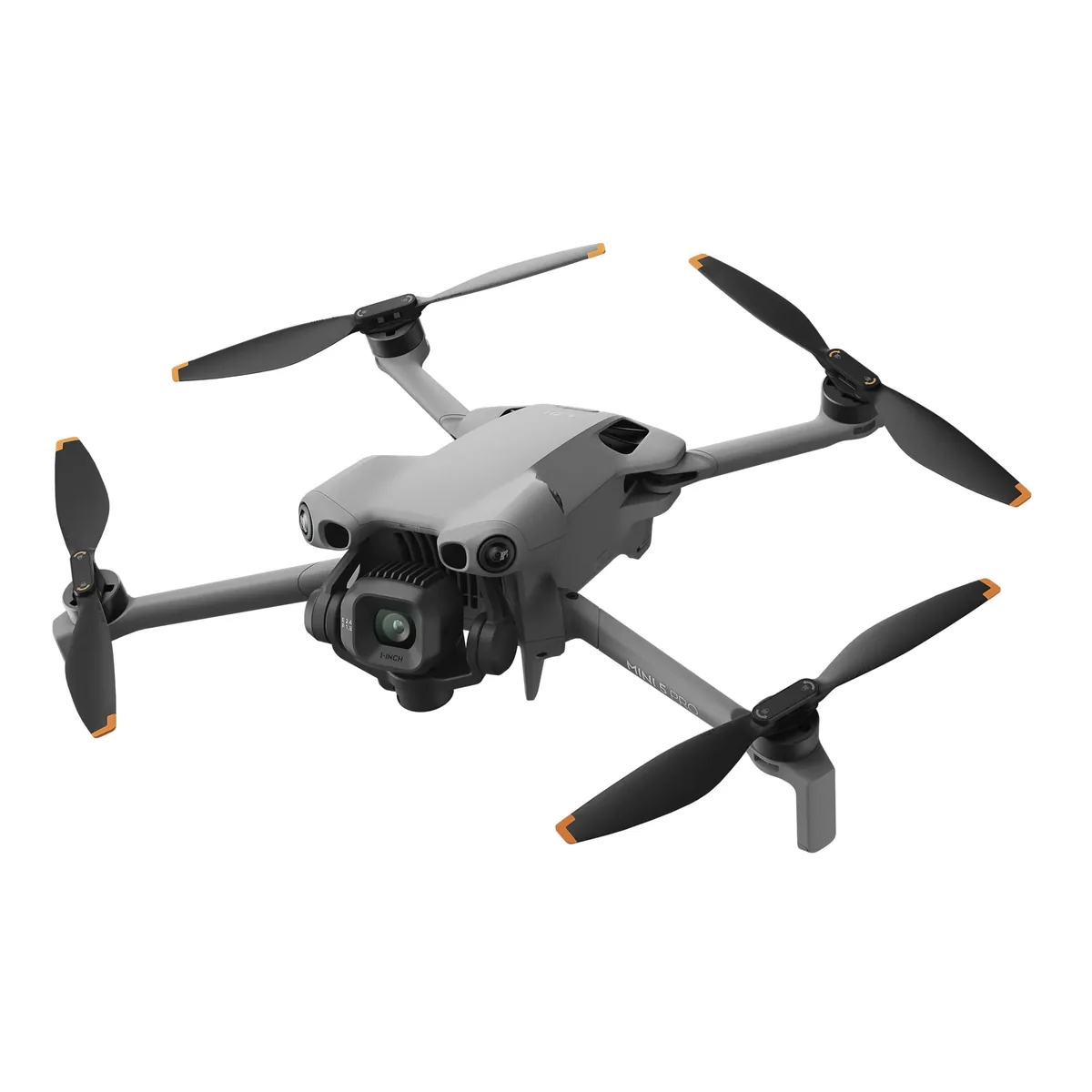
A one-inch sensor under 250 grams was supposed to be impossible, and this is the drone that did it. Fifty megapixels on a 116 mm² sensor at f/1.8 is roughly two-thirds more light-gathering area than the Mini 4 Pro's 1/1.3-inch chip, which shows up exactly where you would expect: dusk, interiors of shadow, and anything where the smaller Minis start smearing. It adds forward LiDAR to the omnidirectional vision system, so it sees in the dark rather than just in daylight, and the gimbal swings through 225 degrees for true vertical framing. The complication is where you buy it. DJI never put it in its own US store, and the units on US shelves arrived through import channels, which changes what happens when you crash it.
- Sensor
- 116.2 mm²
- Claimed
- 36 min
- Bundle
- ~$1,043
Best for: Low light and vertical video without registering
Full spec sheet