Holy Stone HS720G vs Snaptain SP7100
Both are over the 250-gram line, so the legal position is identical and the decision comes down to the rows tinted below — the specs where these two actually differ. The Snaptain SP7100 is the cheaper of the two at ~$200.
| Drone | ||
|---|---|---|
| Bundle price | ~$300base kit | ~$200base kit |
| True first-year price | ~$300 | ~$200 |
| Flight min per $100 | 8.7 | 13.0 |
| Rating | No cited rating | No cited rating |
| Takeoff weight | 380 g | 500 g |
| FAA registration | Required | Required |
| Remote ID | Built-in | Not published |
| Sensor size | 1/2.3" | 1/3" |
| Sensor area | 28.1 mm² | 17.3 mm² |
| Megapixels | 12 MP | 12 MP |
| Max video | 4K/30fps | 4K/15fps |
| Colour depth | 8-bit | 8-bit |
| Log profile | — | — |
| Gimbal | 2-axis | None |
| Obstacle sensing | None | None |
| Claimed flight time | 26 min | 26 min |
| Tested flight time | — | — |
| Battery | — | — |
| Transmission | 5.8 GHz Wi-Fi | 5.8 GHz Wi-Fi |
| Max range | 1 km | 800 m |
| Max speed | — | — |
| Wind resistance | Not published | Not published |
| Service ceiling | — | — |
| Internal storage | None | None |
| Controller | Holy Stone controller (phone required) | Snaptain controller (phone required) |
| Return to home | Yes | Yes |
| Geofencing | No | No |
| Care plan (1 yr) | Not in our snapshot | Not in our snapshot |
| US availability | Sold | Limited |
| Released | 2022 | 2021 |
| Flight claim measured at | Holy Stone quotes 26 minutes per battery. The "52 minutes" on the retail box is the two included batteries added together. | Snaptain quotes a maximum of 26 minutes, with no published test conditions. |
Holy Stone HS720G
A two-axis motorised gimbal plus electronic stabilisation, brushless motors, GPS return-to-home and built-in Remote ID — for a drone that has been on shelves since 2022, the feature list holds up better than the numbers behind it. Range is the giveaway: the controller is rated at roughly a kilometre, a fraction of what the newer sub-250 gram models claim, and there is no obstacle sensing. At 380 grams it also crosses the registration line, which means $5 to the FAA, a TRUST certificate and Remote ID that this aircraft at least provides itself. Two batteries come in the box, which is where the "52 minute" figure on the packaging comes from; a single flight is 26.
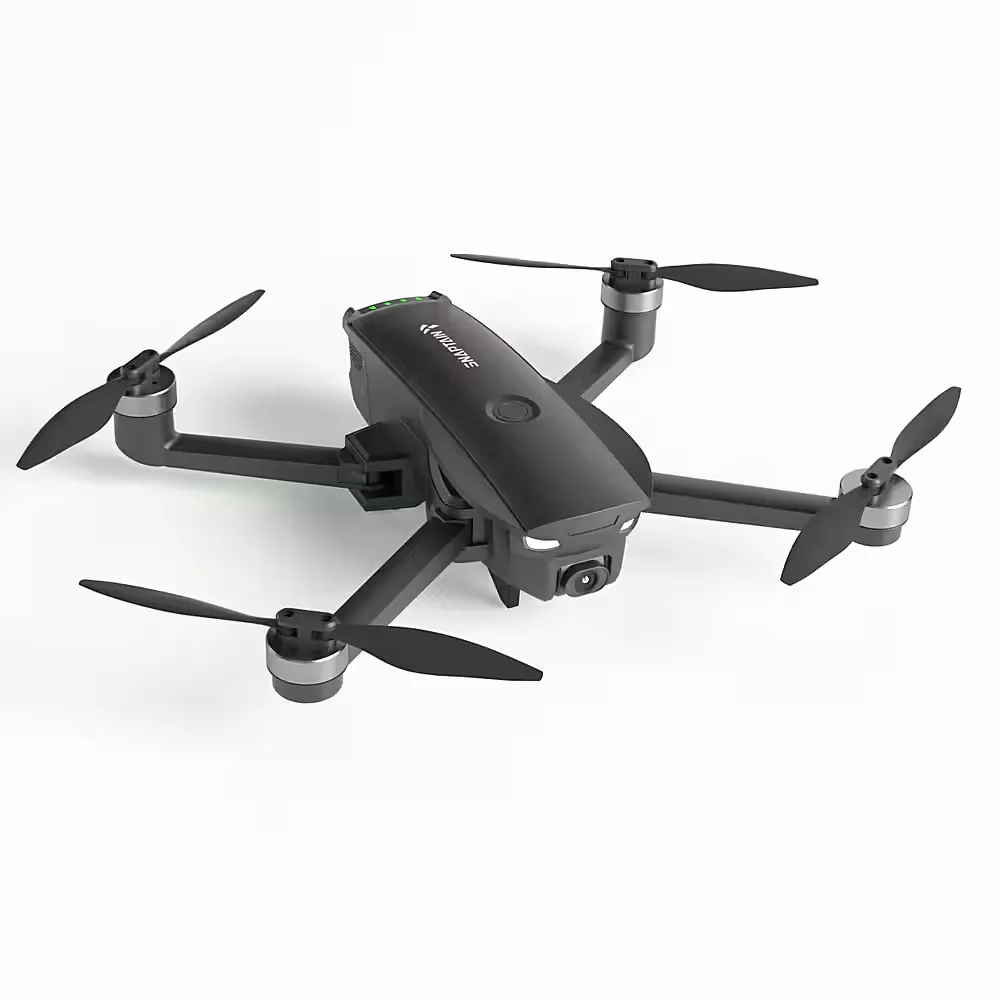
Full spec sheet →Snaptain SP7100
Here is the clearest example in the catalog of why frame rate belongs on a spec sheet next to resolution. Snaptain's SP7100 records 3,840 by 2,160 — genuinely 4K — at fifteen frames per second. Fifteen. Panning produces a slideshow, and there is no gimbal, only a rubber shock mount and a camera you can tilt through 90 degrees from the controller. GPS, brushless motors, return-to-home and a foldable airframe are all present and work as advertised. At 500 grams it needs registration, TRUST and a Remote ID answer that the maker does not give. It is in this catalog so that a shopper comparing "4K drones under $200" can see what the frame rate column does to that comparison.
Full spec sheet →