Snaptain
Snaptain SP7100
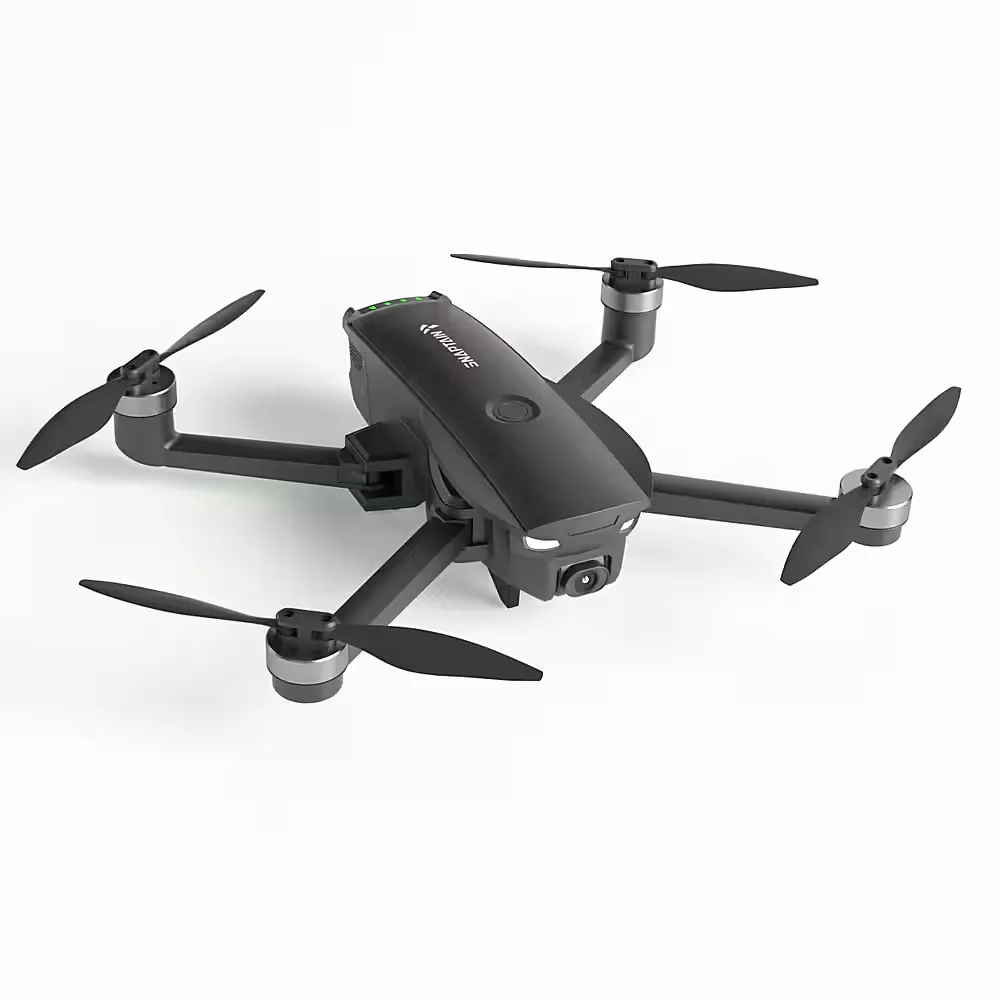
Here is the clearest example in the catalog of why frame rate belongs on a spec sheet next to resolution. Snaptain's SP7100 records 3,840 by 2,160 — genuinely 4K — at fifteen frames per second. Fifteen. Panning produces a slideshow, and there is no gimbal, only a rubber shock mount and a camera you can tilt through 90 degrees from the controller. GPS, brushless motors, return-to-home and a foldable airframe are all present and work as advertised. At 500 grams it needs registration, TRUST and a Remote ID answer that the maker does not give. It is in this catalog so that a shopper comparing "4K drones under $200" can see what the frame rate column does to that comparison.
The 250-gram line
Over 249 g: FAA registration is required ($5, 3 years) and the maker does not say whether it broadcasts Remote ID.
Every recreational flyer must also take TRUST and carry proof of it, at any weight. Rules checked against faa.gov on 2026-09-24. Not legal advice — how this is worked out.
What that 26-minute claim is measured at
Snaptain quotes a maximum of 26 minutes, with no published test conditions.
That works out to 13.0 claimed minutes per $100 of the base kit. Compared with the rest of the catalog.
Buying one in the US: limited
Checked 24 Sep 2026. Snaptain's own store no longer lists the SP7100. It is still sold new and refurbished through US general retailers including Best Buy and Walmart, which is remaining stock rather than current production.
Specifications
True first-year cost: ~$200 — the base kit at ~$200; no crash-plan price has been verified for this model, so nothing is added for it.
What it has
- Foldable airframe with brushless motors
- GPS return-to-home and follow-me
- Camera tilt through 90 degrees from the controller
- 4K stills and video, recorded at 15fps
- Roughly 800 m control range
In its favour
- Brushless motors and GPS return-to-home at a genuinely low price
- Foldable and light enough to carry casually
- Widely stocked, including refurbished units at lower prices
- Camera tilt from the controller rather than a fixed angle
Against it
- 4K records at 15fps, half what anything else here manages, over roughly 800 m of range
- No gimbal at all — just a rubber shock mount
- 500 g means registration, TRUST and a Remote ID solution
The two lists above are drawn from the manufacturer’s published specifications and from the cited reviews, not from owner reports.
What owners report
No owner discussion has been collected for the Snaptain SP7100 yet. Rather than fill the gap with something plausible, this section stays empty until there is a real body of owner reports to read. The specs above come from the maker’s published documentation.
Snaptain SP7100, head-to-head
Shopped alongside it
More from Snaptain →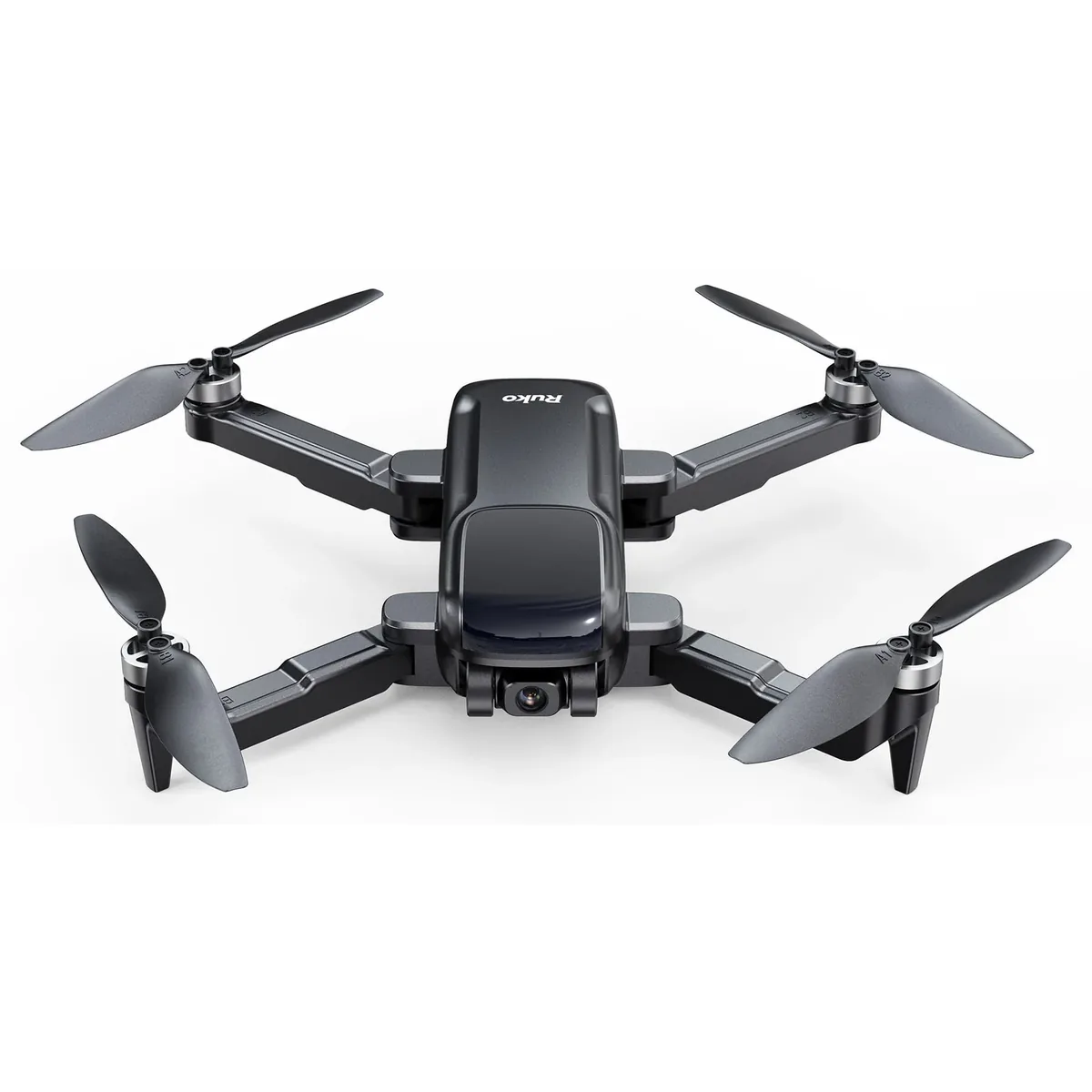
Ruko
Ruko U11 Pro
Aimed squarely at somebody buying their first drone as a gift, and priced like it. GPS hold, automatic return-to-home, indoor and outdoor modes, waypoint flying and two batteries for around $230. What it does not have is a gimbal, and the 500-metre control range is short even by budget standards — that is a park, not a landscape. At 270 grams it lands just over the registration threshold, which is a genuinely annoying place to be: you pay the $5, take TRUST and need a Remote ID answer, for an aircraft 21 grams heavier than the ones that need none of it. If the weight is the only thing between you and a licence-free flight, several drones in this catalog do the same job under 249 grams.
- Sensor
- 17.3 mm²
- Claimed
- 26 min
- Base kit
- ~$230
Best for: A first drone bought as a gift
Full spec sheetHoly Stone
Holy Stone HS720G
A two-axis motorised gimbal plus electronic stabilisation, brushless motors, GPS return-to-home and built-in Remote ID — for a drone that has been on shelves since 2022, the feature list holds up better than the numbers behind it. Range is the giveaway: the controller is rated at roughly a kilometre, a fraction of what the newer sub-250 gram models claim, and there is no obstacle sensing. At 380 grams it also crosses the registration line, which means $5 to the FAA, a TRUST certificate and Remote ID that this aircraft at least provides itself. Two batteries come in the box, which is where the "52 minute" figure on the packaging comes from; a single flight is 26.
- Sensor
- 28.1 mm²
- Claimed
- 26 min
- Base kit
- ~$300
Best for: A first drone where two batteries matter more than range
Full spec sheet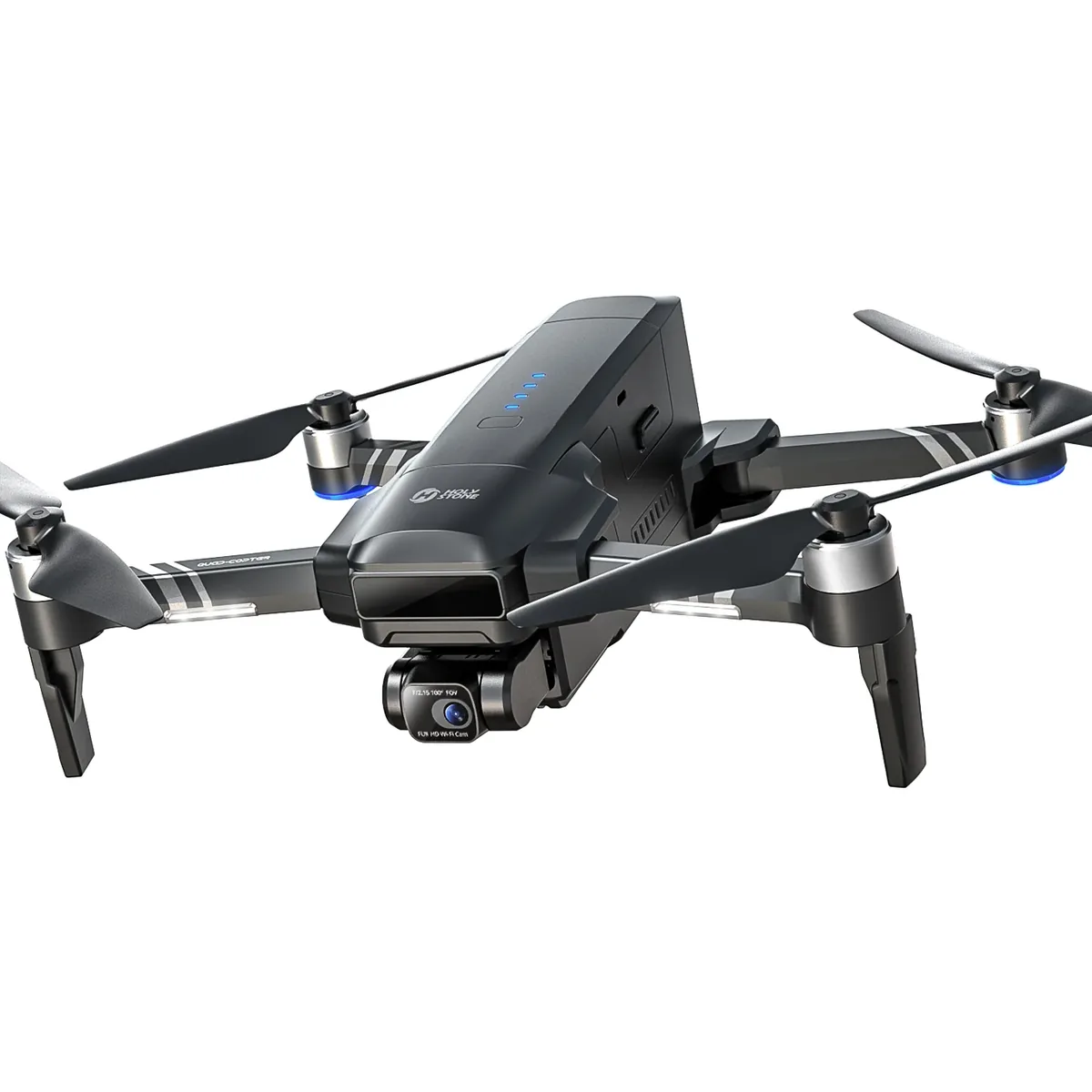
Holy Stone
Holy Stone HS600
Sitting a step below the sub-250-gram HS900 in Holy Stone's range and a step above it in weight, this is the brand's answer for people who want reach rather than a registration exemption. Two-axis gimbal plus electronic stabilisation on the roll axis, a 48MP 1/2.3-inch sensor, integrated Remote ID, Level 6 wind resistance and roughly 6 km of transmission. Two batteries come in the box, which is the source of the 56-minute figure in the listings — a single flight is about 28. At 541 grams the registration, TRUST certificate and Remote ID obligations all apply, and the aircraft at least handles the last of those itself. There is no obstacle sensing, which at this weight and speed is the specification most worth noticing.
- Sensor
- 28.1 mm²
- Claimed
- 28 min
- Base kit
- ~$370
Best for: Range and wind resistance under $400
Full spec sheet