Potensic Atom vs Potensic Atom SE
Both are under the 250-gram line, so the legal position is identical and the decision comes down to the rows tinted below — the specs where these two actually differ. The Potensic Atom SE is the cheaper of the two at ~$299.
| Drone | ||
|---|---|---|
| Bundle price | ~$359multi-battery bundle | ~$299multi-battery bundle |
| True first-year price | ~$359 | ~$299 |
| Flight min per $100 | 8.9 | 10.4 |
| Rating | No cited rating | No cited rating |
| Takeoff weight | 249 g | 245 g |
| FAA registration | Not required | Not required |
| Remote ID | Not published | Not published |
| Sensor size | 1/2.3" | 1/3" |
| Sensor area | 28.1 mm² | 17.3 mm² |
| Megapixels | 12 MP | 12 MP |
| Max video | 4K/30fps | 4K/30fps |
| Colour depth | 8-bit | 8-bit |
| Log profile | — | — |
| Gimbal | 3-axis | None |
| Obstacle sensing | None | None |
| Claimed flight time | 32 min | 31 min |
| Tested flight time | — | — |
| Battery | — | — |
| Transmission | PixSync 3.0 | PixSync 2.0 |
| Max range | 6 km | 4 km |
| Max speed | 36 mph | 36 mph |
| Wind resistance | Level 5 (10.7 m/s) | Level 5 (10.7 m/s) |
| Service ceiling | — | — |
| Internal storage | None | None |
| Controller | Potensic controller (phone required) | Potensic controller (phone required) |
| Return to home | Yes | Yes |
| Geofencing | No | No |
| Care plan (1 yr) | Not in our snapshot | Not in our snapshot |
| US availability | Sold | Sold |
| Released | 2023 | 2022 |
| Flight claim measured at | Potensic quotes 32 minutes per battery with no published test conditions. Its successor's claim of the same figure was measured at roughly 20 minutes in practice, which is a reasonable expectation here too. | Potensic quotes 31 minutes per 2,500 mAh battery. Retail listings often advertise "62 minutes", which is simply two batteries added together rather than a single flight. |
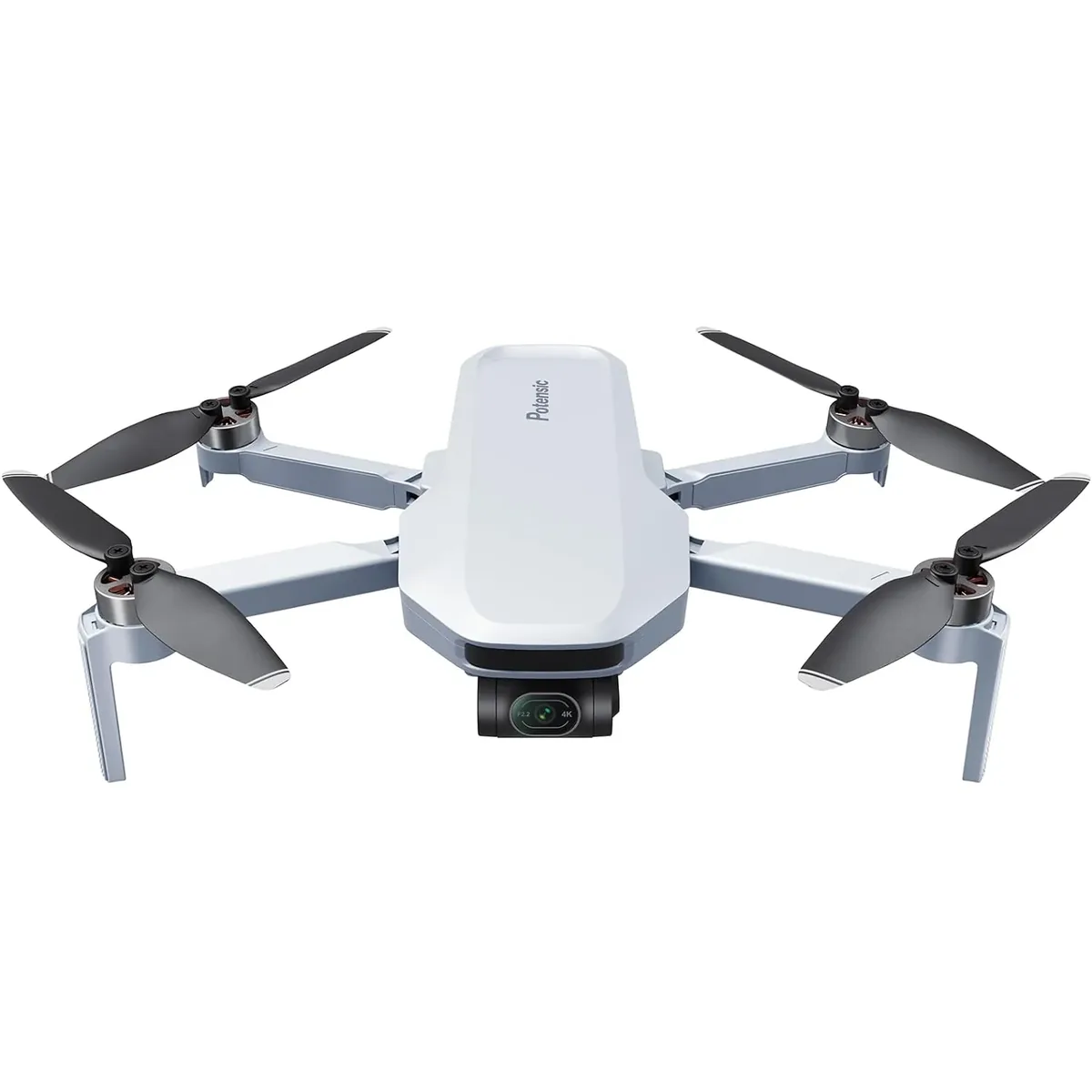
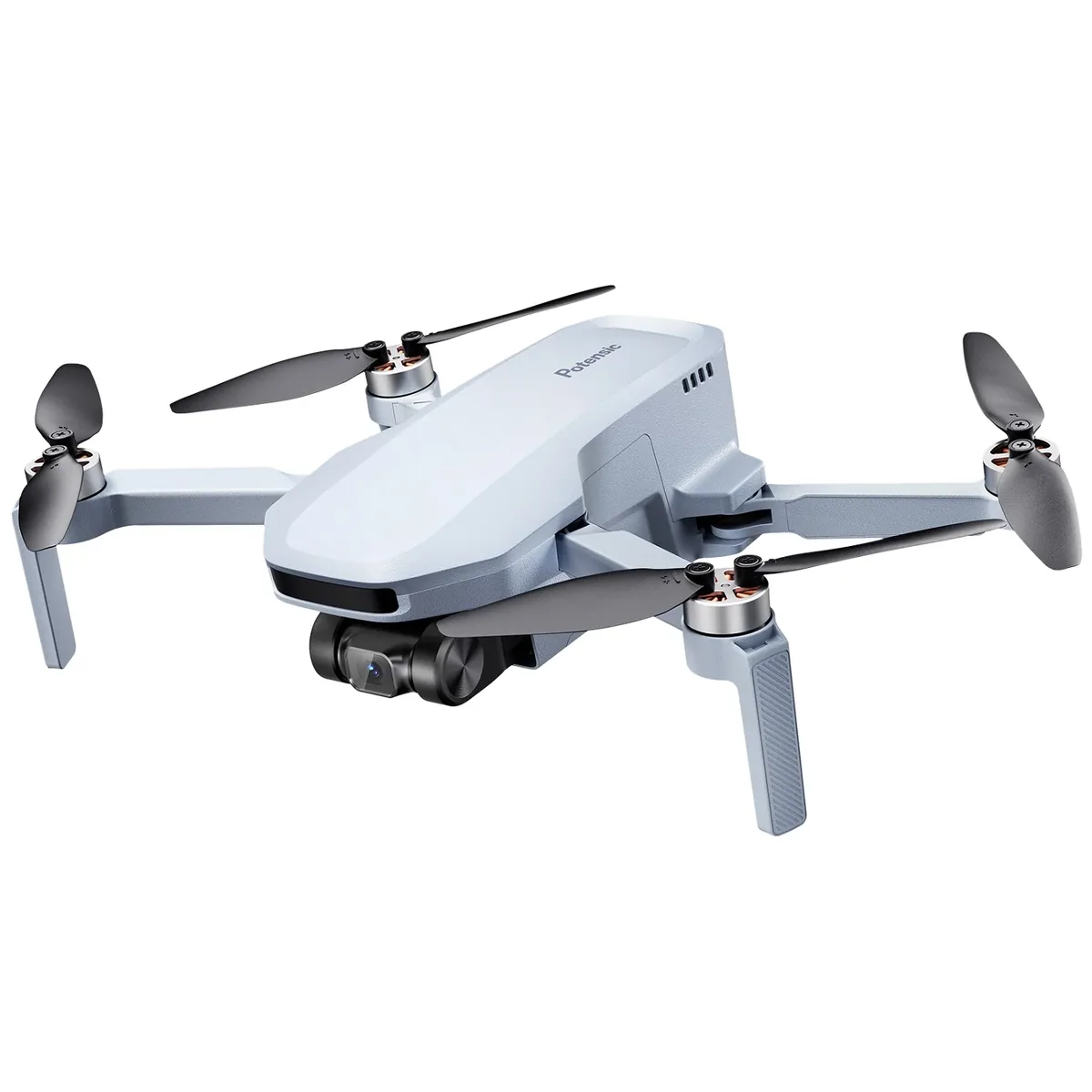
Potensic Atom
Before the Atom 2 there was this, and the older model is still worth a look purely on price. Same sub-249-gram airframe, same three-axis gimbal, same GPS return-to-home and QuickShot moves, with a 1/2.3-inch 12MP sensor instead of the newer 1/2-inch 48MP one and PixSync 3.0 capped at 6 km rather than 10. Visual tracking will follow a walking subject or orbit it. What you are giving up against the Atom 2 is sensor area, HDR, vertical shooting and half the rated range — what you are gaining is roughly fifty dollars. For someone whose real question is "will this hold a steady shot without needing registration", the answer here is the same as the newer one, and neither has any obstacle sensing whatsoever.
Full spec sheet →Potensic Atom SE
Electronic stabilisation, a 1/3-inch sensor and a brushless motor on every arm — that combination, at this price, is what made the Atom SE the default "first GPS drone" recommendation for a couple of years. It holds position on GPS, comes home on a low battery, flies at 16 m/s in Sport mode and records 4K/30 that looks fine on a phone and soft on anything bigger. There is no gimbal, so smoothness depends on software cropping and on you flying gently. The specification to read carefully is the flight time: Potensic's own figure is 31 minutes for one battery, while retail listings routinely headline "62 minutes", which is two batteries added together and not something any single flight will ever deliver.
Full spec sheet →