9 drones · 3 brands
Camera drone
Past the registration line, weight stops being a constraint and starts being an asset. These aircraft hold position in wind a Mini cannot fly in, carry sensors two to eight times larger, and in a couple of cases have a real mechanical aperture rather than a screw-on filter. The price is everything that comes with registering: the $5, the TRUST certificate, Remote ID, and a bag rather than a pocket.
- Price range
- ~$400–~$2,499
- Under 250 g
- 0 of 9
- Cheapest
- ~$400Holy Stone HS600D
- Longest claim
- 51 minDJI Mavic 4 Pro
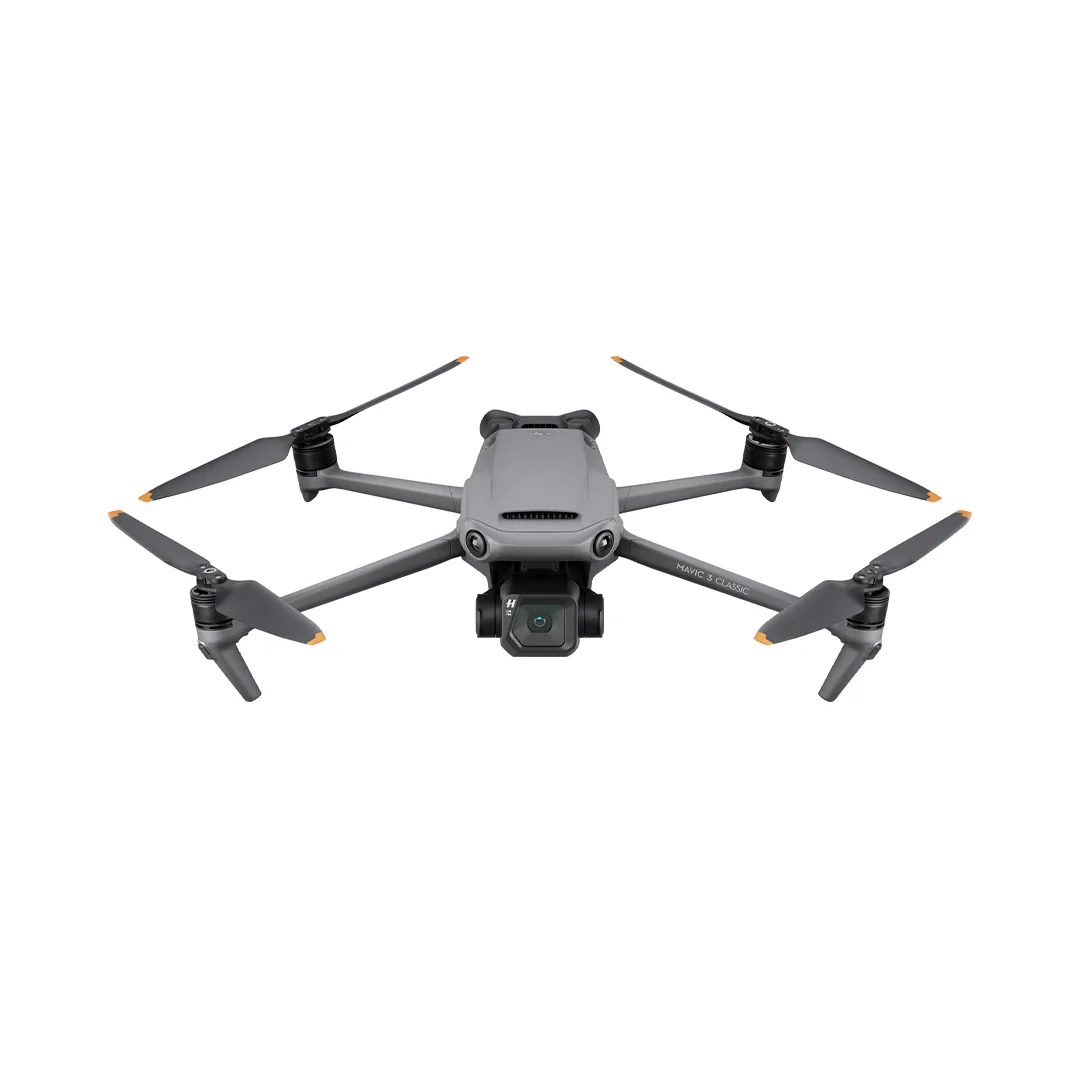
Strip the tele camera off a Mavic 3 and you get the cheapest route to a Four Thirds sensor in the air. Twenty megapixels on 225 mm² — nearly twice the area of a one-inch chip and eight times a 1/2.3-inch one — with a mechanical f/2.8 to f/11 aperture, 10-bit D-Log at 200 Mbps, and 5.1K/50 or 4K/120 recording. That aperture matters more than the resolution: it is the only way in this catalog to cut light without screwing filters onto the front. Omnidirectional sensing, a 77 Wh pack and a 6,000 m ceiling make it a serious tool rather than a hobby aircraft, and at 895 grams it is firmly in registration-and-Remote-ID territory. O3+ transmission is a generation behind the O4 in the Air line, which is the main thing four years have cost it.
- Sensor
- 224.9 mm²
- Claimed
- 46 min
- Bundle
- ~$1,749
Best for: Four Thirds image quality at the lowest price
Full spec sheet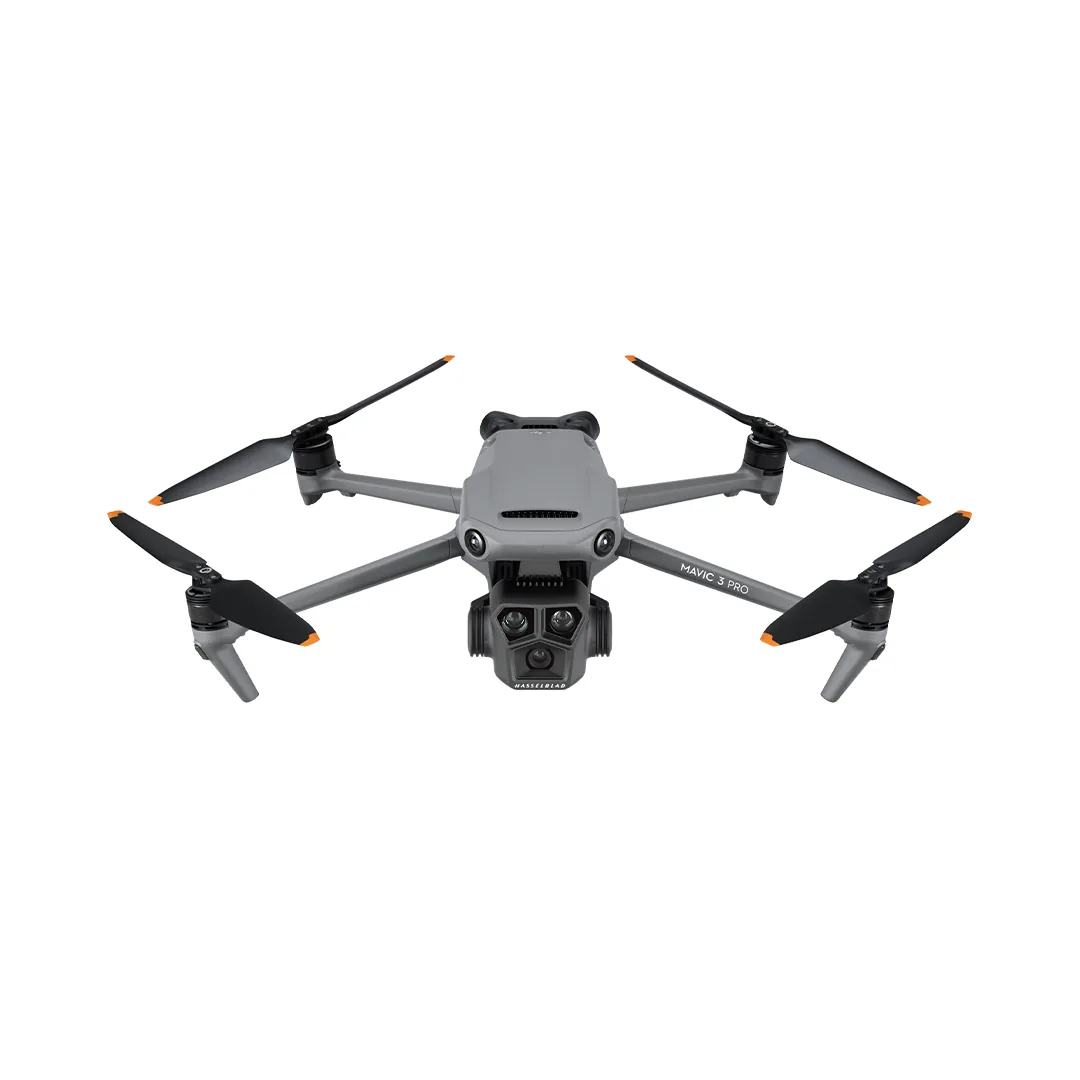
Three focal lengths on one gimbal, all recording 10-bit at 200 Mbps, is a thing no other consumer aircraft does. The 24mm Hasselblad uses the same Four Thirds sensor as the Mavic 3 Classic; a 70mm medium tele on a 1/1.3-inch 48MP chip covers the everyday reach; and a 166mm tele on a 1/2-inch 12MP sensor gets genuinely compressed shots that a digital crop never will. In practice the two longer lenses are what change how you shoot — you stop repositioning the aircraft and start choosing a lens. That third camera is also the weak link, since a 1/2-inch sensor at 166mm wants good light. At $2,199 before a bundle, plus $299 a year for crash cover, this is where a camera drone stops being a purchase and starts being equipment.
- Sensor
- 224.9 mm²
- Claimed
- 43 min
- Bundle
- ~$2,999
Best for: Choosing a lens instead of moving the aircraft
Full spec sheet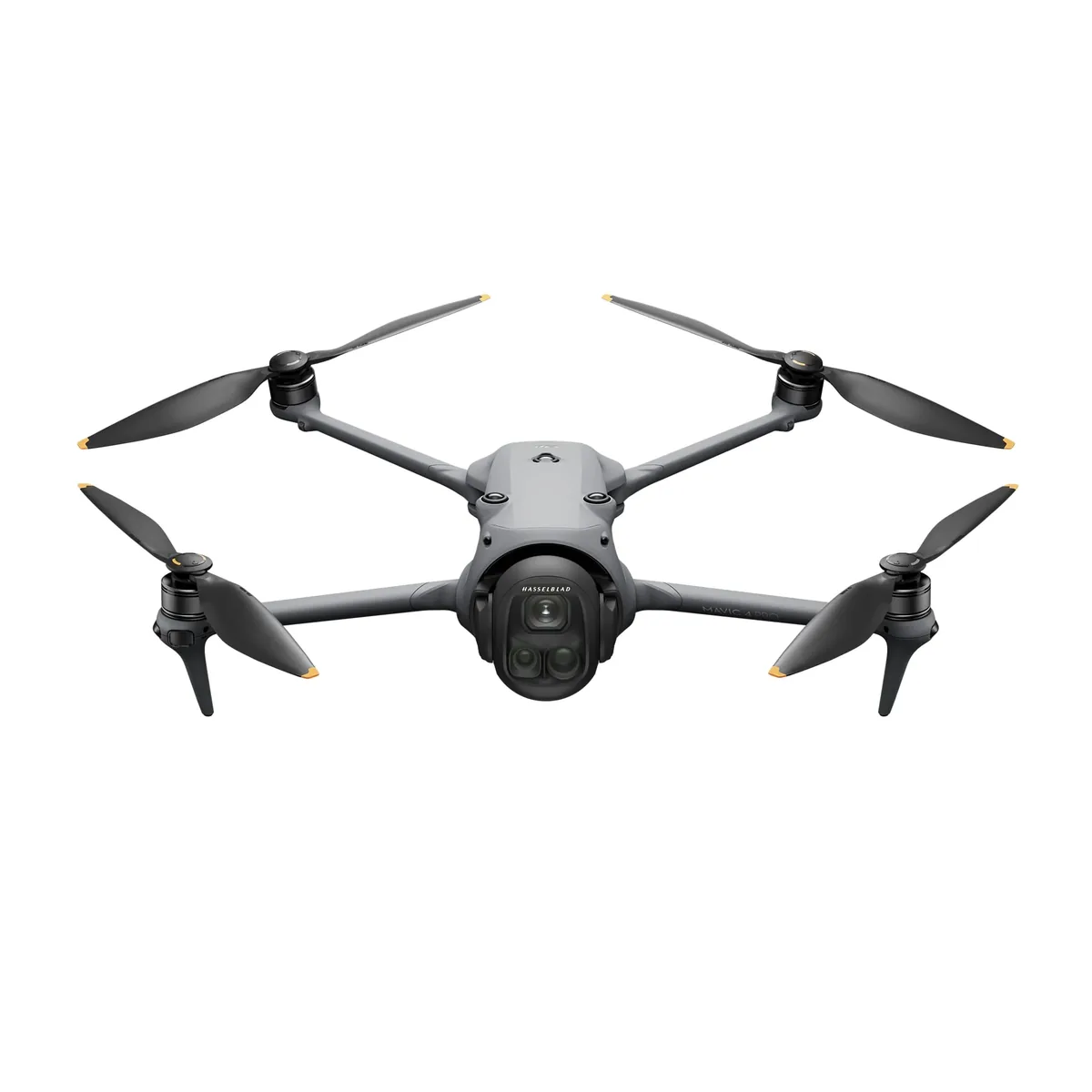
Everything DJI knows how to build, sold everywhere except here. A 100MP Four Thirds wide camera shooting 6K/60, a 70mm 48MP medium tele and a 168mm 50MP tele, all on an Infinity gimbal that rotates a full 360 degrees so vertical framing and continuous rolls stop being compromises. Six low-light fisheye sensors and a forward LiDAR handle obstacles down to 0.1 lux. O4+ carries a 10-bit feed to 30 km in FCC regions and the 95 Wh pack is quoted at 51 minutes, though a reviewer flying it in moderate wind landed closer to 35. The reason it is in this catalog with a warning rather than a recommendation is the US position: DJI said at launch it would not ship here, so anything you find domestically arrived by another route and almost certainly carries no US warranty. For anyone weighing an import against an Air 3S bought normally, the practical questions are service and resale: a domestic warranty claim on this aircraft has nowhere to go, and a buyer three years from now will ask the same question you are asking today.
- Sensor
- 224.9 mm²
- Claimed
- 51 min
- Base kit
- ~$2,499
Best for: Maximum image quality, if you accept the import risk
Full spec sheet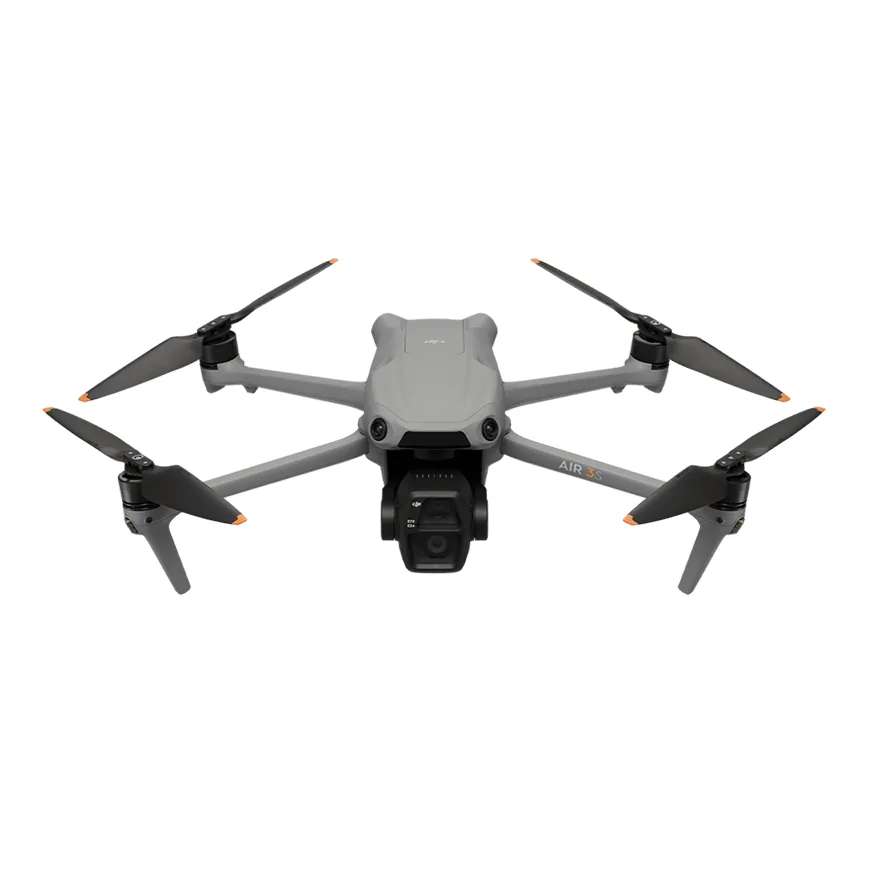
DJI
DJI Air 3S
Where the Air 3 gave you two matched 1/1.3-inch cameras, the Air 3S puts a one-inch 50MP sensor on the wide and keeps a 1/1.3-inch 48MP for the 70mm tele. That is the upgrade almost everyone wanted, and it comes with forward LiDAR bolted onto the omnidirectional vision system, which is the first time DJI's sensing has genuinely worked after dusk. Forty-two gigabytes of internal storage, a 6,000 m ceiling and 12 m/s wind resistance round it out. It sits in a strange spot in 2026: it is the best all-round camera drone DJI has FCC clearance to sell in the US, and the Mavic 4 Pro that beats it never officially arrived here. If you want one aircraft that handles wind, low light and long flights without a caveat, this is the shortest answer in the catalog.
- Sensor
- 116.2 mm²
- Claimed
- 45 min
- Bundle
- ~$1,399
Best for: One aircraft for wind, low light and long flights
Full spec sheet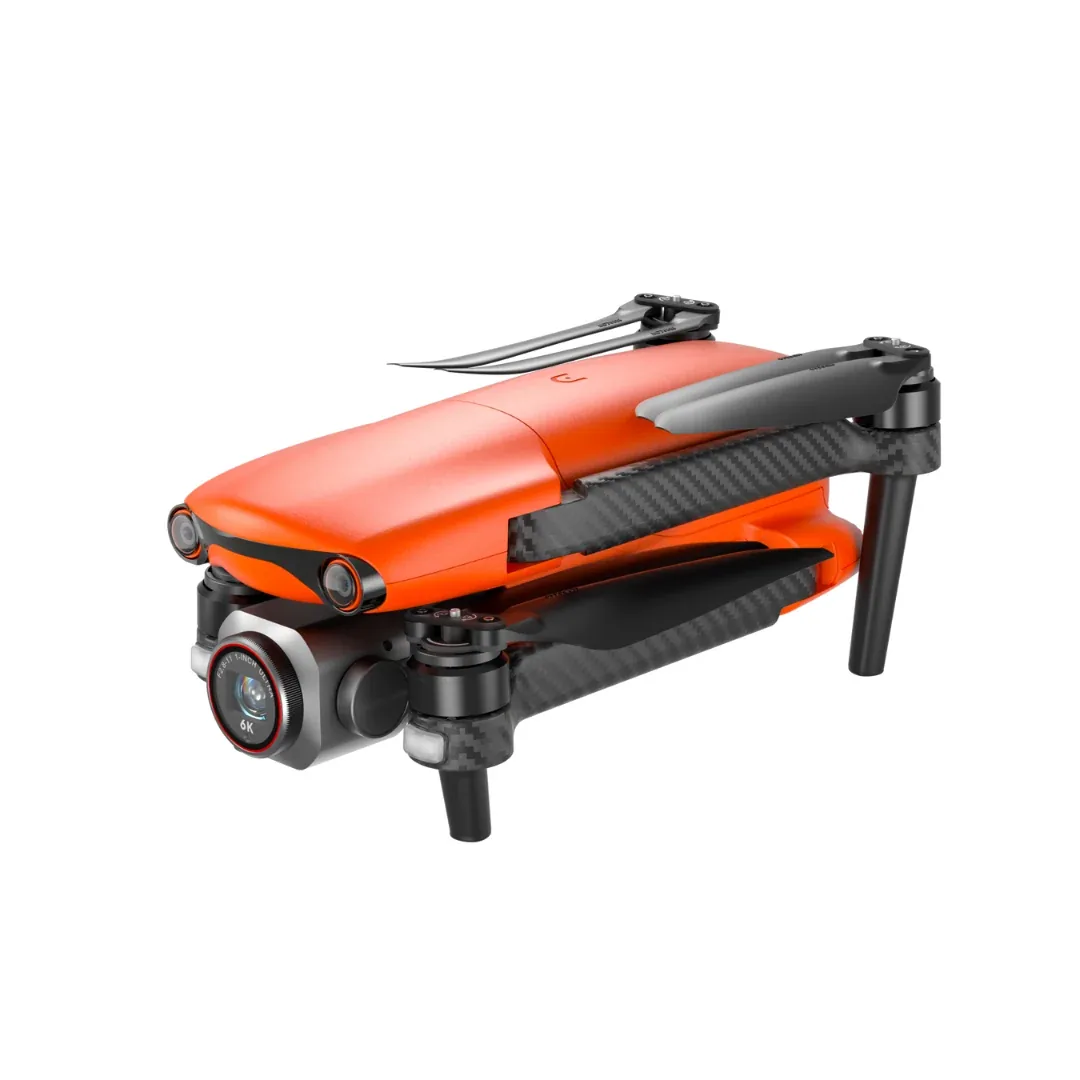
Autel
Autel EVO Lite+
Pair a one-inch sensor with an adjustable f/2.8-to-f/11 aperture and 6K recording and you have what was, for a while, the most interesting non-DJI camera drone of its generation, and it still shoots well. Autel's Moonlight algorithm pushes ISO absurdly high — the marketing claims up to 48,000 — which produces noisy but usable night frames that most rivals simply cannot attempt. Forty claimed minutes on a 43 Wh pack and a 12 km SkyLink link round it out, and as with every Autel there is no manufacturer geofencing. The reason to think hard before buying is the same as with the Nano+: Autel discontinued its whole consumer range in July 2025. Batteries, props and firmware for an 835-gram aircraft with a four-year-old app are not going to get easier to find, and at 835 grams it needs registration and a Remote ID solution either way.
- Sensor
- 116.2 mm²
- Claimed
- 40 min
- Bundle
- ~$1,499
Best for: One-inch night footage without DJI
Full spec sheet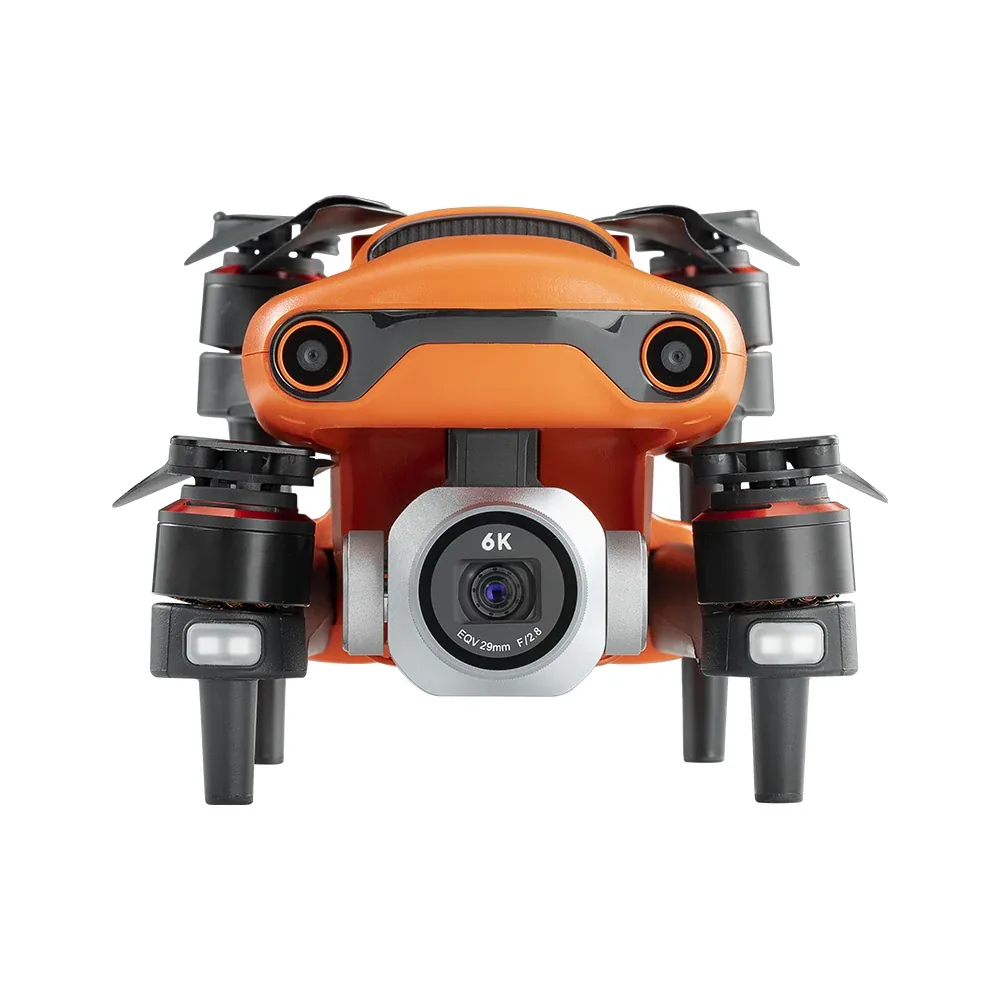
Autel
Autel EVO II Pro V3
This is the Autel that did not get cancelled, and the one American buyers keep circling back to now that DJI cannot restock. A one-inch 20MP sensor with an adjustable aperture, 6K/30 recording with 12-bit DNG stills, a 6.4-inch screened controller in the box, omnidirectional sensing, and a genuinely serious 82 Wh battery quoted at 40 minutes. Level 8 wind resistance and a 7,000 m ceiling put it well past what the consumer Mavics claim. It is also 1,191 grams, costs $2,099, and sits close enough to Autel's commercial range that the accessories and the pricing behave accordingly. If your reason for shopping is that you want a capable camera drone from a company that is still importing to the US, this is the shortest answer in the catalog.
- Sensor
- 116.2 mm²
- Claimed
- 40 min
- Base kit
- ~$2,099
Best for: Serious camera work from a maker still shipping to the US
Full spec sheet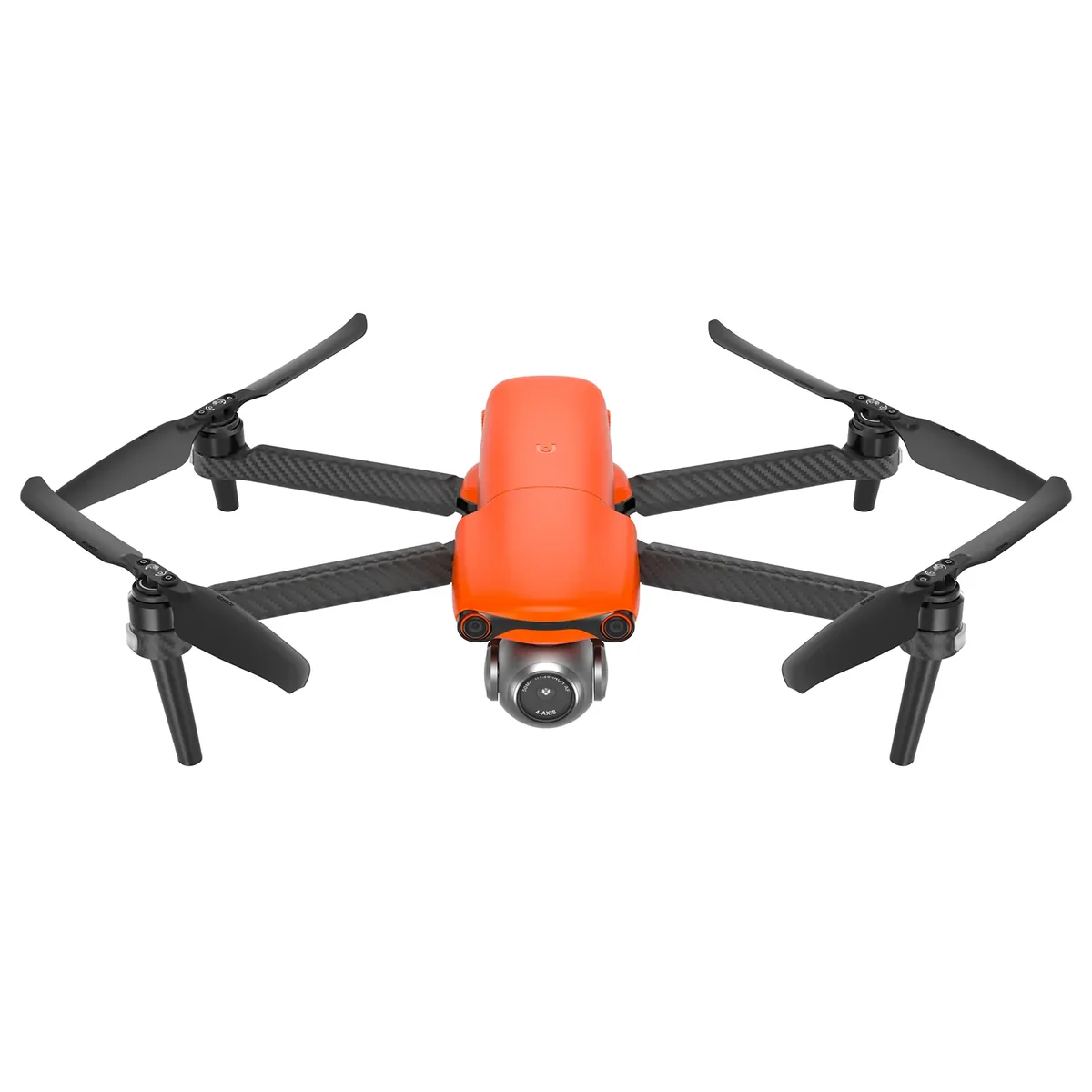
Autel
Autel EVO Lite
Same airframe as the EVO Lite+, different camera, and the difference cuts both ways. Where the plus model carries a one-inch 20MP sensor with a mechanical aperture and 6K recording, this one has a 1/1.28-inch 50MP chip that records 4K at 60 frames per second — half the sensor area, twice the frame rate, and a lot more resolution for stills. For anyone whose output is 4K60 rather than 6K, that is a reasonable trade at a couple of hundred dollars less. Everything structural is shared: 835 grams, 40 claimed minutes, 12 km of SkyLink, forward and backward sensing, and no manufacturer geofencing. So is the problem — Autel ended its consumer line in July 2025, and this is what remains on shelves.
- Sensor
- 71.5 mm²
- Claimed
- 40 min
- Base kit
- ~$1,149
Best for: 4K/60 and 50MP stills without DJI
Full spec sheet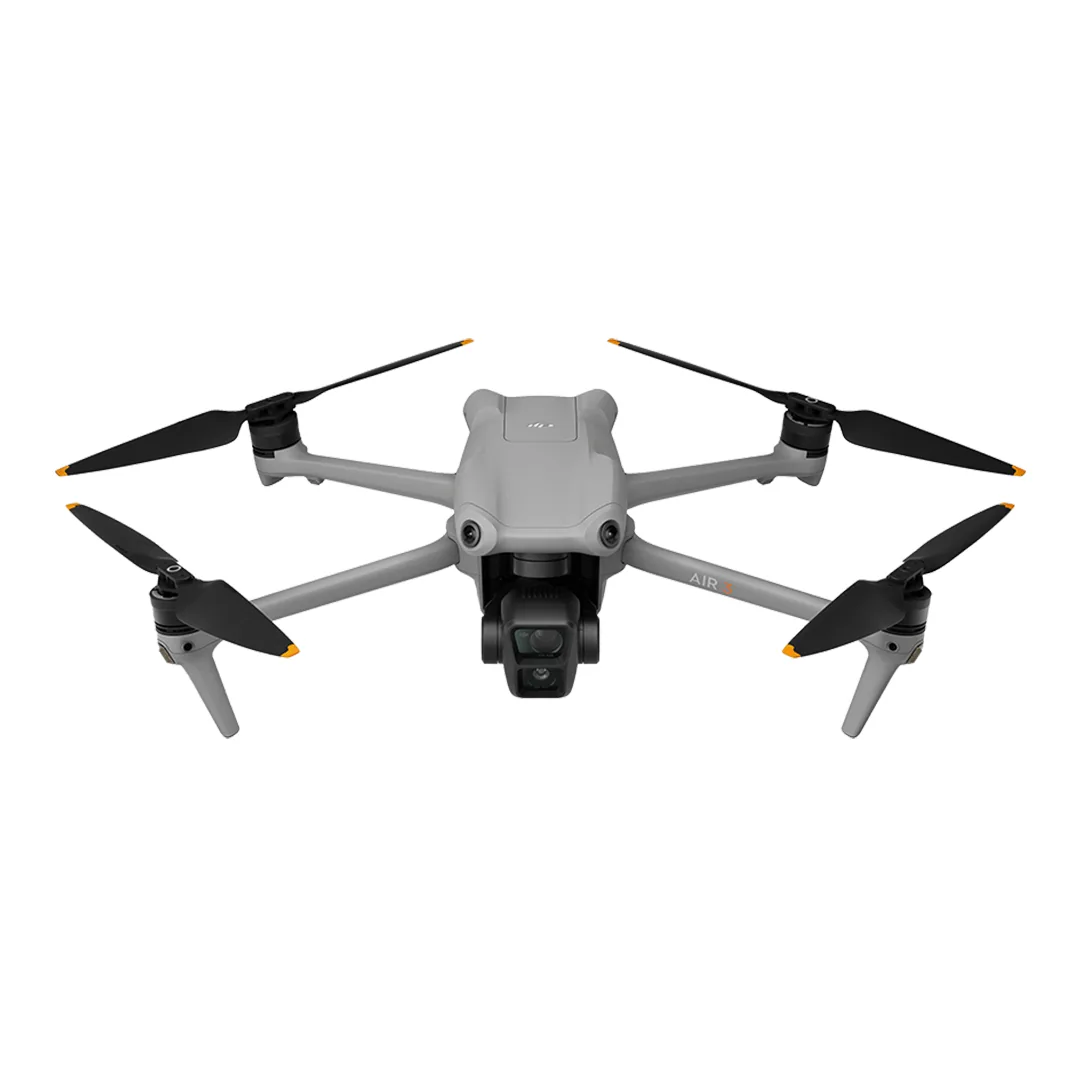
DJI
DJI Air 3
Two 1/1.3-inch cameras rather than one big one was the Air 3's bet, and for a lot of people it paid off. A 24mm wide and a 70mm medium telephoto share the same sensor size and the same 48 megapixels, so cutting between them does not produce the jarring quality drop that a small tele sensor causes. Both shoot 4K/60 HDR, 4K/100 slow motion and 10-bit D-Log M. Omnidirectional sensing, 46 claimed minutes on a 62.6 Wh pack and a 6,000 m ceiling make it the class workhorse it was meant to be. Read that 46 carefully, though: DJI quotes it with obstacle sensing switched off and the camera set to 1080p/24, which is not how anyone flies. The Air 3S replaced it with a one-inch wide camera and forward LiDAR, so the Air 3 is now the value pick in the line rather than the current one.
- Sensor
- 69.1 mm²
- Claimed
- 46 min
- Bundle
- ~$1,349
Best for: Long flights with two usable focal lengths
Full spec sheet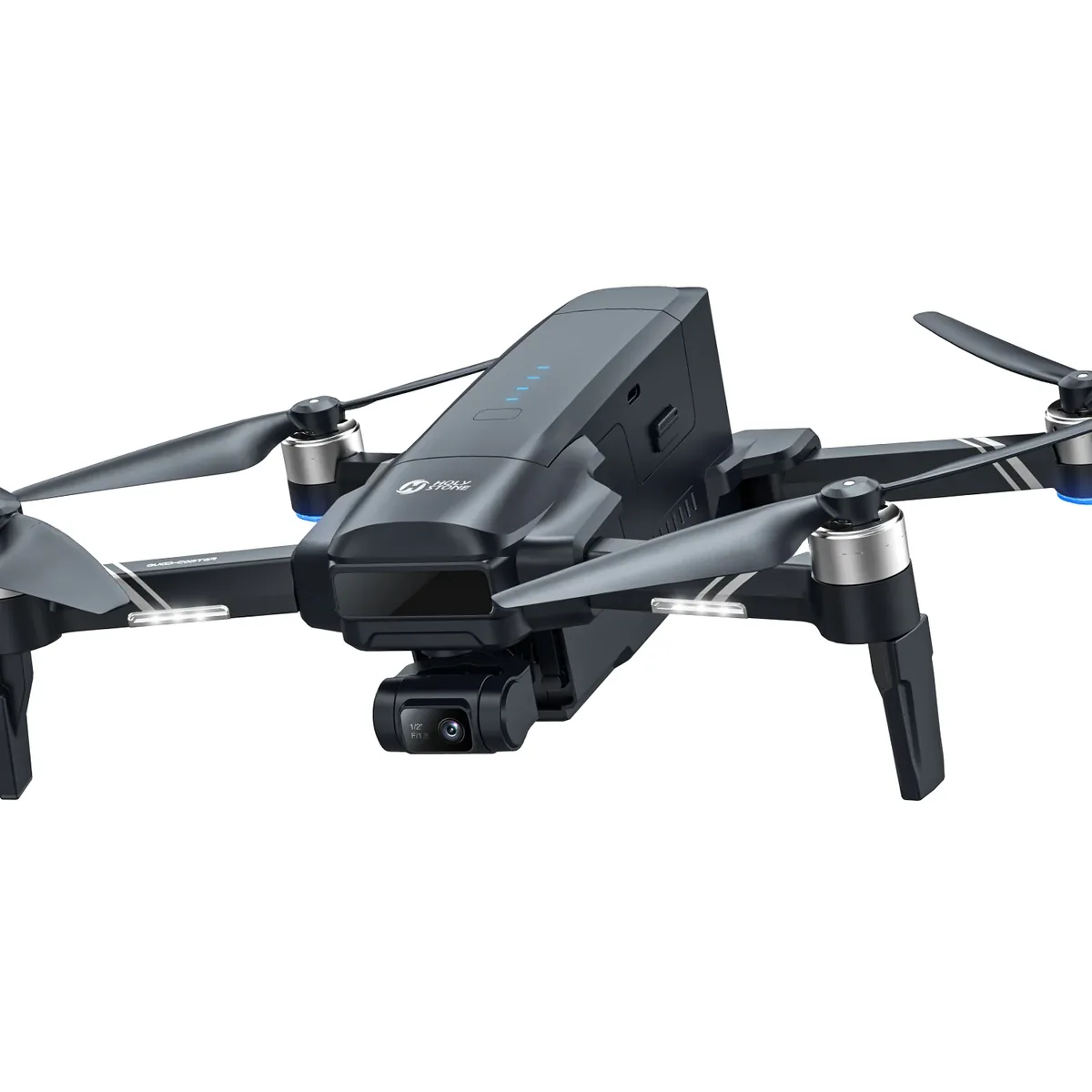
Holy Stone
Holy Stone HS600D
Holy Stone's most ambitious aircraft: a genuine three-axis gimbal, 48MP stills, integrated Remote ID, Level 6 wind resistance and roughly 6 km of transmission, for around $400. Reviewers have called it a clear improvement on everything the brand made before it and still short of the Mini it is priced against. The number to look at hardest is endurance. The box says 40 minutes per battery and 80 across the two included packs; independent reviewers measured 20 to 25 minutes per charge, which is the largest documented gap between a claim and a measurement anywhere in this catalog. Everything else behaves as advertised. At 603 grams you are registering it, taking TRUST and relying on its own Remote ID broadcast. It also arrives with two batteries, a carrying case and a screened controller in the box, which at this price is unusual and is part of why it compares well on paper with drones that charge separately for all three.
- Sensor
- 28.1 mm²
- Claimed
- 40 min
- Base kit
- ~$400
Best for: A three-axis gimbal at budget-brand pricing
Full spec sheet