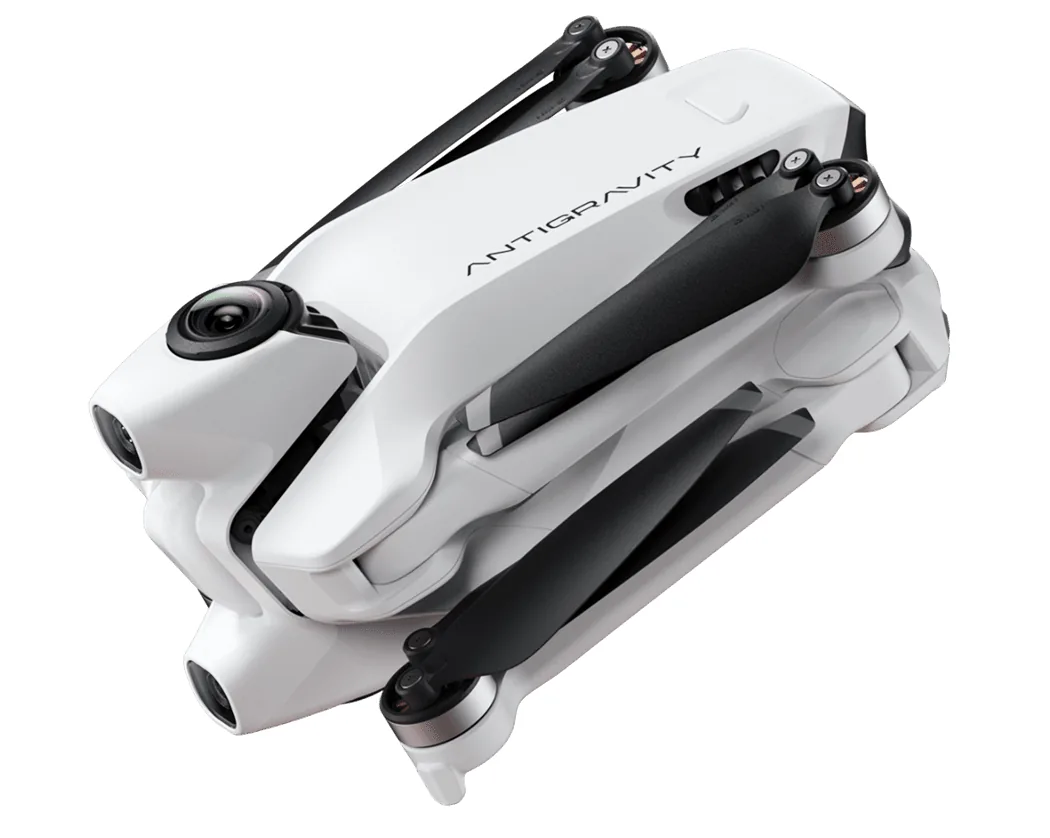
Antigravity
Antigravity A1
Insta360's drone brand did the thing everyone expected Insta360 to do: put a 360 camera on an aircraft and delete the gimbal entirely. Two 1/1.28-inch lenses, one above and one below, capture everything around the drone at 8K/30, and the stitching algorithm removes the aircraft from its own footage. You do not frame during the flight; you fly, then pick angles afterwards from a sphere. Control is goggles-first — a 2560x2560-per-eye headset with head-tracked FreeMotion and a conventional FPV mode — which makes the flying feel closer to sitting in the thing than steering it. It squeezes under 249 grams on the standard battery, carries omnidirectional sensing and return-to-home, and is one of the few genuinely current aircraft a US buyer can order new without an import caveat. The workflow is also genuinely different from a camera drone's. You come home with spherical footage rather than shots, and every frame you publish is a crop and a reframe made afterwards in software — which is liberating if you already edit and tedious if you do not.
The 250-gram line
Under 250 g: recreational flight needs no FAA registration, and Remote ID does not apply.
Every recreational flyer must also take TRUST and carry proof of it, at any weight. Rules checked against faa.gov on 2026-09-24. Not legal advice — how this is worked out.
What that 24-minute claim is measured at
Antigravity quotes 24 minutes on the standard battery and 39 on the high-capacity pack, measured while recording 5.2K/30. The larger battery takes the aircraft past 249 g and with it the US registration exemption.
That works out to 1.5 claimed minutes per $100 of the base kit. Compared with the rest of the catalog.
Buying one in the US: sold
Checked 24 Sep 2026. Launched 4 Dec 2025 and sold in the US through Antigravity's own store, Best Buy and retail partners — a genuinely current US-available alternative while DJI's supply is frozen.
Specifications
True first-year cost: ~$1,599 — the base kit at ~$1,599; no crash-plan price has been verified for this model, so nothing is added for it.
What it has
- Dual 1/1.28-inch lenses capturing full 360 at 8K/30
- Invisible-drone stitching removes the aircraft from its own footage
- Vision Goggles at 2560x2560 per eye with head-tracked FreeMotion control
- Omnidirectional obstacle sensing and return-to-home
- Standard battery keeps it under 249 g; high-capacity pack extends to 39 minutes
- 10 km transmission range in FCC regions
- Built-in Remote ID broadcast
In its favour
- Reframing from a 360 sphere removes the single hardest part of flying a camera
- Goggles and controller are in the box rather than accessories
- Currently available new in the US with no import caveat
- Omnidirectional sensing and return-to-home, which the selfie-drone class lacks
- Under 250 g on the standard battery
Against it
- $1,599 puts it above every DJI here except the Mavic flagships
- No gimbal — stabilisation and framing both happen in software
- The 39-minute battery pushes it over 249 g and cancels the exemption
- A brand-new platform, so the editing workflow and firmware are young
- Several specs, including bitrate and colour depth, are not published
The two lists above are drawn from the manufacturer’s published specifications and from the cited reviews, not from owner reports.
What owners report
No owner discussion has been collected for the Antigravity A1 yet. Rather than fill the gap with something plausible, this section stays empty until there is a real body of owner reports to read. The specs above come from the maker’s published documentation.
Antigravity A1, head-to-head
Shopped alongside it
More from Antigravity →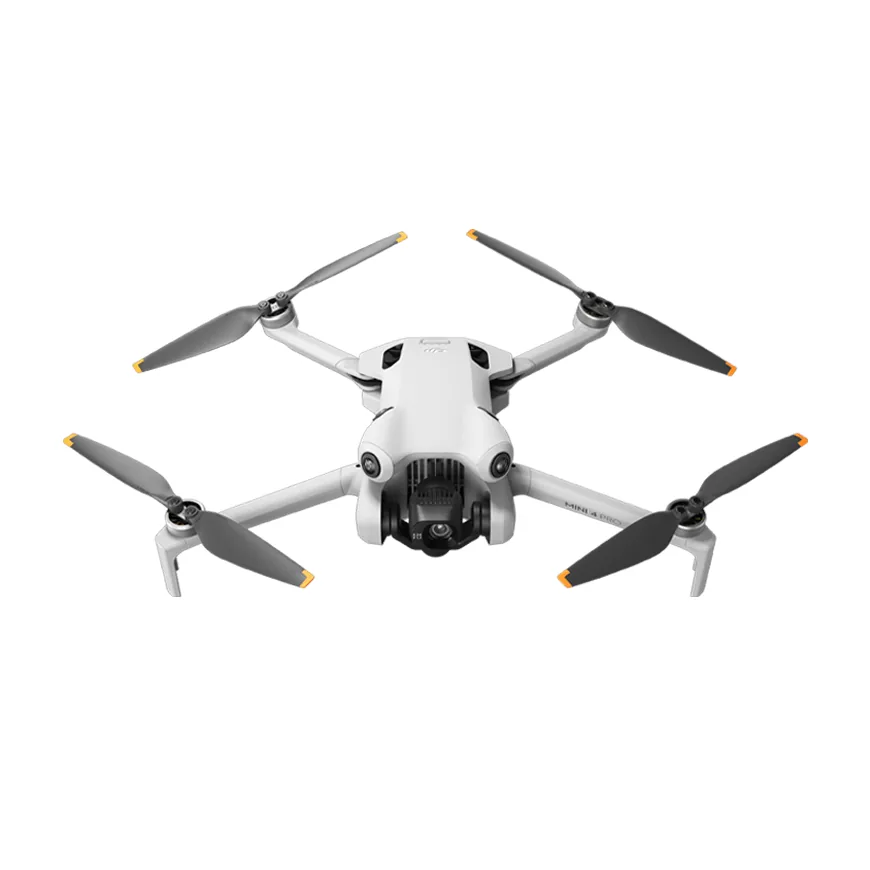
Omnidirectional sensing on a 249-gram airframe is the trick nothing else in this catalog fully matches. Binocular vision on all sides plus a downward 3D infrared sensor means the Mini 4 Pro will stop for a branch it is backing into, which matters far more than it sounds once you fly near trees. The 1/1.3-inch 48MP sensor records 4K/60 HDR and 4K/100 slow motion at 150 Mbps in 10-bit D-Log M, so the footage grades rather than just plays. O4 transmission is rated to 20 km in FCC regions, which is far beyond any legal line-of-sight flight but does mean a clean 1080p feed at the distances people actually fly. The caveat is the one everyone trips on: the 45-minute battery is a separate, heavier pack that takes the aircraft over the registration threshold, so the honest number for a registration-free flight is 34 minutes.
- Sensor
- 69.1 mm²
- Claimed
- 34 min
- Bundle
- ~$1,099
Best for: Flying near trees and buildings without registering
Full spec sheet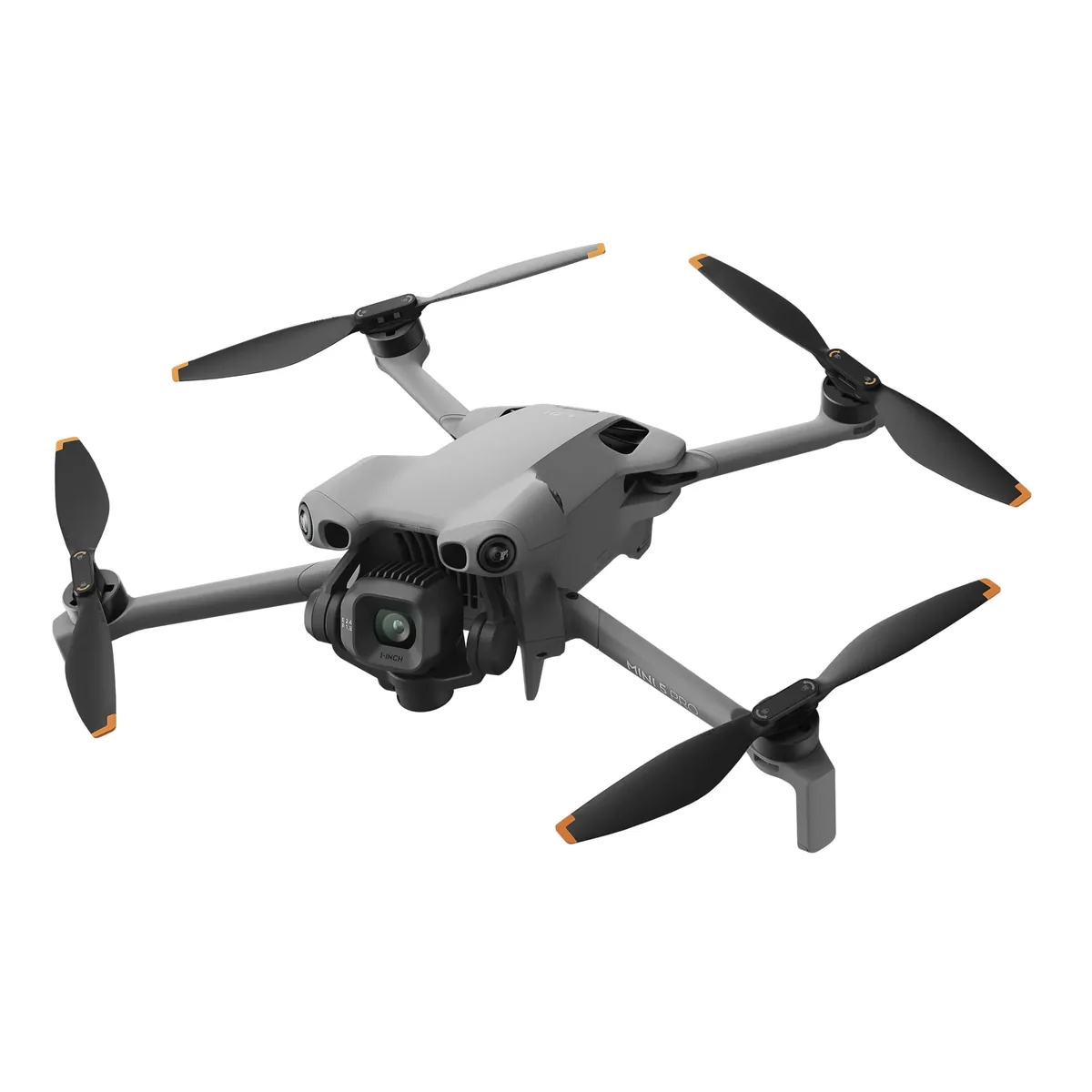
A one-inch sensor under 250 grams was supposed to be impossible, and this is the drone that did it. Fifty megapixels on a 116 mm² sensor at f/1.8 is roughly two-thirds more light-gathering area than the Mini 4 Pro's 1/1.3-inch chip, which shows up exactly where you would expect: dusk, interiors of shadow, and anything where the smaller Minis start smearing. It adds forward LiDAR to the omnidirectional vision system, so it sees in the dark rather than just in daylight, and the gimbal swings through 225 degrees for true vertical framing. The complication is where you buy it. DJI never put it in its own US store, and the units on US shelves arrived through import channels, which changes what happens when you crash it.
- Sensor
- 116.2 mm²
- Claimed
- 36 min
- Bundle
- ~$1,043
Best for: Low light and vertical video without registering
Full spec sheet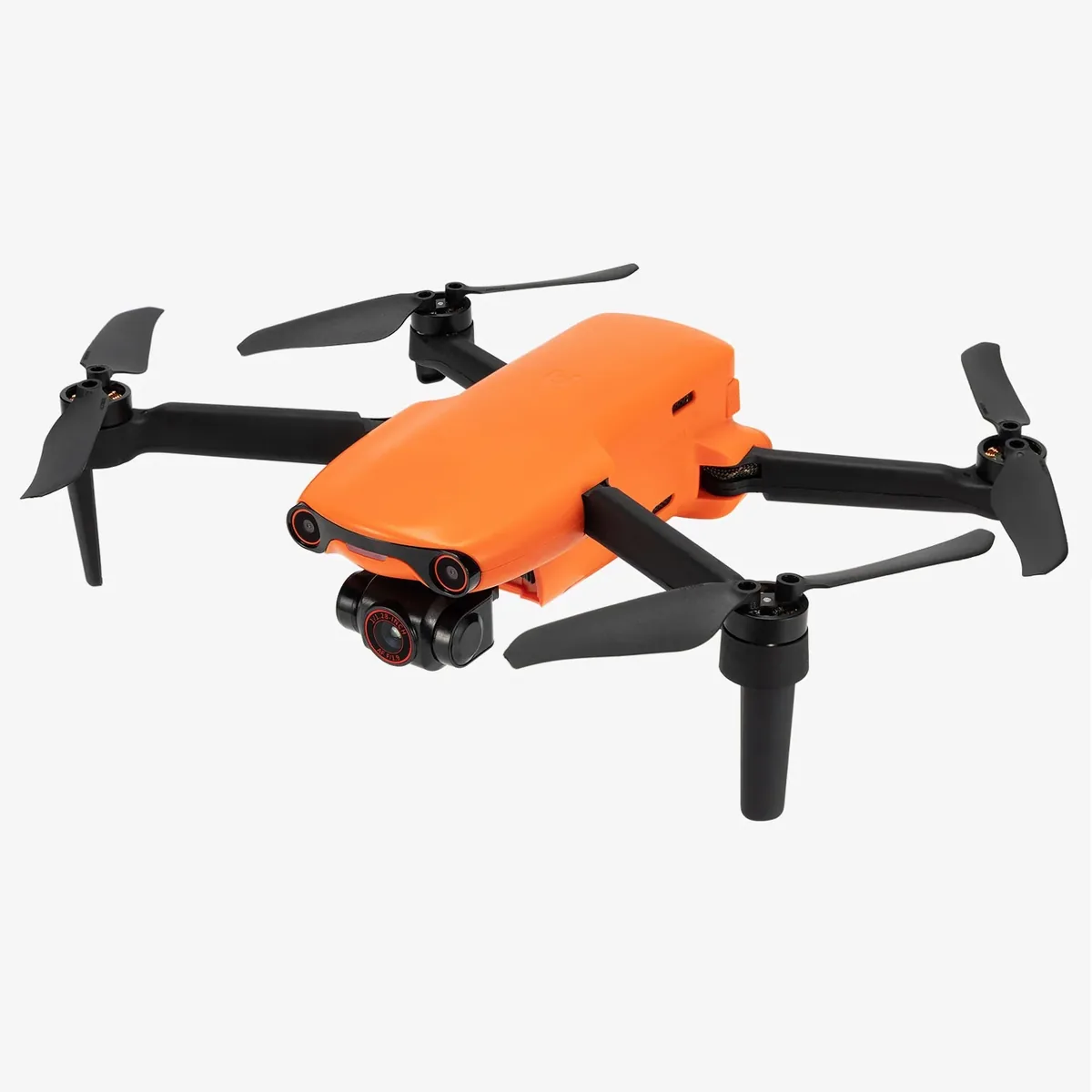
Autel
Autel EVO Nano+
For a couple of years this was the answer to "what if I don't want a DJI", and its selling point has not changed: 50 megapixels on a 1/1.28-inch sensor, three-axis stabilisation, three-way obstacle sensing and no geofencing, all under 249 grams. Autel has never locked its aircraft out of airspace the way DJI does, which some pilots consider the entire reason to buy one and which puts the responsibility for knowing where you may fly squarely on you. Video tops out at 4K/30 in 8-bit with no log profile, so this is a stills-first aircraft. The complication is corporate rather than technical: Autel ended production of the whole Nano and Lite line in July 2025, so you are buying remaining inventory from a company that has left the consumer market, with service promised to 2030. One practical note for anyone coming from DJI: the absence of geofencing means the aircraft will take off anywhere it has satellites, including places you must not fly. That is either the reason you are buying it or the reason you should not, and it is worth deciding which before the first flight rather than after.
- Sensor
- 71.5 mm²
- Claimed
- 28 min
- Bundle
- ~$899
Best for: 50MP stills from a non-DJI aircraft
Full spec sheet