DJI
DJI Lito 1
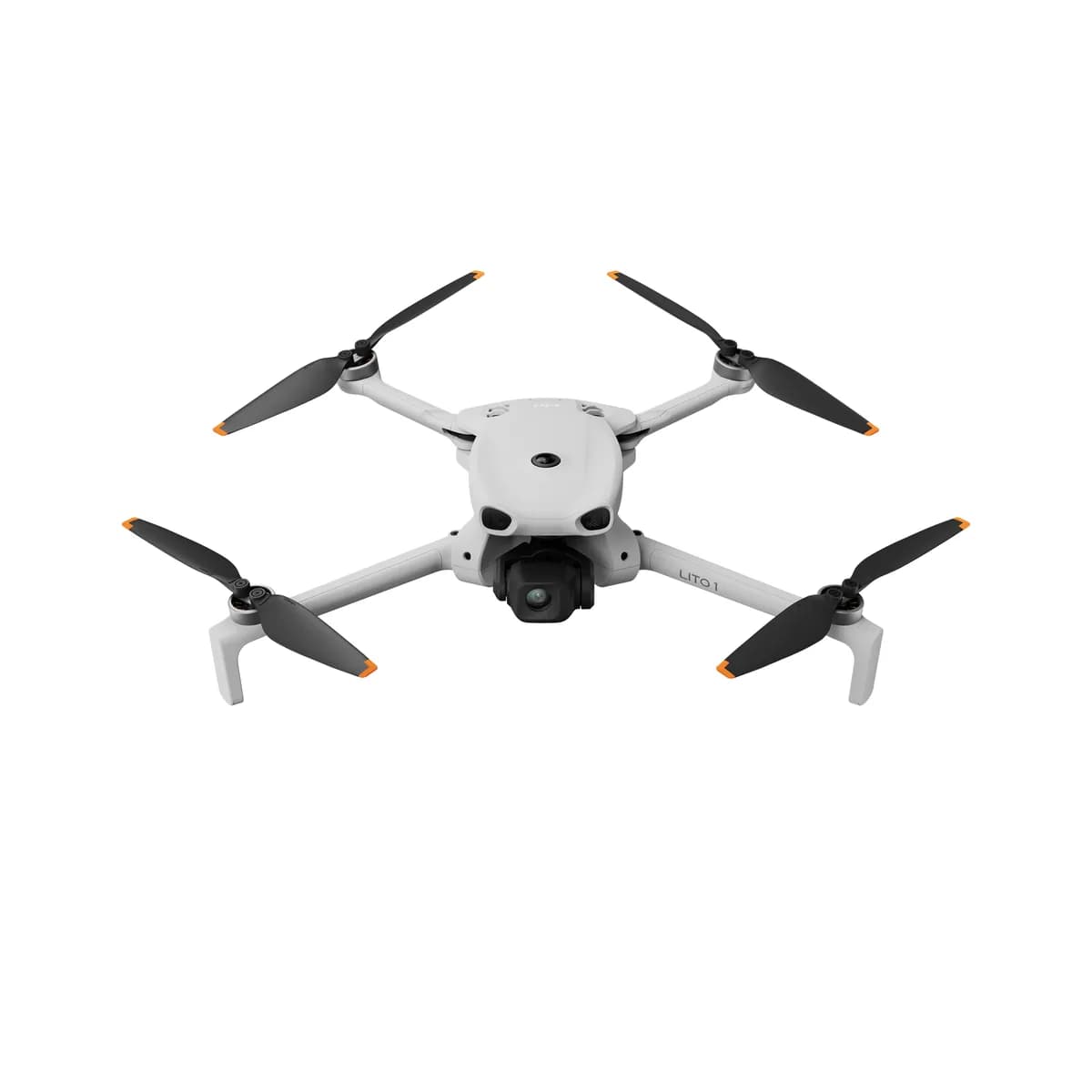
DJI's cheapest folding camera drone with sensing on every side is a stripped-down twin of the Lito X1. Both share the airframe, the 249-gram weight, the O4 link, 4K/100 recording at 130 Mbps and a 36-minute rating on the standard pack. The Lito 1 saves money in three places: a smaller 1/2-inch 48MP sensor behind an f/1.8 lens, vision-only sensing without the X1's forward LiDAR, and no D-Log M, so footage comes out in the normal profile (10-bit in H.265). There is no internal storage either; everything goes to the microSD card. An RC-N3 controller is in the base box. For a US buyer it carries the same problem as its sibling: DJI says US authorization is pending, it publishes only Canadian IC range figures, and any American unit is an import without a domestic warranty.
The 250-gram line
Under 250 g: recreational flight needs no FAA registration, and Remote ID does not apply.
Every recreational flyer must also take TRUST and carry proof of it, at any weight. Rules from faa.gov. Not legal advice — how this is worked out.
Buying, flying and fixing it in the US
Launched on 23 Apr 2026 outside the US: DJI said its US authorization application was still pending after the 22 Dec 2025 Covered List decision, and its spec page lists Canadian (IC) rather than FCC range figures, so a US unit is an import with no US warranty; prices here convert DJI's Hong Kong list price (HK$2,269 base) because DJI publishes no US price.
- Buy it newImport only
- Never sold in the US by the maker; units here are imports with no US warranty.
- FCC authorisationDisputed
- An FCC grant is on record (SS3-DGN12, 11 Dec 2025), but DJI said at launch that its US authorisation was still pending.
- FAA rulesNo registration
- Under 250 g, so recreational flight needs no FAA registration or Remote ID.
- Protection planNone in US
- No US Care Refresh; a plan bought abroad follows the region of purchase.
- RepairsNot published
- No US repair route published for it; DJI's warranty follows the region of purchase.
- Spare batteriesNone from DJI
- No US listing from DJI, and its new US store sells no drone batteries.
- App and accountAccount needed
- Flies with DJI Fly, listed in the US App Store, and is bound to a DJI account.
- Support commitmentNot published
- Not published by the maker.
DJI, across every model
- DJI is on the FCC Covered List by name. Models authorised before 22 Dec 2025 stay legal to sell and fly; new DJI models cannot be authorised.
- Since 5 Nov 2026 DJI's own store no longer serves US buyers. US sales moved to us.store.dji.com, run independently by BRICART Inc., which lists no drones and no drone batteries.
- Every DJI Care Refresh plan is marked discontinued for US buyers, so DJI crash cover can no longer be bought in the US.
- US repairs go to Care Pro (CarePro Technology Inc, Sacramento), the company DJI's US support page names for after-sales service.
- Aircraft are bound to a DJI account. Since June 2025 DJI will not unbind one without the original owner, which matters when buying used.
Every drone’s US status · Remote ID declarations. Stated as published by the maker, the FCC and the FAA; not legal advice.
Published sources: apps.apple.com, dronexl.co (1, 2), store.dji.com (1, 2, 3), thedronegirl.com, fcc.gov, mayerbrown.com, us.store.dji.com, dji.com, tecarepro.com
What that 36-minute claim is measured at
36 minutes on the 18.96 Wh standard battery, measured in a windless wind tunnel at sea level flying forward at a constant 21.6 km/h with obstacle avoidance set to brake and the camera set to 1080p/24 but not recording, until a forced landing. DJI's own 'typical' figure, in a light breeze while recording 4K/60, is 23 minutes. The 52-minute Plus battery takes it over 249 g.
That works out to 8.8 claimed minutes per $100 of the multi-battery bundle. Compared with the rest of the catalog.
Specifications
True first-year cost: ~$408 — the multi-battery bundle at ~$408; no crash plan on sale in the US has a verified price for this model, so nothing is added for it.
What it has
- 1/2-inch 48MP sensor on a three-axis gimbal
- 4K at up to 100fps at 130 Mbps, 10-bit in H.265
- Omnidirectional vision sensing (no LiDAR)
- O4 transmission rated 15 km (IC); no FCC figure published
- RC-N3 controller included in the base kit
In its favour
- All-round obstacle sensing at the lowest price in DJI's folding range
- Three-axis gimbal and 4K/100 slow motion
- Controller in the base box
- Same airframe and batteries as the Lito X1, so accessories cross over
Against it
- Not sold by DJI in the US, so no US warranty and no FCC range rating
- 1/2-inch sensor gathers well under half the light of the X1's
- No log profile for grading
- No internal storage; a forgotten card means no footage
- The Plus battery takes it past 249 g and into FAA registration
The two lists above are drawn from the manufacturer’s published specifications and from the cited reviews, not from owner reports.
What owners report
Summarised from reports by people who own and fly it; a single report is written as one owner.
A 1/2-inch camera, all-round sensing and a controller in the box at a low price made the Lito 1 the first drone for several of its owners. One describes an easy first flight, including the way it comes back to the pilot, and two crashes left it flying: a first-day crash scratched only a propeller, and a tree strike dented the shell and scratched the top sensor while leaving it flying normally. Two owners were also pleasantly surprised by its photos and 4K/60 footage.
Automated shots are where its sensing let two owners down: a Rocket QuickShot hit an obstacle the sensors missed and jammed the gimbal, and FocusTrack ran into an unseen clothesline. One owner's repair quote came to more than three times the price of the part, and a few single-owner problems turn up early, from a battery that would not release to a failed first firmware update. One owner also finds the 2x digital zoom usable only in 1080p mode.
Two owners weighed it against the Lito X1, which shares the airframe and adds the larger sensor and D-Log M; one new owner considered sending the Lito 1 back for the X1 because the price gap was small.
What owners like
- Two first-time owners found it takes beginner crashes: one crashed it on day one and found only a tiny prop scratch, and another flew it into a clothesline with no damage
- One owner new to drones found it as easy as the videos promise, including the way it comes back to the pilot, one who moved up from a cheap drone without GPS calls it a world away, and a third loved flying it
- Its small sensor impressed two owners: one was pleased with the photo quality in first tests, and another found the 4K/60 footage much better than expected
What owners ran into
- Its sensing missed obstacles in automated shots for two owners: a week-old drone hit something its sensors did not detect during a Rocket QuickShot and ended up in soccer goal netting with a stuck gimbal, and FocusTrack carried another into a clothesline
- In November 2026 one owner whose rear arm snapped in a crash was quoted $160 for the repair against a replacement arm part found for under $50
- One owner who added extra batteries found the release tabs would not free the fitted battery, and feared forcing it would snap something
- A new owner's first firmware update cut out with the phone or the drone, or both, under 20% battery, and afterwards the drone would not power on
- The app grounded one owner who otherwise loves it, insisting the phone be connected to a controller it was already plugged into, even after a cable swap
- The 2x and 3x zoom is digital, and one owner finds 2x usable only in 1080p mode, so shoots 48 MP RAW and crops by hand rather than use the zoomed JPGs
Questions owners ask
Is it normal for the Lito 1 gimbal to wobble when touched?
Will the Lito 1's sensing stop it hitting things in automated shots?
What does a Lito 1 crash repair cost?
Should I get the Lito 1 or step up to the Lito X1?
Shopped alongside it
More from DJI →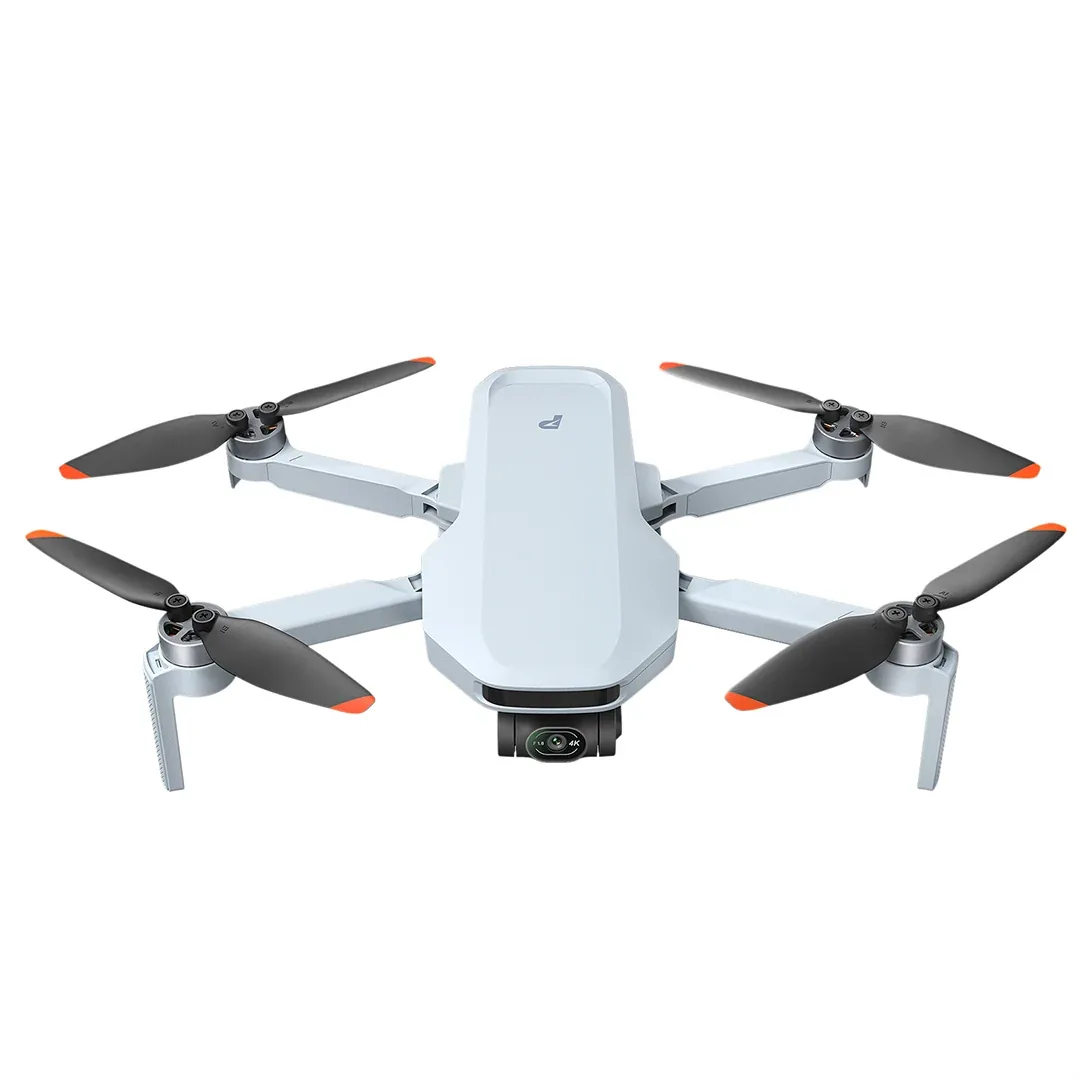
Potensic
Potensic Atom 2
Potensic's pitch is simple arithmetic: a three-axis gimbal, a 10 km link, waypoints and subject tracking for the price DJI charges for a Mini 4K with none of those things. The 1/2-inch 48MP sensor is genuinely smaller than the Mini's 1/1.3-inch chip, so the footage is a step behind in anything but good light, but the stabilisation is real and vertical shooting is supported. The flight-time claim is where this entry earns its place in the catalog: the box says 32 minutes, a reviewer could not get past 20 on any flight, and Potensic's own spokesperson put typical real-world endurance at around 20 minutes. That is a well-documented gap between claim and reality, and it is worth knowing before you plan a session around three batteries. Two things to check before ordering: whether the Fly More bundle is genuinely cheaper than buying batteries later, because the discount varies week to week; and whether you need the screened RC PTD 1 controller, because the base kit's controller needs your phone and your phone's battery.
- Sensor
- 30.7 mm²
- Claimed
- 32 min
- Bundle
- ~$449
Best for: A gimballed first drone on a tight budget
Full spec sheet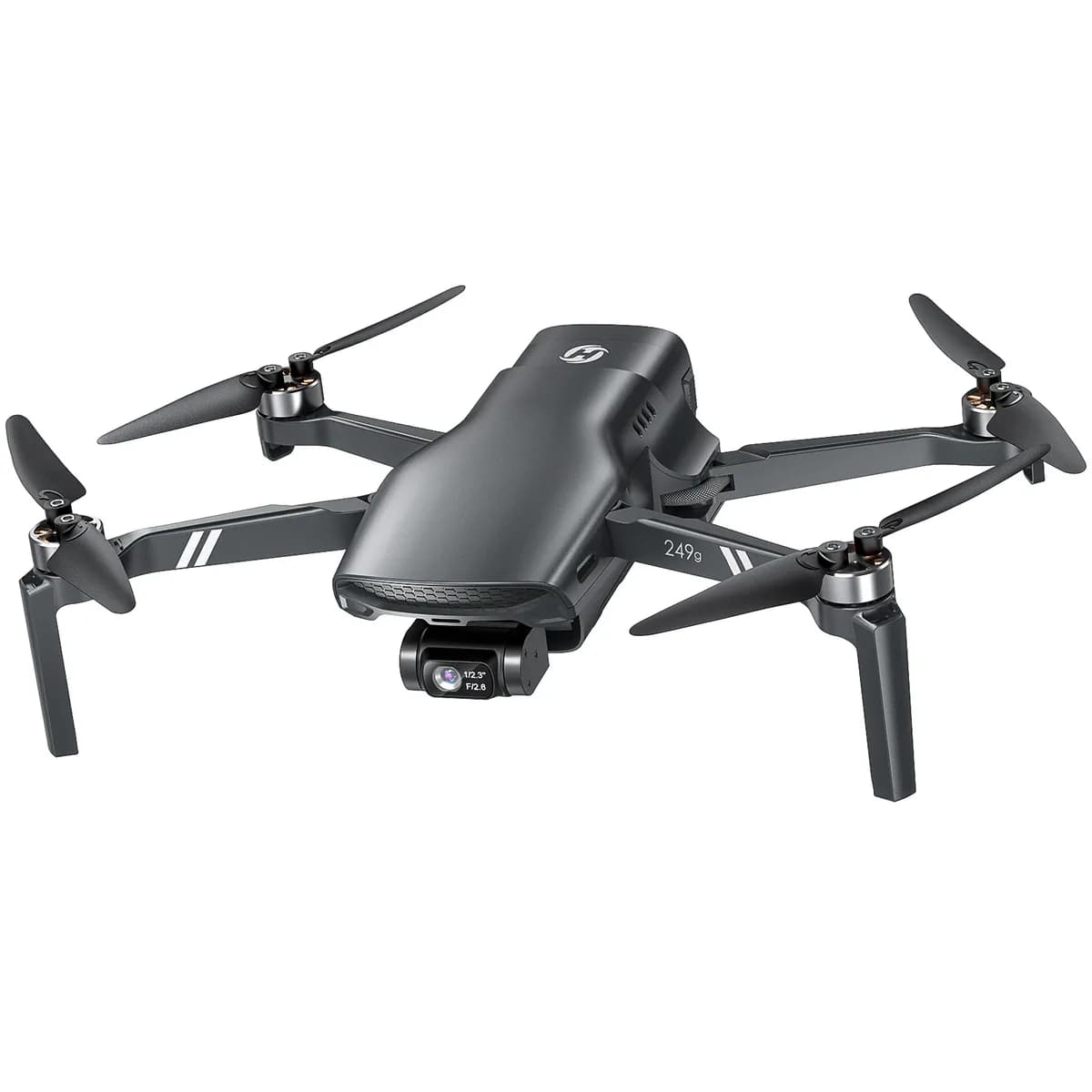
Holy Stone
Holy Stone HS900 Sirius
Holy Stone spent years making competent toys and then built this, which is the first of their aircraft that invites comparison with a Mini rather than with a hobby quadcopter. Three-axis brushless gimbal, a 48MP 1/2.3-inch Sony sensor, 6 km of transmission, subject tracking and 249 grams on the nose. Reviewers have been noticeably warmer about it than about anything else in the brand's catalog. The gaps are still real: no obstacle sensing in any direction, a fixed-focus f/2.6 lens, and a measured 22 minutes against a 30-minute claim. At about a third of a Mini 4 Pro's price with a real gimbal, though, it is the most credible budget alternative here.
- Sensor
- 28.1 mm²
- Claimed
- 30 min
- Bundle
- ~$380
Best for: The best-equipped sub-$400 camera drone
Full spec sheet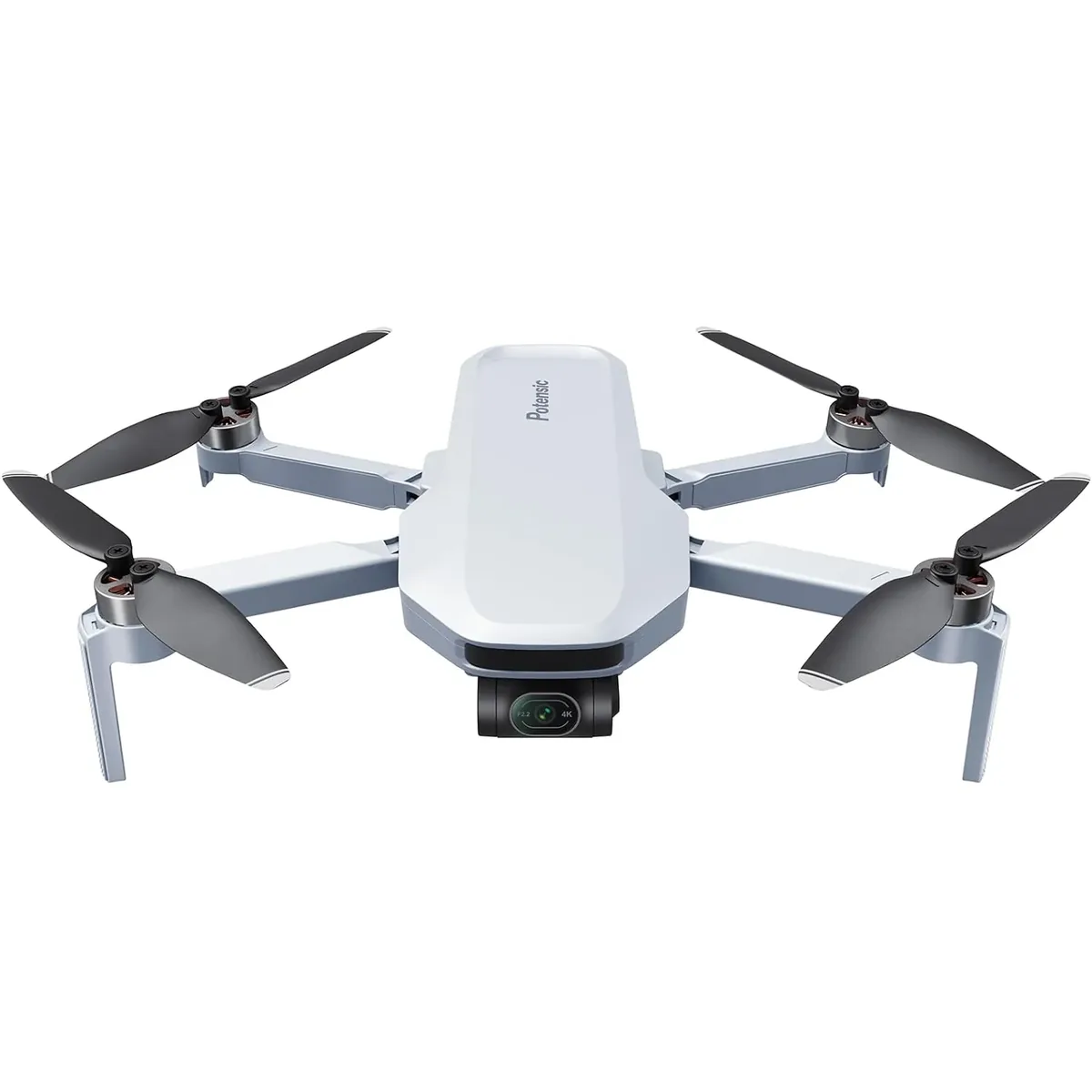
Potensic
Potensic Atom
Before the Atom 2 there was this, and the older model is still worth a look purely on price. Same sub-249-gram airframe, same three-axis gimbal, same GPS return-to-home and QuickShot moves, with a 1/2.3-inch 12MP sensor instead of the newer 1/2-inch 48MP one and PixSync 3.0 capped at 6 km rather than 10. Visual tracking will follow a walking subject or orbit it. What you are giving up against the Atom 2 is sensor area, HDR, vertical shooting and half the rated range — what you are gaining is roughly fifty dollars. For someone whose real question is "will this hold a steady shot without needing registration", the answer here is the same as the newer one, and neither has any obstacle sensing whatsoever.
- Sensor
- 28.1 mm²
- Claimed
- 32 min
- Bundle
- ~$359
Best for: Stable 4K for under $300
Full spec sheet